
The 30 Worst Cat Breeds for Constant Meowing: Which Vocal Cats to Avoid
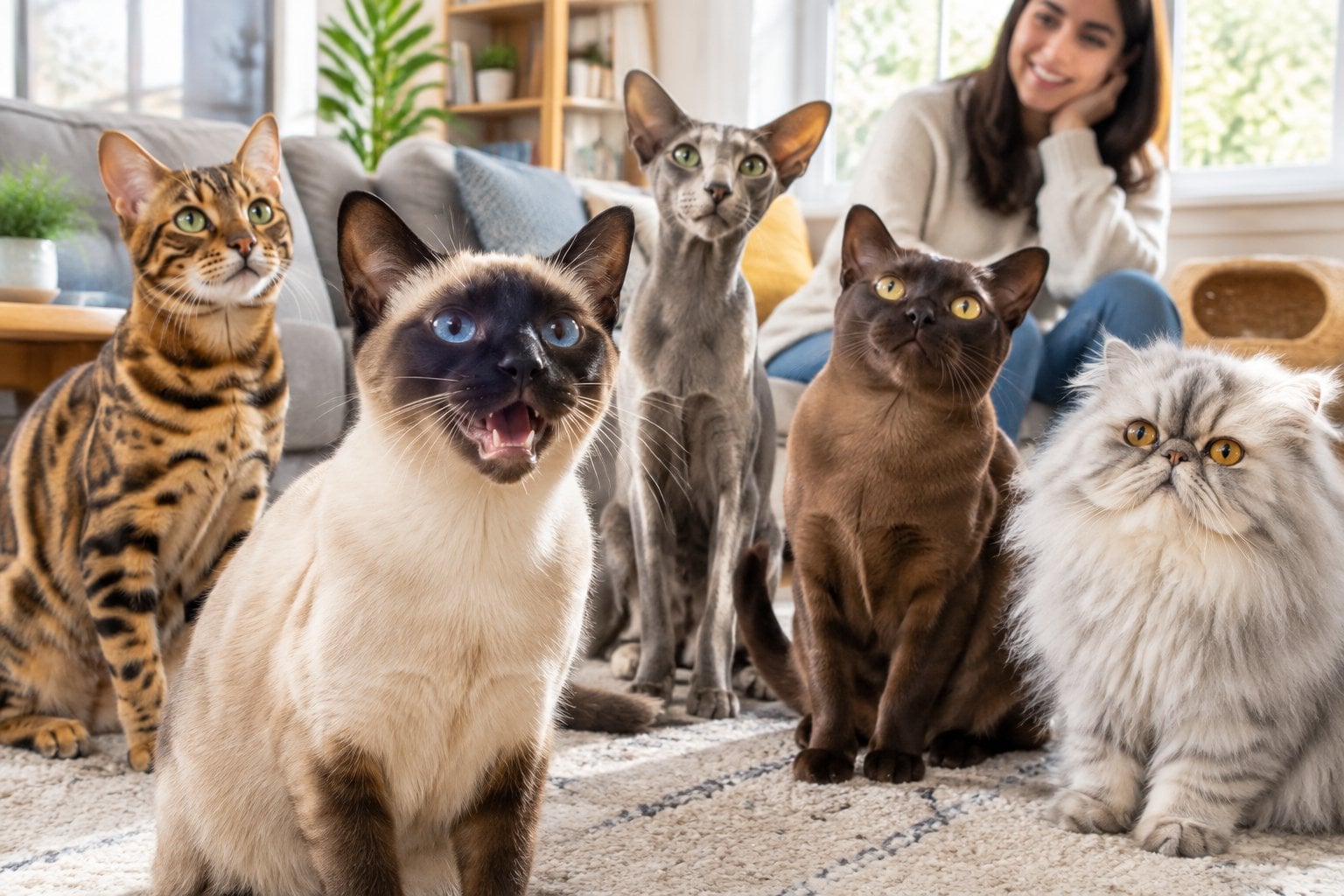
Some cats meow occasionally. Others seem to narrate every moment of their day. If you value a quiet home, certain breeds may test your patience more than others.
Vocal tendencies often come down to genetics, with some breeds bred specifically for high communication and social engagement with their owners.
Understanding which breeds are known for frequent vocalization can help you set realistic expectations before bringing a cat into your home.
1. Siamese
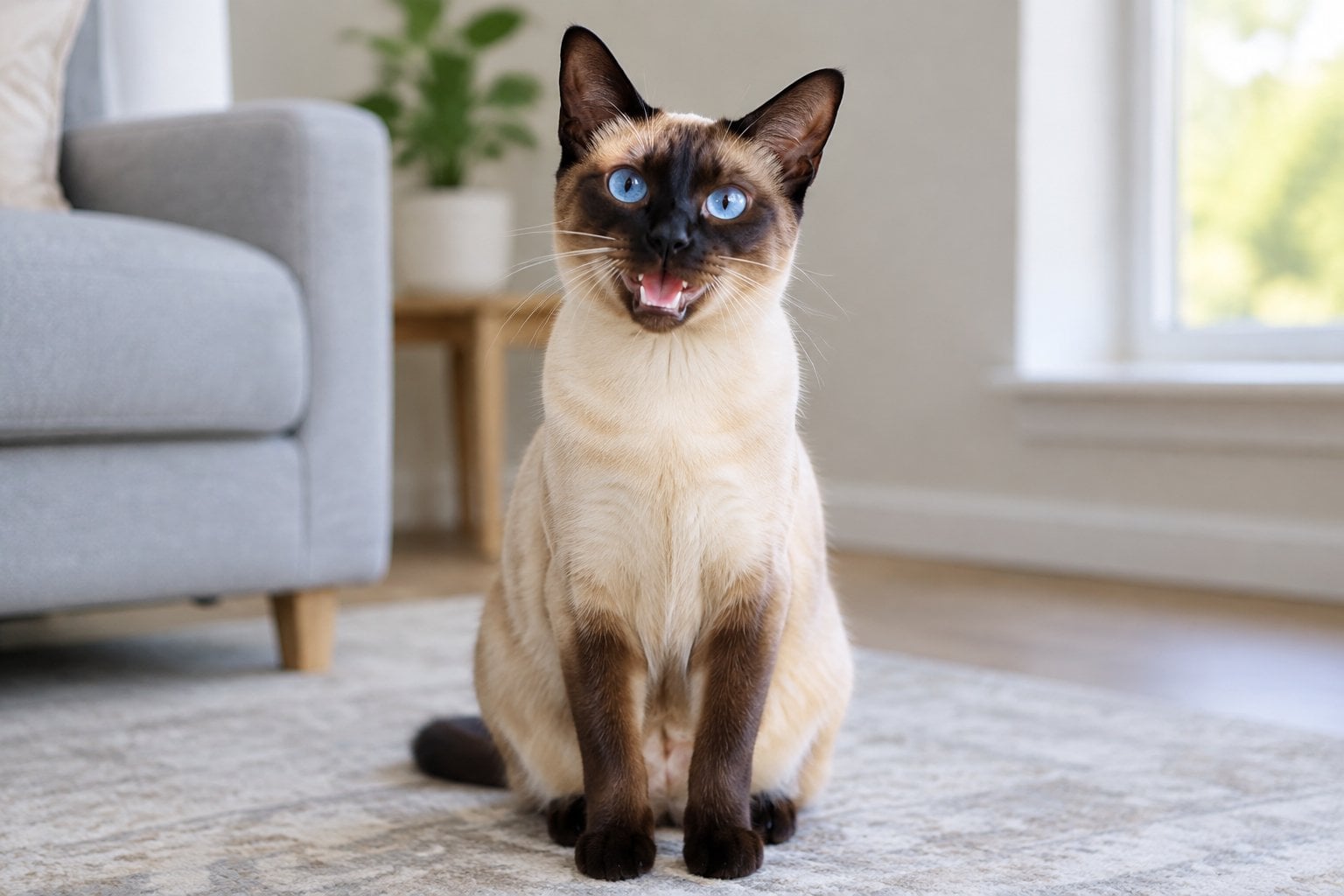
Siamese cats top the list for a reason. You will notice the vocalization almost immediately after bringing one home, since this breed rarely stays quiet for long.
Their meow carries a distinct, raspy tone that many owners compare to a baby’s cry. This sound alone can make the breed challenging if you need a calm household.
Siamese cats meow for attention, food, boredom, or simply to hold a conversation with you. They are highly intelligent and social, so silence often means something is wrong rather than everything being fine.
If you leave a Siamese alone for extended periods, expect the meowing to increase. Separation and lack of stimulation tend to worsen vocal behavior in this breed.
You should prepare for daily interaction and mental engagement if you choose a Siamese, since their vocal nature reflects a genuine need for companionship.
2. Oriental Shorthair
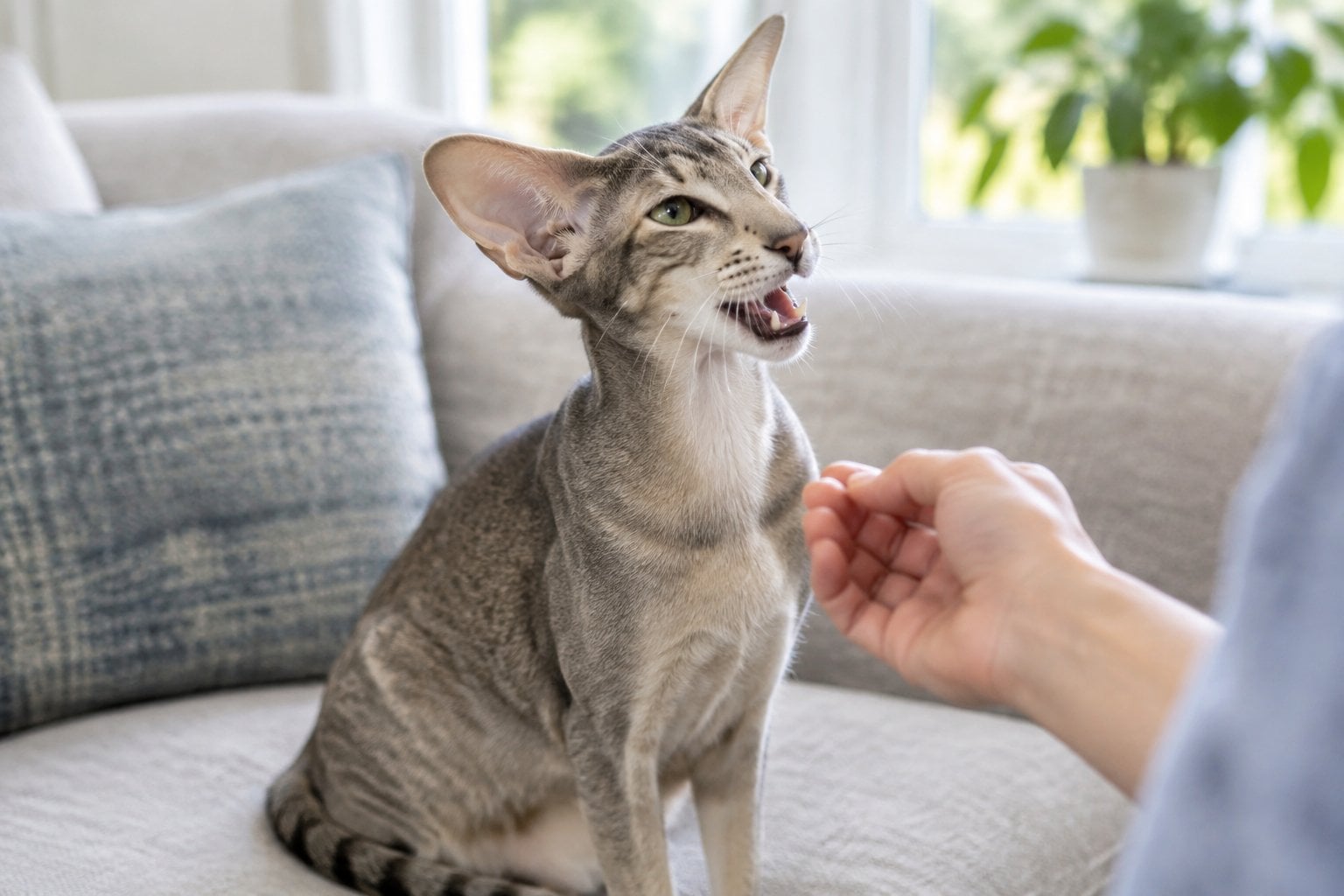
The Oriental Shorthair ranks among the most vocal cat breeds you can bring into your home. This breed shares close ancestry with the Siamese, and that connection shows clearly in its talkative nature.
You’ll notice your Oriental Shorthair communicates through a wide variety of sounds, including chirps, trills, and meows. It uses these vocalizations to express curiosity, seek attention, or simply narrate its daily activities.
This breed forms strong attachments to its owners and often follows you from room to room. That attachment translates directly into frequent vocal check-ins throughout the day.
If you work from home or spend most of your time indoors, you’ll likely hear from your Oriental Shorthair often. Sudden increases in meowing can sometimes signal stress, boredom, or a need you haven’t addressed yet.
Owners who prefer a quiet household should consider this breed’s vocal demands carefully before adopting one.
3. Oriental Longhair
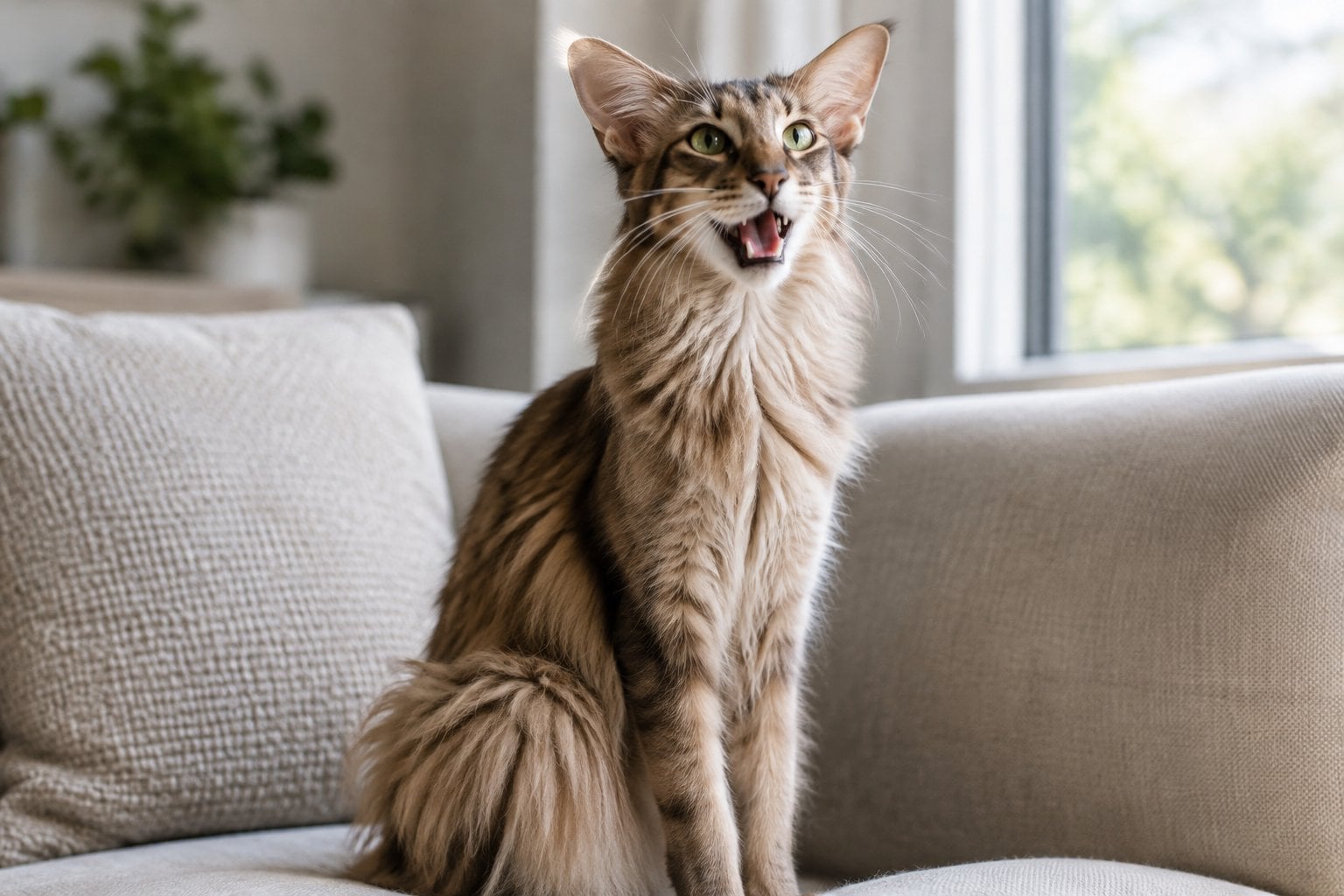
The Oriental Longhair is one of the most talkative cat breeds you can bring into your home. This breed shares close ties with the Siamese, and that vocal heritage carries through clearly.
You’ll notice a wide range of sounds from this cat, not just simple meows. Chirps, trills, and more complex vocal patterns are common, and your cat will use them often.
These cats tend to be highly social and attached to their owners. If you leave the room, expect to hear about it. Many owners describe a near-constant commentary throughout the day.
This breed also communicates when it wants attention, food, or play. If you’re looking for a quiet companion, the Oriental Longhair’s talkative nature may not suit your lifestyle. Their intelligence and curiosity only add to how often they vocalize.
4. Tonkinese
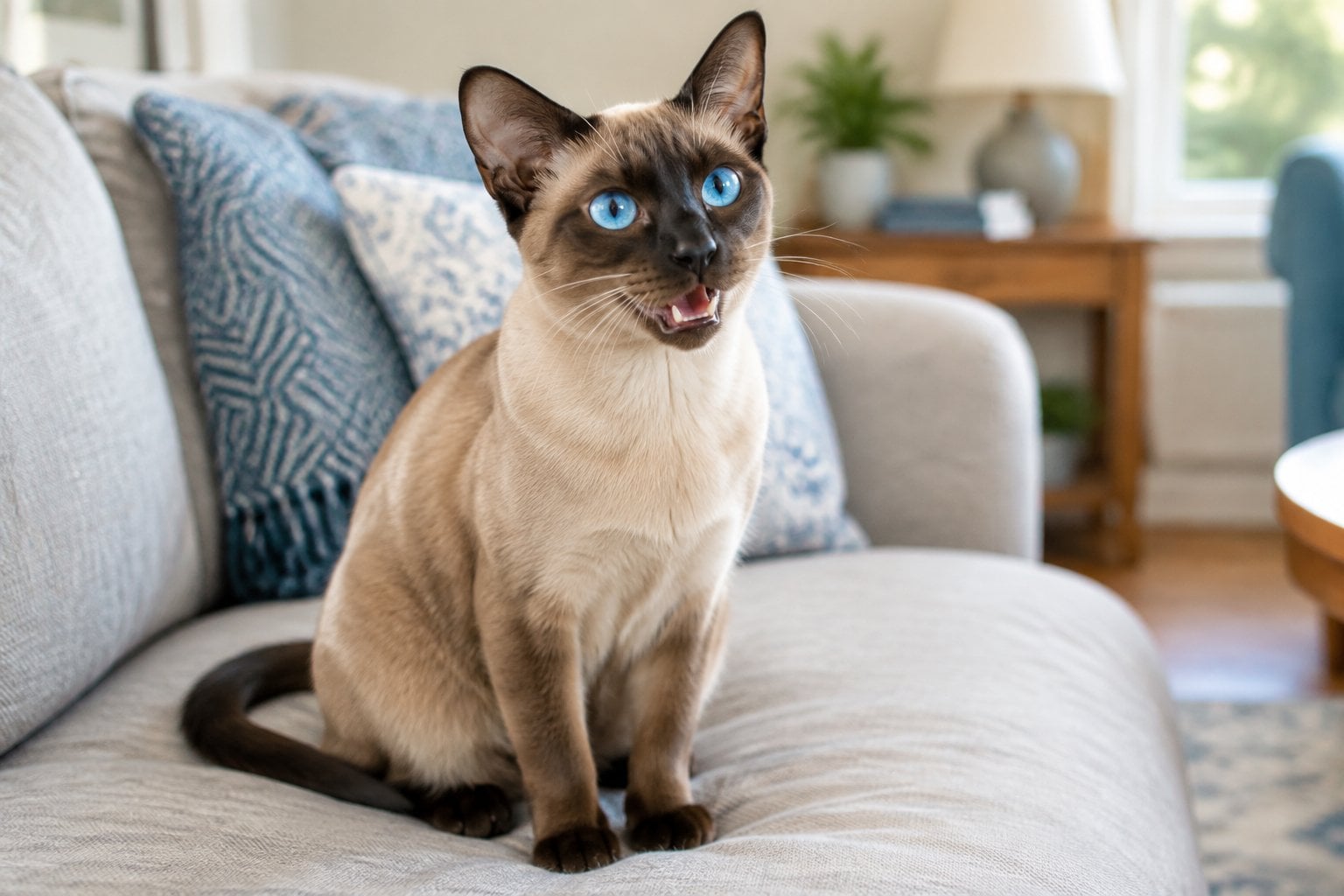
Tonkinese cats come from a mix of Siamese and Burmese bloodlines, and they carry the vocal habits of both parent breeds. If you bring one into your home, expect a cat that communicates often and with purpose.
These cats form strong attachments to their owners and tend to follow you from room to room. When left alone for long stretches, they can become stressed, and this often shows up as persistent meowing or attention-seeking behavior.
Their vocalizations aren’t random noise. Tonkinese cats use meowing to express needs, from hunger to boredom to a simple desire for company.
If your schedule keeps you away from home for extended periods, this breed may not be the right fit. They do best with owners who can offer consistent interaction and avoid leaving them isolated for too long.
5. Burmese
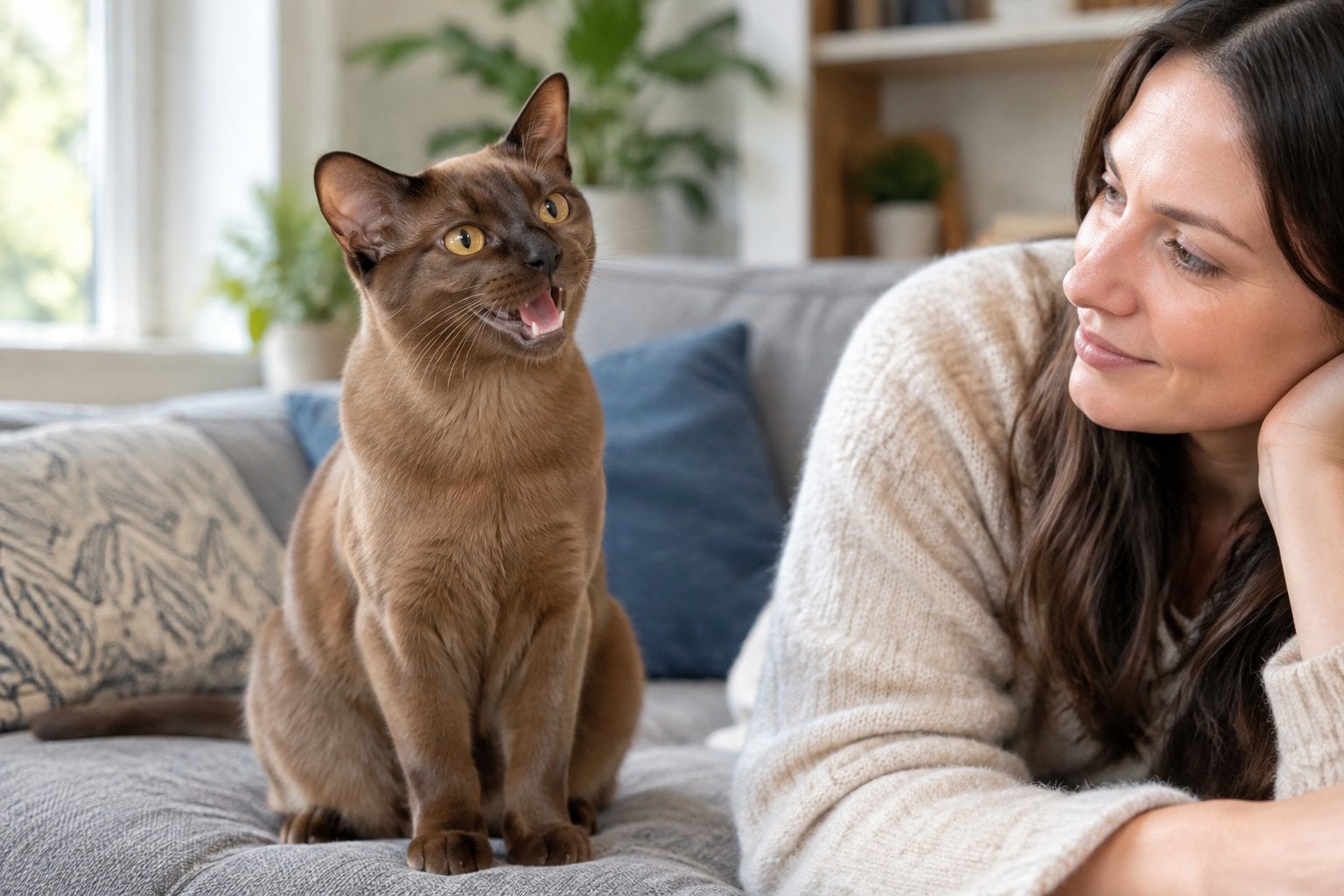
Burmese cats rank among the most vocal breeds you can bring into your home. They communicate through frequent meowing, and you’ll notice they use their voice to express hunger, boredom, and a desire for attention.
If you work long hours, this breed may not suit your lifestyle. Burmese cats develop strong attachments to their owners and often vocalize when left alone for extended periods.
You should expect this breed to follow you from room to room while meowing for interaction. Ignoring these vocal cues typically increases the behavior rather than reducing it.
Burmese cats also tend to meow during meal times, demanding food on their own schedule. Your daily routine may need to accommodate this breed’s vocal requests for consistent companionship and engagement throughout the day.
6. Burmilla
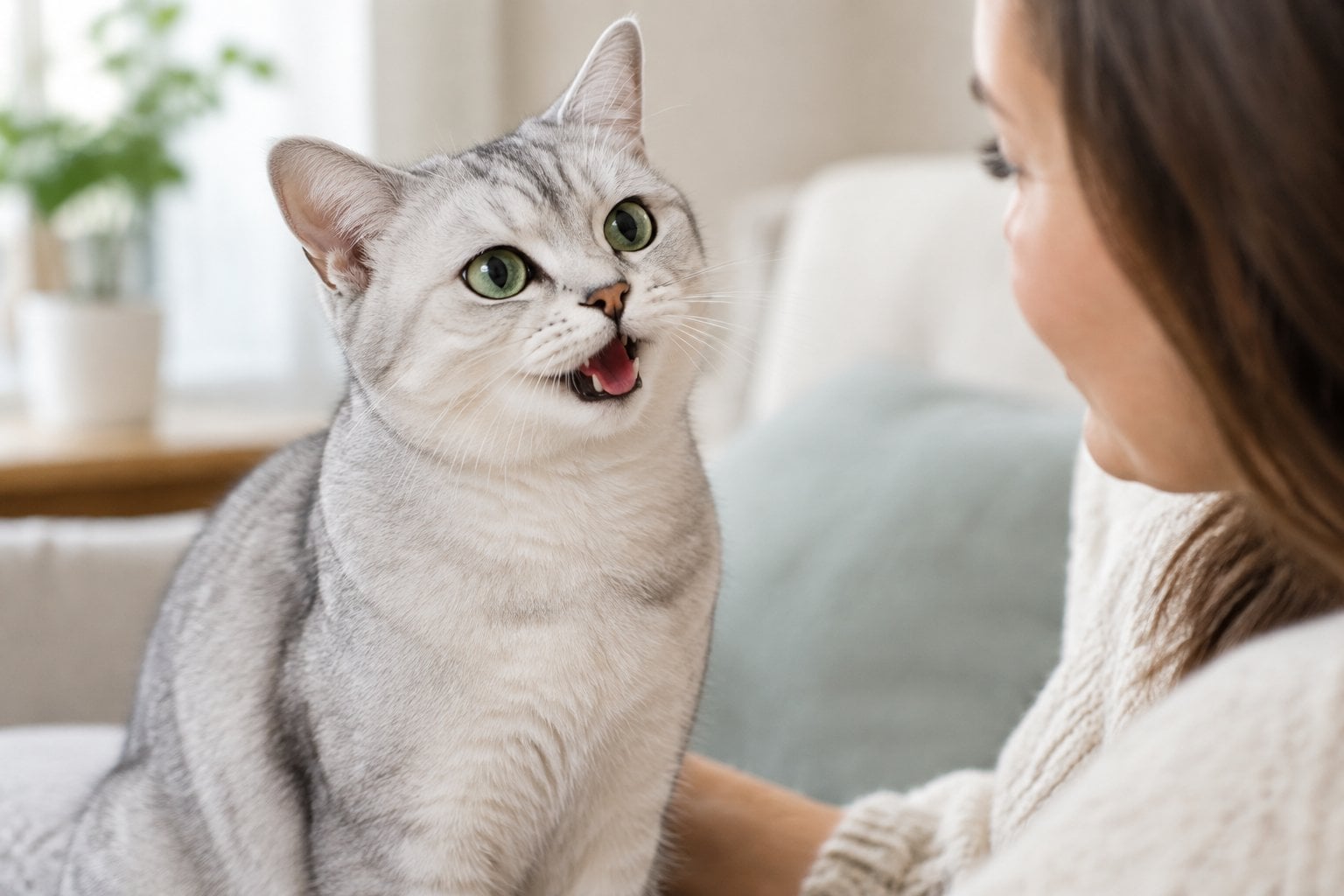
The Burmilla developed from a 1981 pairing between a Chinchilla Persian and a Lilac Burmese. You get a cat with a silver-tipped coat and the rounded build of both parent breeds, but its vocal habits often surprise new owners.
While not classified as one of the loudest breeds, your Burmilla can become quite talkative when something is bothering it. Common triggers include boredom, hunger, and a desire for attention.
You may notice increased meowing if your schedule changes or if the cat feels under-stimulated. This breed tends to be social, so long stretches without interaction can prompt vocal complaints.
If you want a quieter household, pay attention to your Burmilla’s daily routine. Consistent feeding times, regular play sessions, and enough mental stimulation can help you reduce unnecessary meowing. Ignoring these needs, however, often leads to a cat that makes its opinions known loudly and repeatedly.
7. Balinese
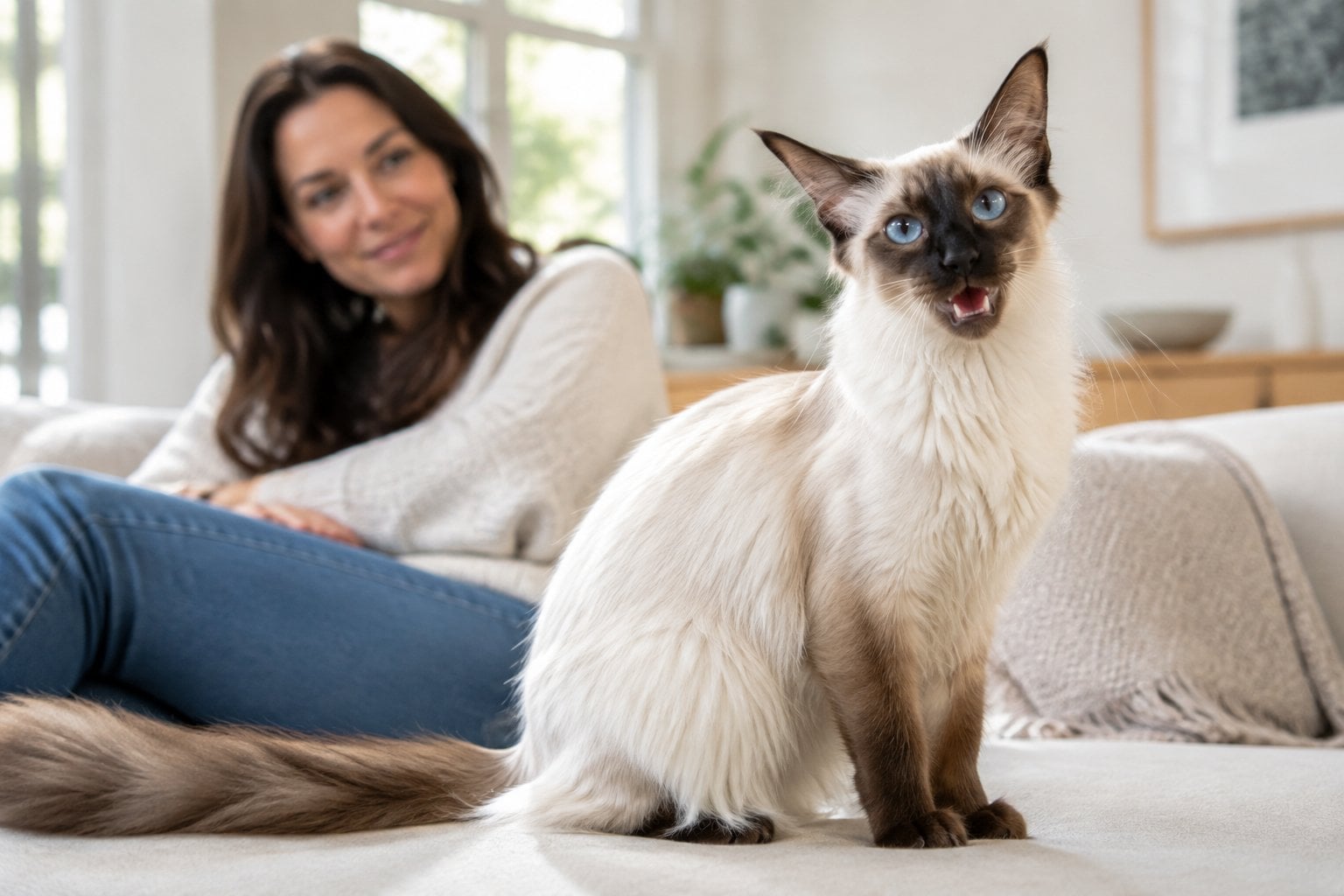
The Balinese is sometimes called the “long-haired Siamese,” and it carries the same vocal tendencies as its relative. You’ll find this breed eager to narrate its daily routine, from mealtimes to your return home from work.
Their voice tends to be softer and more melodic than the sharp yowl of a Siamese, but the frequency remains high. You should expect regular chatter throughout the day, especially if you respond to it.
Balinese cats form strong attachments to their owners and often meow to initiate interaction or express displeasure at being ignored. If your schedule keeps you away for long stretches, you may notice increased vocalization when you return.
This breed thrives on engagement, and silence isn’t part of its personality. If you prefer a quiet household, the Balinese will likely challenge that expectation daily.
8. Javanese
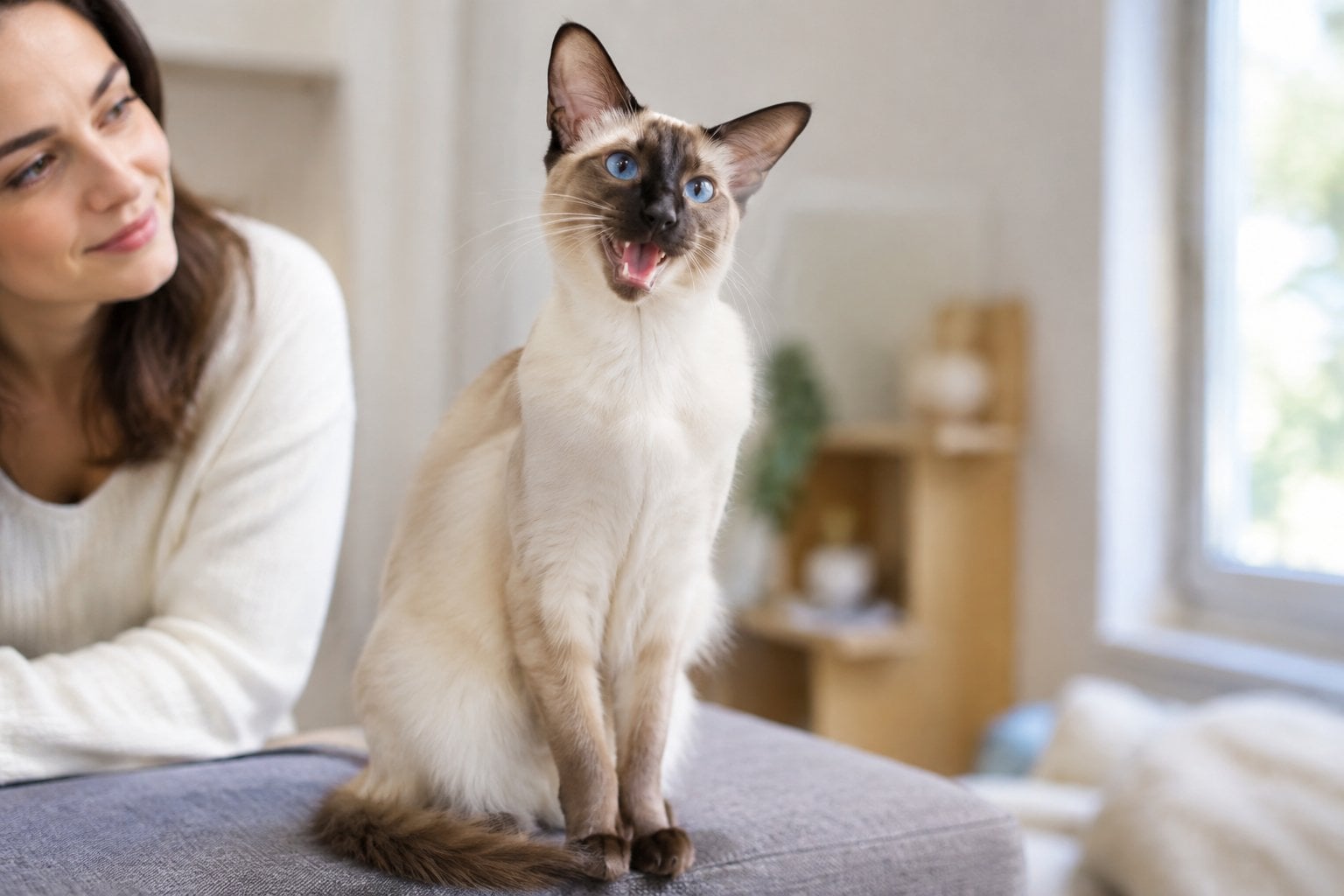
The Javanese shares close ties with the Siamese and carries much of that breed’s talkative nature. You’ll notice meows, chirps, and trills used regularly as this cat tries to interact with you and its surroundings.
This vocal habit isn’t a quirk or a phase. It’s part of the breed’s genetic makeup, so you should expect it to continue throughout your cat’s life.
Your Javanese will often meow to get your attention, especially if it feels bored or wants engagement. Long stretches of being ignored tend to make the vocalizing more frequent and more insistent.
You can reduce some of the noise through regular play and interaction, but you won’t eliminate it completely. If the meowing suddenly increases or changes in tone, it’s worth checking with your vet to rule out underlying health issues.
9. Cornish Rex
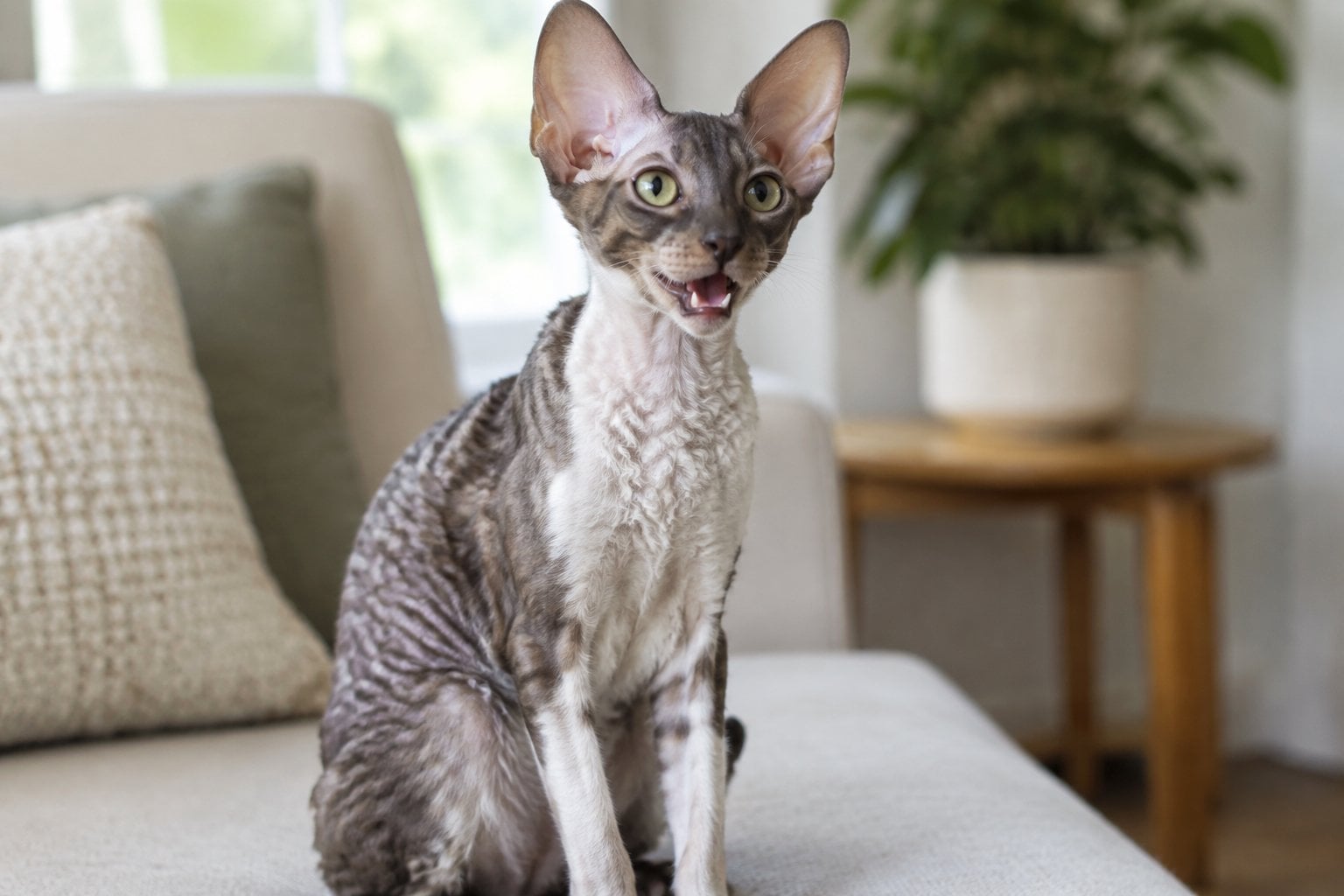
The Cornish Rex ranks among the more vocal breeds you’ll encounter. Their curly coats and slim build get most of the attention, but their talkative nature shapes daily life with this cat.
These cats often meow to greet you, request food, or simply comment on what’s happening around them. Some owners describe the sound as more of a chirp or trill than a typical meow.
Their vocal tendency may trace back to Siamese ancestry in their bloodline. Not every Cornish Rex is equally chatty, but many lean toward frequent communication rather than quiet observation.
This breed also craves companionship and doesn’t do well when left alone for long stretches. If your schedule keeps you away often, expect the meowing to increase as a response to loneliness or boredom.
10. Devon Rex
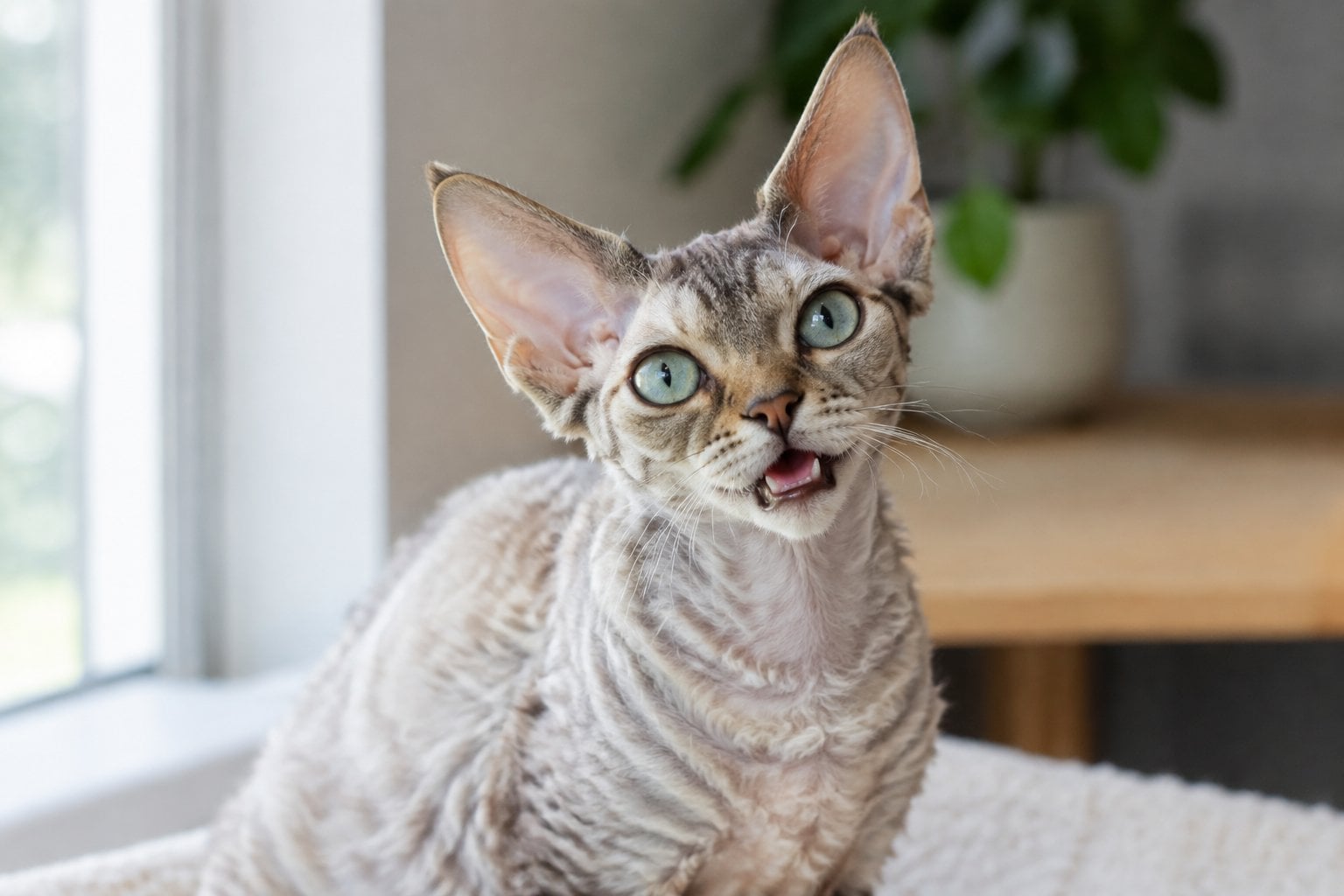
You’ll find the Devon Rex ranks among the most demanding cats when it comes to vocal behavior. This breed wants your attention, and it will meow to get it.
Mealtimes often trigger the loudest responses. You may notice your Devon Rex begging at the table or meowing persistently until you share your food.
These cats form strong attachments to their owners. If you leave the room or ignore them for too long, expect to hear about it.
Their large ears and slender frame give them an alert, curious appearance that matches their personality. You’re dealing with a breed that stays engaged with its surroundings and communicates that engagement loudly.
First-time owners sometimes underestimate how vocal this breed can be. If you want a quiet household, the Devon Rex will challenge that expectation daily.
11. Sphynx
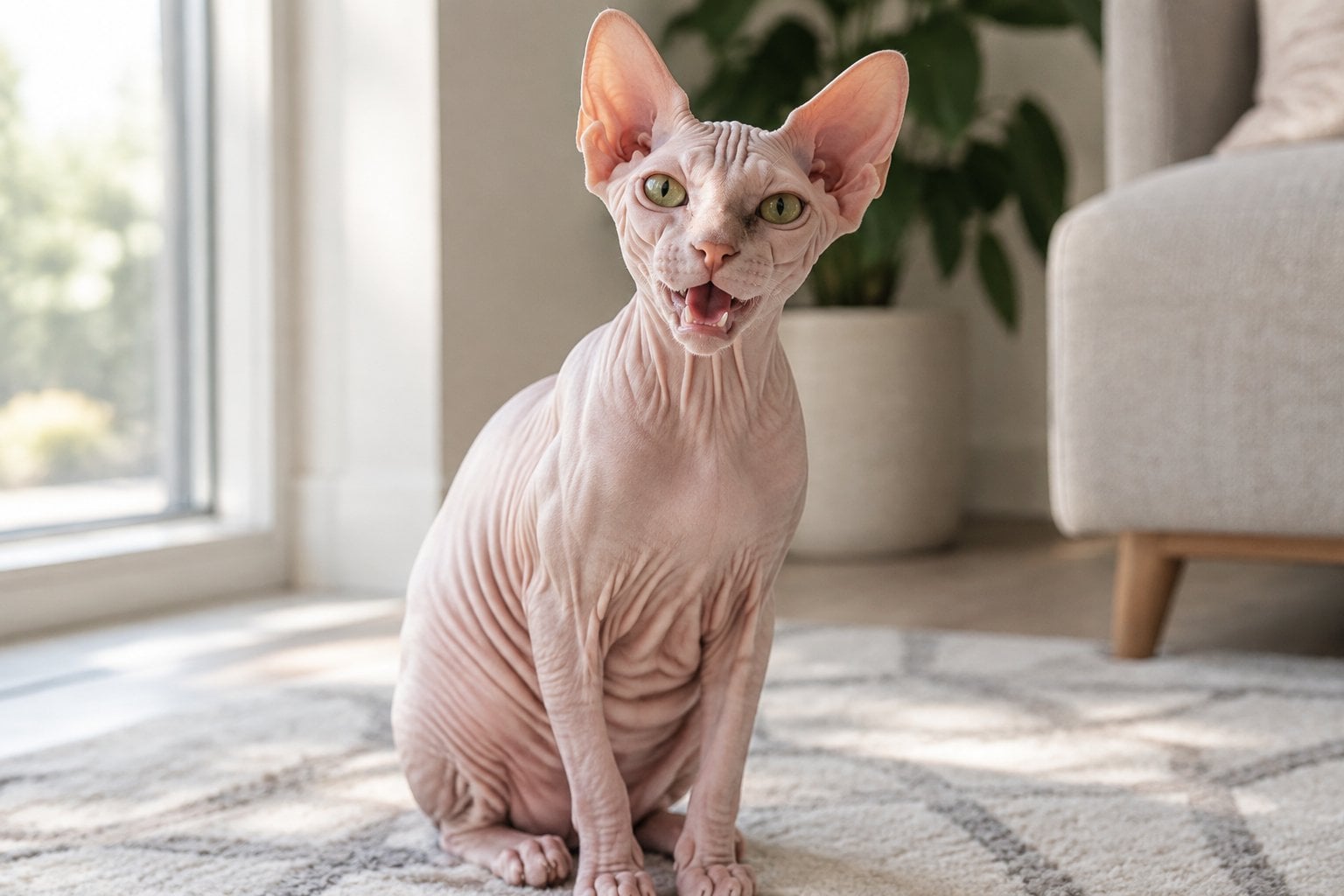
Sphynx cats are hairless, but they are far from quiet. You’ll notice they have a wide vocal range and aren’t shy about using it.
This breed bonds closely with its owners and often expresses that attachment through frequent meowing. You may find your Sphynx narrating its movements around the house or announcing when it wants attention.
Because they lack a fur coat, Sphynx cats seek out warmth more actively than other breeds. You might hear more vocalizing when they’re looking for a warm lap or a sunny spot.
Separation from you can also trigger meowing, since Sphynx cats tend to form strong attachments and dislike being left alone for long stretches.
If you choose a Sphynx, expect regular conversation. This breed communicates often, and you’ll need patience for the chatter that comes with its affectionate personality.
12. Peterbald
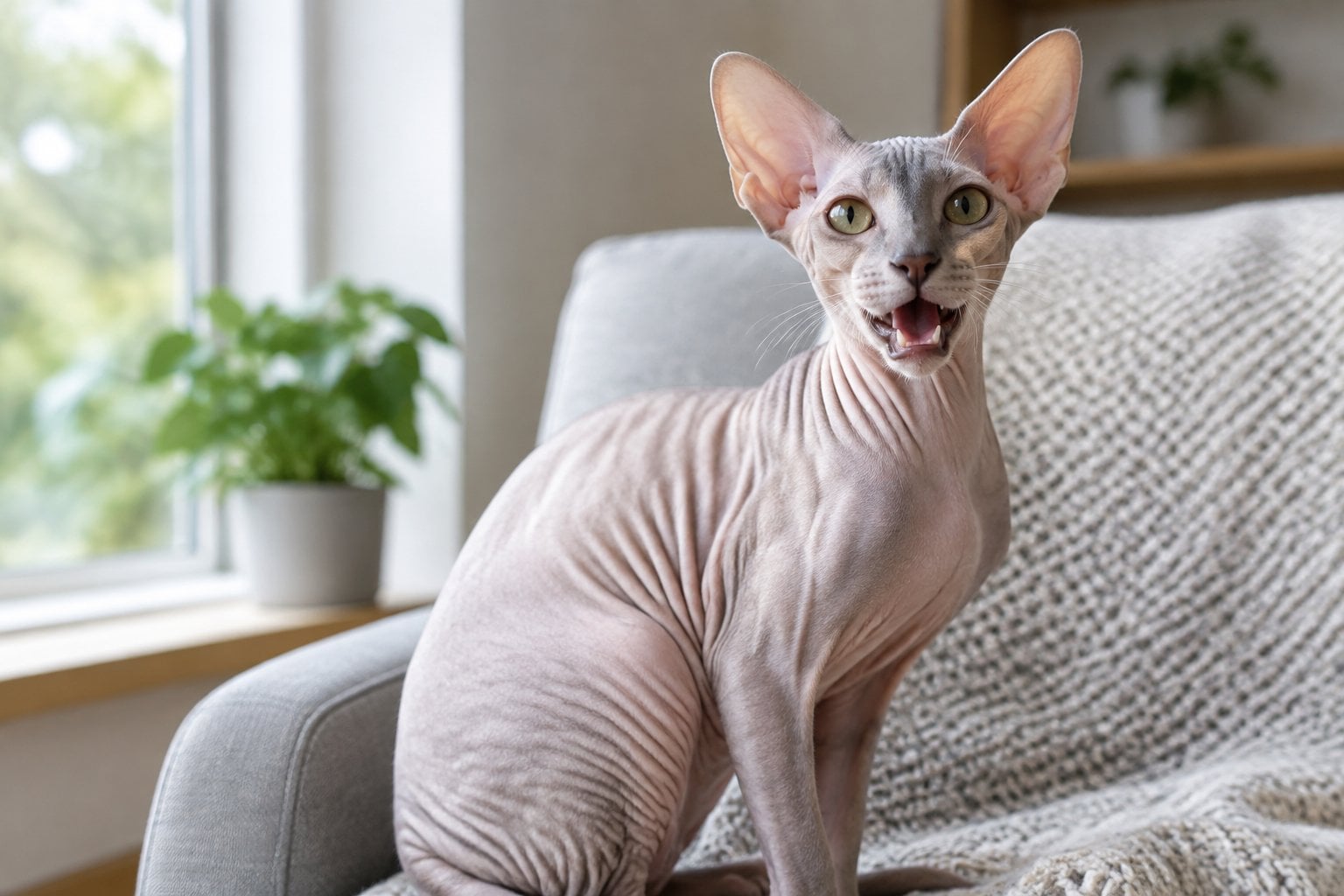
Peterbald cats are known for their talkative nature, and you’ll likely notice this trait right away. These cats often meow when they’re alone, when they’re following you between rooms, or simply when they want your attention.
Your Peterbald’s vocal habits tend to increase over time rather than fade. Many owners report their cat becoming more vocal over weeks or months, not less.
This breed forms strong bonds with its owners and uses meowing as a primary way to communicate. If you leave your Peterbald alone for long stretches, expect more vocalization when you return.
You should also know that this isn’t necessarily a sign of a problem. For Peterbalds, frequent meowing is often just part of their personality rather than a symptom of distress or illness.
If constant chatter isn’t something you want in a pet, you may want to consider a quieter breed instead.
13. Savannah
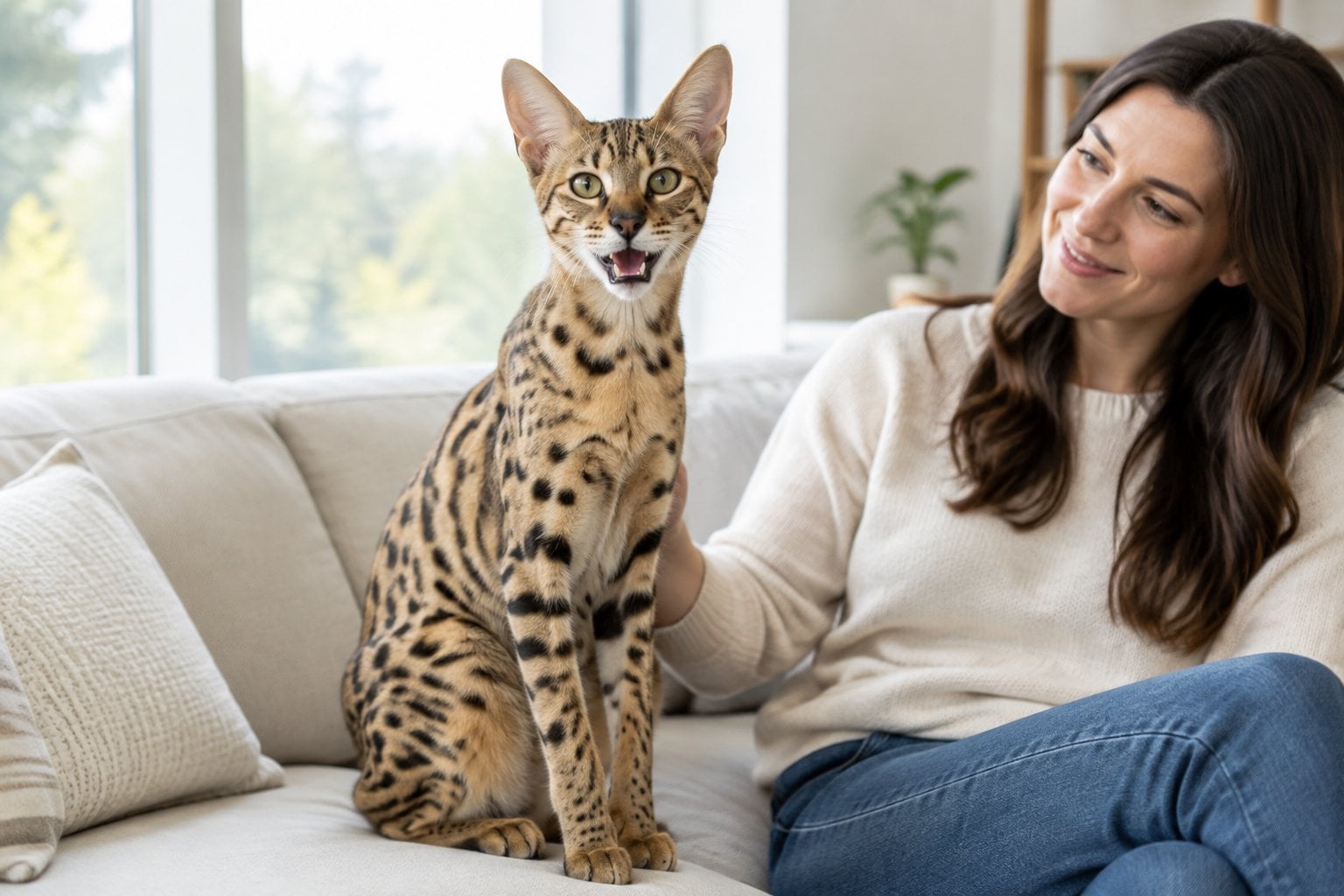
If you own a Savannah cat, you already know they rarely stay quiet. This breed is a hybrid of a domestic cat and an African serval, and that wild heritage shows up in both energy and voice.
You’ll notice a wide range of sounds beyond the standard meow, including chirps, yowls, and hybrid vocalizations that blend the two. These cats use sound constantly to communicate what they want.
Your Savannah is highly intelligent and curious, which means boredom turns into noise fast. Leave the room, and you may hear loud crying until you return.
Separation anxiety is common in this breed, so expect vocal protests when you’re away. High energy levels combined with sharp intelligence mean you’ll need to provide consistent mental stimulation to keep the meowing manageable.
14. Bengal
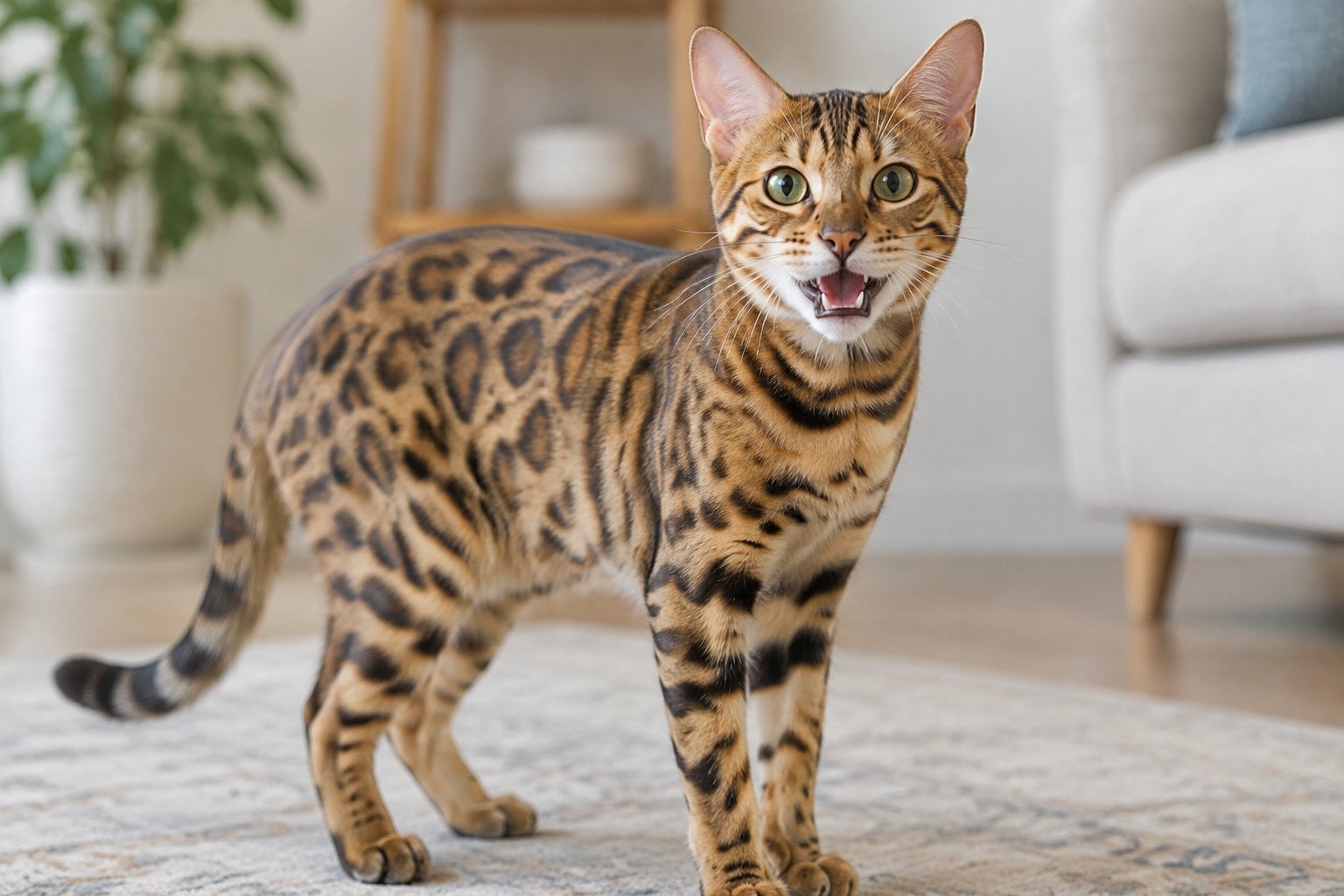
Bengal cats are vocal and persistent when they want attention. This breed carries high energy levels, and when that energy goes unused, meowing becomes the outlet.
You’ll notice the chatter increases around feeding times, play sessions, or whenever you walk into a room. Bengals track movement closely and vocalize to signal what they want next.
Boredom plays a large role here. A Bengal left alone for long stretches without climbing structures or interactive toys will often meow out of frustration rather than genuine need.
This breed doesn’t do well with a passive lifestyle. You’re dealing with a cat that was bred partly from wild ancestry, and that heritage shows in its demand for stimulation.
If your schedule doesn’t allow for several hours of active engagement daily, expect the meowing to escalate rather than fade over time.
15. Turkish Van
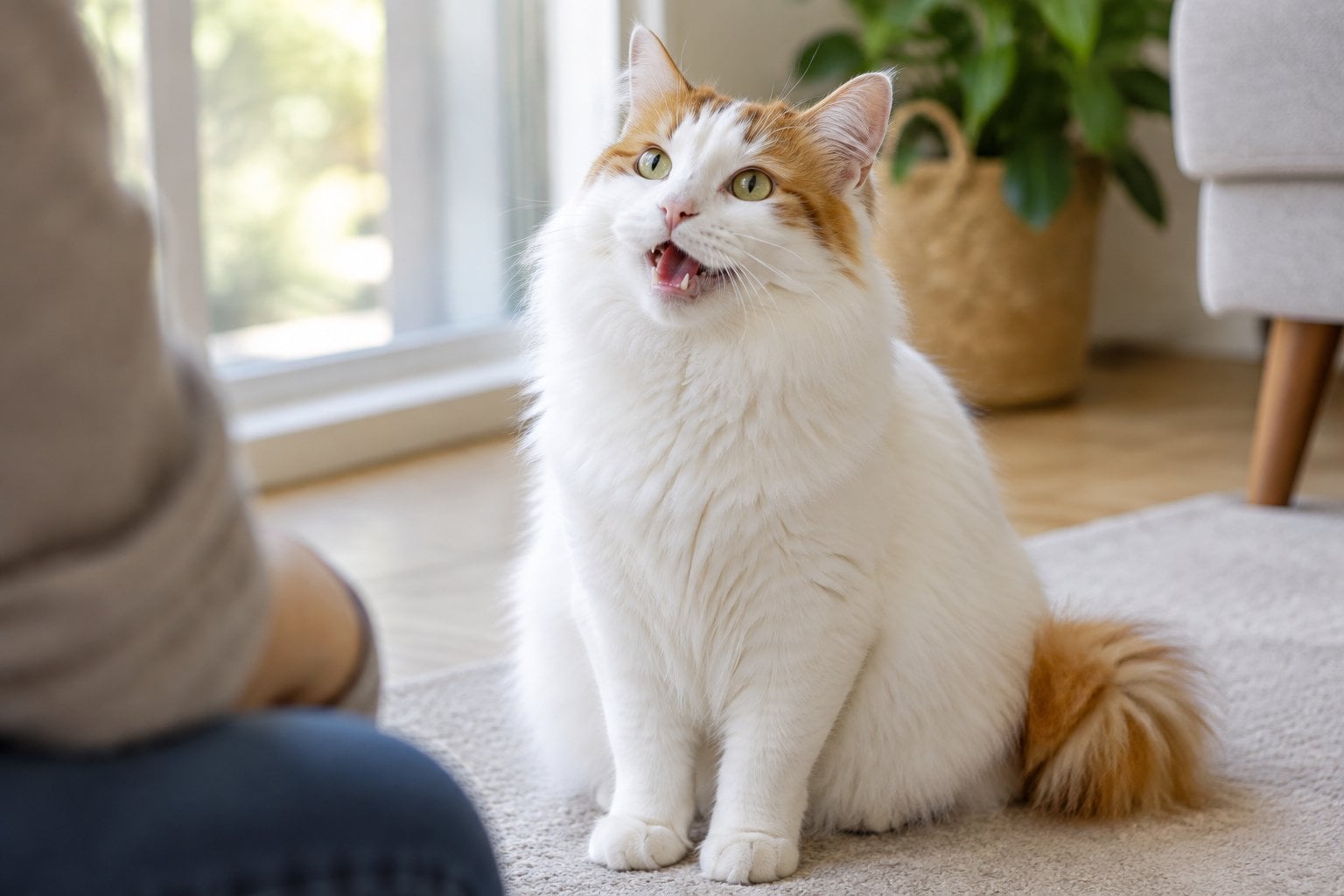
Turkish Vans are known for their water-loving habits, but they’re also talkers. If you bring one home, expect frequent vocal check-ins throughout the day.
This breed tends to meow when seeking attention. Turkish Vans want your acknowledgment, whether that means playtime, cuddles, or simply confirmation that you’ve noticed them.
You should also know that Turkish Vans can be territorial. Many prefer to be the only cat in the household, and this preference sometimes comes with vocal objections to sharing space or attention.
Their meowing isn’t random noise. It’s typically a direct communication method, so you’ll need to pay attention to context and body language to understand what your cat wants.
If you prefer a quiet household, this breed may test your patience. Their vocal nature is consistent, not occasional, making it a defining trait you’ll live with daily.
16. Turkish Angora
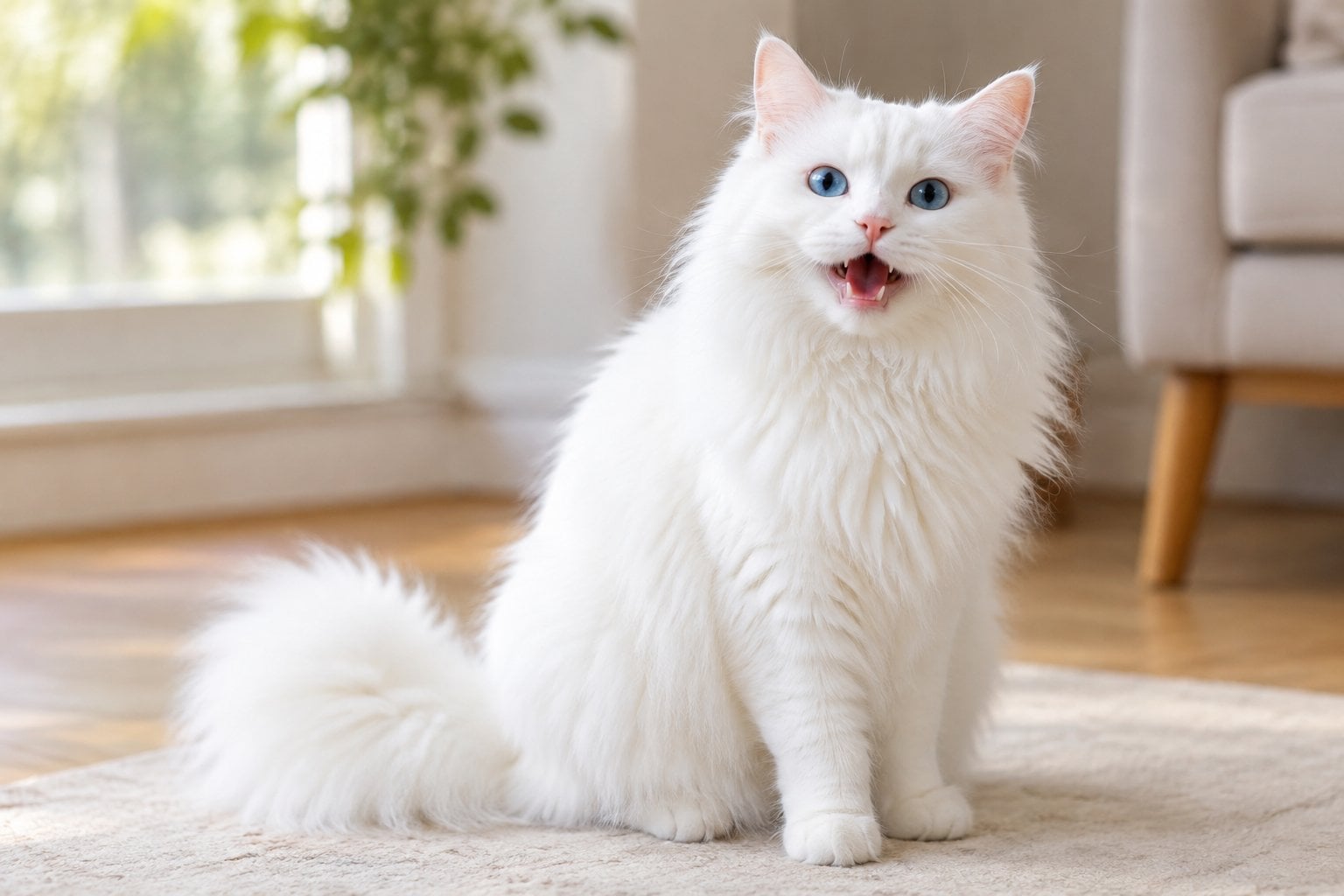
Turkish Angoras rank among the more vocal cat breeds you can bring into your home. These cats communicate frequently through meows, trills, and chirps, often as a way to express their needs or stay connected with you throughout the day.
Their intelligence and strong attachment to their owners play a role in this behavior. You’ll likely notice your Angora following you from room to room while vocalizing, especially if it wants attention or feels bored.
This breed doesn’t stay quiet for long stretches. Some owners compare their chattiness to Siamese cats, another famously talkative breed.
If you work long hours or prefer a quieter household, this trait is worth considering. Turkish Angoras tend to vocalize more when left alone, so you may need to provide extra interaction or enrichment to reduce excessive meowing.
17. Japanese Bobtail
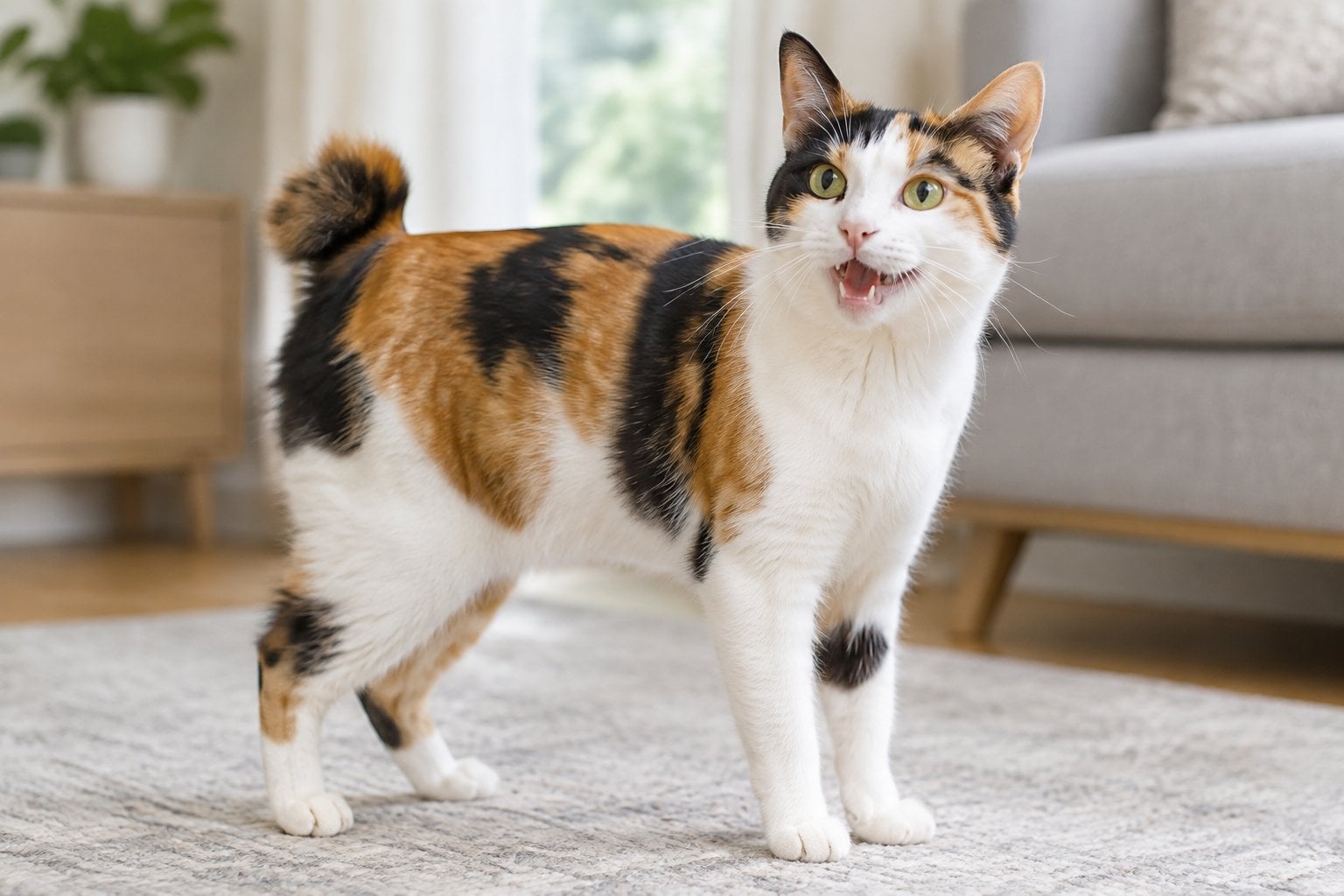
Your Japanese Bobtail will talk to you throughout the day, and often in a tone that sounds almost musical. This breed uses a chirping, melodic voice rather than a harsh yowl, but that doesn’t mean it’s quiet.
You’ll notice your cat vocalizing when you walk into a room, when it wants food, or simply when it wants your attention. These cats enjoy interacting with their owners, and meowing is one of their main tools for keeping that connection active.
Compared to breeds like the Siamese, your Bobtail’s meow is softer and less persistent. Still, you should expect regular chatter rather than silence.
If you prefer a cat that rarely speaks, this breed may test your patience. If you enjoy a conversational companion, you’ll likely find the sound pleasant rather than irritating.
18. Korat
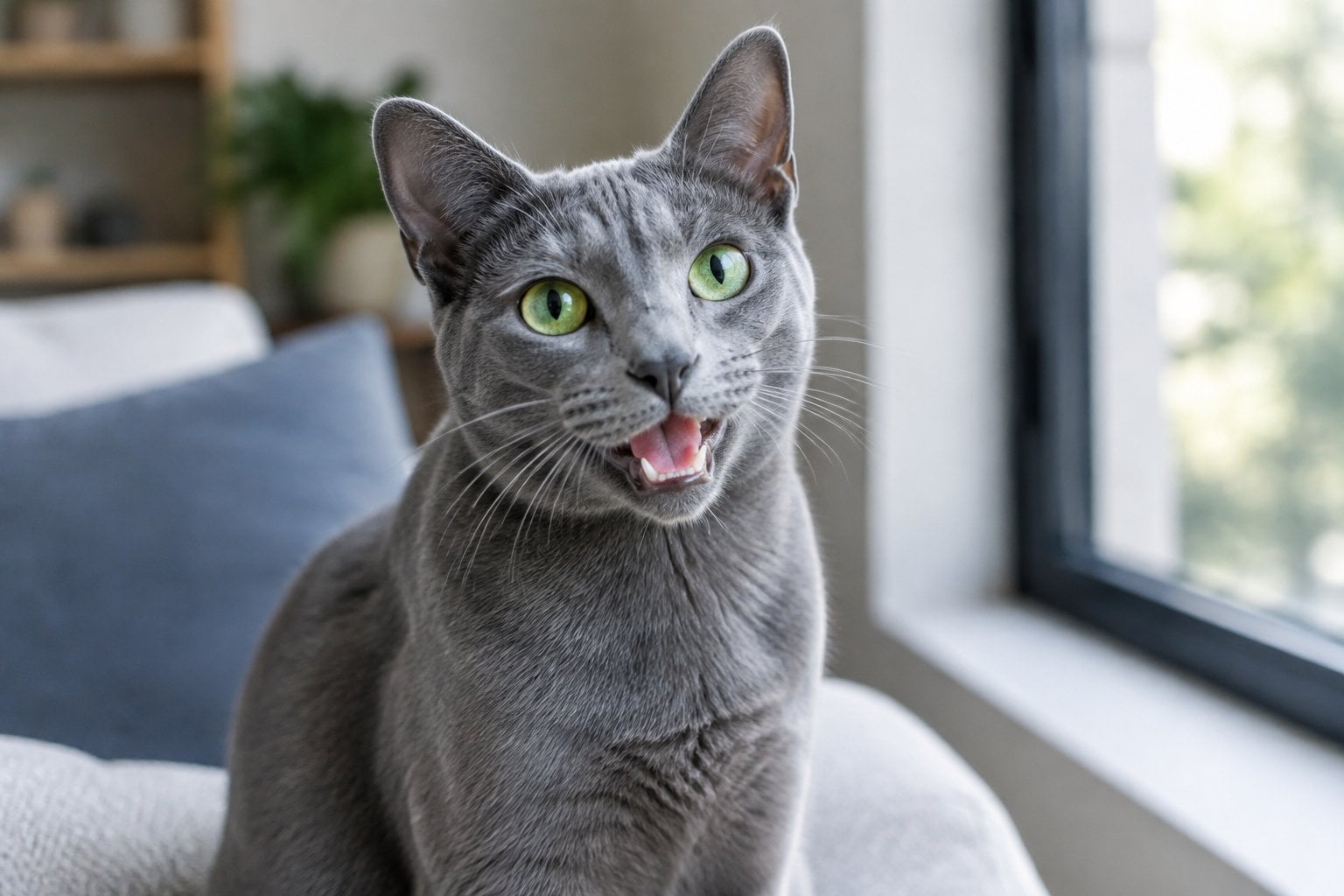
The Korat has a silver-blue coat and green eyes, but its personality often draws more attention than its looks. This breed forms close bonds with its owners and tends to express itself vocally throughout the day.
You’ll notice your Korat meowing when it wants attention, playtime, or food. It can also vocalize simply to stay in contact with you as you move through the house.
Korats don’t tolerate being ignored for long periods. If you work long hours or travel frequently, the meowing may increase as a response to loneliness or boredom.
This breed is intelligent and alert, which means it picks up on changes in routine quickly. Any disruption to its schedule can trigger more vocal communication than usual.
If you prefer a quiet household, the Korat’s talkative nature may test your patience over time.
19. Mekong Bobtail
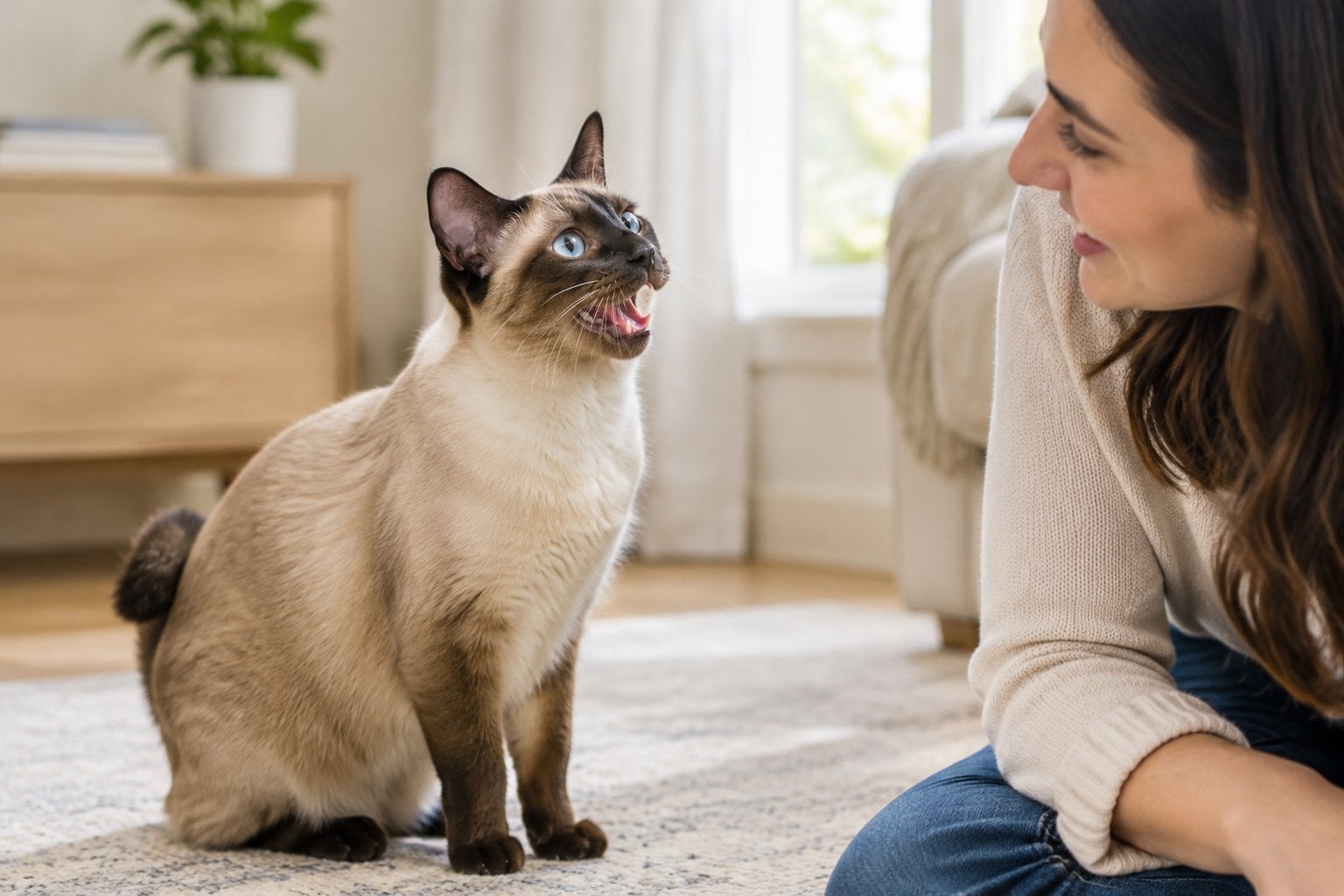
The Mekong Bobtail descends from Siamese ancestors, and that lineage shows clearly in its voice. You’ll notice this breed rarely stays quiet for long, especially when it wants something from you.
This cat uses vocalization as its primary communication tool. If you don’t provide attention, food, or affection on its schedule, you can expect persistent meowing until you respond.
Despite the noise, you’ll find the Mekong Bobtail highly affectionate and people-oriented. It tends to follow you from room to room, often narrating the experience the whole way.
Your lifestyle matters here. If you work long hours or need quiet surroundings, this breed’s demand for interaction may not suit your household.
Owners who enjoy a chatty, people-focused companion tend to do well with this breed. Those seeking a calm, silent cat should look elsewhere.
20. Ocicat
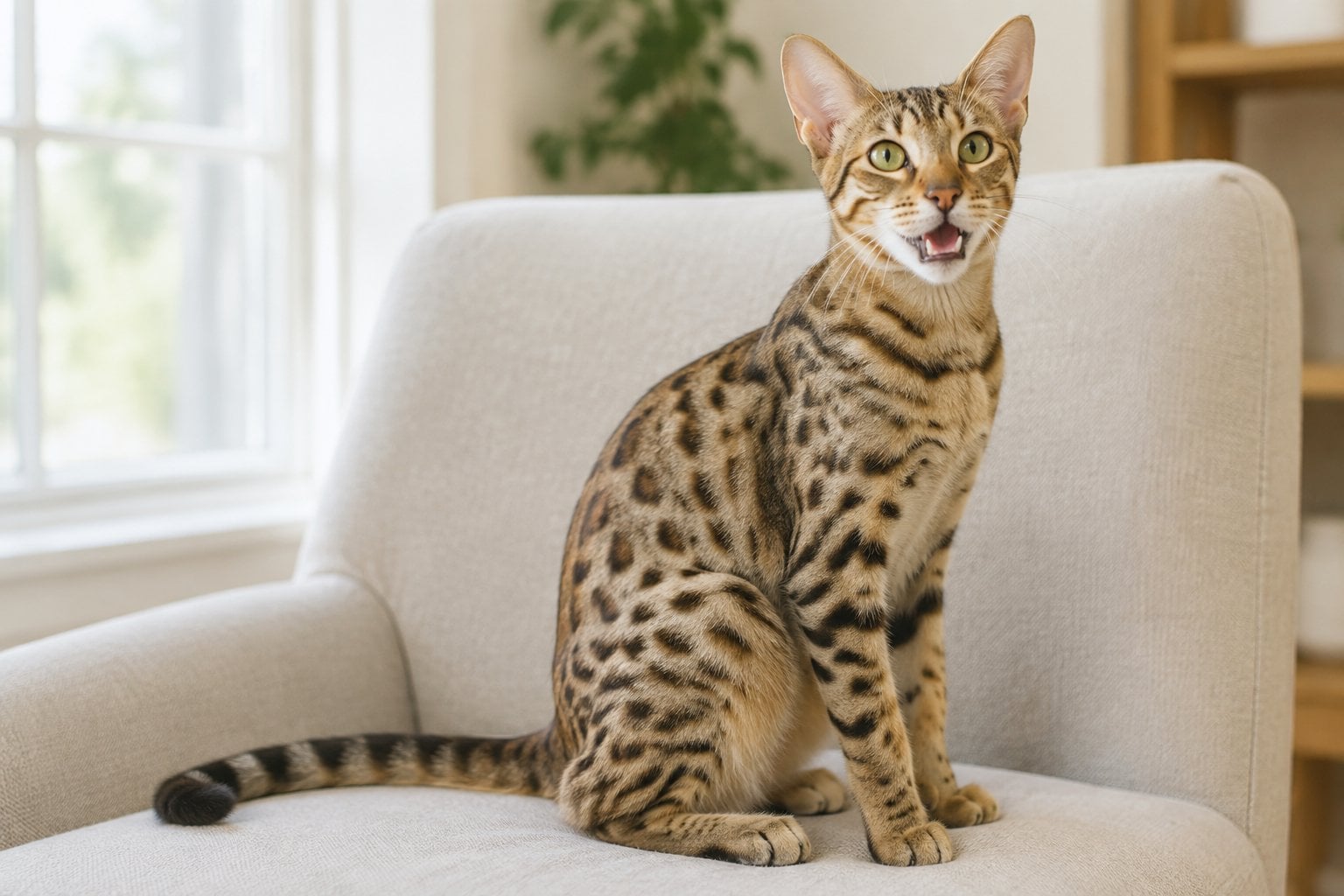
The Ocicat may look like a wild cat, but its voice is anything but quiet. You’ll notice this breed communicates frequently, using a range of meows to express opinions about meals, attention, and daily routines.
This breed forms strong bonds with its owners and doesn’t hesitate to let you know when it wants interaction. Expect chirps, trills, and meows directed at you throughout the day, especially if you’ve been away.
Ocicats are social and intelligent, traits that contribute to their vocal nature. They often meow to initiate play or request that you join in on activities with them.
If you work long hours, you’ll likely come home to a cat eager to catch up through conversation. This breed doesn’t do well with being ignored, and your attempts to focus on other tasks may be interrupted by persistent vocal requests for engagement.
21. Egyptian Mau
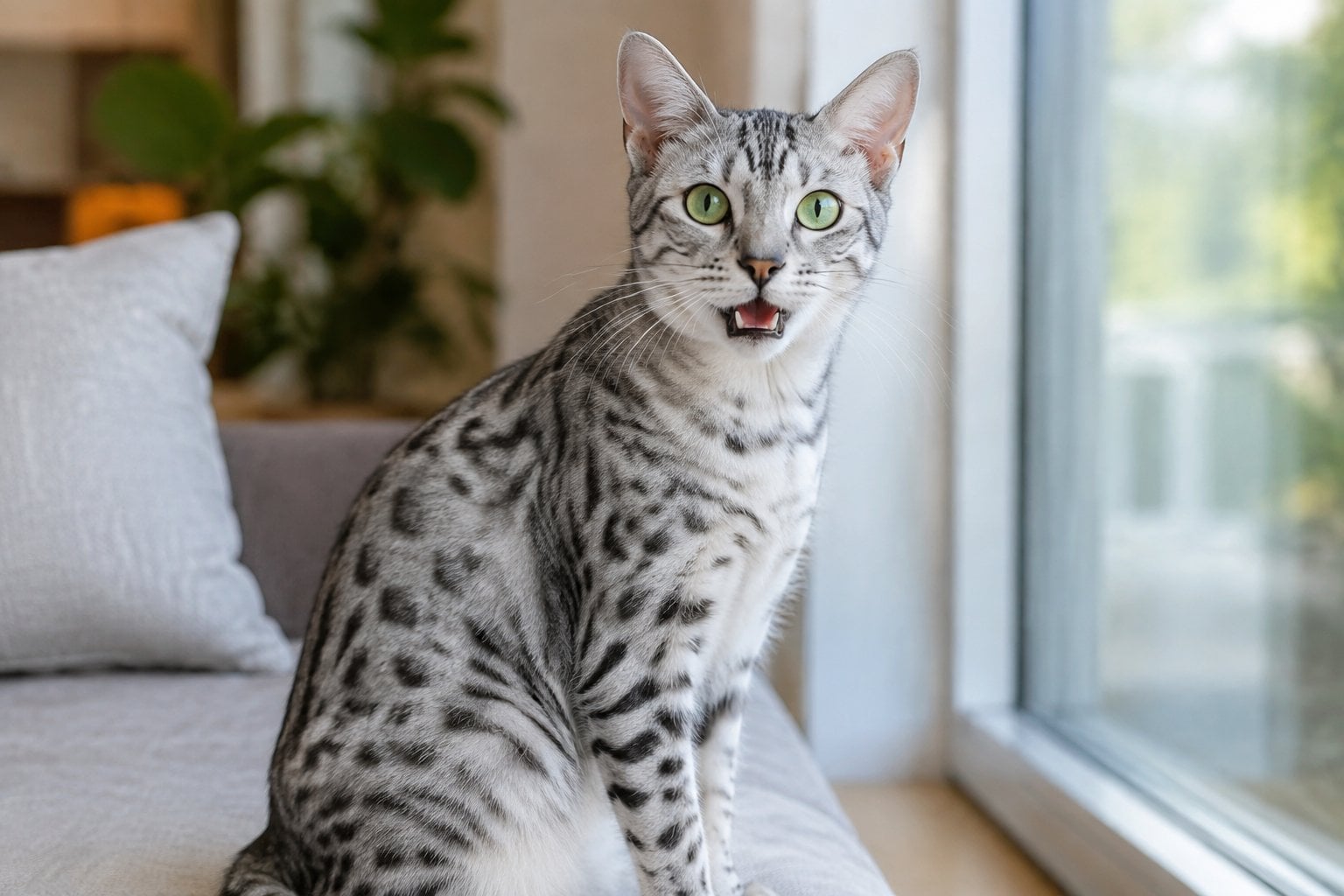
The Egyptian Mau traces back to ancient Egypt, and it hasn’t lost its tendency to communicate through sound. You’ll notice this breed uses a mix of meows and chirps to interact with you throughout the day.
This cat forms strong bonds with its owners, and vocalizing is part of how it expresses affection. If you’re away for long stretches, you may come home to a Mau eager to tell you about it.
Their speed and alertness feed into their vocal habits. You’ll find they often meow when they want attention, want to play, or notice changes in their environment.
If your schedule keeps you out of the house frequently, expect this breed to react to the quiet with increased vocalization. The Mau doesn’t do well with unpredictability, and you’ll likely hear about it.
22. Singapura
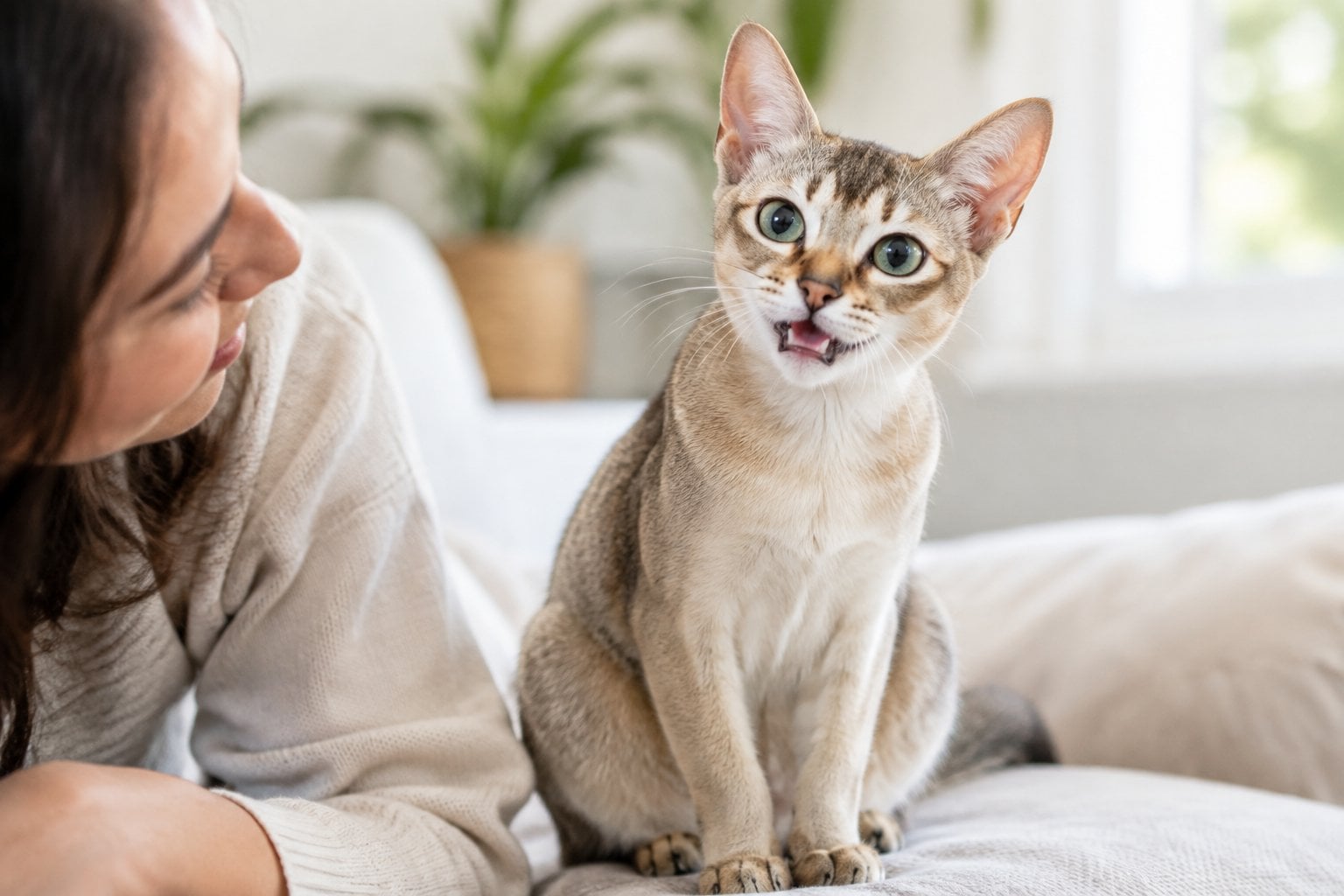
The Singapura is a small, energetic cat with large eyes and a reputation for strong vocal habits. Many owners describe its sounds as chirps rather than typical meows, but the frequency can still catch you off guard.
You’ll notice this breed uses vocalization to express curiosity, excitement, or a desire for attention. It doesn’t stay quiet for long stretches, especially when it wants interaction.
Separation can trigger more vocal episodes. If you work long hours or travel often, you may come home to a cat that’s eager to tell you about its day, loudly.
Singapuras are social by nature, so silence from them can actually be a signal that something’s wrong. Their communication style is persistent, and if you’re sensitive to noise, this breed’s chattiness could wear on you over time.
23. Abyssinian
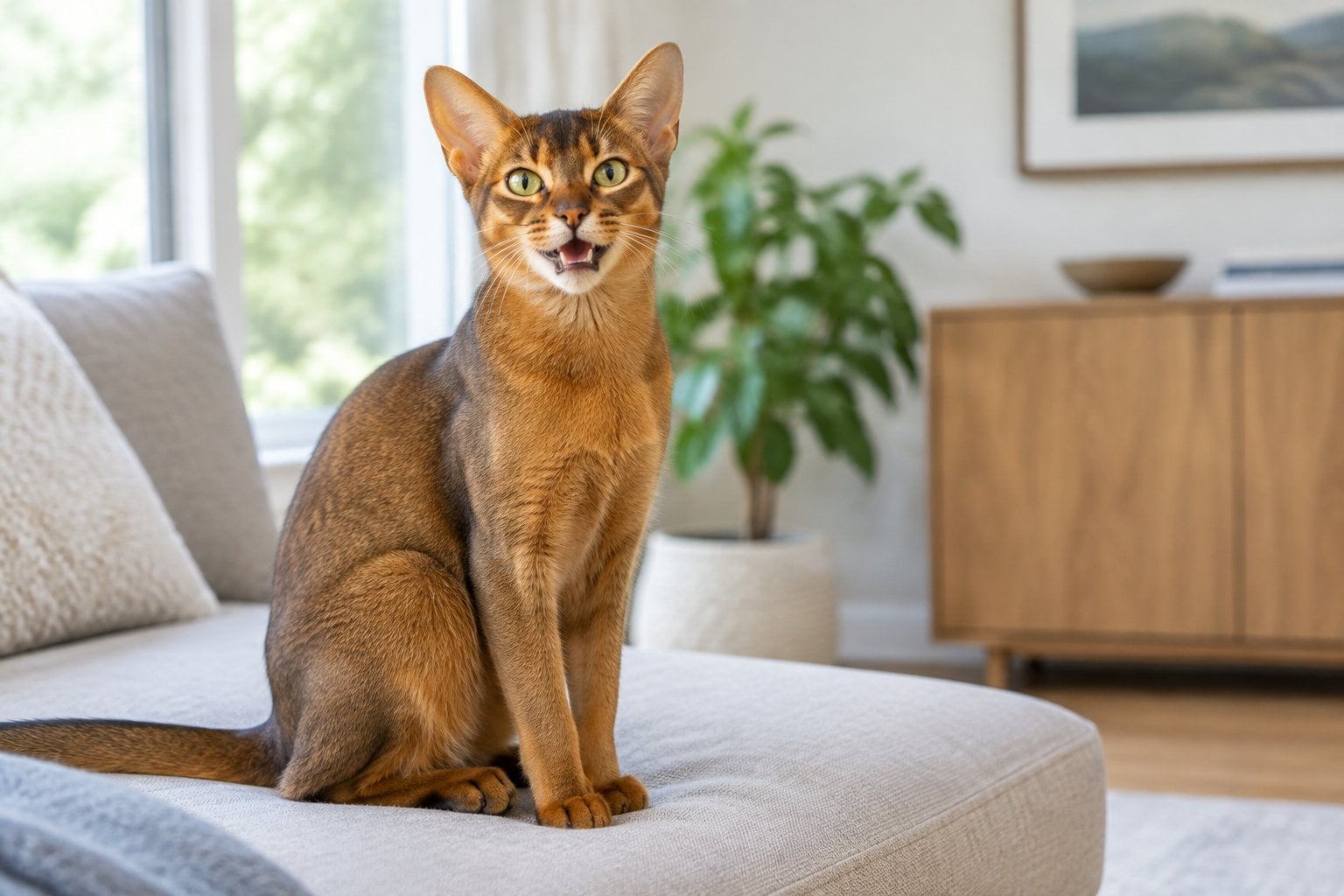
Abyssinians are vocal cats, though not typically in a harsh or grating way. You’ll notice they communicate through soft chirps, trills, and meows rather than loud yowling.
Their vocalizations tend to increase when they want attention, since this breed bonds closely with its owners and dislikes being ignored.
You should expect your Abyssinian to “talk” to you throughout the day, especially during play or when seeking interaction. This breed ranks among the most active and curious cats, and their energy often translates into frequent vocal check-ins.
If you leave an Abyssinian alone for long stretches, you may notice increased meowing out of boredom or a need for stimulation. Providing climbing structures and interactive toys can help reduce this.
Their chattiness isn’t usually excessive compared to breeds known for constant yowling, but you’ll still find them more talkative than quieter breeds like the British Shorthair.
24. Somali
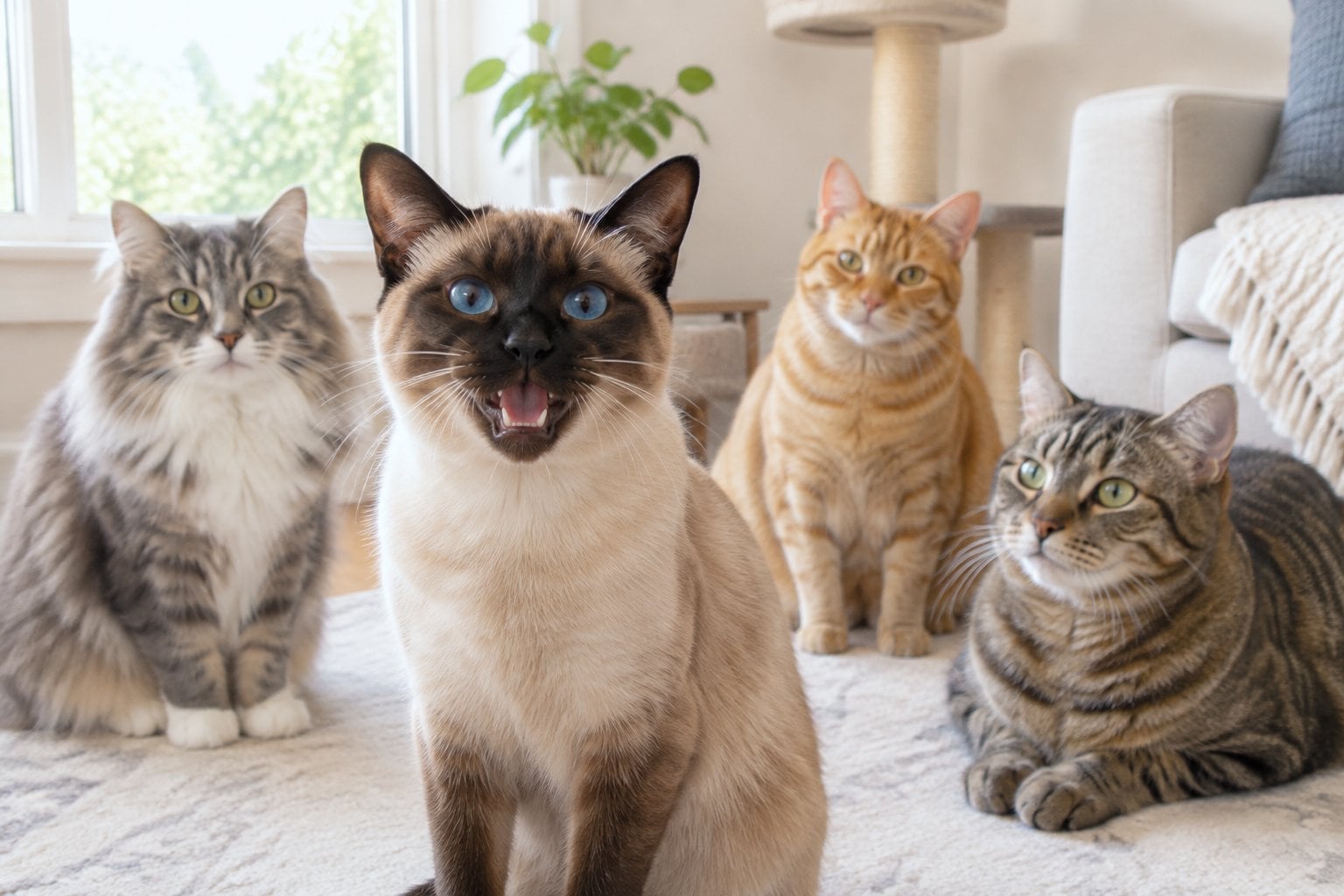
The Somali isn’t typically ranked among the loudest breeds, but you’ll still find it talkative when it wants something. This cat uses meowing, chirping, and other vocalizations to get your attention, especially if it feels ignored.
You’ll notice the Somali is highly social and wants to be involved in whatever you’re doing. If you shut it out of a room or leave it alone for long stretches, expect vocal complaints.
Energy levels play a role here too. This breed needs daily play and mental stimulation, and when those needs go unmet, you may hear about it through persistent calling.
Individual personality varies more with Somalis than with some other breeds. Some stay relatively quiet, while others meow frequently to communicate wants and needs. If you’re drawn to this breed, be prepared for a cat that expects your engagement and will tell you when it’s not getting enough.
25. Thai
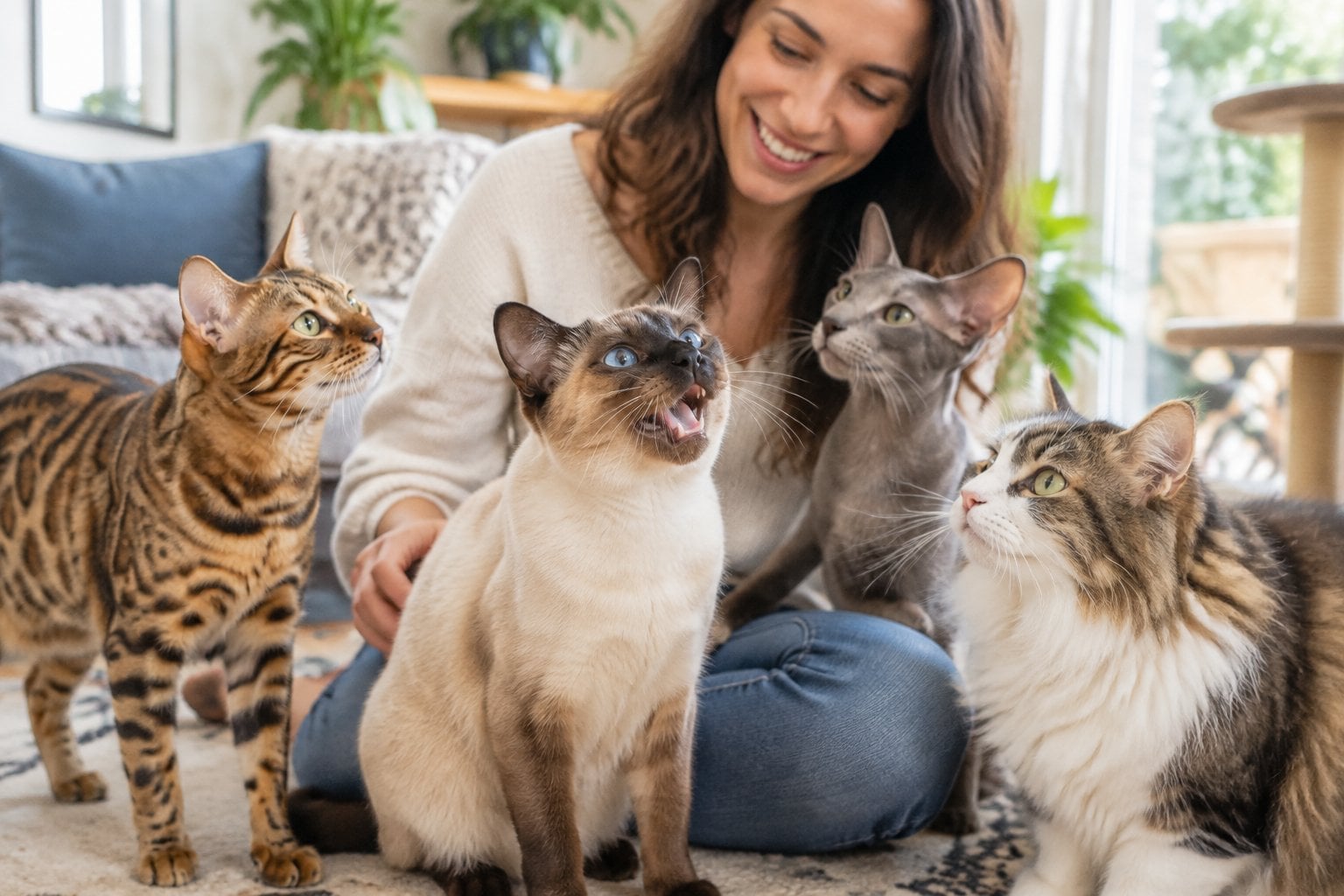
The Thai cat is a close relative of the traditional Siamese, and it shares that breed’s talkative nature. If you bring one home, expect a steady stream of meows throughout the day.
This breed communicates through vocalization more than most. You’ll hear opinions about mealtimes, your schedule, and even your location in the house.
Thai cats form strong bonds with their owners and use their voices to maintain contact. When you’re in another room, your cat may call out until you respond or come find it.
Their meows carry a wide range of tones, from soft chirps to louder, more insistent calls. You’ll need patience to handle the vocal demands this breed brings.
If you prefer a quiet household, the Thai’s constant commentary may wear on you. This breed suits owners who enjoy frequent interaction and don’t mind a vocal companion.
26. Havana Brown
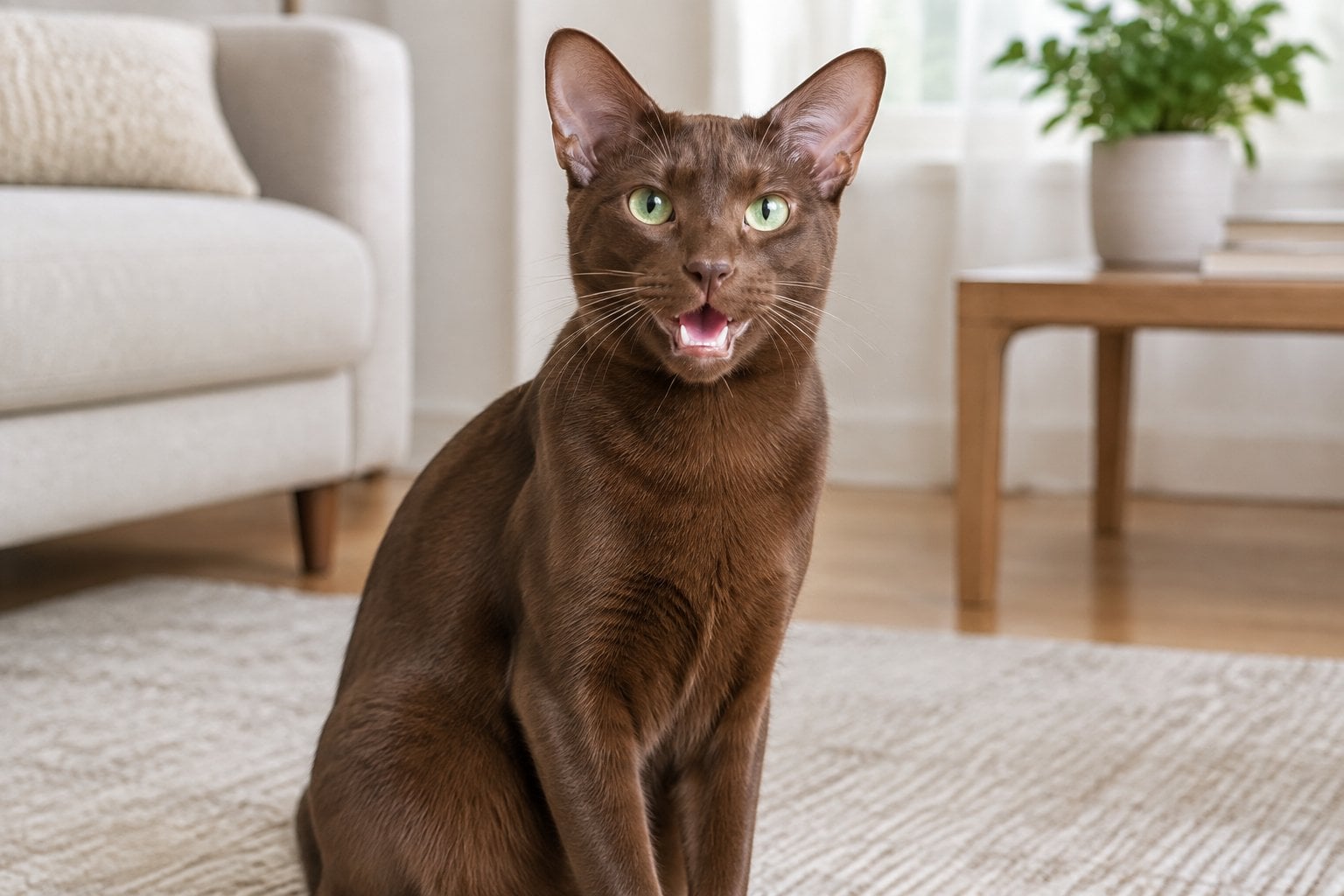
The Havana Brown has a reputation for being chatty, with a soft, distinctive voice that owners often describe as unusual compared to typical cat sounds.
You’ll likely notice this breed vocalizing to get your attention, especially when it wants to play or be near you. These cats bond closely with their owners, and meowing is often how they communicate that preference.
Boredom can trigger more frequent vocalizing in Havana Browns. They’re intelligent and curious, so a lack of mental stimulation may lead to more calling out than you’d expect.
Not every source agrees on how vocal this breed truly is. Some describe them as moderately talkative rather than excessive, with noise levels depending heavily on individual temperament and upbringing.
If you choose a Havana Brown, expect a cat that communicates often and clearly prefers interaction over independence.
27. Khao Manee
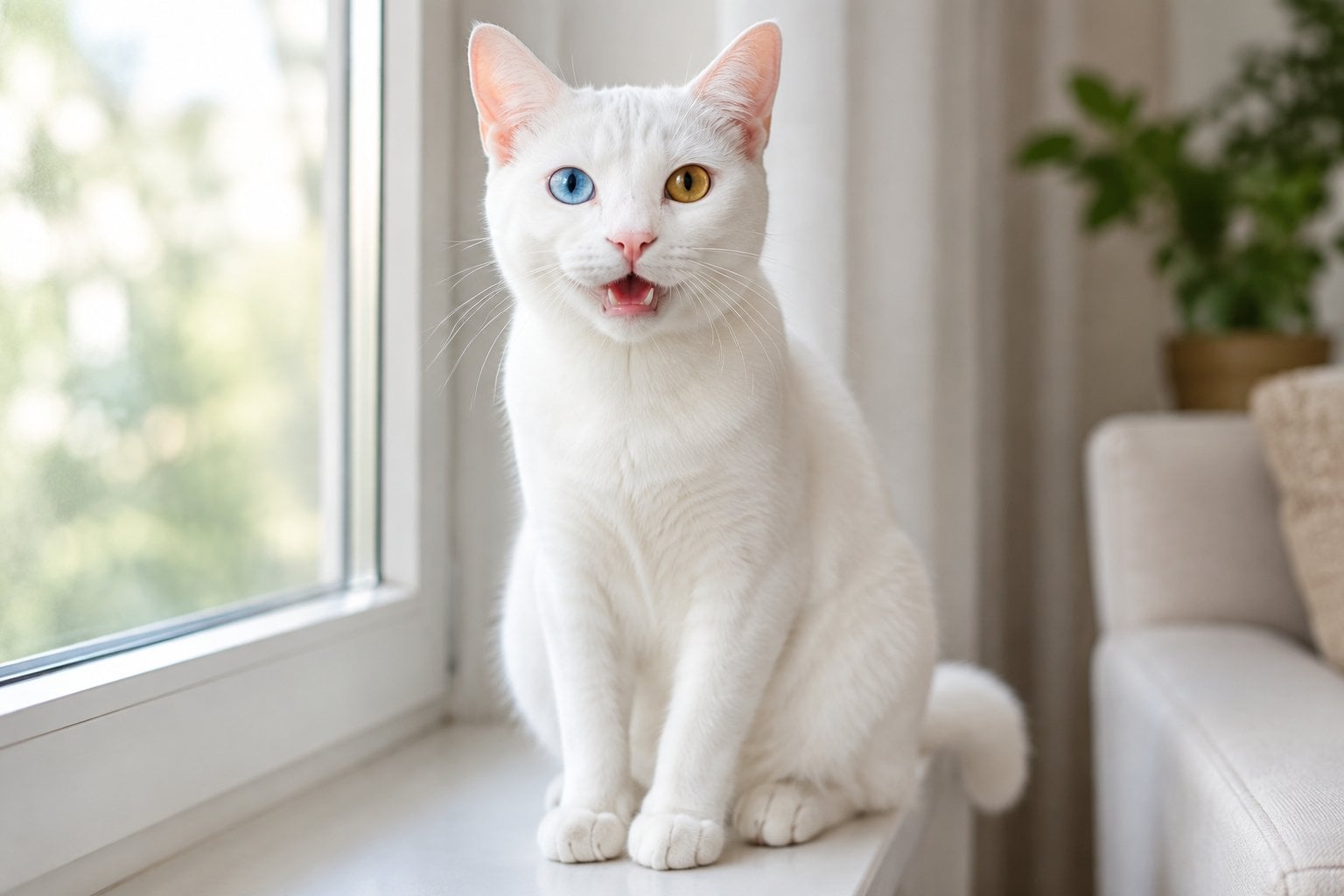
The Khao Manee comes from Thailand, where breeders have kept the lineage pure for centuries. You’ll recognize this breed by its solid white coat and striking eyes, which are often two different colors.
This cat doesn’t stay quiet for long. You’ll hear a wide range of sounds, from soft chirps to loud, demanding calls when it wants your attention.
Intelligence drives much of this vocal behavior. You’re dealing with a breed that thinks through problems and expects you to respond when it communicates.
Expect your Khao Manee to follow you around the house, commenting on your activities along the way. It won’t settle for being ignored, and it treats silence as something to fill.
If you want a cat that interacts constantly, this breed delivers. If you prefer quiet, you’ll find the Khao Manee’s chattiness hard to ignore.
28. Maine Coon
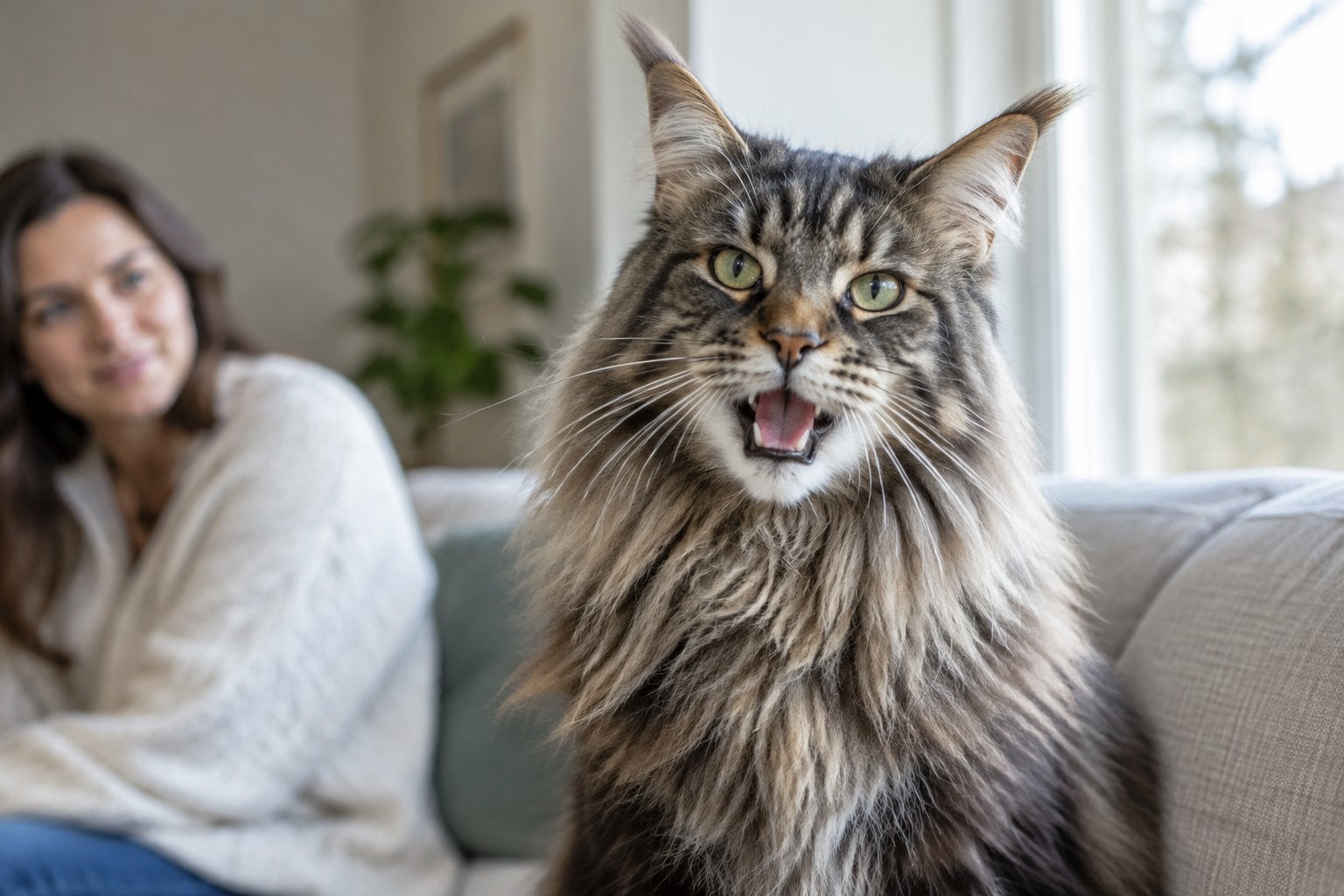
Maine Coons are large, sociable cats, and they tend to communicate more than you might expect from their size. Instead of loud yowling, you’ll typically hear chirps, trills, and short meows that sound almost like questions.
You’ll notice these sounds most when you’re busy or out of the room. Maine Coons bond closely with their owners and often vocalize to get your attention or check in with you throughout the day.
If you respond every time your Maine Coon chirps or trills, you reinforce the habit. The cat learns that vocalizing brings quick results, so it keeps doing it.
While the volume isn’t usually excessive, the frequency can feel constant if you’re not used to a chatty cat. If you prefer a quiet companion, you should know this breed likes to stay in conversation with you.
29. Siberian
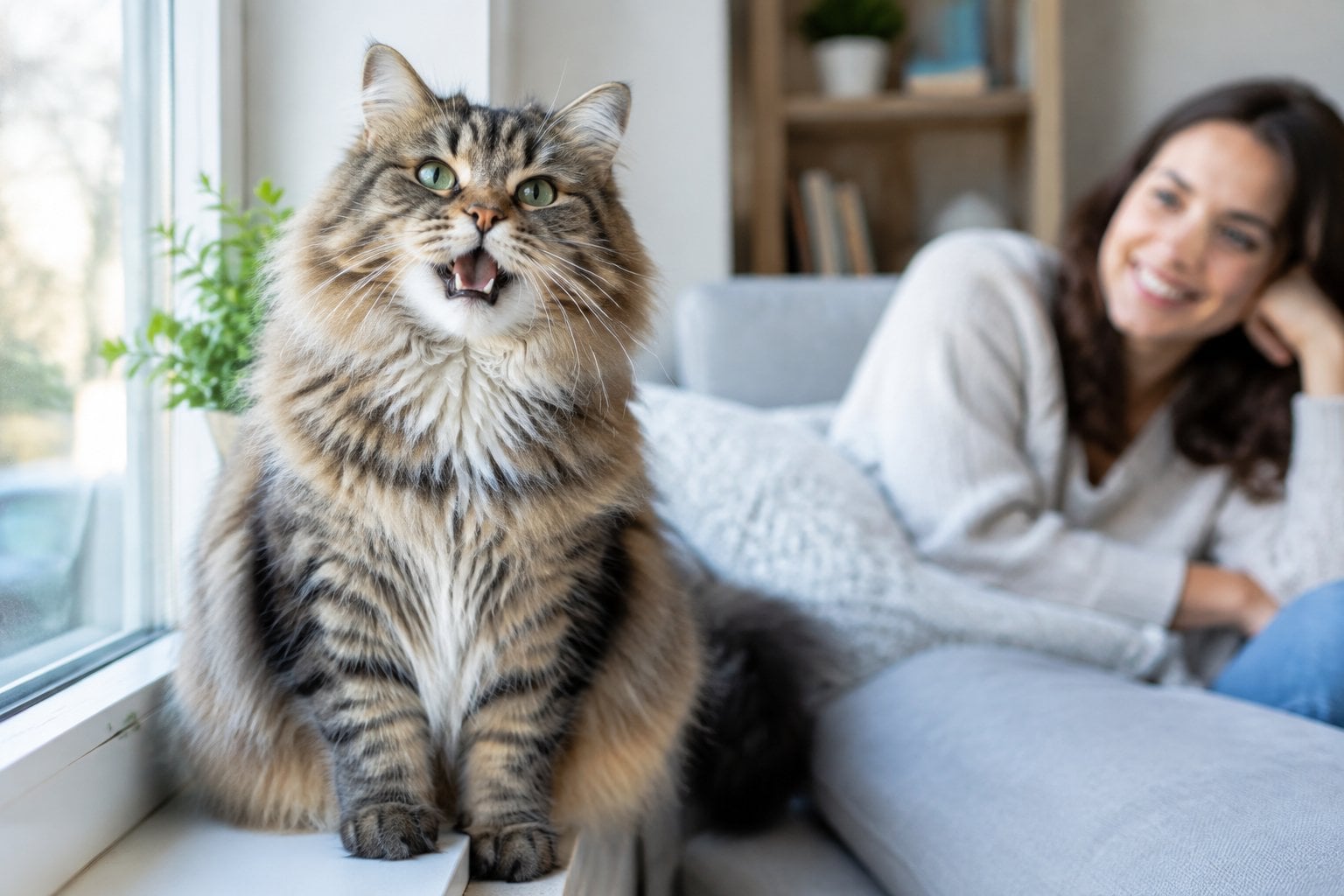
Siberians rank among the more vocal cat breeds, though the amount varies between individual cats. You’ll notice they speak up most around play, feeding time, and when they want physical affection.
Once you learn your cat’s patterns, the meowing tends to become more predictable and easier to manage. These cats are also highly active and intelligent, so a lack of mental stimulation can increase vocal demands for attention.
If your Siberian’s meowing suddenly increases or changes in tone, treat it as a signal worth investigating rather than typical breed behavior. Siberians don’t usually meow excessively without a reason, so persistent vocalization may point to an underlying issue, such as stress, boredom, or a health concern.
Addressing the root cause, rather than the noise itself, will give you better results and a more content cat.
30. Ragdoll
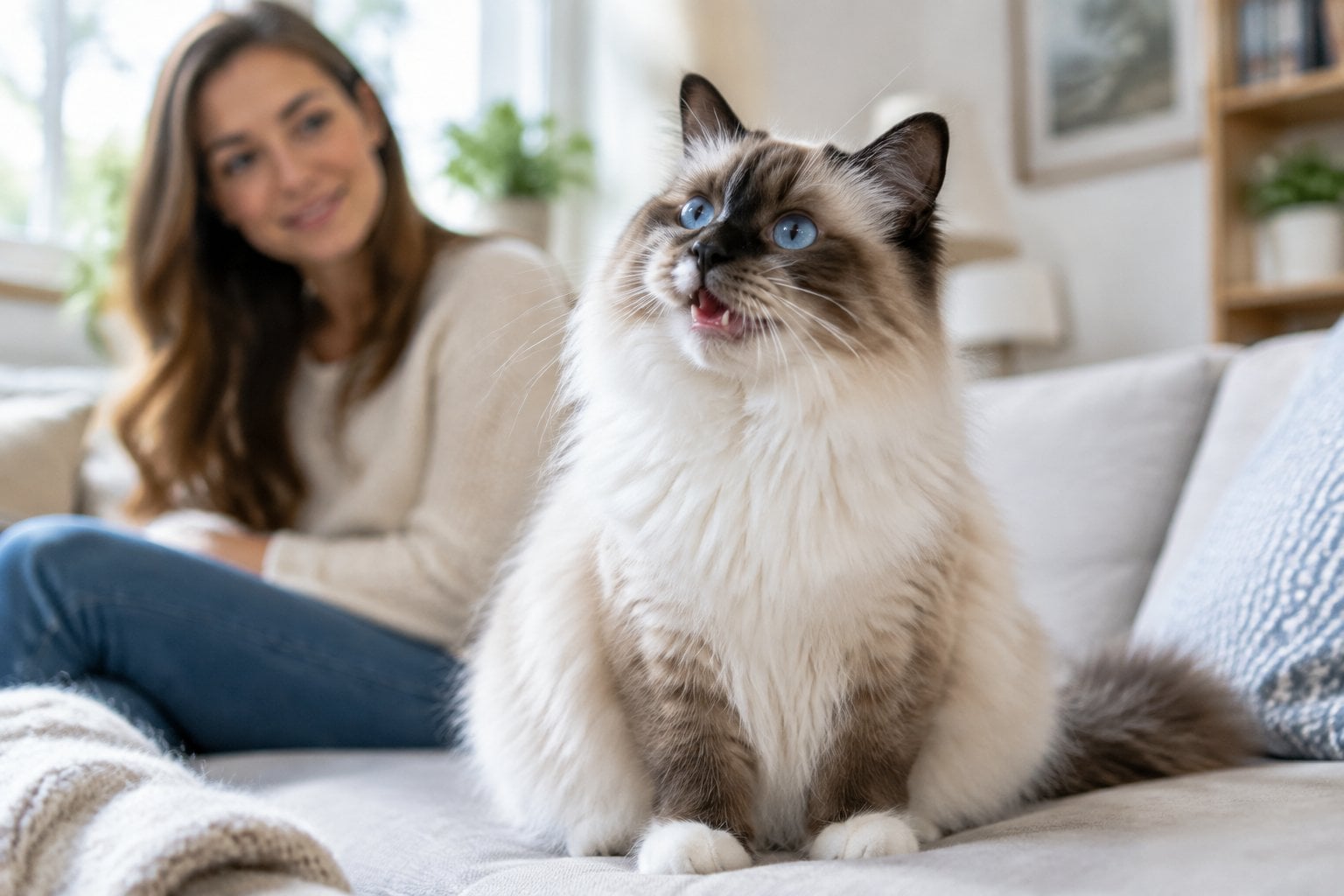
The Ragdoll is known for a calm, affectionate temperament, which is why it ranks last on this list. You won’t typically deal with constant meowing from this breed under normal circumstances.
When a Ragdoll does vocalize more than usual, it’s often a signal you should pay attention to. Common triggers include hunger, loneliness, stress, or an underlying health issue.
Ragdolls form strong attachments to their owners, so separation anxiety can sometimes cause an increase in vocalization. If your cat is spayed or neutered, you can rule out heat-related meowing as a cause.
You should monitor any sudden change in your Ragdoll’s vocal habits. A normally quiet cat that starts meowing frequently may be trying to communicate a specific need rather than exhibiting typical breed behavior.
Why Some Cats Vocalize More Than Others
Vocalization depends on genetics, breed background, and the individual cat’s personality. You can also learn to read specific sounds, since different vocal patterns often signal different needs or emotional states.
Breed Tendencies Versus Individual Personality
Breed genetics set a baseline for vocal behavior. Oriental breeds like the Siamese and Tonkinese were selectively bred for strong vocal traits, so you’ll typically hear more meowing from them than from a British Shorthair or Persian.
That said, breed is not the only factor at play. Two cats of the same breed can have very different vocal habits based on temperament alone.
A confident, socially engaged cat tends to meow more to interact with you, while a reserved or independent cat may stay quiet most of the day. Your own responses also shape this behavior over time.
If you consistently respond to meowing with attention or treats, your cat learns that vocalizing gets results. This learned behavior can override typical breed expectations in either direction.
What Different Meows Can Communicate
Cats use distinct vocal patterns to convey different messages, and learning to distinguish them helps you respond appropriately:
- Short, single meows – a greeting or simple acknowledgment
- Long, drawn-out meows – a demand, often for food or attention
- Low-pitched meows – complaint or displeasure
- High-pitched meows – pain, fear, or urgency
- Chirps and trills – excitement, often directed at you or at prey outside a window
- Repeated rapid meowing – stress or a persistent request you haven’t yet addressed
Context matters as much as pitch or length. A cat meowing at the food bowl communicates something different than the same sound made at a closed door.
Paying attention to when and where your cat vocalizes gives you better insight than the sound alone.
Managing Frequent Meowing
Vocal cats typically respond well to consistent routines, mental stimulation, and prompt attention to their physical needs. A sudden increase in meowing that doesn’t match known patterns deserves closer attention, since it can signal a health issue rather than a behavioral one.
Meeting Needs for Attention and Enrichment
You can reduce excessive meowing by addressing the root cause rather than the noise itself. Schedule two or three short play sessions daily using wand toys or puzzle feeders to burn off energy and satisfy hunting instincts.
Set a consistent feeding schedule, since hunger-driven meowing often spikes when meals are delayed or inconsistent. Cats from vocal breeds, including Siamese and Burmese, tend to need more one-on-one interaction than quieter breeds.
Try these approaches:
- Rotate toys weekly to maintain interest
- Install a window perch for outdoor viewing
- Use automatic feeders for consistent meal timing
- Avoid responding to demand-meowing with immediate attention, which reinforces the behavior
Reward quiet moments with treats or affection instead.
When a Change in Vocalization Warrants a Vet Visit
You should schedule a vet appointment if your cat’s meowing pattern shifts suddenly or becomes noticeably louder or more frequent. Hyperthyroidism and cognitive dysfunction are two documented medical causes of increased vocalization, particularly in cats over ten years old.
Your vet can run bloodwork to rule out thyroid or kidney disease. Don’t assume age alone explains the change, since treatable conditions often present with vocalization as an early sign.


