
The 30 Largest Cat Breeds in the World: Sizes, Traits, and Care Essentials
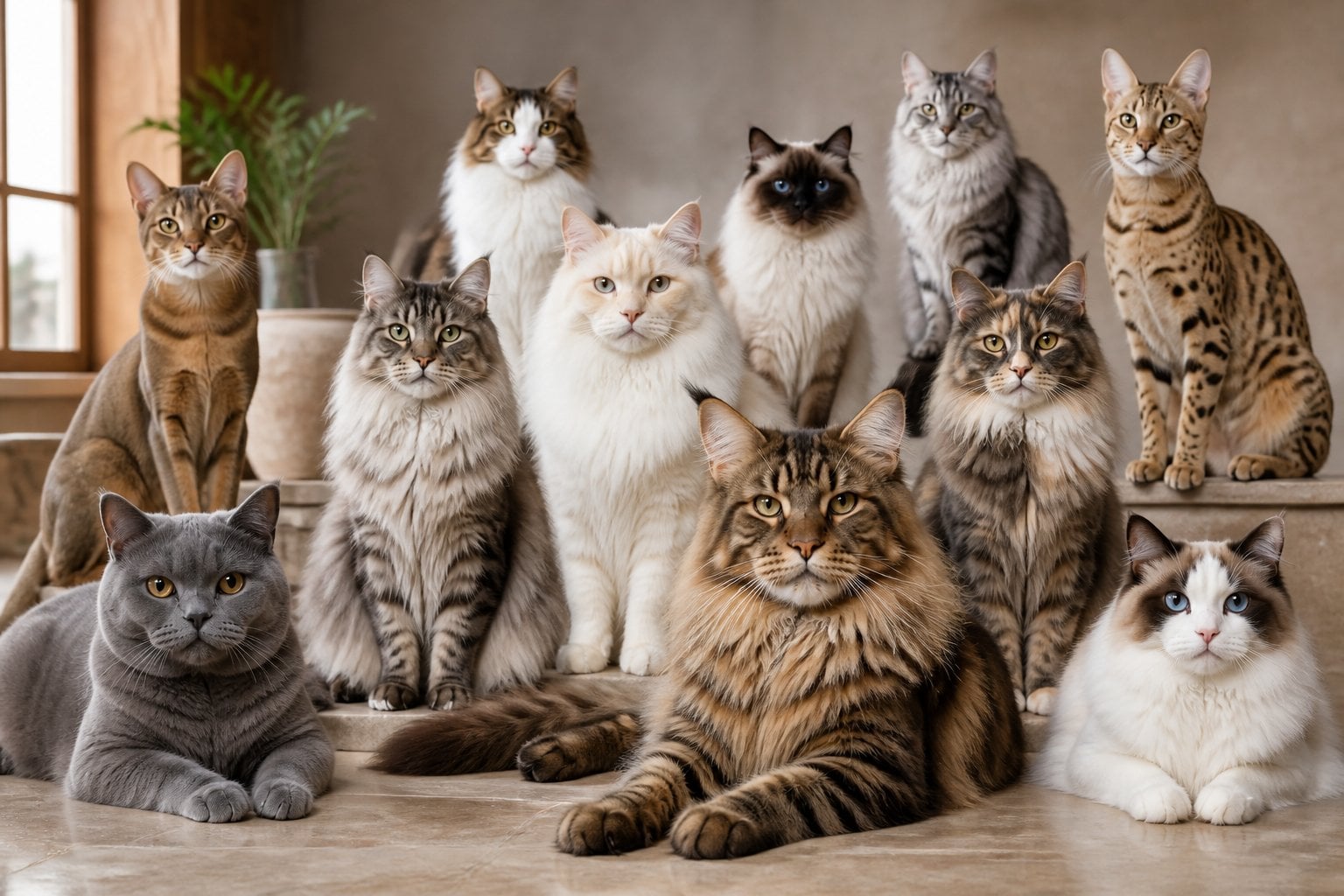
Not every house cat fits in your lap. Some breeds grow to the size of a small dog, with adult weights reaching 20 pounds or more and body lengths that stretch across a couch cushion.
The largest cat breeds include the Maine Coon, Savannah, Ragdoll, Siberian, Norwegian Forest Cat, and Chausie, along with two dozen others that regularly exceed the 10-pound average for domestic cats.
These breeds range from long-established natural varieties to more recent wildcat hybrids.
Below, you’ll find 30 of the biggest cat breeds, with details on their typical size, temperament, and what owning one involves.
1. Maine Coon
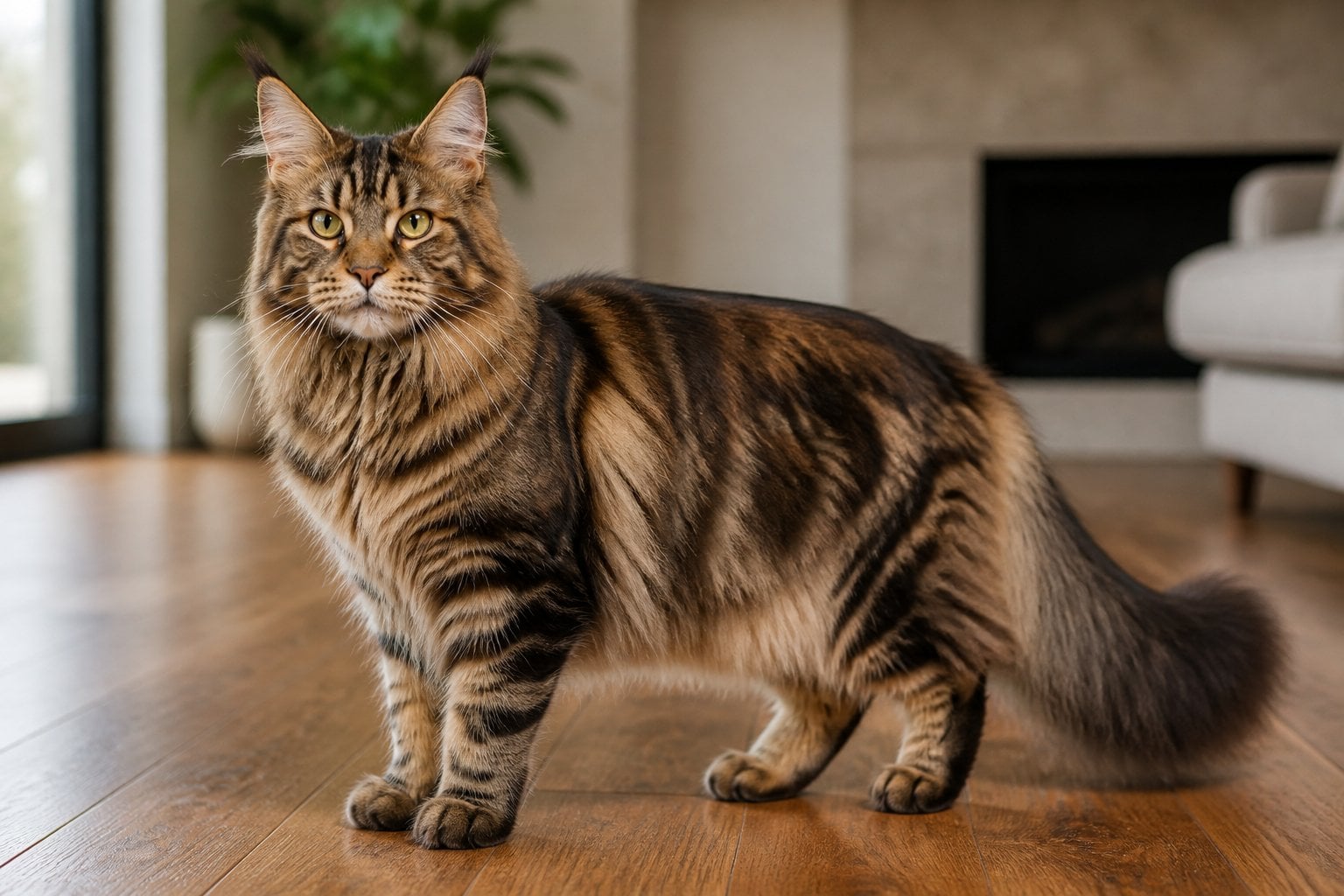
The Maine Coon tops most size rankings among domestic cats, and for good reason. Males typically weigh 15 to 25 pounds, while females usually fall between 10 and 15 pounds. Some individuals exceed 30 pounds, though that is well above the breed standard.
Length is where this breed really stands out. A Maine Coon named Stewie measured 48.5 inches from nose to tail tip, setting a Guinness World Record in 2010.
You’ll notice the breed grows slowly. Most Maine Coons don’t reach full size until three to five years of age, which is longer than the one to two years typical of other cats.
Originating in Maine, where it serves as the official state cat, this breed carries a long, water-resistant coat and a heavily furred tail.
Despite the size, they’re known as gentle giants. Expect a sociable, even-tempered companion that tolerates handling and family activity well.
2. Savannah
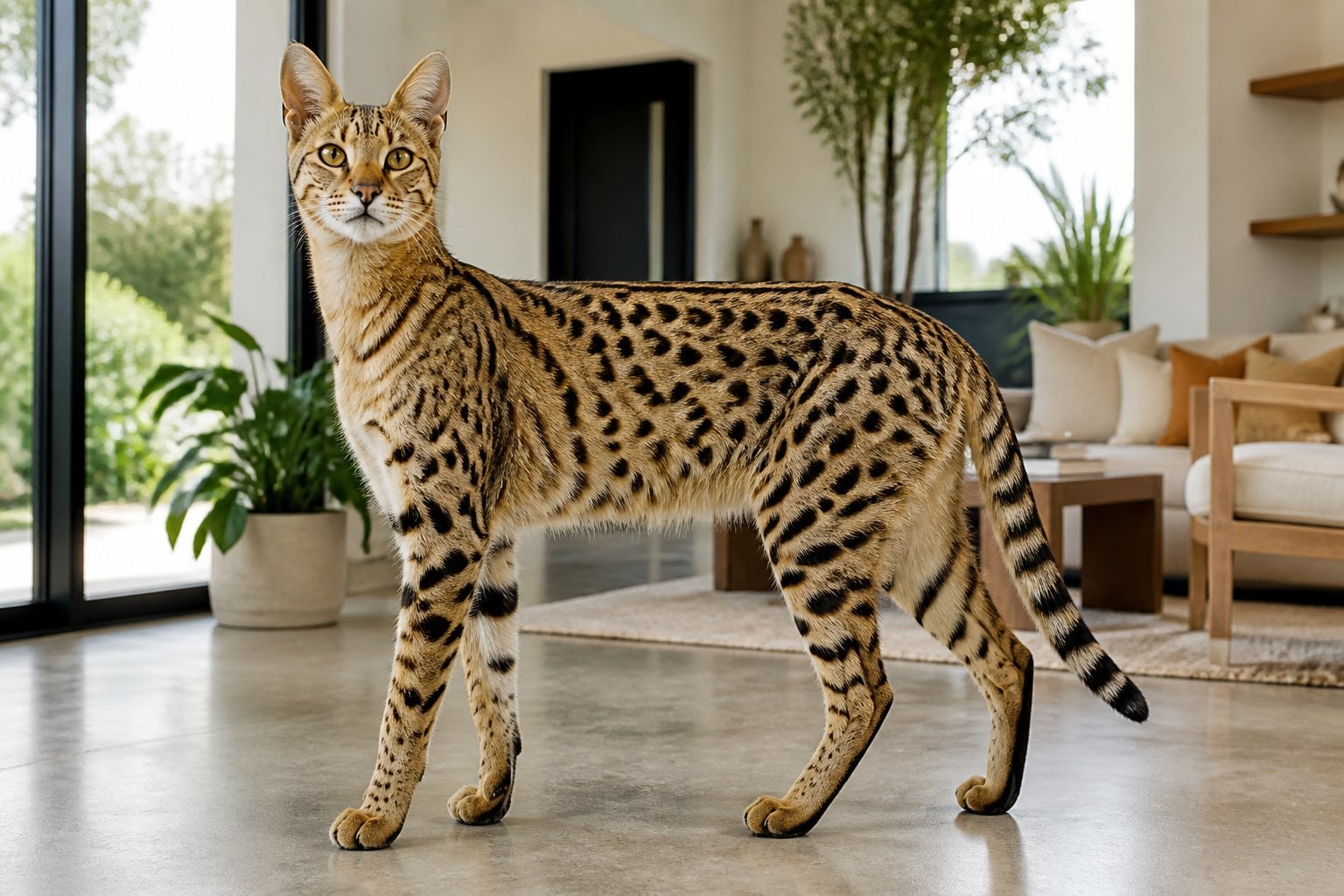
The Savannah is a hybrid breed, created by crossing an African serval with a domestic cat. That wild ancestry shows in the long legs, oversized ears, and bold spotted coat you’ll see in most examples of the breed.
Height is where the Savannah stands out. Tall individuals reach roughly 16 to 17 inches at the shoulder, and the breed has held a Guinness World Record for the tallest domestic cat.
Weight varies widely by generation. Most Savannahs fall between 11 and 20 pounds, with the heaviest figures belonging to early-generation F1 and F2 males.
You should know that ownership isn’t straightforward. Early generations are restricted or banned in some states and countries, so check your local regulations before you commit.
Expect an active, curious cat that climbs, jumps, and often enjoys water. Savannahs need space, stimulation, and consistent interaction to stay content.
3. Ragdoll
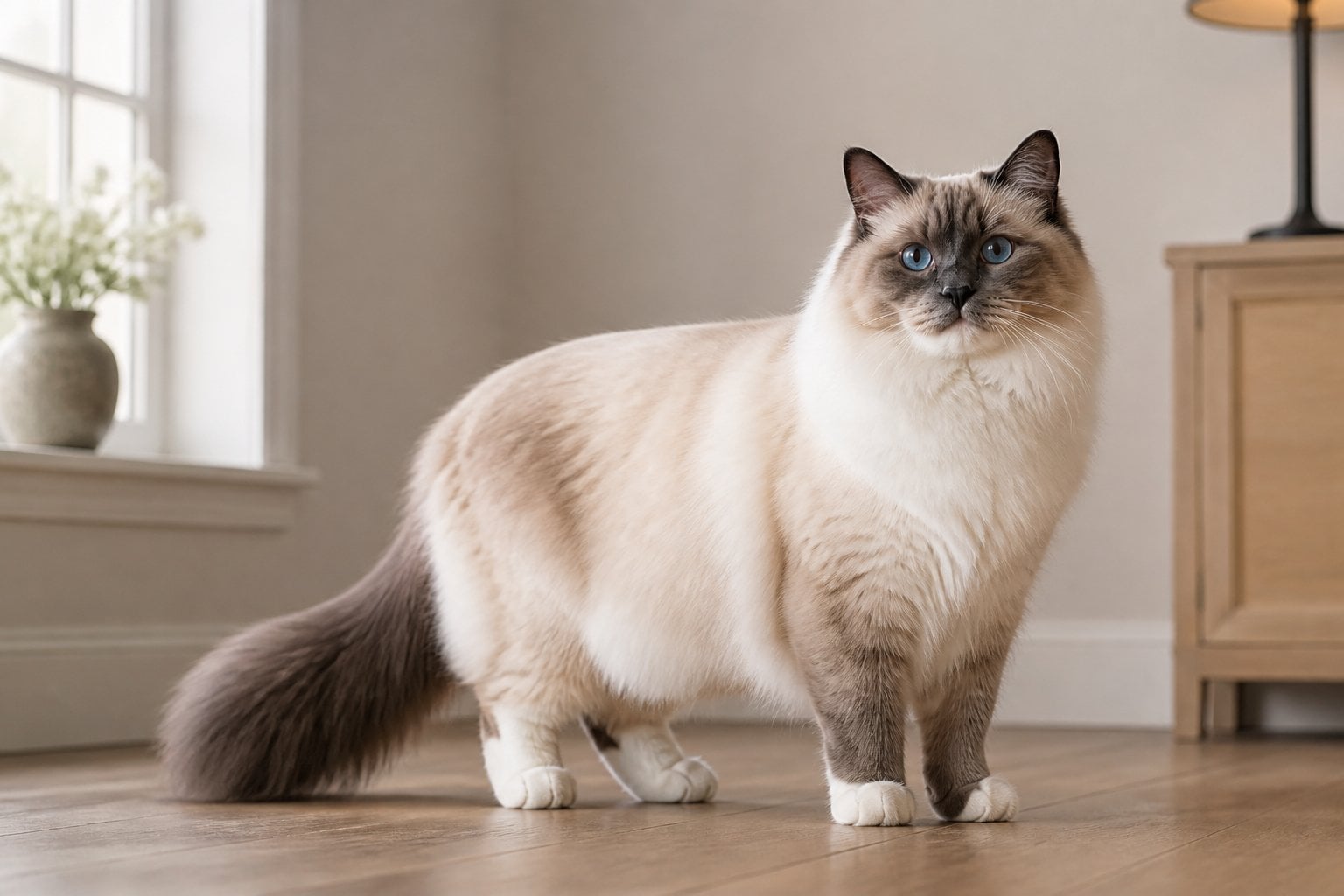
The Ragdoll ranks among the largest domestic cat breeds, with males typically weighing 15 to 20 pounds and females falling between 10 and 15 pounds. Their heavy bone structure and broad chest add to the impression of size, as does the semi-long, silky coat.
Expect a slow growth curve. Ragdolls often need three to four years to reach full size and coat density, so a one-year-old cat is still filling out.
The name refers to the tendency many Ragdolls have to relax completely when you pick them up. Combined with their calm temperament, this makes handling a large cat more manageable than you might assume.
Ann Baker developed the breed in California during the 1960s, selecting for docile behavior alongside the colorpoint coat and blue eyes.
For comparison, a Siamese male usually weighs 8 to 12 pounds — roughly half what a large Ragdoll male carries.
4. Ragamuffin
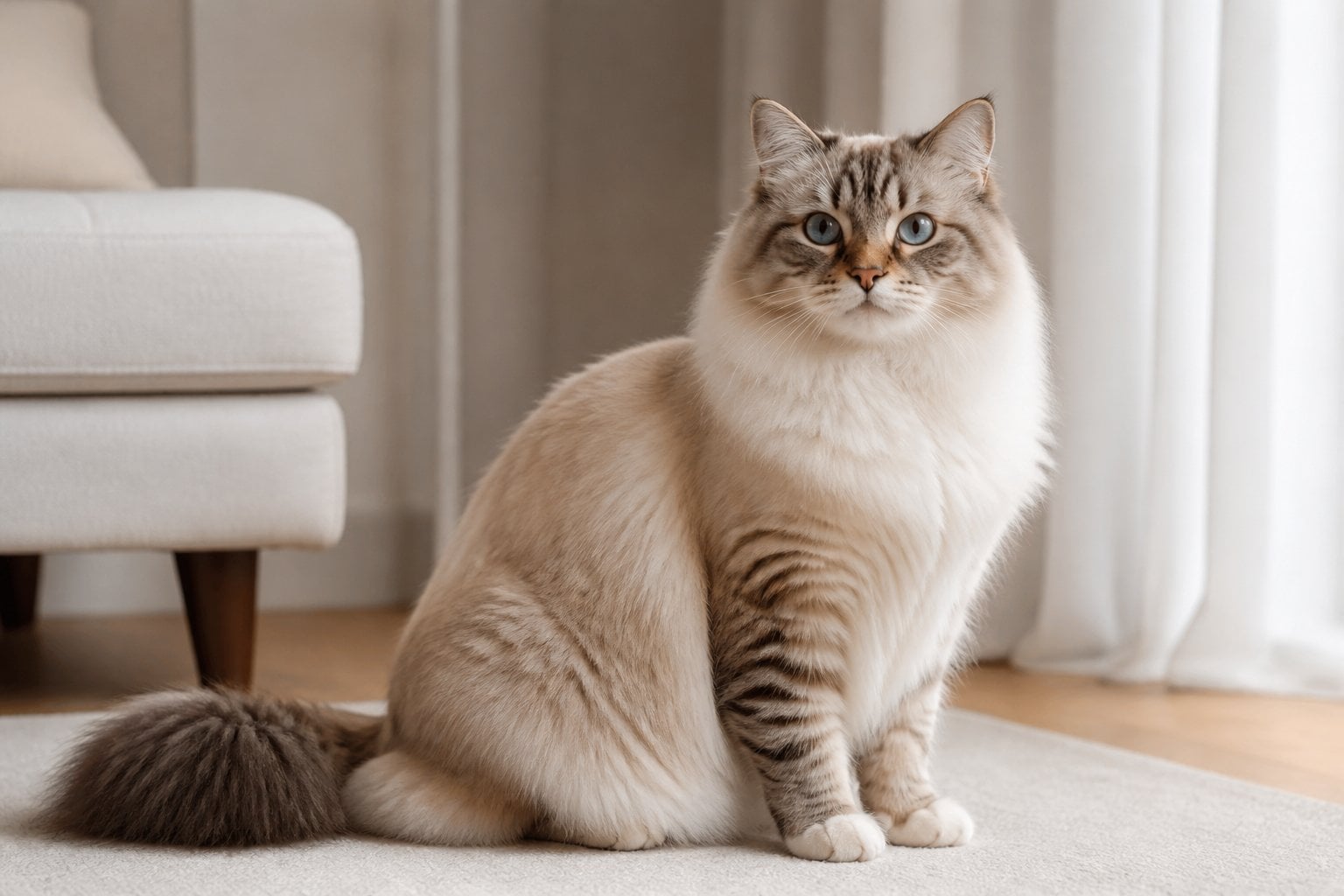
The Ragamuffin is a large, longhaired breed that shares ancestry with the Ragdoll. It was recognized as a separate breed in 1994, after breeders worked to broaden the gene pool and introduce more colors and patterns.
Expect males to weigh between 15 and 20 pounds, while females typically reach 10 to 15 pounds. Height generally falls between 9 and 11 inches at the shoulder.
You’ll notice the breed takes time to mature. Ragamuffins often need four to five years to reach their full size and weight, so a young cat may not indicate its adult dimensions.
The coat is thick and soft, sometimes described as rabbit-like in texture. Despite the length, it resists matting better than many longhaired breeds, though weekly brushing is still recommended.
If you want a sizeable cat that tolerates handling well, the Ragamuffin’s calm, people-oriented temperament makes it a practical choice for households with children.
5. Norwegian Forest Cat
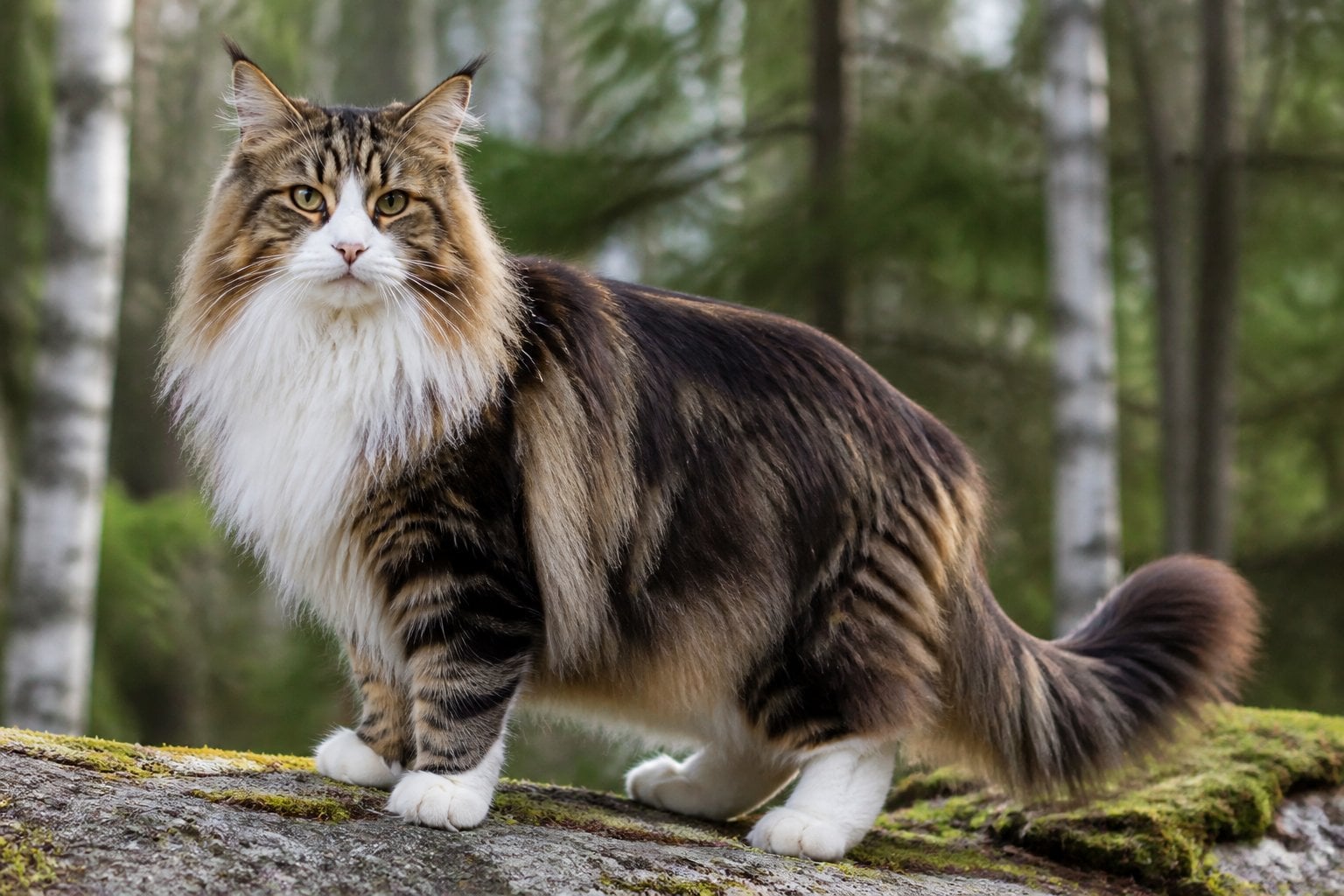
Known as the “skogkatt” in its homeland, the Norwegian Forest Cat developed as a landrace breed in Northern Europe, where cold winters shaped its build.
You’ll notice the coat first. A long, water-resistant topcoat sits over a woolly undercoat, giving these cats insulation against harsh weather and a fuller silhouette than their frame alone would suggest.
Males typically weigh between 13 and 22 pounds, while females usually range from 8 to 12 pounds. Body length often reaches 12 to 18 inches, not counting the tail.
Growth takes time with this breed. Wegies generally keep filling out until around five years of age, so a young adult may still gain size and muscle well past its first birthday.
Their history is often linked to Viking voyages, though much of that connection comes from folklore rather than documented record.
6. Siberian
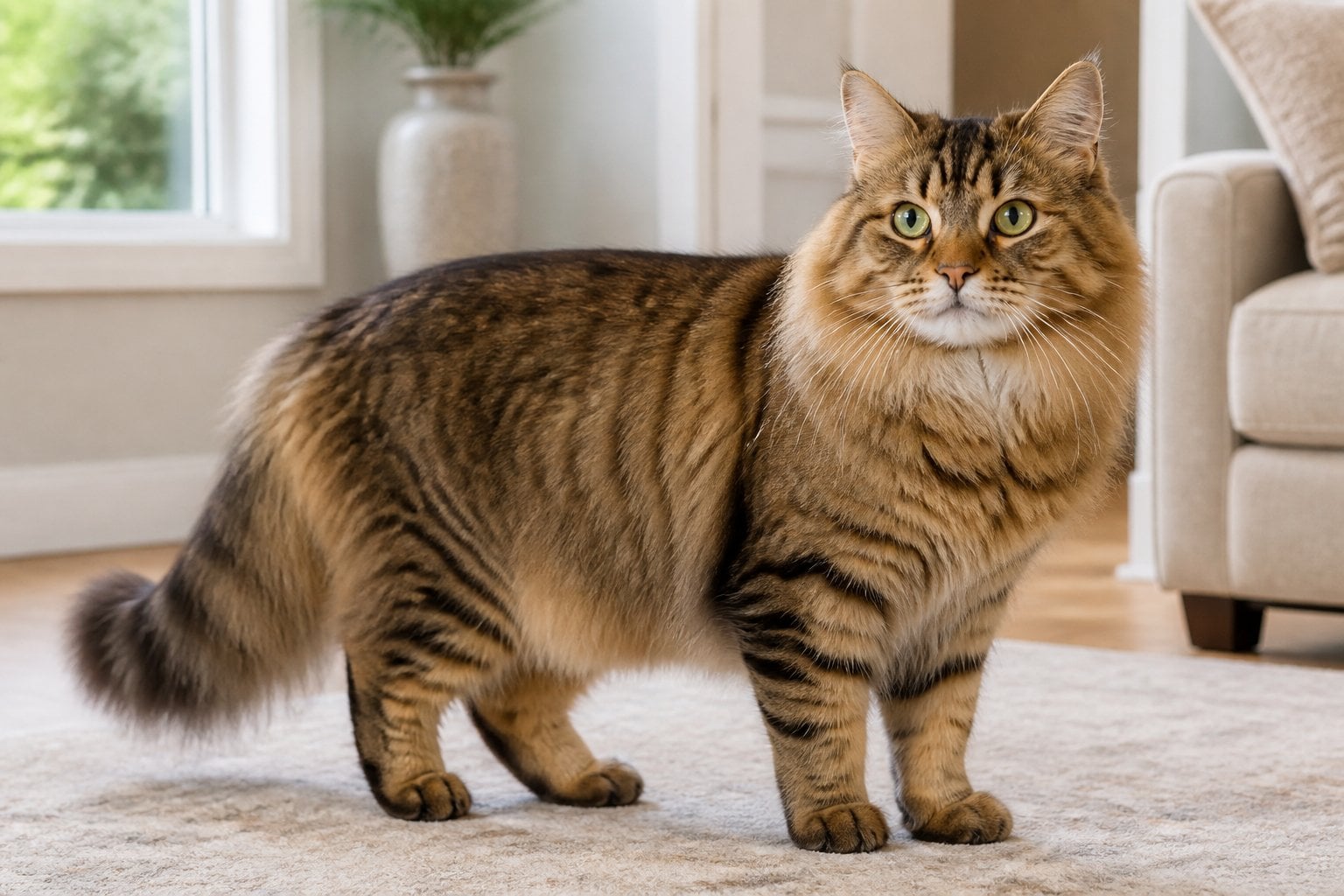
The Siberian is a natural breed from Russia, where it developed over centuries in a cold climate before being formalized as a show breed in the late 1980s.
Expect a medium-to-large cat with a muscular, rounded body. Mature males typically weigh 12 to 18 pounds, while females usually fall between 8 and 12 pounds.
Patience is part of owning one. Siberians mature slowly, and some individuals take three to five years to reach their full size and weight.
The triple coat is dense and water-resistant, thickening in winter and shedding down to a shorter, lighter coat in summer. You will need to brush regularly, especially during seasonal shedding.
Despite their size, Siberians are agile and enjoy climbing and jumping, so vertical space suits them well.
Many owners with mild cat allergies report fewer reactions to this breed, though research on lower Fel d 1 levels remains limited.
7. Chausie
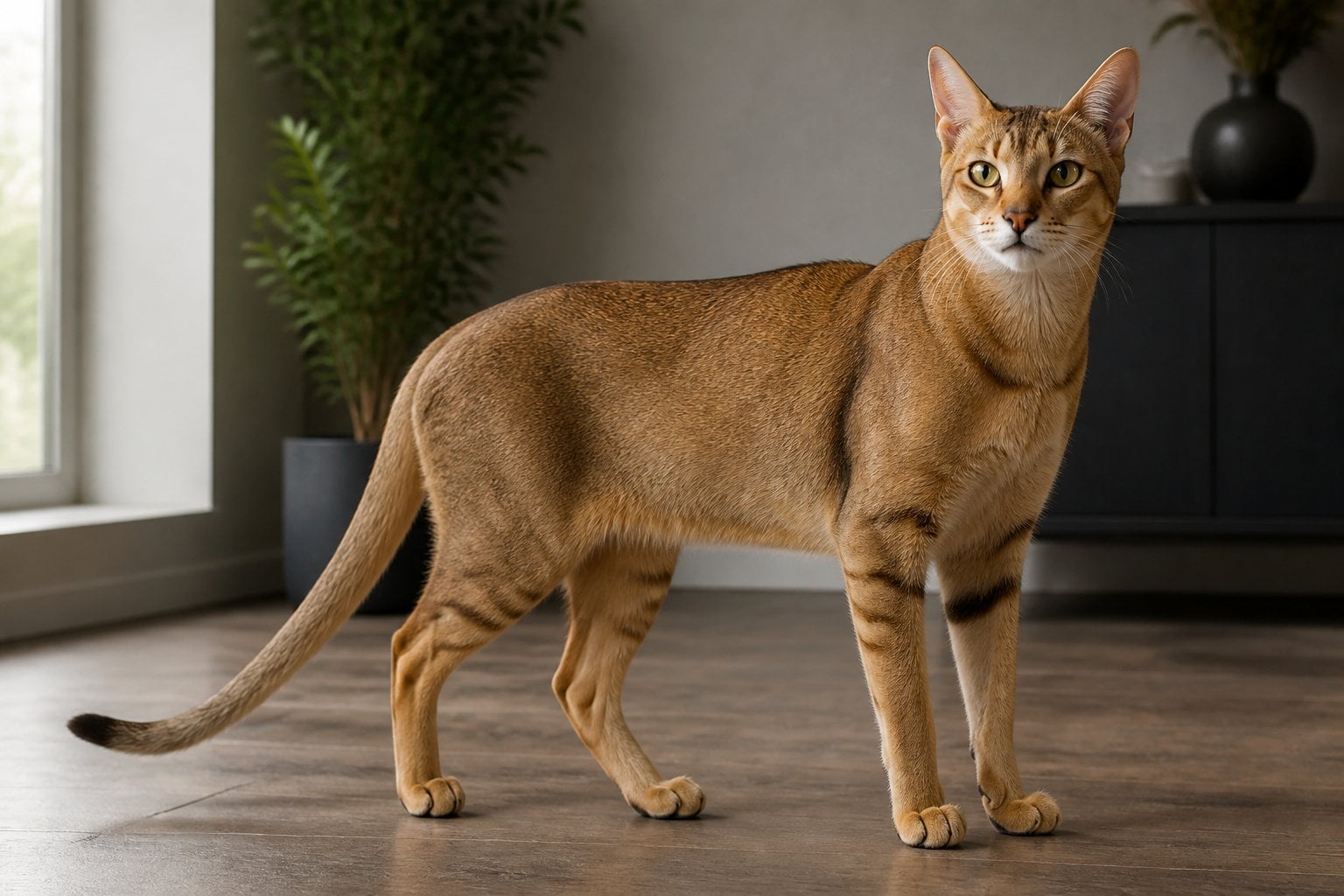
The Chausie is a hybrid breed created by crossing the wild jungle cat (Felis chaus) with domestic cats. Its name comes directly from that Latin species name.
Males typically weigh between 15 and 25 pounds, while females tend to be smaller. What stands out most is the build: long legs, a deep chest, and a lean frame that makes the cat look taller than its weight suggests.
You’ll find their coats short and dense, usually in ticked tabby, grizzled, or solid black patterns.
The International Cat Association recognized the breed in 1995, though cats of this type have existed along the Nile and in parts of Southeast Asia for far longer.
Expect a high activity level. Chausies jump well, explore constantly, and need consistent play to stay content indoors.
If you want a large cat with wild ancestry and an athletic temperament, this breed fits that description.
8. Bengal
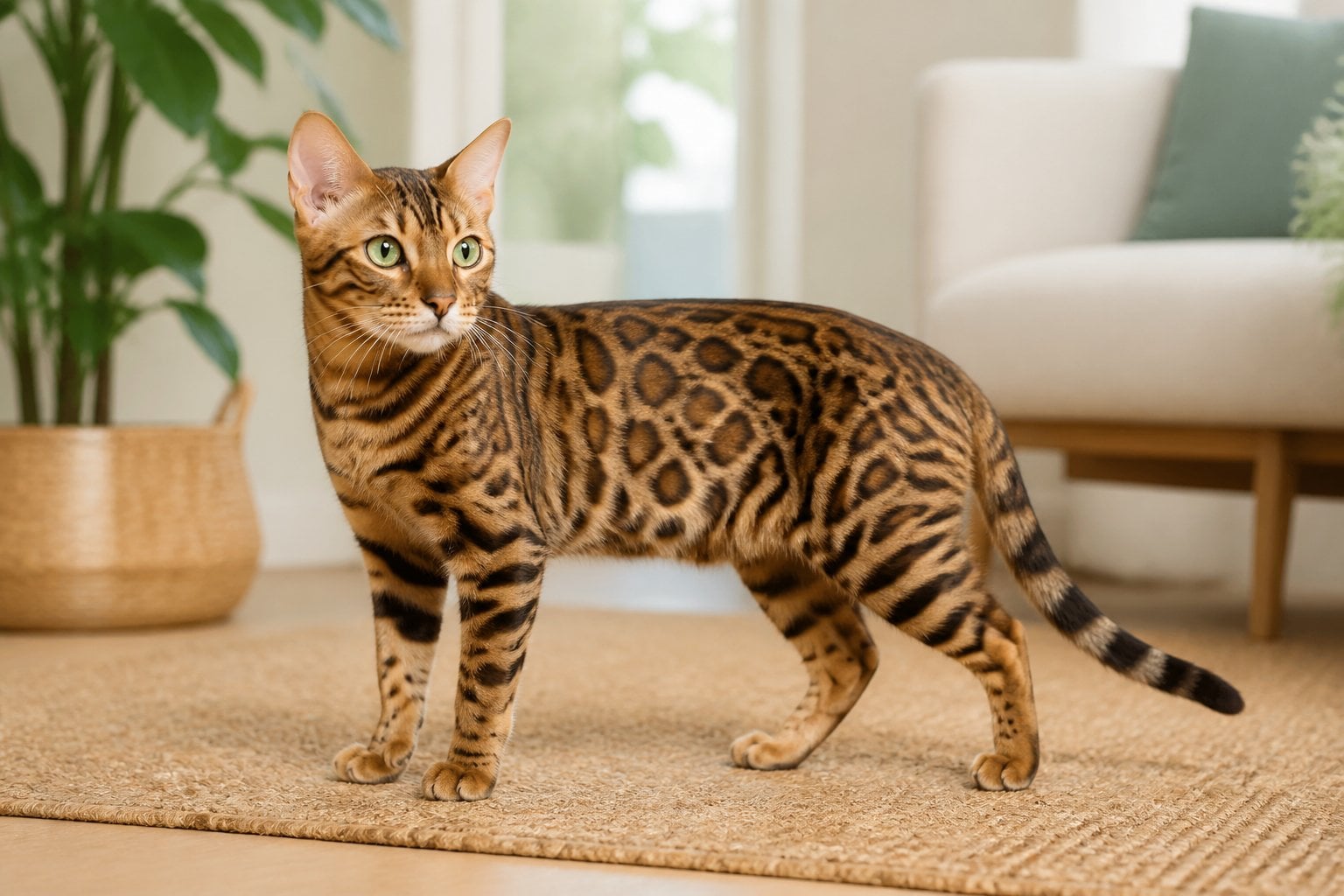
The Bengal is a medium to large breed, with males typically weighing 10 to 15 pounds and females falling between 8 and 12 pounds. Its length and muscular build often make it appear heavier than it actually is.
This breed came from crossing domestic cats with the Asian leopard cat, and its name comes from that wild ancestor’s taxonomic name. You’ll notice the influence in the spotted or marbled coat, which sometimes has a glittered appearance.
Bengals are athletic and need outlets for that energy. Expect climbing, jumping, and a strong interest in water — many will join you at the sink or tub.
Because of the recent hybridization in the breed’s background, ownership and breeding are regulated in some countries and U.S. states. Check your local rules before bringing one home, particularly if you’re looking at an earlier generation cat.
9. Turkish Van
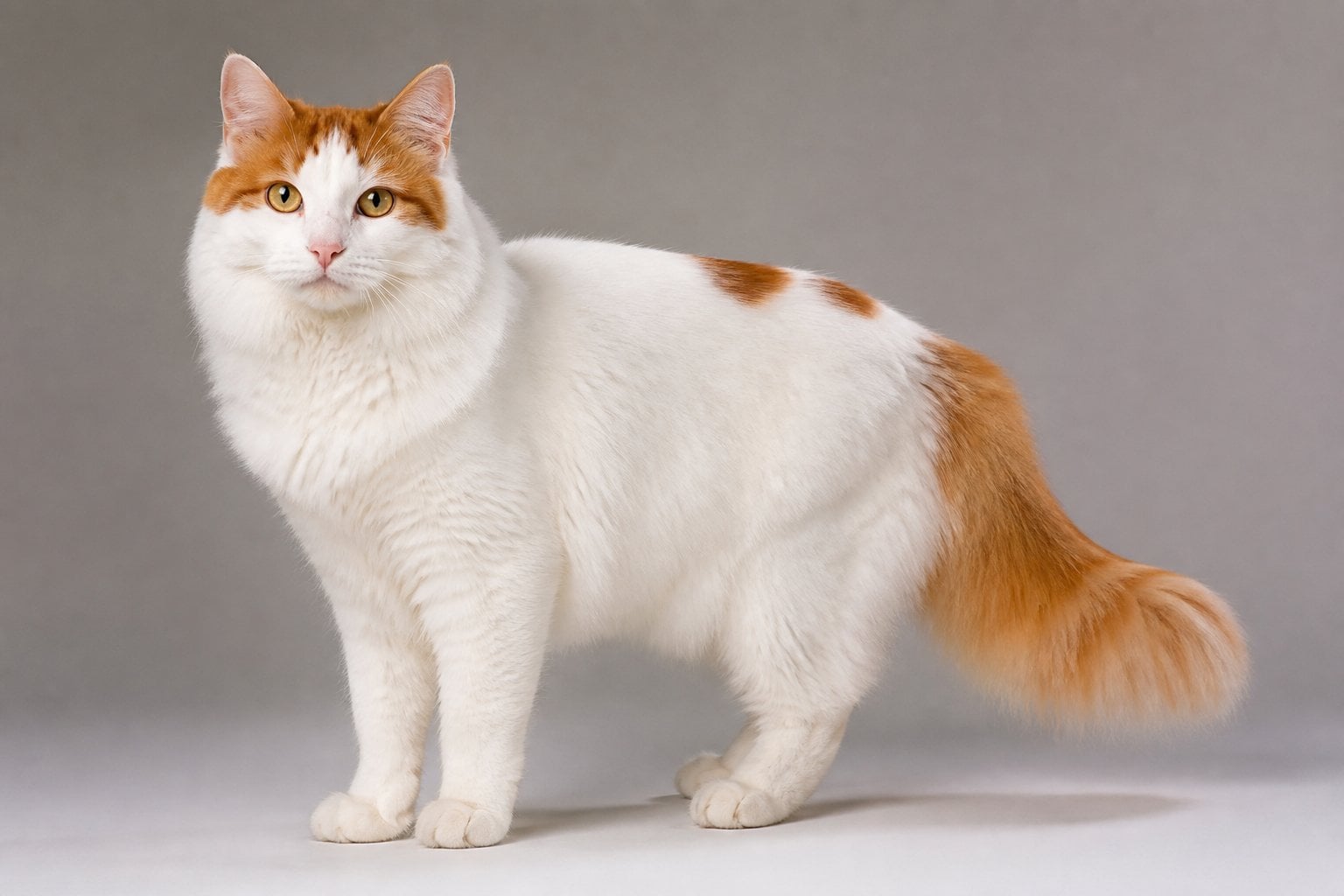
The Turkish Van is a semi-long-haired breed developed in the United Kingdom during the 1950s from cats imported from Turkey. Males typically reach 10 to 20 pounds, with females noticeably smaller.
You’ll notice the build before anything else. These cats have broad shoulders, long bodies, and substantial boning, and they often take three to five years to reach full physical maturity.
The coat is white with color restricted to the head and tail, a marking known as the Van pattern. It has a cashmere-like texture with no undercoat, which makes it water-resistant and easier to maintain than its length suggests.
Turkish Vans have a reputation for tolerating and sometimes seeking out water, which is why you’ll see them called “swimming cats.”
Expect high activity levels. This is a strong, athletic breed that climbs, jumps, and needs space to move rather than a lap to occupy.
10. American Bobtail
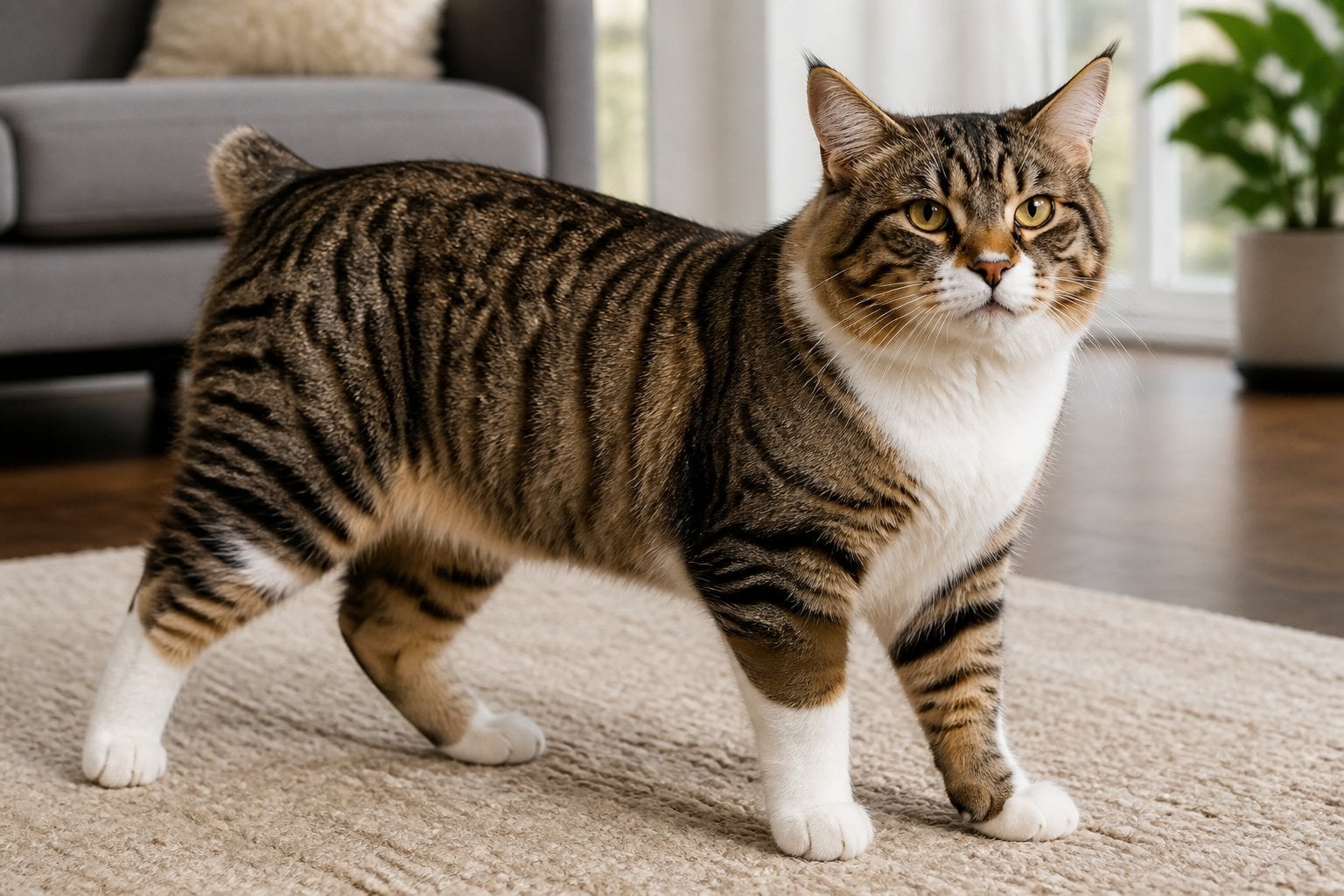
The American Bobtail developed in the United States during the late 1960s, and it remains an uncommon breed today.
Males typically weigh between 12 and 16 pounds, while females fall in the 7 to 11 pound range. Height usually measures 10 to 16 inches at the shoulder.
You’ll recognize this cat by its short tail, which runs about one-third to one-half the length of a standard cat’s tail. Most bobbed tails measure between one and four inches.
The body is muscular and rectangular, with a broad chest and substantial bone structure. Coats come in short or long varieties, and any color or pattern is accepted.
Despite the wild appearance that draws comparisons to a bobcat, this breed is friendly and adaptable. American Bobtails generally do well with children and other pets.
Expect a lifespan of roughly 13 to 15 years with proper care and regular grooming.
11. British Shorthair
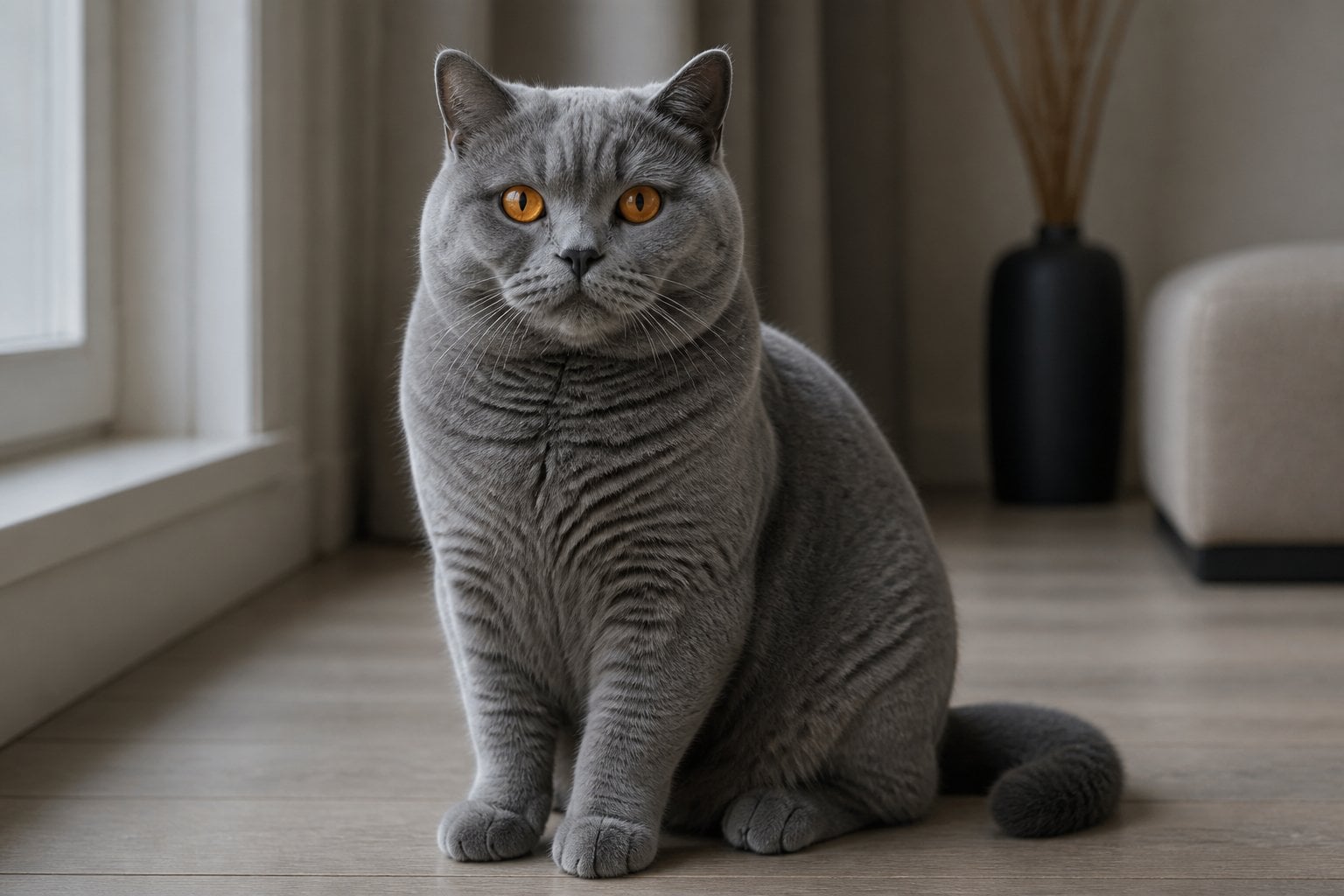
The British Shorthair is built solidly, with a broad chest, thick legs, and a rounded head that gives it a teddy bear look. Males typically weigh 12 to 18 pounds, while females usually range from 8 to 14 pounds.
You’ll notice the density of the coat before anything else. It’s short but plush, and it sits close to the body, which adds to the impression of bulk.
The blue-gray coat is the most recognized color, so much so that the breed is often called the British Blue. In reality, you can find them in many colors and patterns, including cream, white, tabby, and bicolor.
Temperament matters here too. These cats are calm and undemanding, and many prefer sitting beside you rather than on your lap.
Expect slow growth. British Shorthairs often take three to five years to reach their full adult size and weight.
12. Persian
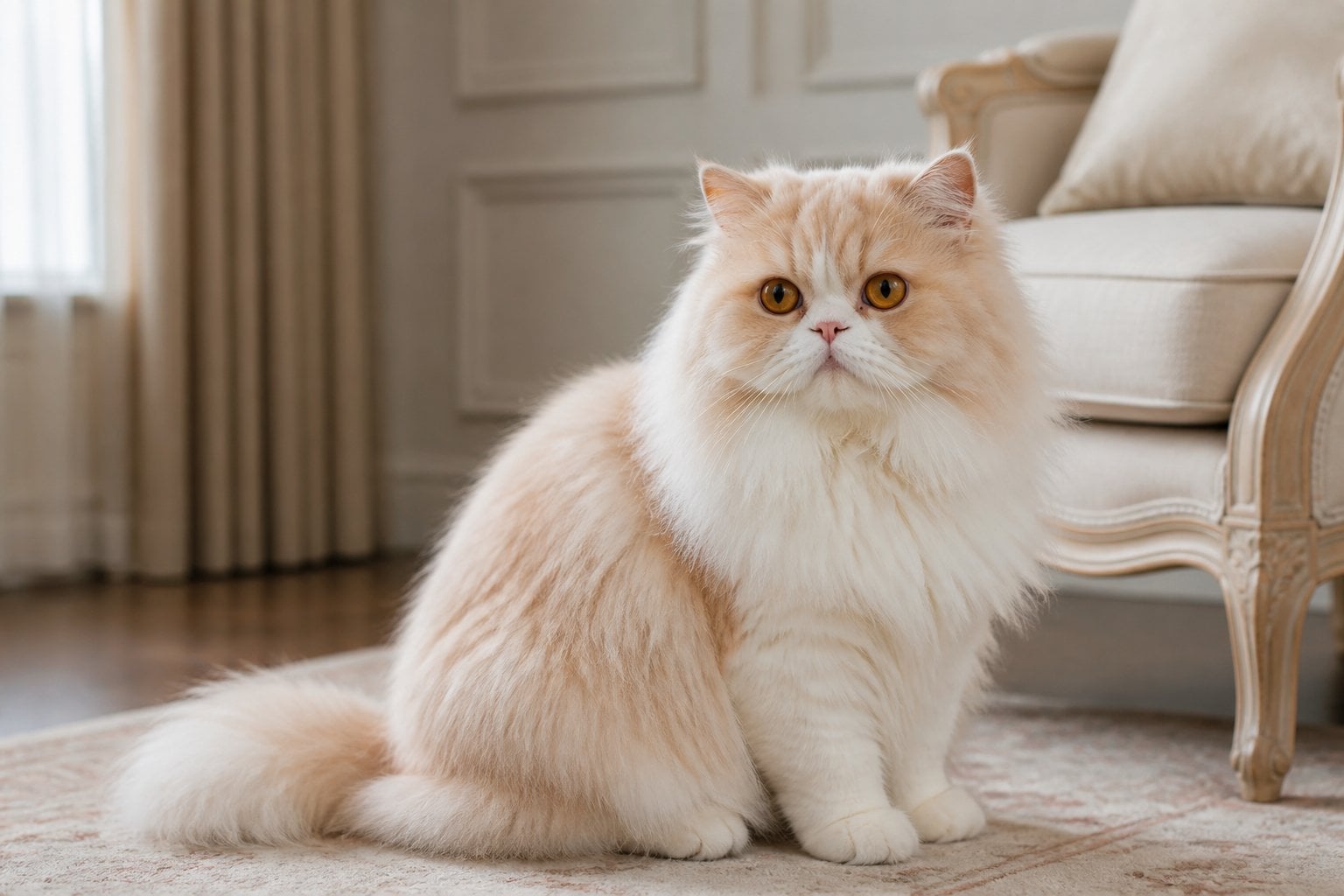
The Persian earns its place on this list less through sheer height and more through solid, cobby build. Males typically weigh 9 to 14 pounds, with some well-boned individuals reaching 15 or 16.
You’ll notice the broad chest, short thick legs, and heavy boning that give the breed its substantial feel. The long, dense double coat adds visible bulk, so a Persian often looks heavier than the scale confirms.
This is one of the oldest recognized breeds, and it serves as the foundation for the Persian Breed Group, which also includes the Himalayan and the Exotic Shorthair. All three share the same body type; only coat length and pattern separate them.
Temperament-wise, expect a quiet, undemanding companion that prefers calm rooms over high shelves.
Plan on daily brushing. That coat mats quickly, and a large Persian gives you plenty of fur to manage.
13. Egyptian Mau
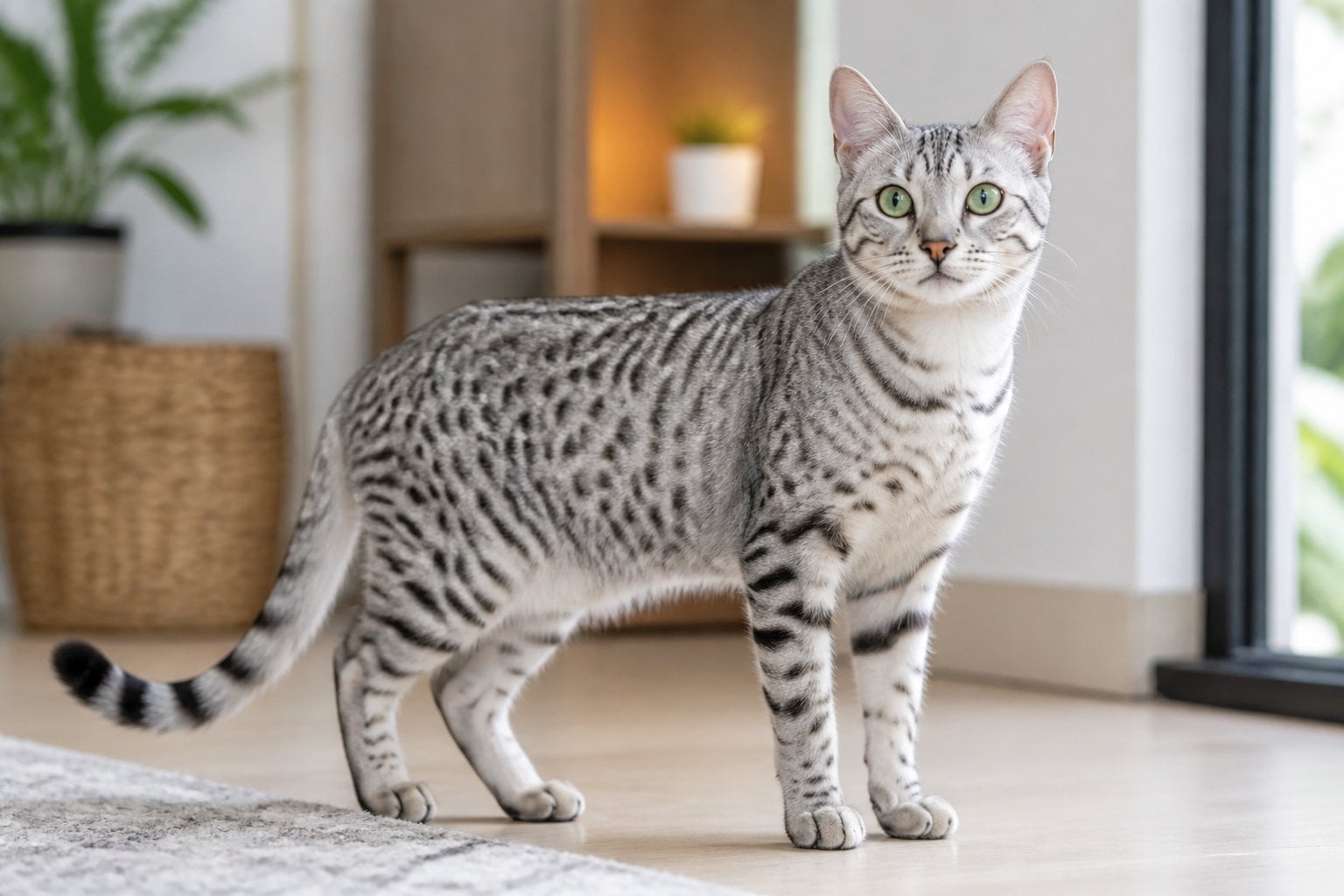
The Egyptian Mau sits at the smaller end of this list, typically weighing 6 to 14 pounds. Males are noticeably heavier than females, and their muscular build makes them feel more substantial than their numbers suggest.
You’ll recognize this breed by its randomly distributed spots, which appear on the coat rather than just the hairs. It’s one of the few naturally spotted domestic cats, meaning no wild crossbreeding was needed to produce the pattern.
The Mau has a slightly longer hind leg and a loose flap of skin at the flank, giving it a stride that supports quick acceleration. It’s often described as one of the fastest domestic breeds.
Expect an active, vocal companion that enjoys climbing and interactive play. Their coat is short and needs little grooming, though they appreciate warmth and will seek out sunny spots in your home.
14. Turkish Angora
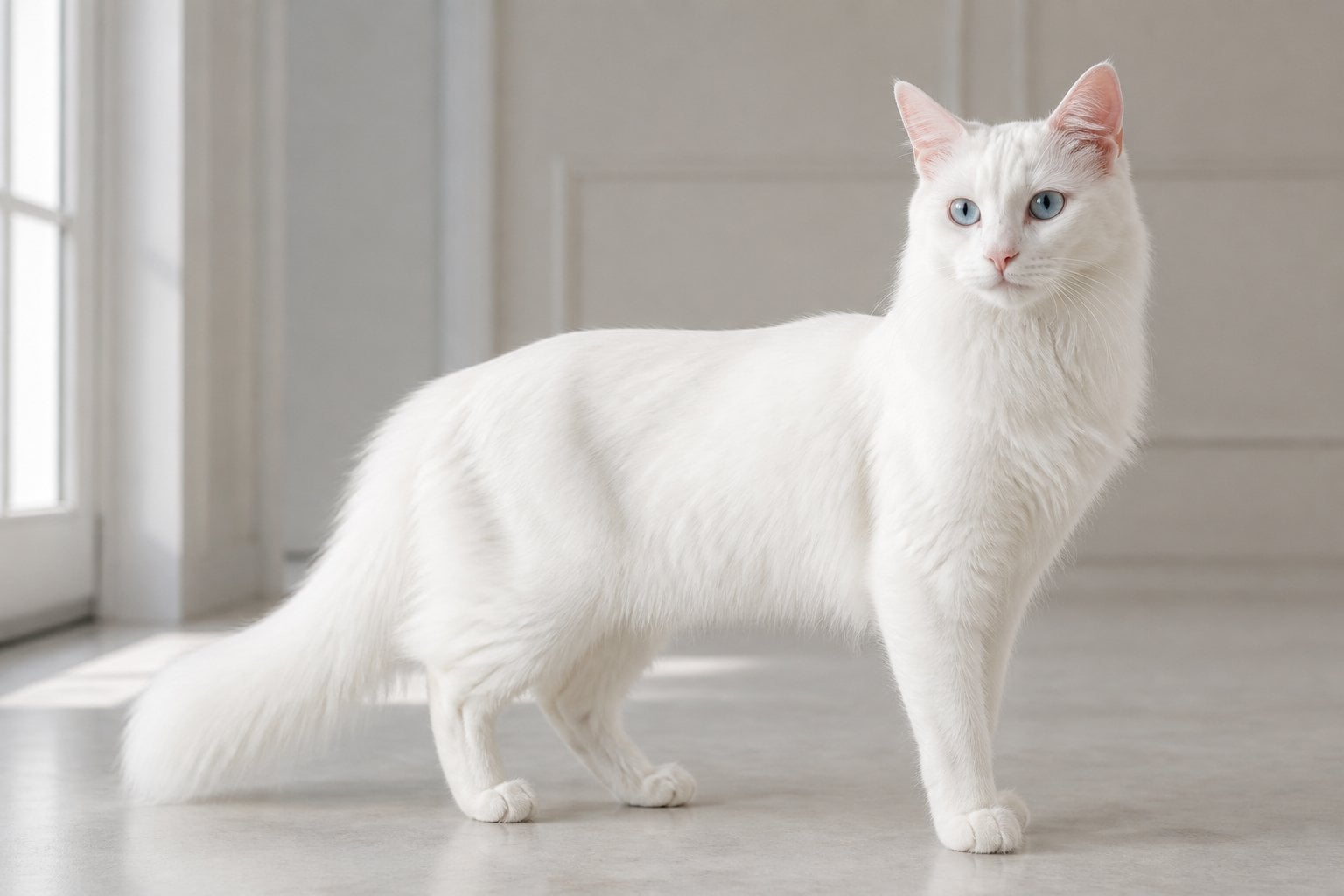
The Turkish Angora is one of the oldest known natural cat breeds, originating in central Anatolia around Ankara Province in modern-day Turkey. It earns a place on this list through length rather than bulk.
Adults typically stand up to about 25 cm at the shoulder, with a body length reaching roughly 35 cm. Males generally weigh 8 to 12 pounds, while females tend to fall between 5 and 9 pounds.
You will notice a long, fine-boned frame beneath the silky single coat, which makes the breed look lighter than it feels. Pick one up and you will find firm muscle across the shoulders and hindquarters.
This is an active, athletic cat that keeps its playfulness well into adulthood. Expect climbing, fetching, and a strong interest in whatever you happen to be doing.
Plan for daily play and vertical space if you bring one home.
15. Birman
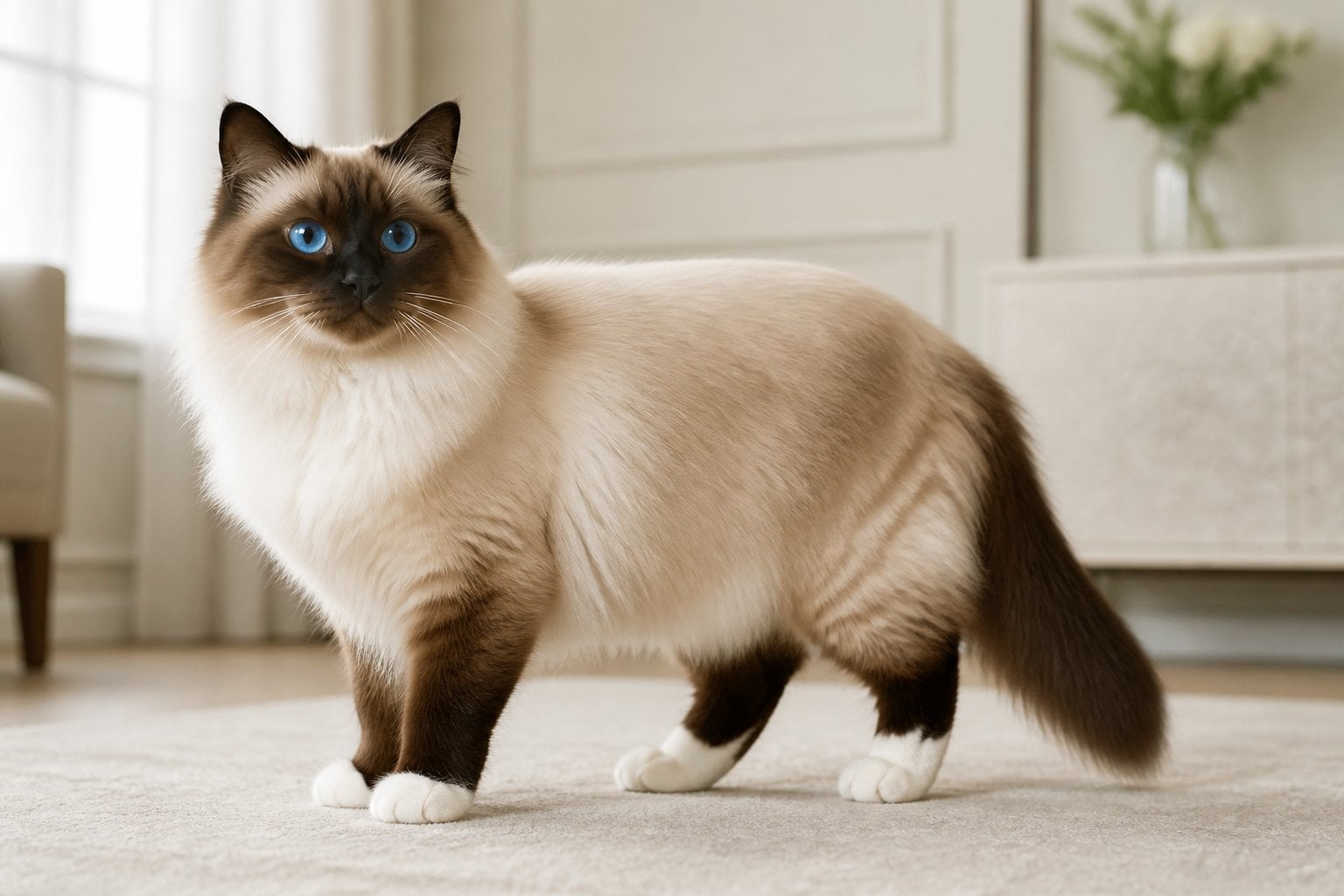
The Birman sits at the lower end of this list, but its sturdy frame and long coat give it real presence. Males typically weigh 10 to 15 pounds, while females usually range from 6 to 10 pounds.
Registries describe the breed as medium to medium-large, with a broad, rounded head and thickset legs that support a rectangular body.
You will recognize a Birman by its pointed coloring, deep blue eyes, and the white “gloves” on all four paws. On the back feet, those white markings extend up the leg as “laces.”
The coat is a single layer of silky fur, so grooming is less demanding than the length suggests. A weekly comb-through is usually enough to prevent tangles.
Known as the “Sacred Cat of Burma,” the Birman has a calm, affectionate temperament. It tends to follow you from room to room without being especially vocal about it.
16. American Shorthair
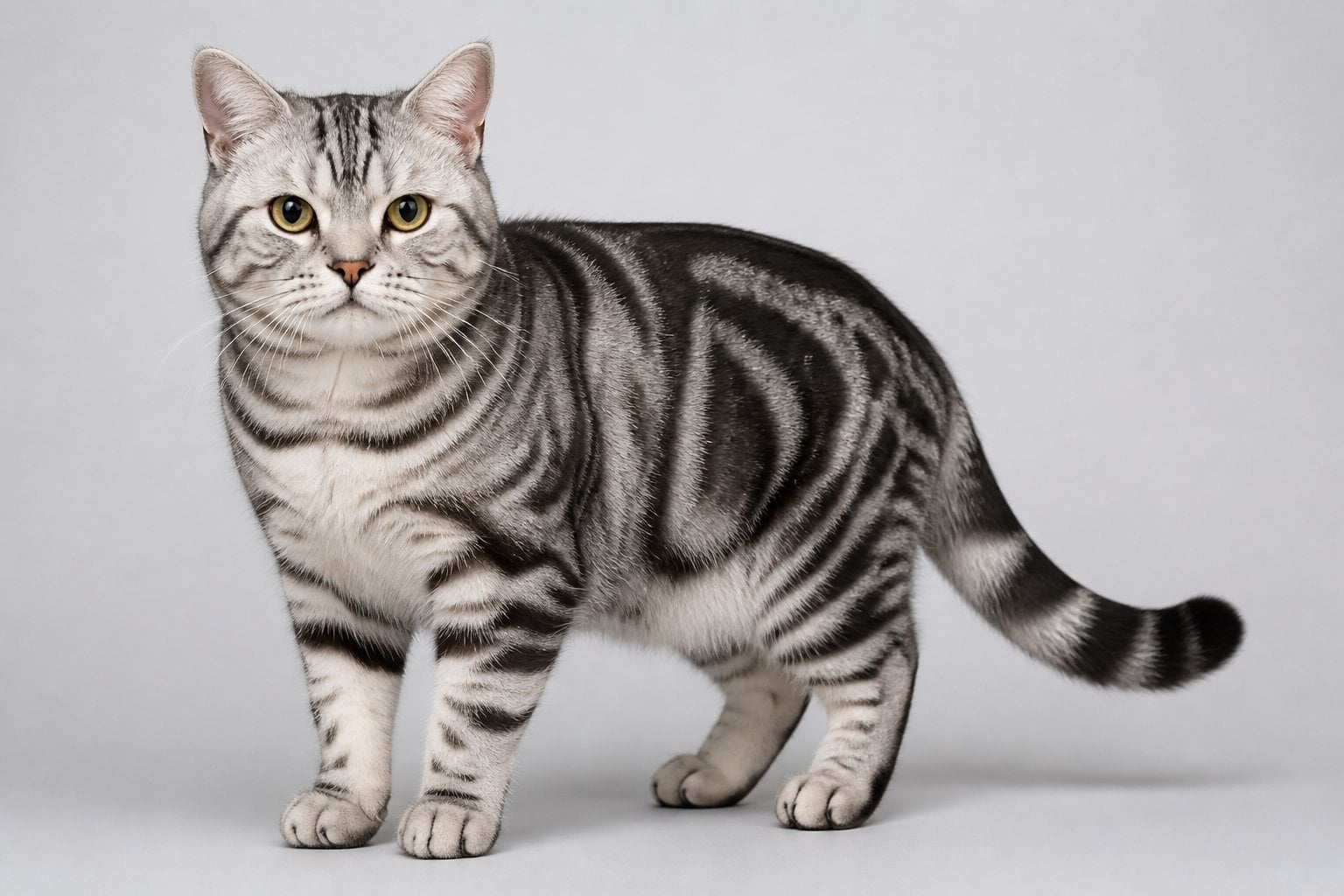
The American Shorthair is a solidly built cat with a broad chest and muscular legs. Males typically weigh 11 to 15 pounds, while females usually fall between 8 and 12 pounds.
You’ll notice this breed matures slowly. Many American Shorthairs don’t reach their full size until they’re three or four years old.
Their coat is short, dense, and comes in more than 80 recognized colors and patterns. The silver tabby remains the most familiar version, though brown, black, cream, and calico varieties are all common.
This breed descends from working cats brought to North America by European settlers, where they earned their keep controlling rodents. That history shows in their sturdy frame and steady energy levels.
If you’re looking for a large cat that doesn’t demand constant grooming, the American Shorthair is a practical choice. A weekly brushing usually keeps their coat in good condition.
17. American Curl
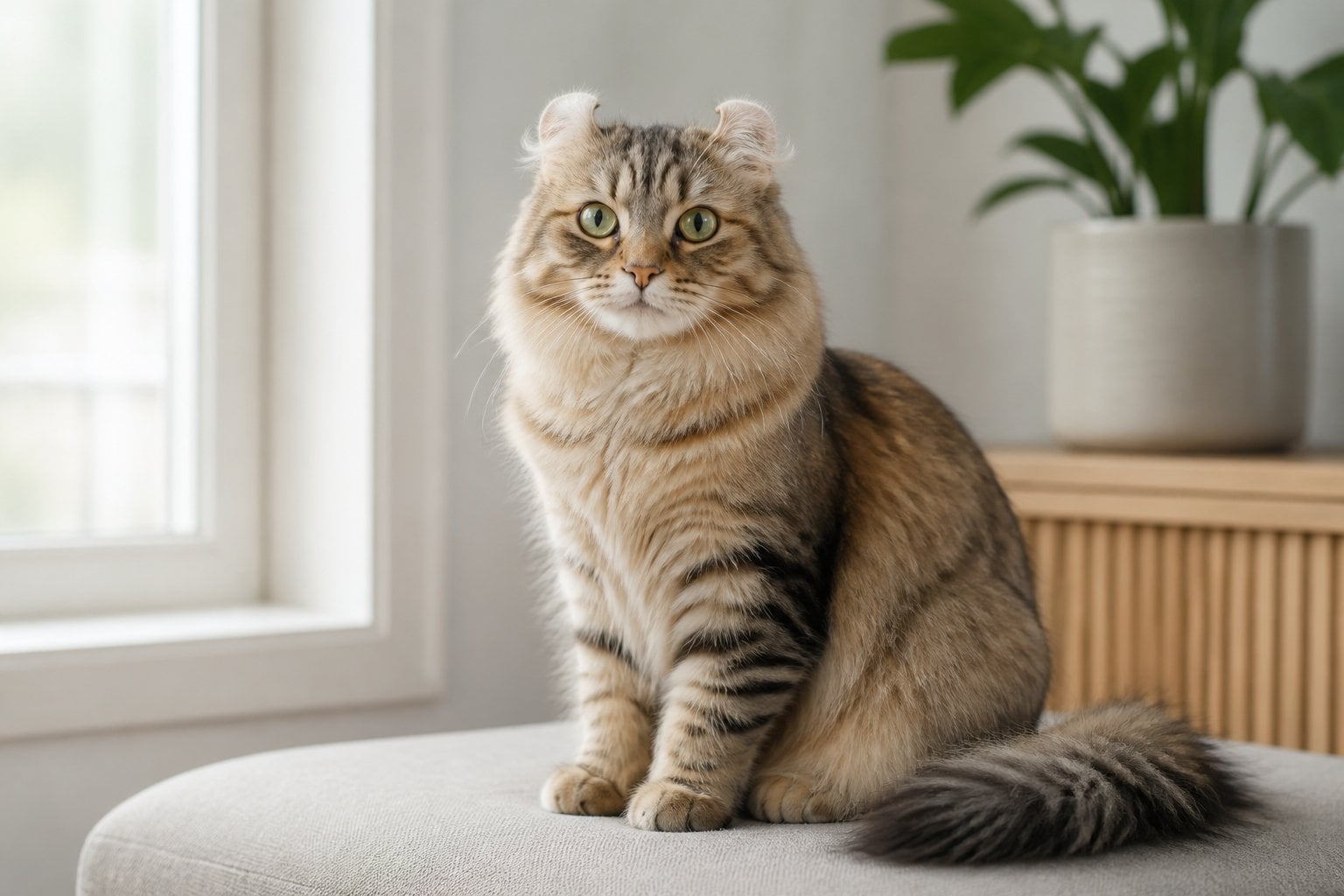
The American Curl sits at the smaller end of this list, with most adults weighing between 5 and 10 pounds. Males are typically heavier than females, though neither reaches the bulk of a Maine Coon or Ragdoll.
What sets this breed apart is its ears. They curl backward, away from the face, toward the center of the back of the skull.
The breed traces back to a single cat found in Lakewood, California, in 1981. She was named Shulamith, and the curled ears came from a spontaneous genetic mutation.
Breeders later crossed curl-eared cats with domestic shorthairs and longhairs to establish the standard you see today.
You can expect a medium-boned, moderately muscular cat with a rectangular body. Coats come in both short and long lengths, in a wide range of colors and patterns.
Their temperament is energetic and affectionate, and they generally stay playful well into adulthood.
18. Ocicat
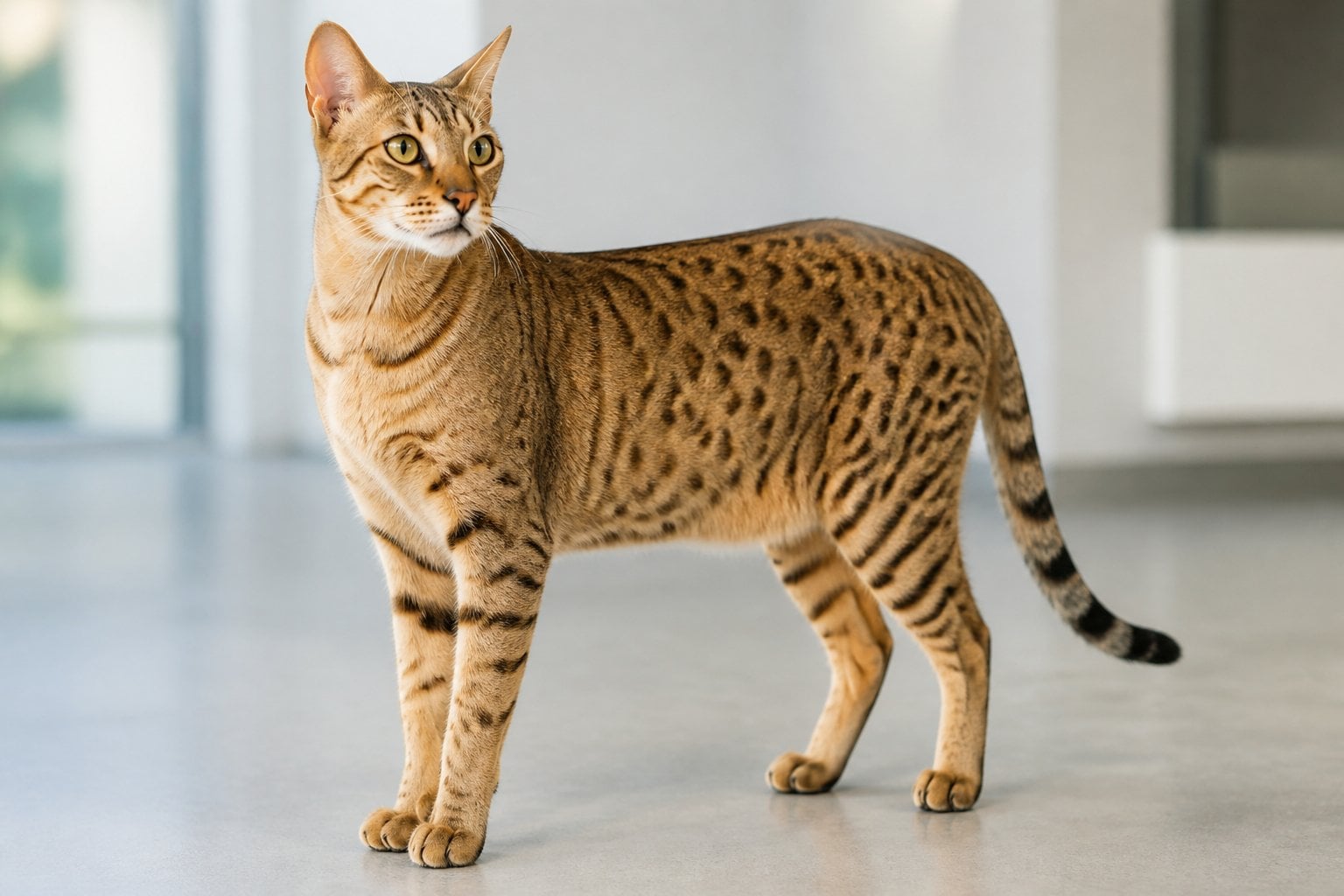
The Ocicat looks like a small wild cat, but its ancestry is entirely domestic. The breed came about in 1964 when a Michigan breeder crossing Abyssinians and Siamese produced a spotted kitten, and American Shorthairs were later added to the mix.
Males typically weigh 9 to 15 pounds, while females usually range from 6 to 9 pounds. What you notice first is the build: long, muscular, and solid, so an Ocicat often feels heavier in your arms than you expect.
Their spotted tabby coat comes in colors including tawny, chocolate, cinnamon, blue, lavender, and fawn.
Personality-wise, expect a social, vocal cat that greets guests rather than hiding from them. Ocicats are athletic and intelligent, so climbing shelves, puzzle feeders, and interactive play sessions will help channel that energy.
Grooming is straightforward, since the short coat needs only occasional brushing to stay in good condition.
19. Cheetoh
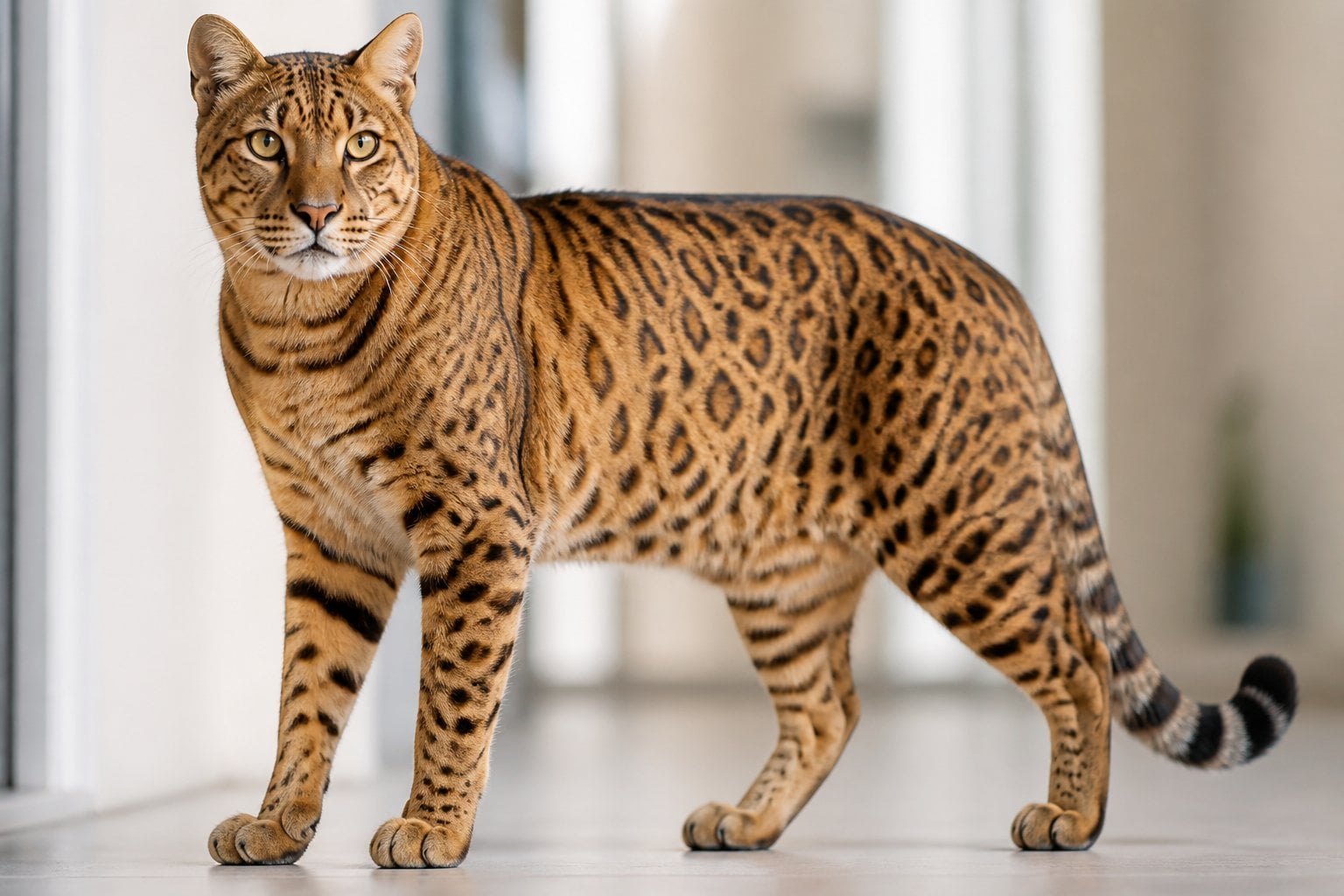
The Cheetoh is one of the newest breeds on this list, developed in the United States in 2003 by crossing Bengals with Ocicats. The goal was a cat with the spotted, wild-looking coat of a jungle cat and the steady temperament of a household pet.
Size-wise, you can expect a Cheetoh to weigh roughly 12 to 25 pounds, with males at the upper end of that range. Height typically falls between 12 and 18 inches, and their long, muscular bodies make them look even bigger than the scale suggests.
You’ll notice they’re built for movement. Cheetohs are athletic, curious, and often described as dog-like in how they follow you from room to room.
The breed isn’t yet recognized by major registries as a full championship breed, which keeps numbers low. If you want one, expect a wait and a higher price than most domestic cats.
20. Pixiebob
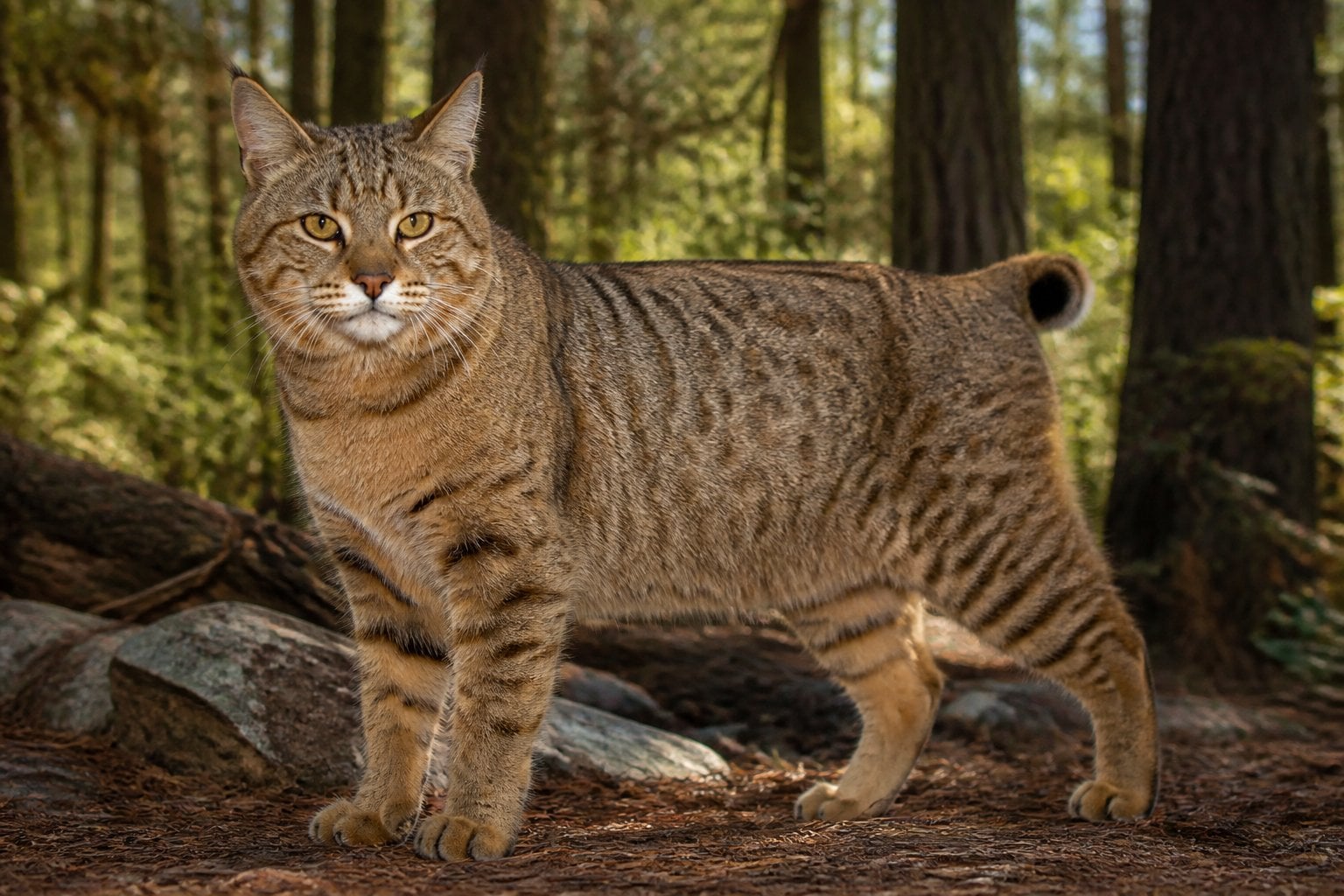
The Pixiebob was developed in the United States in the 1980s, bred to resemble the North American bobcat. Early breeders claimed wild bobcat ancestry, though DNA testing has not supported this, and the breed is considered fully domestic.
Expect a male to weigh between 12 and 17 pounds, with females typically ranging from 8 to 12 pounds. Growth is slow, and your cat may take three to four years to reach full maturity.
The muscular build and short tail can make a Pixiebob look heavier than it is, so monitor body condition rather than relying on appearance alone.
Some Pixiebobs are polydactyl, carrying up to seven toes per paw, a trait the breed standard permits.
You will find them calm and highly attached to their people. Many Pixiebobs learn to walk on a leash and will follow you from room to room throughout the day.
21. Chartreux
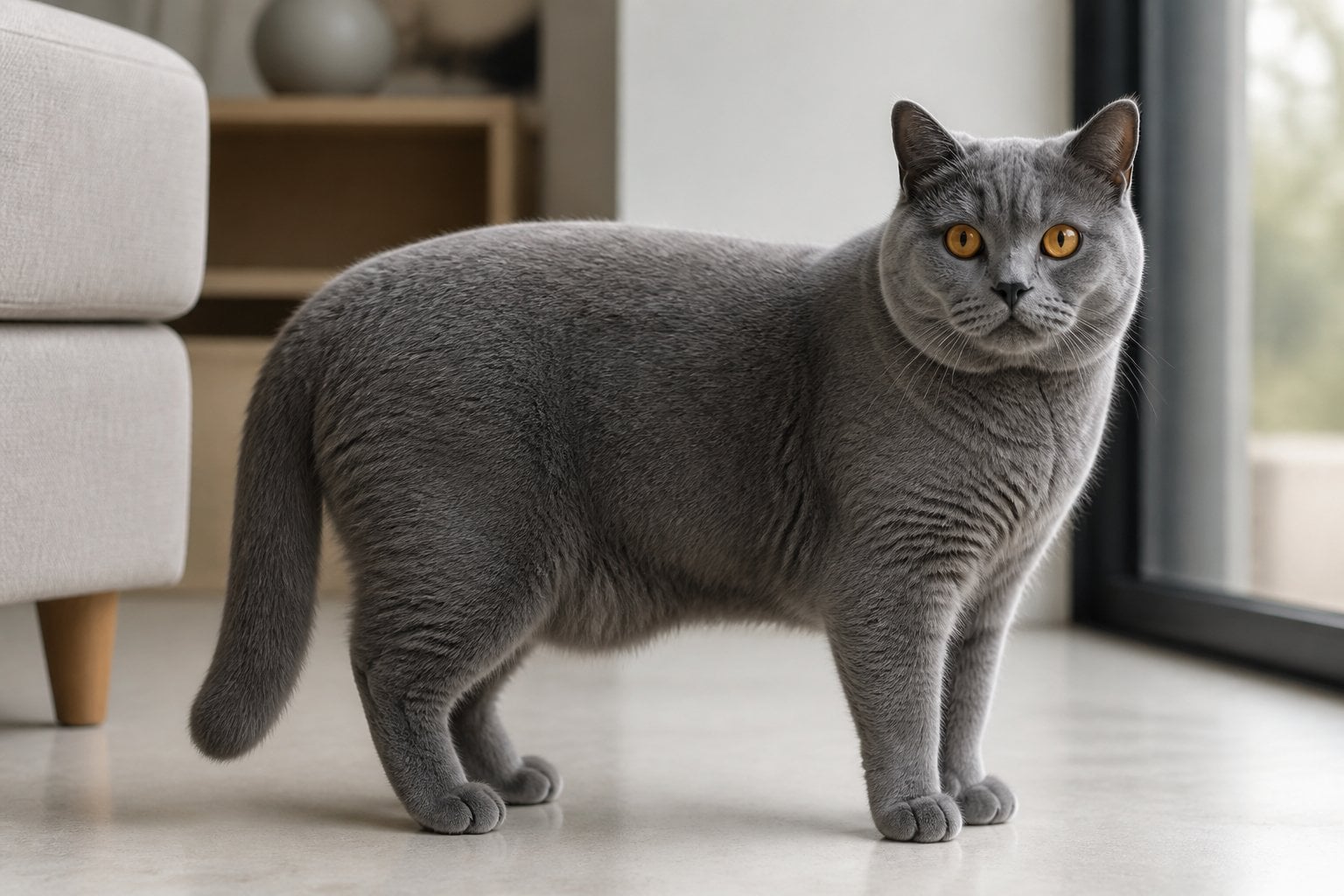
The Chartreux is a French breed with a solid, muscular build that places it among the larger domestic cats. Males typically weigh 10 to 16 pounds, while females tend to fall between 6 and 11 pounds.
You’ll notice the broad chest and heavy shoulders first, supported by relatively short, fine-boned legs. That contrast gives the breed its distinctive shape, sometimes described as a potato on toothpicks by owners.
The head forms a trapezoid, with full cheeks and a narrow top. Its blue-grey double coat is water-resistant and slightly woolly, often showing breaks similar to sheepskin.
Despite the bulk, these cats are agile and quick, with reflexes that reflect their history as working hunters.
Expect a quiet companion. Many Chartreux rarely vocalize, and those that do tend toward soft chirps rather than loud meows.
The breed remains uncommon in the United States, so finding a registered breeder may take time and patience.
22. Selkirk Rex
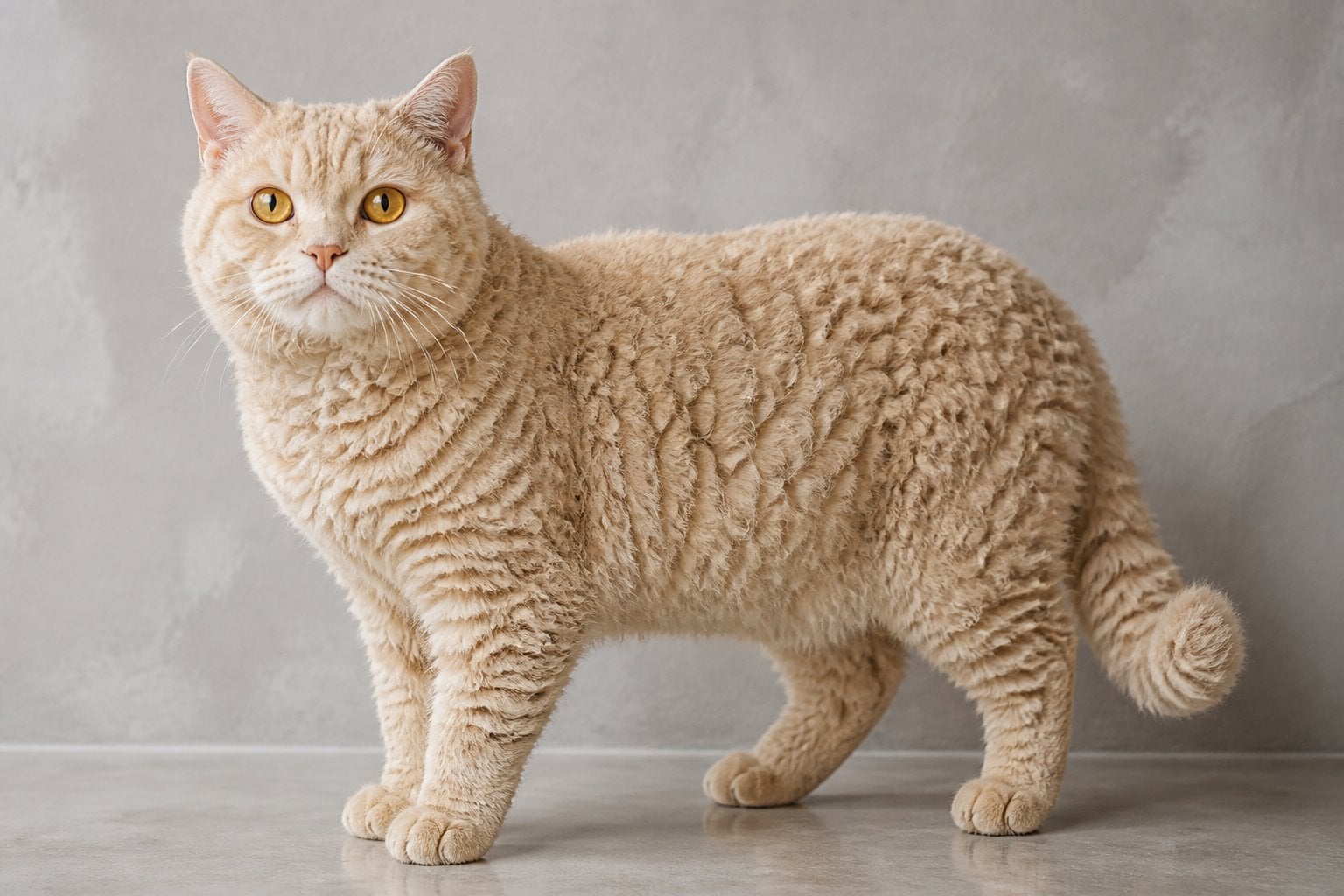
The Selkirk Rex stands out on this list for its curly coat, but it earns its place through solid, heavy-boned build. Most adults weigh between 10 and 16 pounds, with males at the upper end of that range.
You’ll notice the body is muscular and rectangular, giving these cats more heft than their size suggests when you pick them up.
The breed traces back to a curly-coated rescue kitten born in Montana in 1987. Breeder Jeri Newman crossed it with Persians, and later British Shorthairs and Exotics were added, which explains the substantial bone structure you see today.
The thick, plush coat sets the Selkirk apart from the Devon and Cornish Rex, whose curls are sparser. It comes in both longhaired and shorthaired varieties.
Expect a calm, patient cat that tolerates handling well. Weekly brushing is usually enough to keep those curls from matting.
23. British Longhair
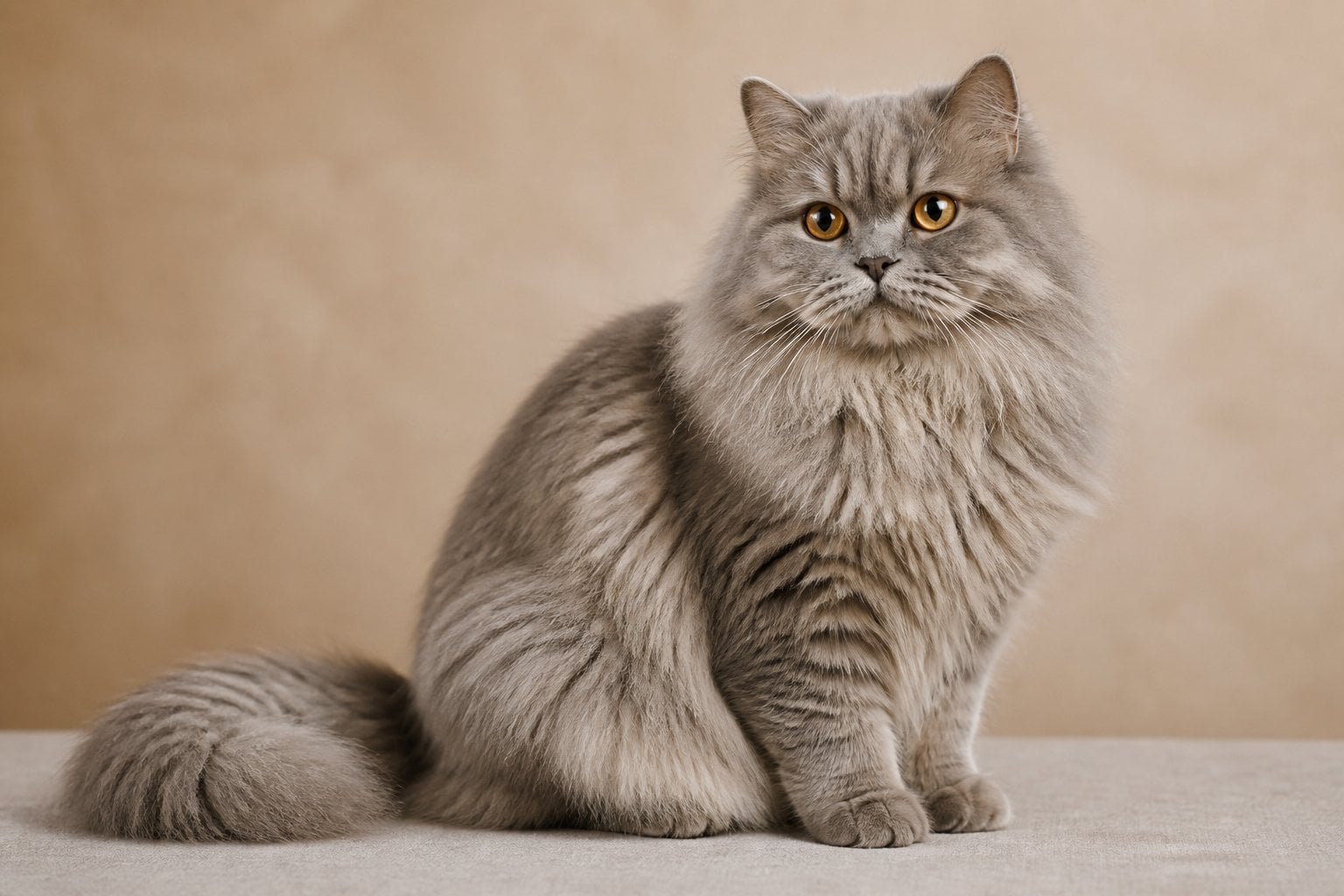
If you like a cat with substance, the British Longhair delivers a sturdy, cobby build wrapped in a semi-long coat. Most weigh between 9 and 18 pounds and stand about 12 to 15 inches tall, with males sitting at the heavier end of that range.
The breed traces back to crosses between British Shorthairs and longhaired cats such as Persians and Turkish Angoras. Those pairings were used to rebuild the British Shorthair gene pool after the World Wars, and the recessive longhair gene they introduced eventually produced a separate breed.
Expect a slow developer. Your British Longhair may take three to five years to reach full size and weight, so patience is part of the deal.
Temperament tends toward calm and easygoing. These cats are affectionate without being demanding, and many are content to spend part of the day entertaining themselves.
24. Domestic Shorthair
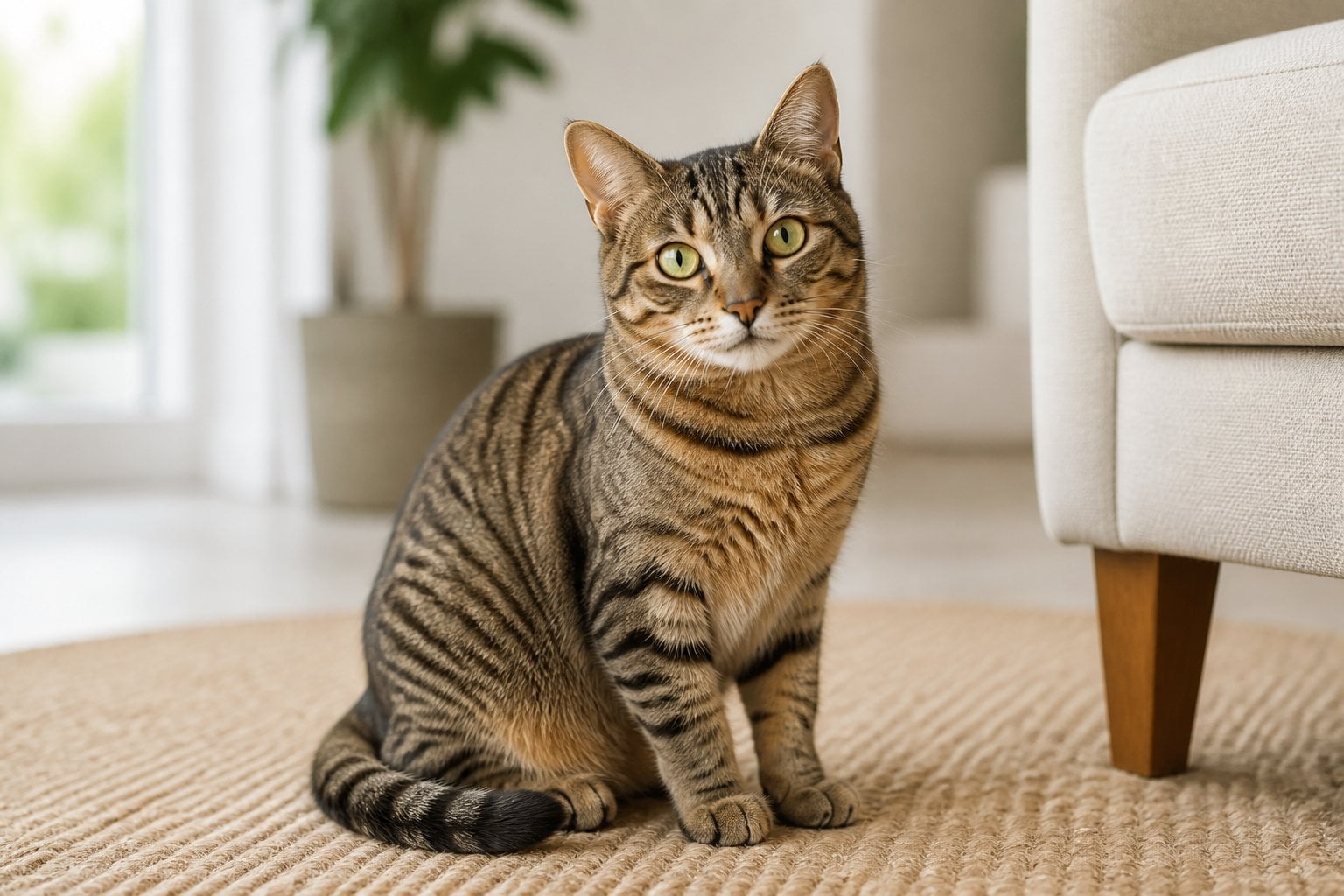
The Domestic Shorthair isn’t a breed in the formal sense. It’s the catch-all term for mixed-ancestry cats with short coats, which means size varies more here than in any pedigreed line.
Most fall between 8 and 15 pounds, with males at the upper end. Some individuals with heavy-boned backgrounds push past 16 pounds and reach lengths comparable to smaller purebred giants.
Because their genetics are unpredictable, you can’t reliably forecast how large a Domestic Shorthair kitten will grow. Body type, coat pattern, and frame all depend on whatever ancestry sits behind them.
What you can expect is a sturdy, adaptable cat. These cats tend to have fewer inherited health problems than closely bred lines, and many live well into their teens.
If you want a larger cat without committing to a specific breed, look for a kitten with broad paws and a long torso.
25. Korat
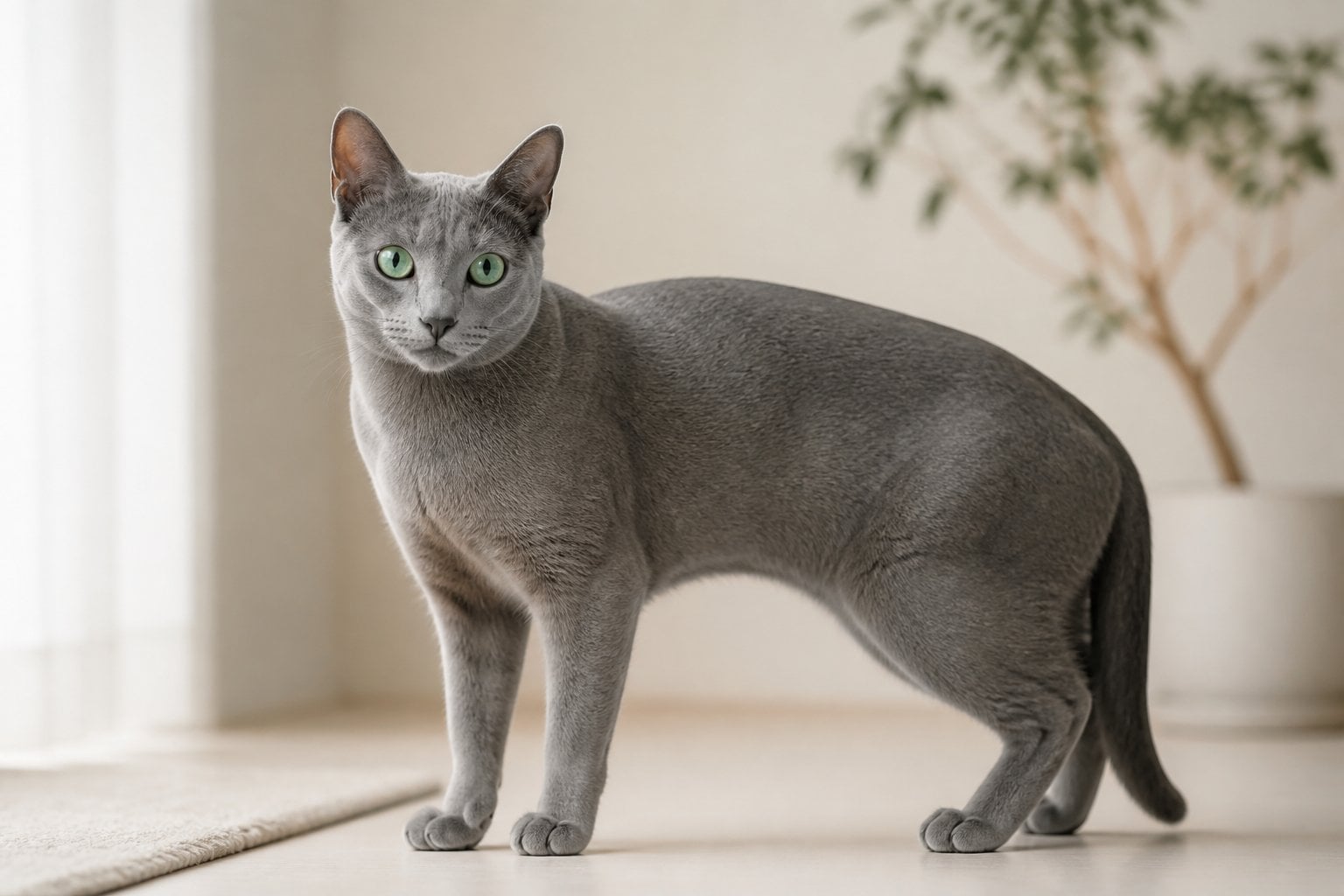
The Korat sits at the smaller end of this list, with a small-to-medium build and a low percentage of body fat. Males typically weigh 8 to 10 pounds, while females often stay between 6 and 8 pounds.
What you gain in place of sheer size is density. The Korat’s silver-tipped blue-grey coat covers a muscular, surprisingly heavy body, so the cat feels weightier than it looks when you pick it up.
This breed originated in Thailand’s Korat province, and it appears in the Tamra Maew, a collection of Thai cat poems dating to the Ayutthaya period. In its homeland, it’s regarded as a symbol of good fortune.
You’ll recognize a Korat by its heart-shaped face and large, prominent green eyes.
Expect an active, people-oriented cat. Korats bond closely with their owners, stay curious well into adulthood, and need little grooming thanks to their single coat.
26. Himalayan
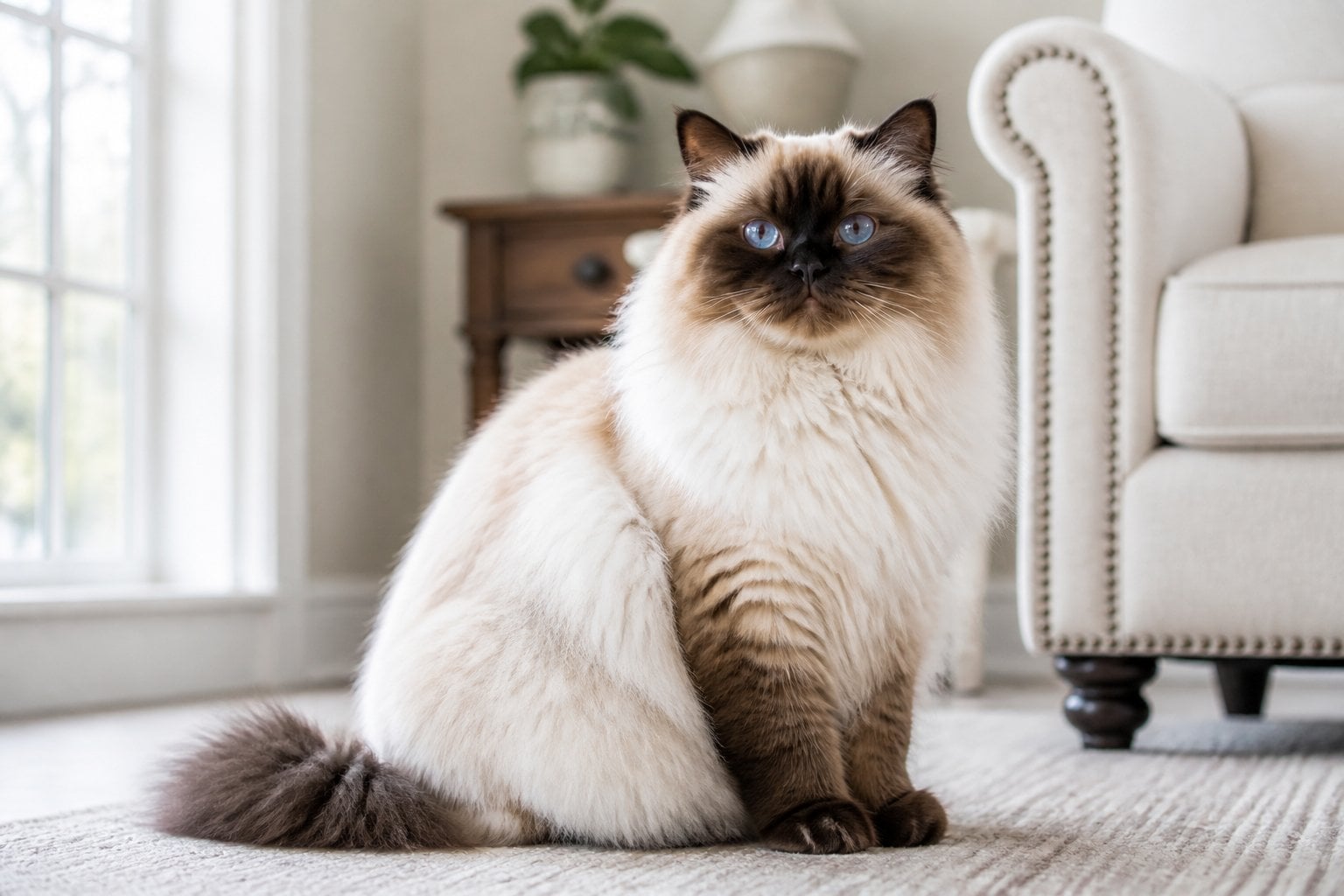
The Himalayan combines Persian body type with the point coloration and blue eyes of the Siamese. You’ll find most adults weigh between 7 and 12 pounds, with males at the upper end of that range.
What makes this breed feel larger than the numbers suggest is its build. Breed standards describe a strong cat with heavy boning and solid musculature, and the long coat adds considerable visual bulk.
Registries treat the Himalayan differently. TICA recognizes it as its own breed, while the CFA classifies it as a colorpoint division of the Persian.
Expect a calm, gentle companion that tolerates handling well. Himalayans tend to prefer quiet rooms and predictable routines over climbing and chasing.
Grooming is the main commitment here. Daily brushing keeps the dense coat from matting, and the flat facial structure often means regular eye cleaning as well.
27. Somali
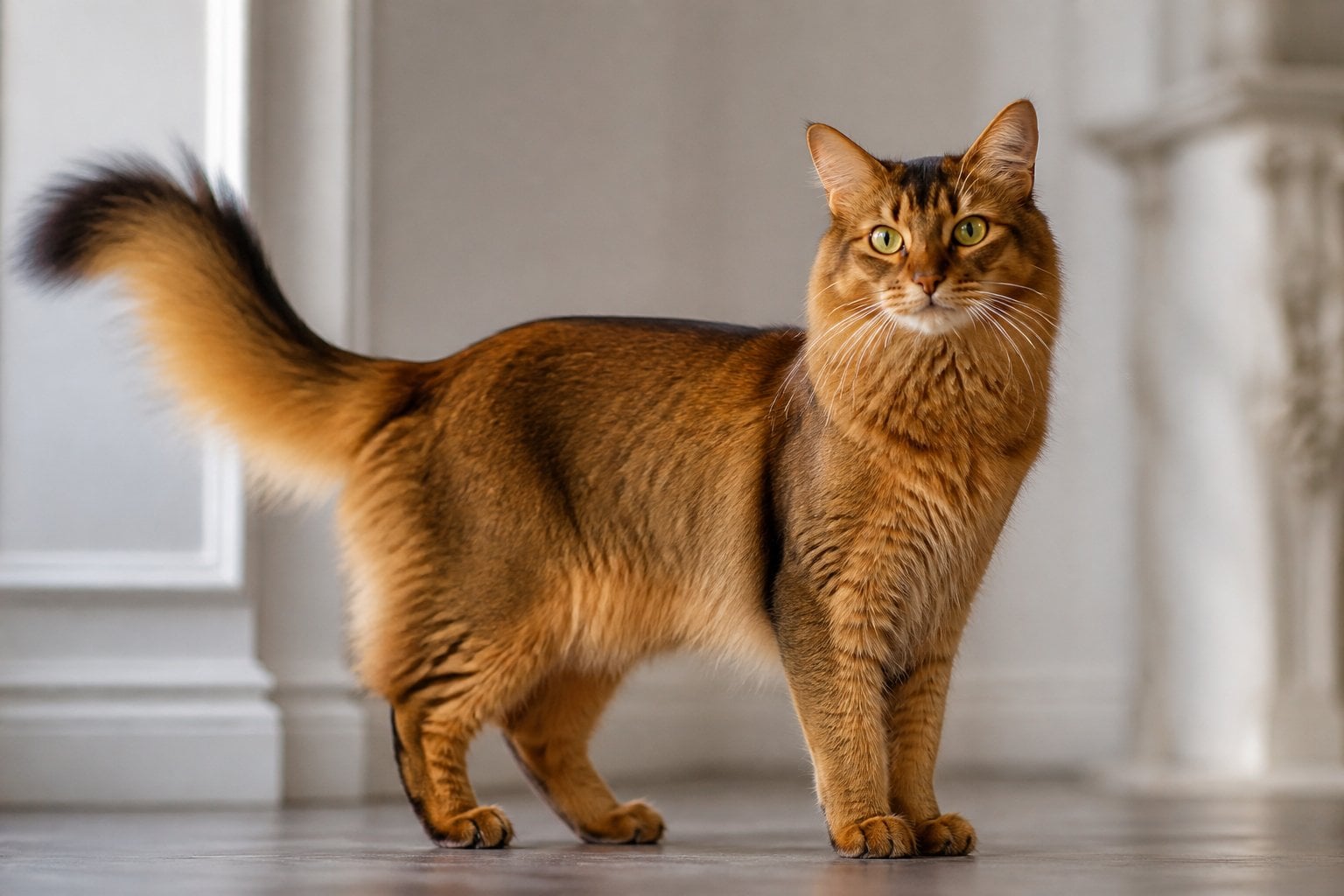
The Somali is the longhaired variety of the Abyssinian, carrying two copies of the recessive long-hair gene. Adults typically weigh 6 to 12 pounds, with males at the upper end of that range.
You’ll notice a medium to large frame with firm muscle and a lithe build. The breed standard calls for an alert, active cat that appears healthy and vigorous, and the coat adds visual bulk without much extra weight.
The full, plume-like tail earned the breed its “fox cat” nickname. That tail, combined with a ruff around the neck and britches on the hind legs, makes a Somali look larger than the scale reads.
Expect high activity levels. Somalis climb, explore, and involve themselves in whatever you’re doing, so vertical space and puzzle feeders suit them well.
Grooming is manageable. A weekly brushing keeps the soft, medium-length coat in order.
28. Abyssinian
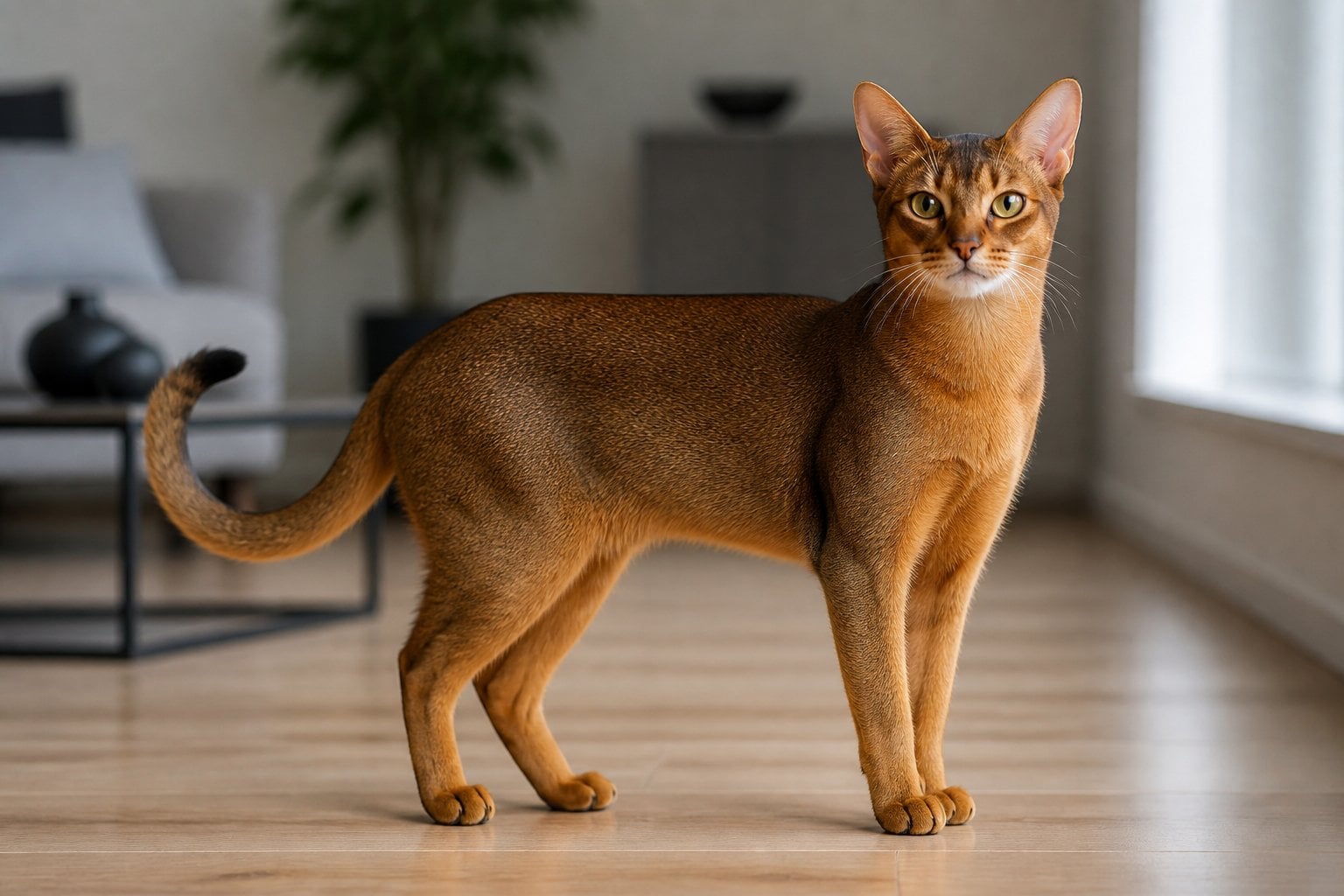
The Abyssinian sits at the smaller end of this list, but its long legs and lean frame often make it look bigger than it is. Males typically weigh 8 to 12 pounds, while females usually fall between 6 and 10 pounds.
Registries describe the breed as medium to large, with a lithe, muscular body and a noticeably arched neck. Abys appear to stand on tiptoe, which adds to the impression of height.
The coat is short and dense, marked by ticked agouti hairs that give each strand bands of colour. Large cupped ears and dark facial markings complete the look.
You should expect an active cat rather than a lap companion. Abyssinians climb shelves, open cupboards, and stay engaged with interactive play well into adulthood.
If you want size paired with constant motion, this breed delivers both. Plan for vertical space and daily attention.
29. Manx
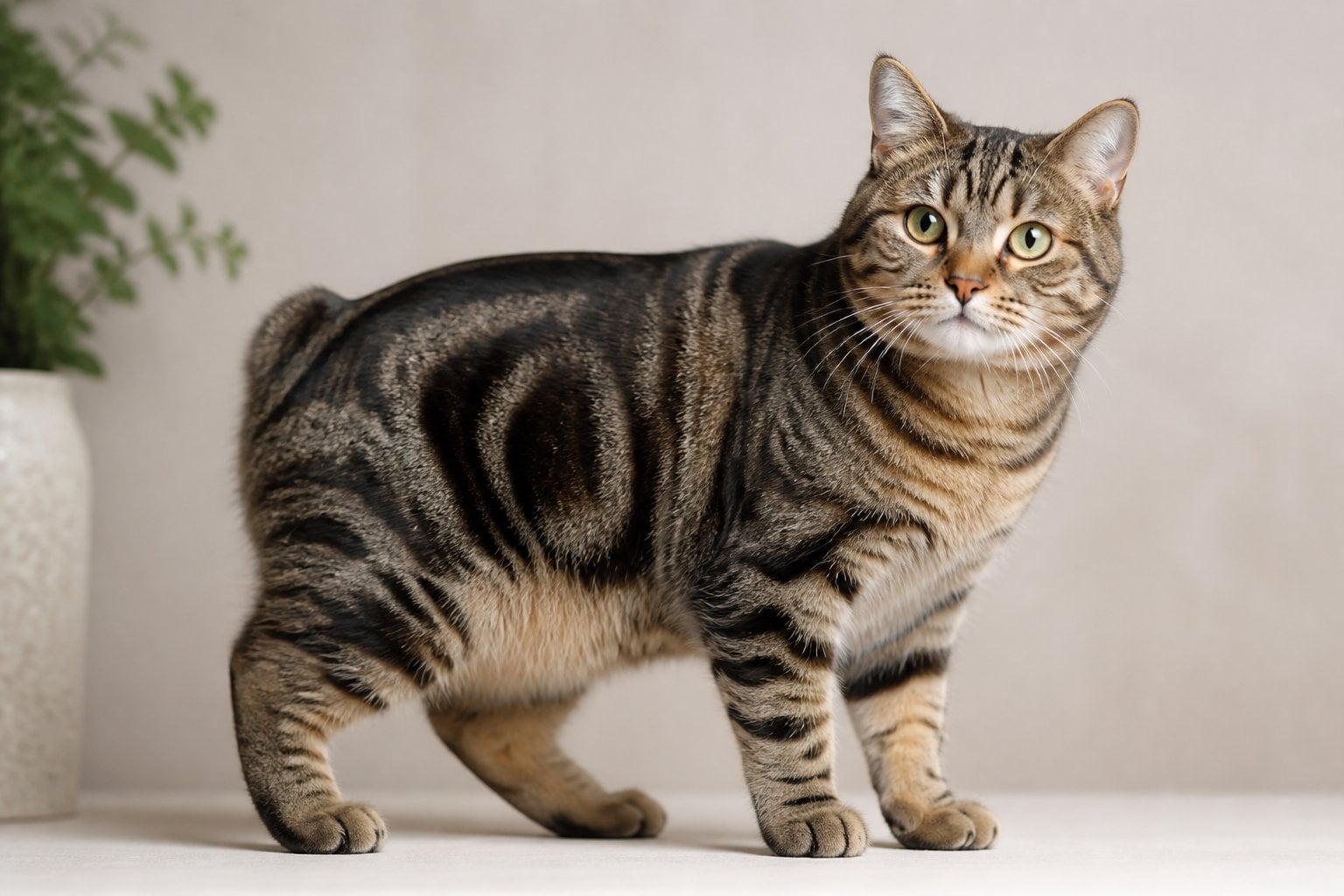
The Manx sits at the smaller end of this list, but its build gives it real substance. Males typically weigh 10 to 12 pounds, females eight to 10, with a shoulder height of roughly 9 to 11 inches.
What you notice first is the shape. This is a round, compact cat with a broad chest, a rounded head, and hind legs noticeably longer than the front pair, which gives the Manx a rabbit-like gait.
The breed originated on the Isle of Man, where a natural mutation shortened or eliminated the tail. Some Manx are completely tailless, others carry a short stub, and a few are born with a nearly full tail.
Expect an even-tempered companion that bonds closely with its household. Manx cats generally get along with children and other pets, and they tend not to do well when left alone for long stretches.
30. LaPerm
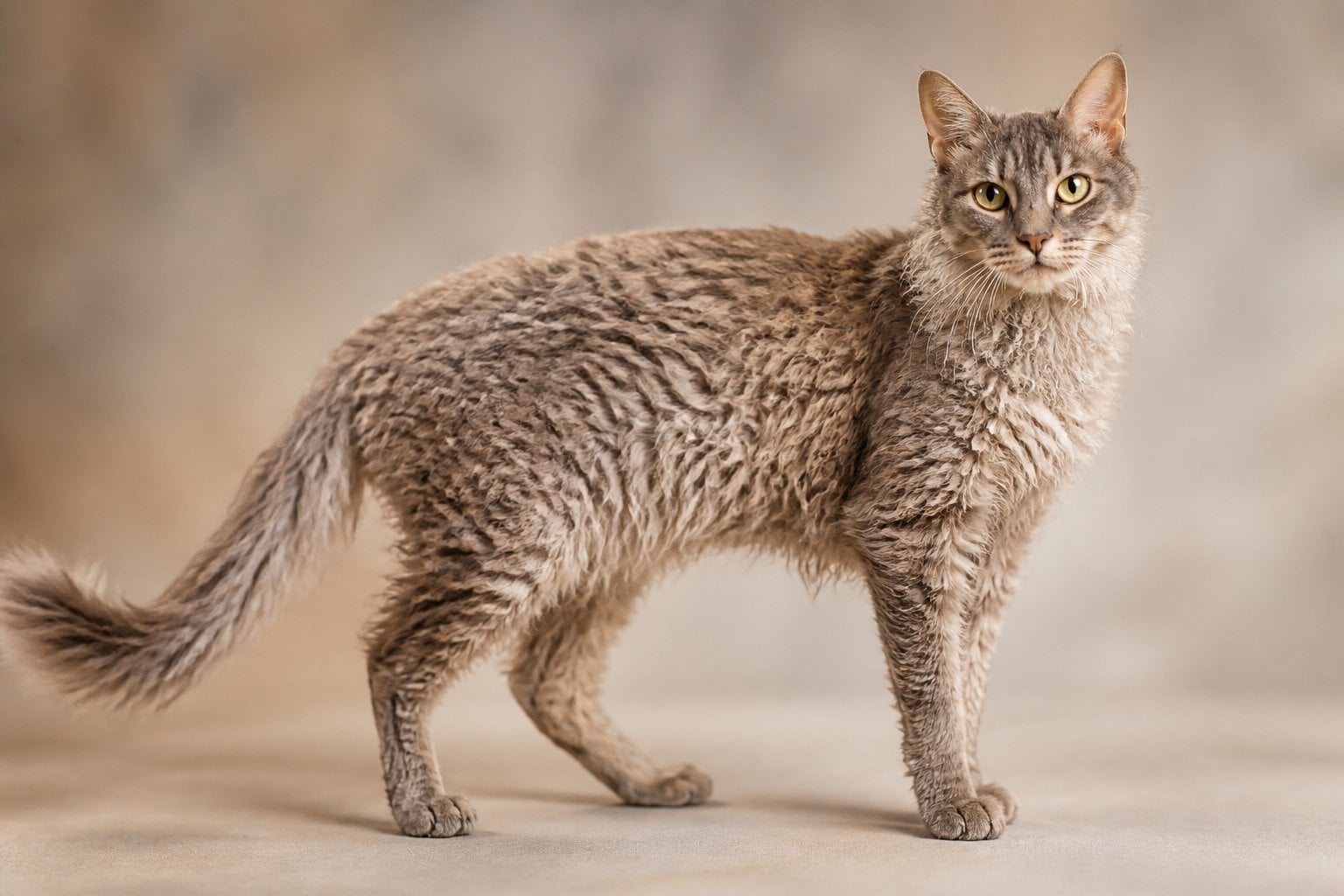
The LaPerm sits at the smaller end of this list, with most adults weighing between 8 and 12 pounds. Males are noticeably heavier than females, though neither reaches the bulk of a Maine Coon or Savannah.
What you’ll notice first is the coat. This rex breed developed in the United States, and its curls come from a dominant gene unrelated to other curly-coated cats.
The build is athletic and moderately long rather than stocky, so a LaPerm can look bigger than the scale suggests.
You can expect an active, affectionate cat that follows you from room to room. Many owners describe them as persistent lap-seekers.
Health is generally good, with a typical lifespan of 12 to 15 years, and some individuals living considerably longer.
Grooming needs stay low. Occasional combing keeps the curls defined without disturbing the coat’s natural texture.
Cat size comes down to three measurements — weight, body length, and shoulder height — and each tells you something different about a breed. Genetics sets the ceiling, but sex, nutrition, neutering age, and growth timeline all determine where an individual cat lands.
How Cat Size Is Measured
Breeders and veterinarians rely on three standard figures:
- Weight — measured in pounds or kilograms. Most domestic cats settle between 8 and 12 pounds, while large breeds commonly reach 15 to 25 pounds.
- Body length — measured from the tip of the nose to the base of the tail. Adding the tail gives you total length, which is how record-holders like Maine Coons are usually ranked.
- Shoulder height — measured from the floor to the top of the shoulder blade while the cat stands. Typical house cats fall around 9 to 10 inches; Savannahs can exceed 16 inches.
Bone structure matters too. A Maine Coon with a broad rib cage and heavy legs looks and weighs considerably more than a lanky Savannah of identical length.
Factors That Influence Adult Weight And Height
Genetics is the primary driver. A breed’s standard predicts adult size more reliably than any other single factor.
Sex creates a consistent gap. Male cats typically outweigh females of the same breed by 20 to 40 percent — a male Maine Coon may hit 20 pounds while his sister stops near 13.
Growth timeline varies widely. Most cats finish growing by 12 months, but Maine Coons, Ragdolls, and Norwegian Forest Cats continue filling out until three to five years old.
Nutrition and neutering age shape the outcome as well. Early neutering can delay the closure of growth plates, sometimes producing a slightly taller cat with longer limbs.
Body condition is separate from frame size. A 22-pound cat may be genuinely large or simply overweight — check for a visible waist and palpable ribs to tell the difference.
A 20-pound Maine Coon needs a litter box roughly 1.5 times its body length, a cat tree rated for its weight, and a feeding plan measured in calories rather than scoops. Joint health, portion control, and breed-specific screening matter more as body mass increases.
Space, Exercise, And Enrichment Needs
Big cats need horizontal room as much as vertical height. A Savannah or Chausie will pace a small apartment, so aim for open floor space and at least one perch tall enough to survey the room.
Check the weight rating on cat furniture. Many mass-market cat trees are built for 10-pound cats and will wobble under a 22-pound Maine Coon.
Practical gear adjustments:
- Litter boxes: at least 1.5x body length; storage totes often work better than commercial pans
- Scratching posts: 32 inches or taller so a stretched-out cat can use the full height
- Beds: firm, supportive orthopedic styles for cats over 15 pounds
- Carriers: measure your cat, not the label — many “large” carriers max out around 16 pounds
Active breeds like Bengals and Savannahs need two 15-minute play sessions daily. Wand toys, puzzle feeders, and leash walks all help reduce destructive behavior.
Nutrition And Weight Management
Size does not mean unlimited food. A large-framed cat needs more total calories than a 9-pound domestic shorthair, but the same calorie-per-pound math applies, roughly 20 calories per pound of ideal body weight for an indoor adult.
Feed measured portions rather than free-feeding. Kibble left out all day is the most common cause of obesity in large breeds, and extra weight compounds the joint stress these cats already carry.
| Nutrient | Why it matters for large breeds |
|---|---|
| Protein (40%+ of calories) | Maintains the muscle mass that supports heavy frames |
| Omega-3s (EPA/DHA) | Supports joint comfort in cats prone to hip dysplasia |
| Taurine | Cardiac support, relevant for HCM-prone breeds |
| Moisture | Reduces urinary risk in cats fed dry-only diets |
Large breeds mature slowly. Maine Coons and Ragdolls often need kitten formula until 15 to 18 months, well past the 12-month mark used for average cats.
Health Considerations For Bigger Cats
Several conditions appear more often in large breeds, and most are detectable before symptoms show.
Hypertrophic cardiomyopathy (HCM) is the leading concern in Maine Coons and Ragdolls. Ask breeders for HCM DNA test results and schedule an echocardiogram if a murmur is detected.
Hip dysplasia and arthritis affect heavy-bodied cats disproportionately. Watch for hesitation before jumping, reduced grooming of the lower back, or litter box avoidance, all signs of pain rather than behavior problems.
Spinal muscular atrophy and polycystic kidney disease are also screened for in Maine Coons and Persians respectively.
Book annual exams through age 7, then twice yearly after, with bloodwork and blood pressure checks. Keep body condition at a 4 or 5 on the 9-point scale; you should feel ribs under a thin fat layer without pressing.


