
The 30 Worst Cat Owner Mistakes of All Time: Are You Guilty of These?
Cats are independent animals, and this independence can sometimes lead owners to overlook important aspects of their care. Many mistakes happen because cat behavior is not always easy to read, and signs of stress, illness, or discomfort can go unnoticed for long periods.
Understanding the most frequent errors cat owners make can help you provide better care and avoid problems that affect your cat’s health and behavior. These mistakes range from basic care oversights to misunderstandings about feline nutrition, environment, and social needs.
This article reviews 30 common mistakes cat owners make, along with practical information to help you recognize and correct these issues in your own home.
1. Ignoring sudden changes in appetite, thirst, litter-box use, or behavior
Cats hide illness by instinct. A sudden change in eating, drinking, or litter-box habits is often the only signal you’ll get that something is wrong.
If your cat skips meals for more than a day, drinks noticeably more or less water, or stops using the litter box properly, you should take note. These aren’t quirks to wait out.
Increased vocalization, hiding, or sudden aggression can point to pain, illness, or cognitive decline, especially in older cats. Don’t assume it’s “just aging” if the shift is abrupt.
Waiting a few days to see if things improve can allow treatable conditions, like kidney disease or urinary blockages, to worsen. If you notice any of these changes lasting more than 24 to 48 hours, contact your vet.
2. Skipping routine veterinary examinations

Cats hide illness well. Your cat can carry a developing problem for months without any obvious signs, which is why annual checkups matter more than they might seem to.
By the time you notice weight loss, changed appetite, or lethargy, the underlying issue may already be advanced. Routine exams catch problems like dental disease, kidney changes, or thyroid issues before they become harder and costlier to treat.
Vaccinations and parasite prevention also depend on consistent scheduling. Skipping a year here or there can leave gaps in protection you might not realize until it’s too late.
If your cat is over seven, twice-yearly visits are worth considering. Older cats develop health issues faster, and senior screening bloodwork often reveals conditions with no visible symptoms yet.
Treat checkups as prevention, not a reaction to visible illness. Waiting until your cat “seems sick” defeats the purpose of veterinary care entirely.
3. Failing to spay or neuter without a responsible medical or breeding plan
Leaving your cat intact without a clear medical or breeding reason creates problems you can avoid. Unspayed females go into heat repeatedly, and intact males often spray, roam, and fight with other cats.
If you don’t plan to breed, spaying or neutering removes these behaviors and lowers the risk of certain reproductive cancers and infections. Waiting too long increases the odds your cat escapes and mates unintentionally, adding to the number of unwanted litters born each year.
If you do intend to breed, that decision should come with a plan. Work with a veterinarian to screen for genetic conditions, and understand the health risks pregnancy carries for your cat.
Breeding without this groundwork puts your cat’s health at risk and contributes to the surplus of cats already needing homes. Either path—spaying, neutering, or responsible breeding—requires a clear decision, not neglect by default.
4. Feeding a calorie-heavy diet that causes obesity
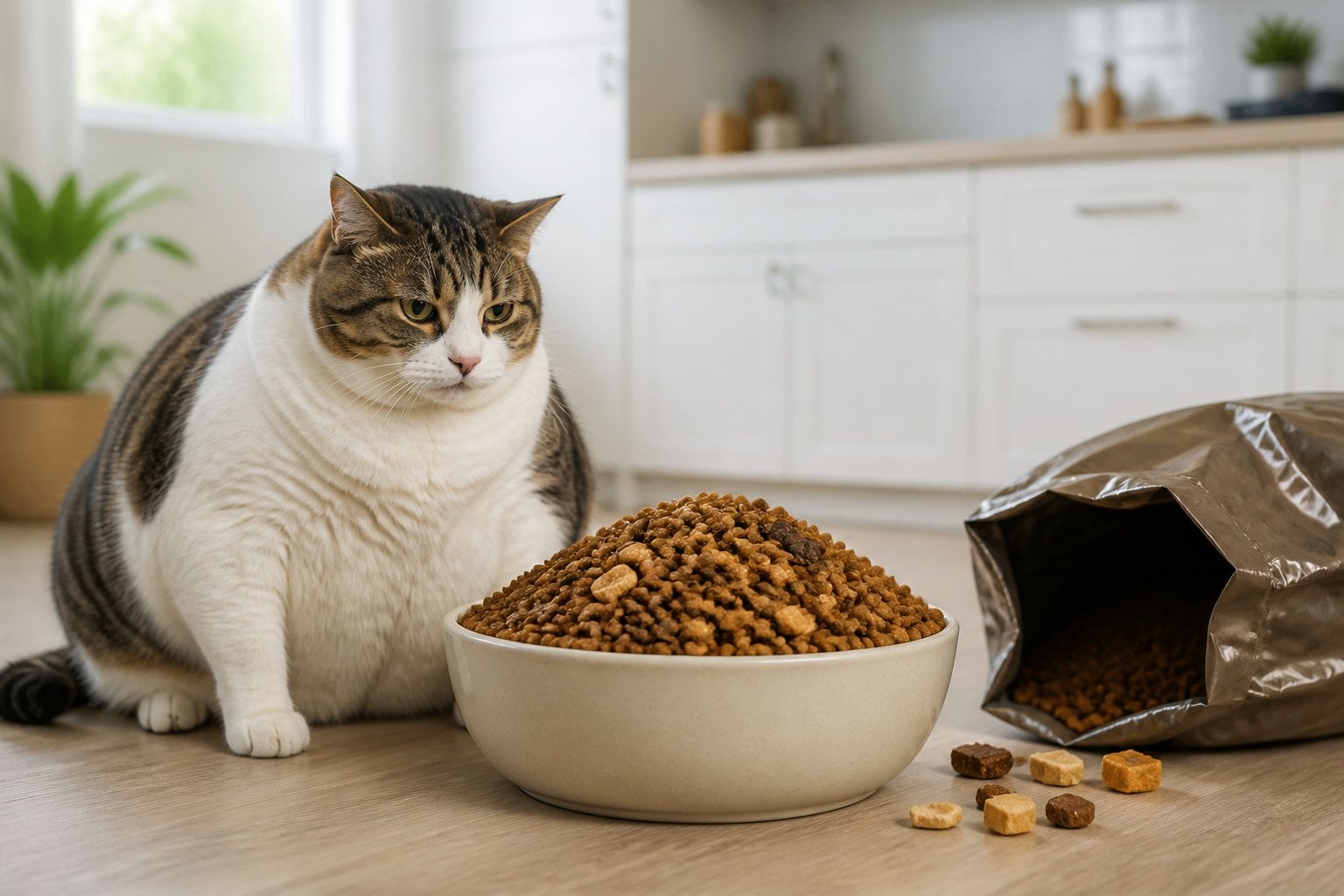
Many cat owners overestimate how many calories their cat actually needs. Dry food, in particular, is often calorie-dense, and pouring it into a bowl without measuring adds up quickly.
Free-feeding makes this worse. When food is always available, you lose track of how much your cat eats in a day, and grazing habits can mask steady weight gain.
Treats compound the problem. A few extra pieces here and there seem harmless, but they can account for a significant share of your cat’s daily calorie intake.
Obesity isn’t just about appearance. It raises your cat’s risk of diabetes, joint problems, and liver disease.
Check the feeding guidelines on your cat’s food label, and adjust portions based on your cat’s weight, age, and activity level. If you’re unsure how many calories your cat should be eating, ask your veterinarian for a specific recommendation rather than guessing.
5. Offering toxic foods such as onions, garlic, chocolate, or grapes

Sharing your food with your cat feels generous, but many kitchen staples are dangerous to them. Onions and garlic damage red blood cells and can lead to anemia, even in small amounts.
Chocolate contains theobromine, a compound cats cannot metabolize efficiently. This can affect their heart rate and nervous system.
Grapes and raisins are another risk. The exact toxic component isn’t fully understood, but they’ve been linked to kidney damage in some cats.
You should also keep alcohol, caffeine, and xylitol out of reach. These substances can cause rapid, serious reactions in a small feline body.
Check ingredient labels on sauces and baked goods before leaving them within your cat’s reach. If you suspect your cat has eaten something toxic, contact your veterinarian immediately rather than waiting for symptoms to appear.
6. Leaving fresh water unavailable or rarely changing it
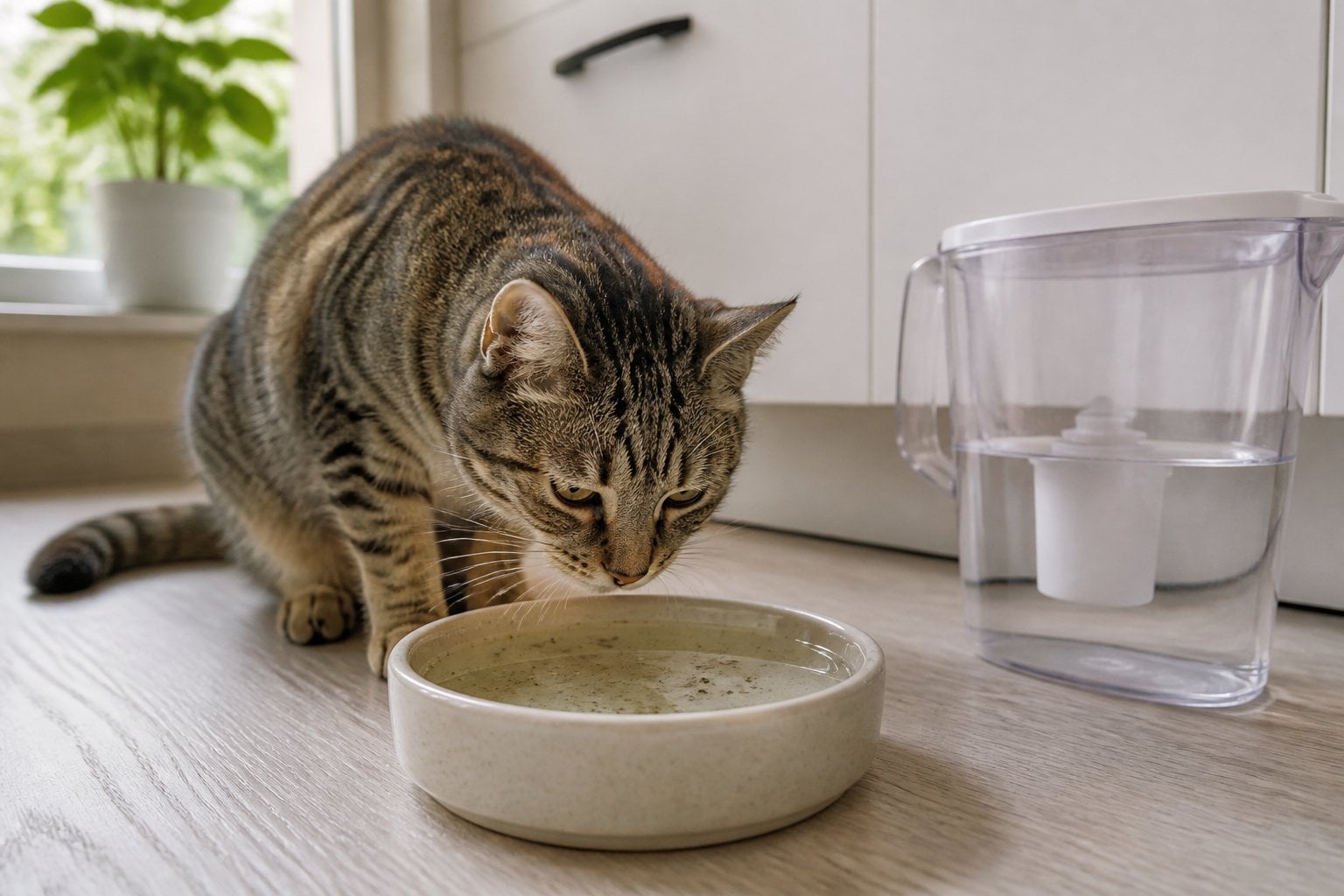
Cats need constant access to clean water. If you only fill the bowl once a day, or let it sit for several days, you’re likely undermining your cat’s hydration without realizing it.
Stale water collects dust, hair, and bacteria. Your cat may notice this before you do, and refuse to drink from a bowl that smells or tastes off. This puts your cat at risk of chronic dehydration, which can contribute to urinary tract issues and kidney problems over time.
You should wash the bowl daily and refill it with fresh water at least once, ideally twice, a day. Placement matters too. Keep water away from the litter box and food bowl, since many cats won’t drink near either one.
If your cat seems uninterested in a standard bowl, consider a pet fountain. Moving water often encourages cats to drink more consistently.
7. Feeding a kibble-only diet without evaluating hydration needs
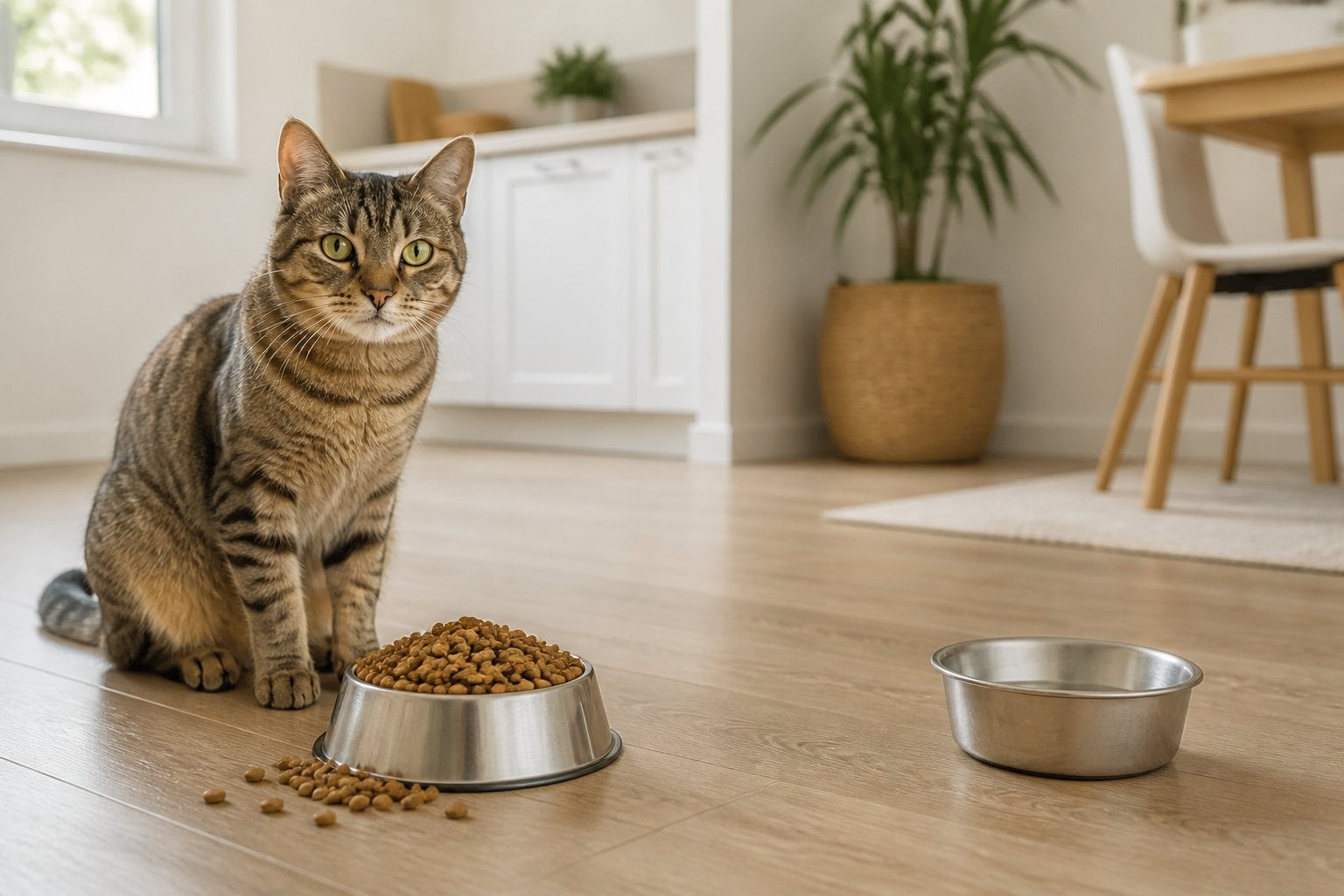
Many cats can survive on dry food alone, but survival isn’t the same as optimal health. Kibble typically contains only about 10% moisture, far less than what cats would get from prey in the wild.
Cats descend from desert-dwelling ancestors, so their thirst drive is naturally low. You can’t assume your cat will drink enough water to make up for a dry diet.
This mismatch between low thirst drive and low-moisture food creates real risk. Over time, chronic dehydration can strain the kidneys and contribute to urinary tract issues.
If you feed kibble exclusively, you need to actively monitor your cat’s water intake. Adding wet food, using a water fountain, or mixing water into dry food are simple ways to offset the deficit.
Skipping this evaluation isn’t necessarily dangerous in the short term, but it can quietly set the stage for long-term problems.
8. Giving cats human medication without veterinary approval

Cats process drugs differently than people do. Their livers lack certain enzymes needed to break down many common medications, so a dose that helps you can poison your cat.
Pain relievers like ibuprofen and acetaminophen are especially risky. Even small amounts can damage a cat’s liver or kidneys, and acetaminophen can be fatal within days.
Aspirin isn’t automatically safe either. Cats metabolize it far slower than humans, so a dose that seems reasonable can build up to toxic levels.
Antihistamines and cold medicines carry hidden dangers too. Many combination products contain ingredients that are harmless to you but toxic to your cat.
If your cat seems sick or in pain, call your vet before reaching for your own medicine cabinet. Store all human medications where your cat can’t access them, since accidental ingestion happens more often than you’d expect.
9. Using essential oils or unsafe household chemicals around cats
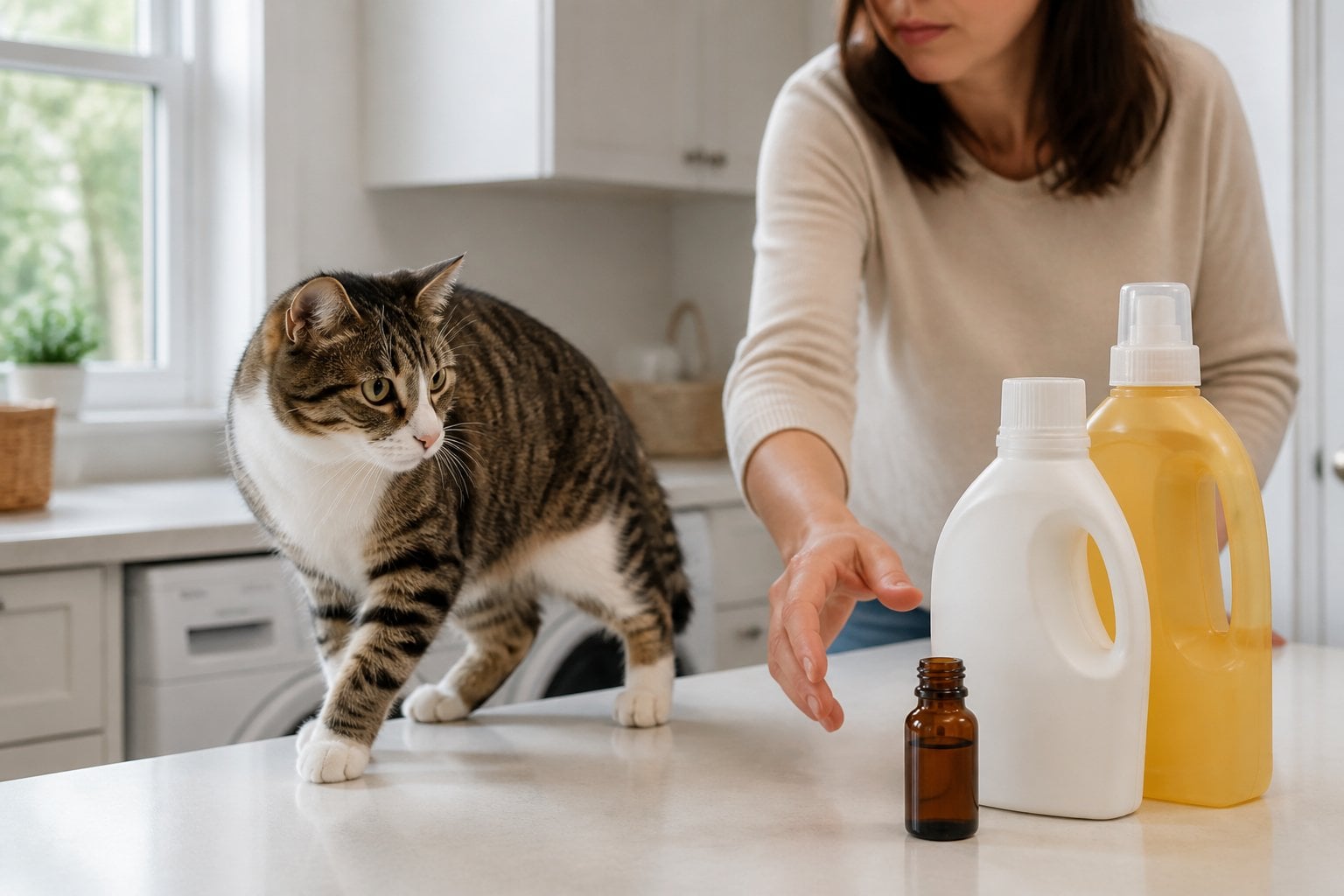
Cats lack certain liver enzymes needed to break down many common compounds, including those found in essential oils. This means substances that are harmless to humans and dogs can build up to toxic levels in your cat’s system.
Diffusers, reed diffusers, and topical oil products are common sources of exposure. Oils like tea tree, citrus, cinnamon, and clove are particularly risky and can cause respiratory distress, drooling, tremors, or liver damage.
Household cleaners pose similar dangers. Bleach, ammonia, and phenol-based disinfectants can irritate your cat’s lungs, skin, and eyes on contact.
If you want to use cleaning products or fragrance in your home, check labels for pet safety warnings before use. Store all chemicals and oils in closed cabinets your cat cannot access, and always ventilate rooms after cleaning.
When in doubt, choose fragrance-free products and consult your veterinarian about safer alternatives for scenting your home.
10. Allowing access to lilies and other poisonous plants
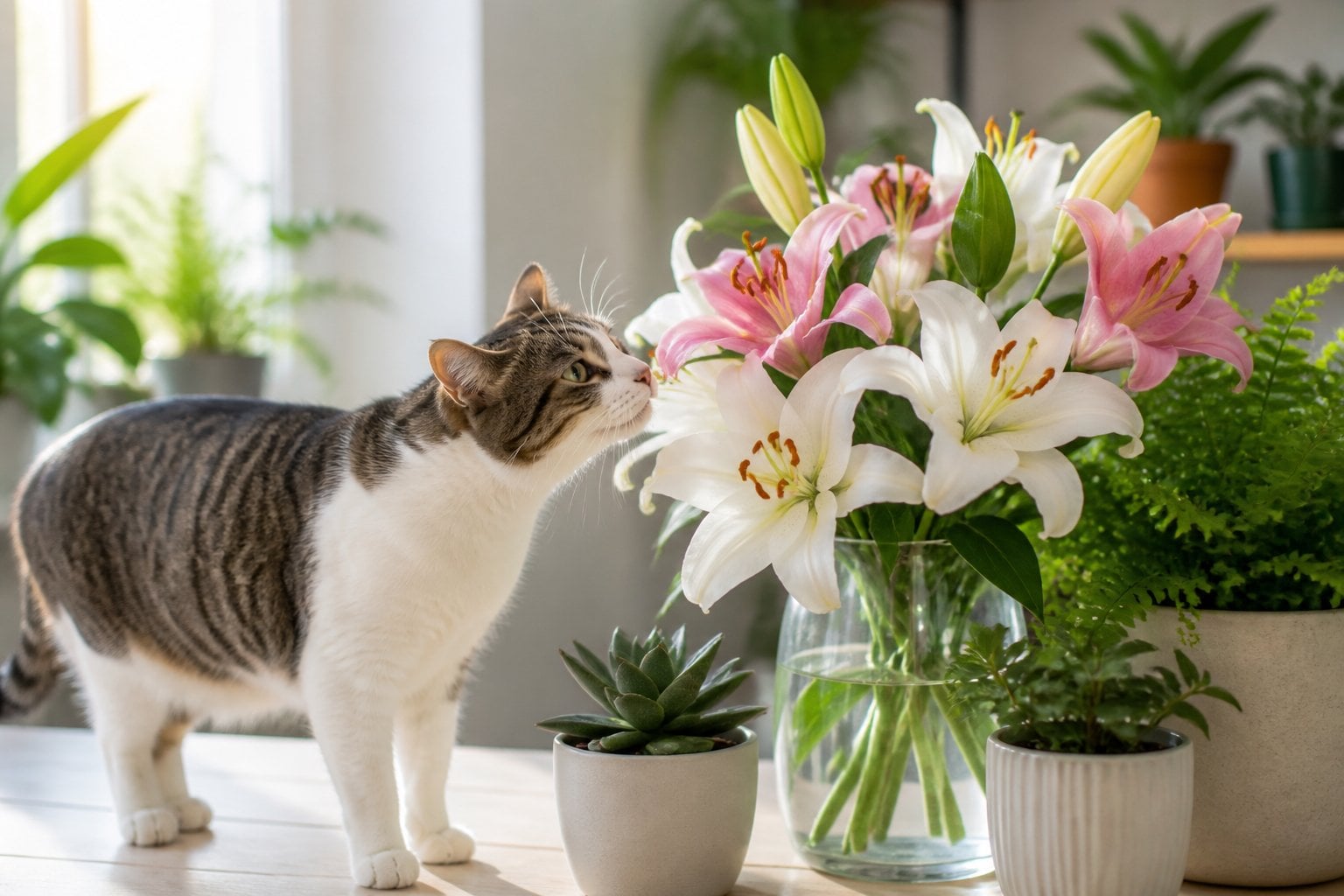
Lilies are one of the most common causes of fatal poisoning in cats. Every part of the plant is toxic, including the pollen and the water in the vase.
If your cat brushes against a lily, pollen can stick to their fur. When they groom themselves, they ingest it, and this alone can be enough to cause kidney failure.
You may not realize your cat is in danger until symptoms appear, often within hours. Early signs include vomiting, lethargy, and loss of appetite, but by then internal damage may already be underway.
Lilies aren’t the only risk. Plants like sago palm, azaleas, and pothos are also toxic to cats and are frequently found in homes.
Before buying flowers or houseplants, check whether they’re safe for cats. Keep any toxic varieties completely out of your home, since even small amounts of exposure can cause serious harm.
11. Ignoring dental care and signs of oral pain
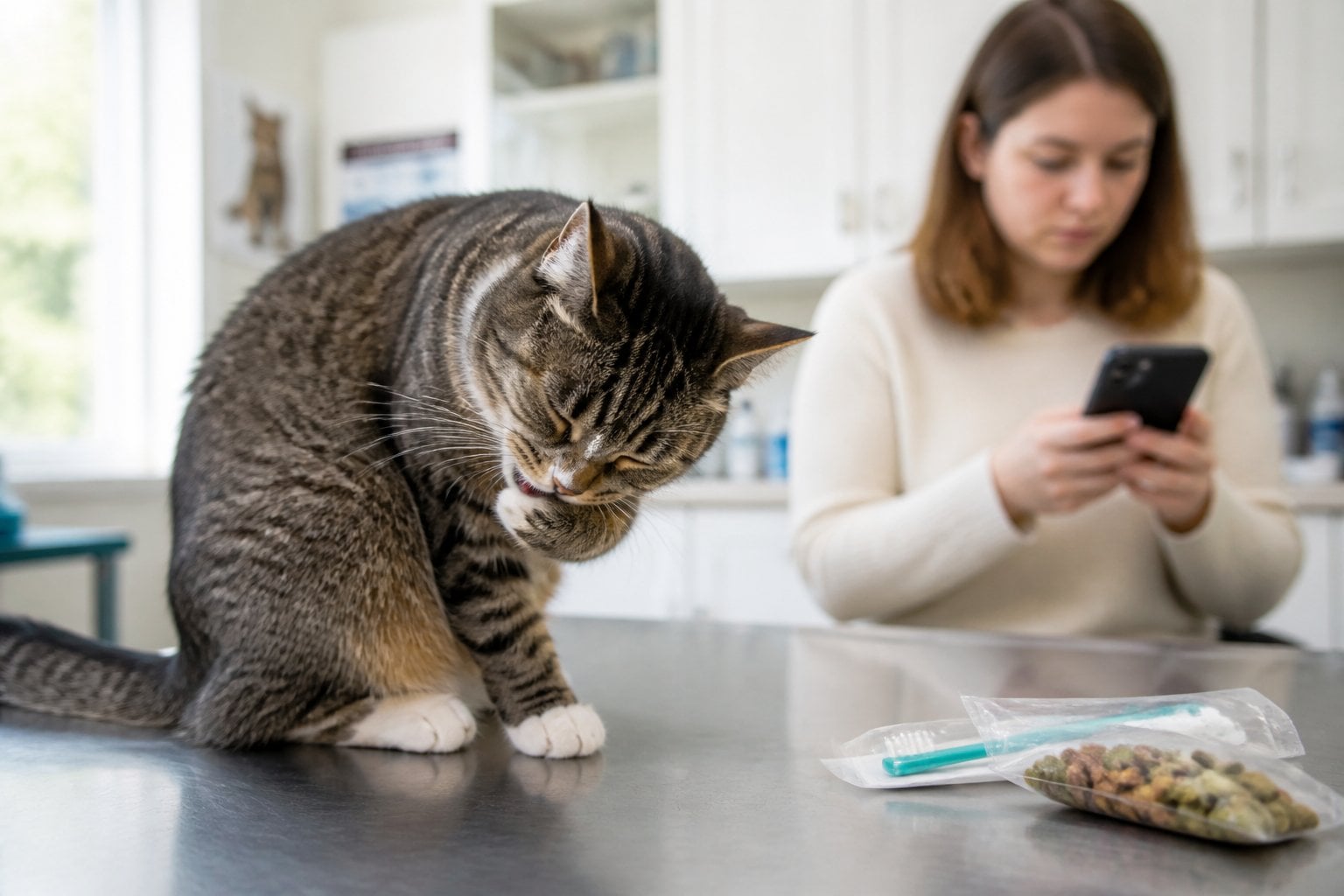
Most cat owners skip toothbrushing entirely, assuming it’s unnecessary or too difficult to manage. Over time, plaque hardens into tartar, and gum disease sets in quietly.
By age three, many cats already show some degree of dental disease. Cats are also skilled at hiding pain, so you may not notice anything wrong until the condition has progressed significantly.
Watch for bad breath, drooling, reduced appetite, or pawing at the mouth. Dropping food while eating or chewing on one side can also signal a problem.
You don’t need to brush daily to make a difference, but some routine is better than none. Introduce a pet-safe toothpaste gradually, and pair it with dental treats or diets designed to reduce buildup.
Schedule regular veterinary checkups that include an oral exam. Left untreated, dental disease can lead to tooth loss, infection, and pain that affects your cat’s quality of life.
12. Treating persistent vomiting or diarrhea as normal

Occasional vomiting or a single loose stool isn’t usually cause for alarm. But when it happens repeatedly, you shouldn’t shrug it off as just a sensitive stomach.
Cats hide illness well, so ongoing digestive symptoms often signal something more serious. Conditions like kidney disease, inflammatory bowel disease, parasites, or thyroid problems can all present this way.
If your cat vomits more than once a week, or has diarrhea lasting more than a couple of days, you need a vet visit. Waiting it out at home puts your cat at risk of dehydration and delays diagnosis of an underlying issue.
Blood in the stool, lethargy, or weight loss alongside these symptoms means you should seek care immediately. Don’t assume it will resolve on its own just because it has before.
Your cat’s digestive system isn’t meant to be in constant distress. Treating it as routine can mean missing a treatable problem while it worsens.
13. Delaying emergency care for breathing difficulty or collapse
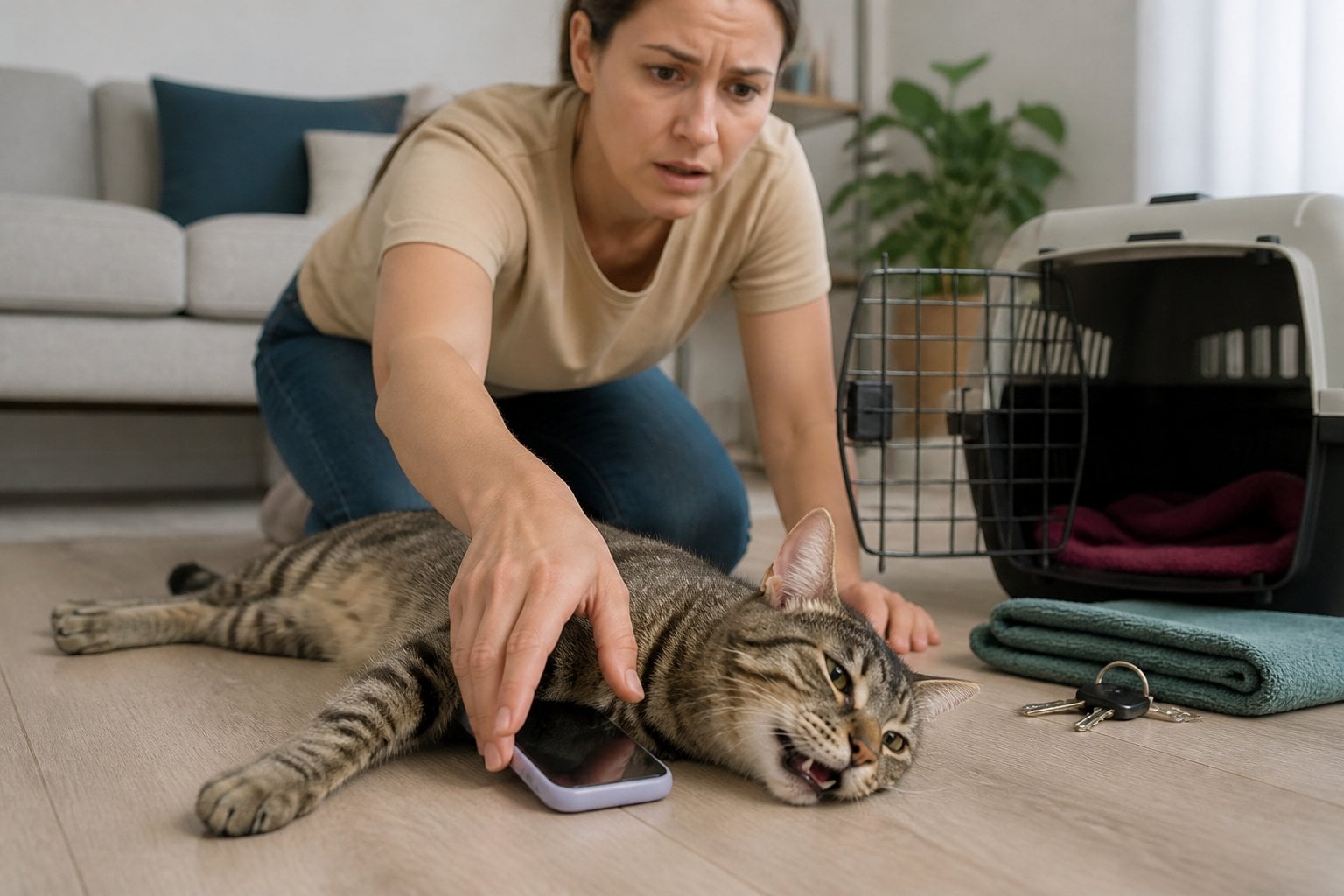
When your cat struggles to breathe, waiting to see if it improves is a mistake. Open-mouth breathing, fast breathing, or exaggerated effort to breathe are signs of a serious problem, not something that resolves on its own.
Collapse is another symptom you should never ignore. If your cat suddenly goes weak, falls over, or cannot stand, this points to a condition affecting the heart, lungs, or nervous system.
You may feel unsure about whether a trip to the emergency vet is necessary. But with breathing problems and collapse, hesitation costs valuable time.
Cats also hide illness well, so by the time symptoms are visible, the underlying issue is often advanced. Pale or blue gums alongside either symptom mean you should seek immediate veterinary attention rather than monitoring your cat at home.
Acting quickly gives your cat the best chance at a positive outcome.
14. Punishing scratching, biting, hissing, or house-soiling

Scratching, biting, hissing, and house-soiling are not acts of defiance. They are natural behaviors or signs of stress, pain, or an unmet need.
If you yell, hit, or spray your cat with water for these behaviors, you don’t fix the problem. You just teach your cat to fear you.
Punishment also fails to address the root cause. A cat scratching furniture needs an appropriate scratching post. A cat urinating outside the litter box may have a medical issue or a dirty tray.
Hissing and biting usually signal fear or overstimulation, not aggression for its own sake. Instead of punishing these reactions, you should identify the trigger and remove it.
Redirect unwanted behavior toward acceptable outlets and reward the response you want. This approach builds trust and produces better results than fear-based correction ever will.
15. Declawing a cat for furniture convenience
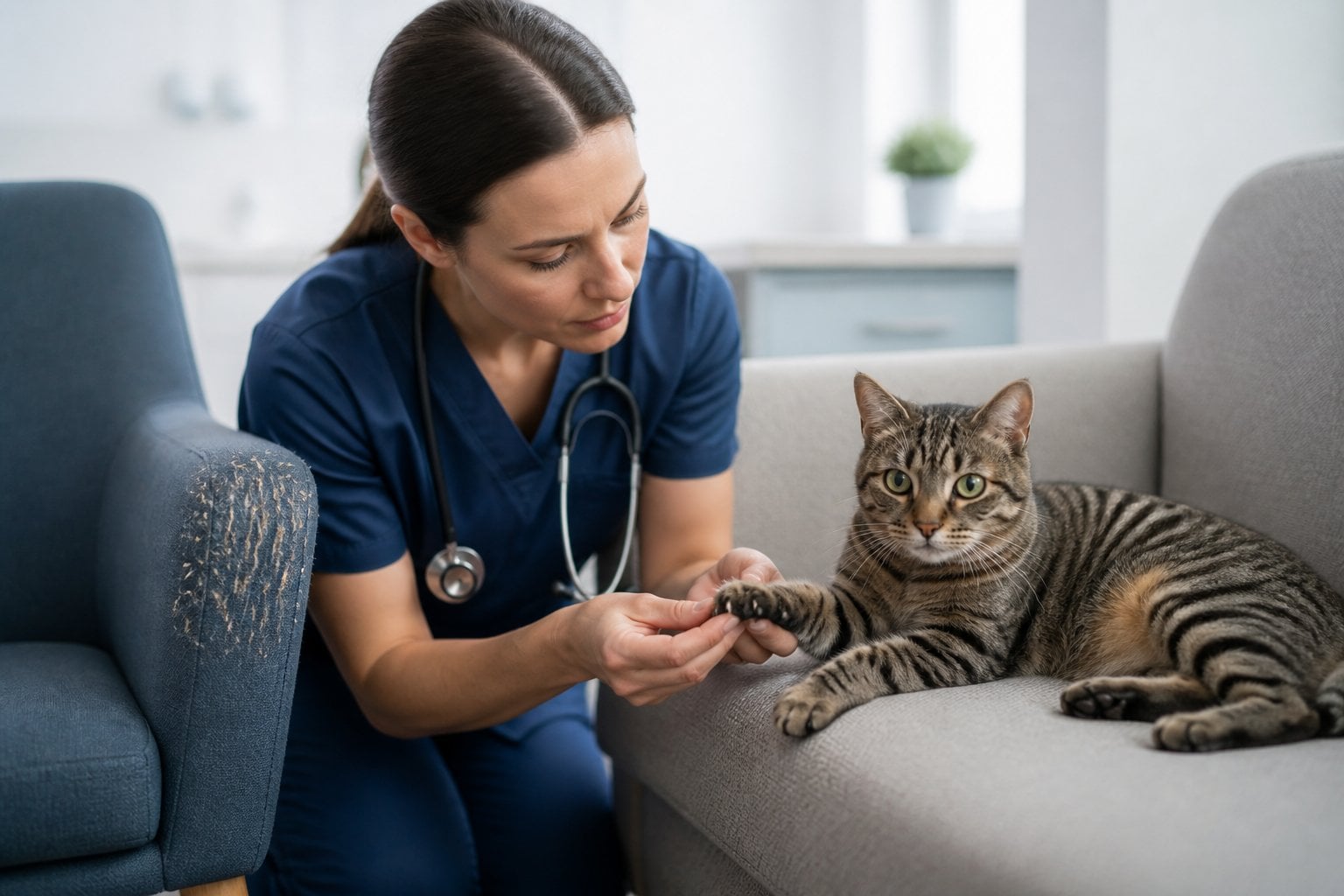
Declawing isn’t a simple nail trim. It’s an amputation that removes the last bone of each toe, similar to cutting off your fingers at the last knuckle.
If you’re considering declawing to protect your couch, you should know the procedure carries real risks. Cats can experience chronic pain, nerve damage, and altered gait afterward. Some develop litter box aversion because standing on litter becomes uncomfortable.
Behavioral changes are common too. A declawed cat may turn to biting more often, since scratching is no longer an option for defense or communication.
Better alternatives exist. Regular nail trims, scratching posts, and soft nail caps address the furniture problem without harming your cat. If you’re only weighing convenience against your cat’s long-term wellbeing, the alternatives are worth trying first.
16. Removing access to scratching posts and suitable surfaces
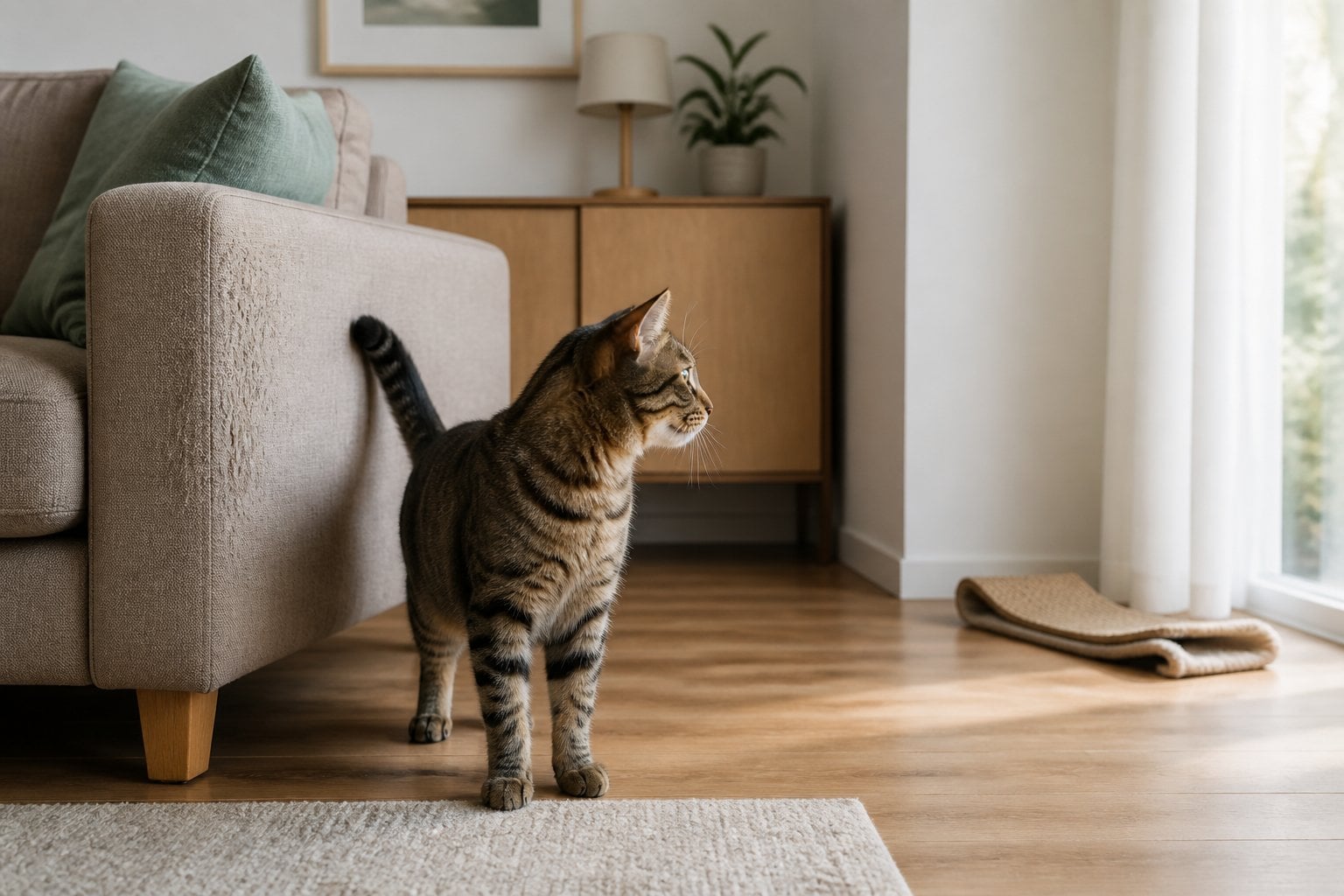
Some owners remove scratching posts because they take up space or don’t match the decor. This is a mistake. Your cat still needs to scratch, and without a designated surface, they will find another one.
Scratching serves several purposes for cats. It maintains claw health, stretches muscles, and marks territory through scent glands in their paws.
If you take away the only appropriate outlet, you haven’t stopped the behavior. You’ve just redirected it toward your furniture, carpet, or door frames.
Placement matters too. Moving a scratching post to an inconvenient location, like a closet or basement, often has the same effect as removing it entirely.
Cats scratch where they spend time and where the surface is accessible. Keep posts in visible, frequently used areas of your home rather than tucking them out of sight.
17. Providing too few litter boxes for the number of cats
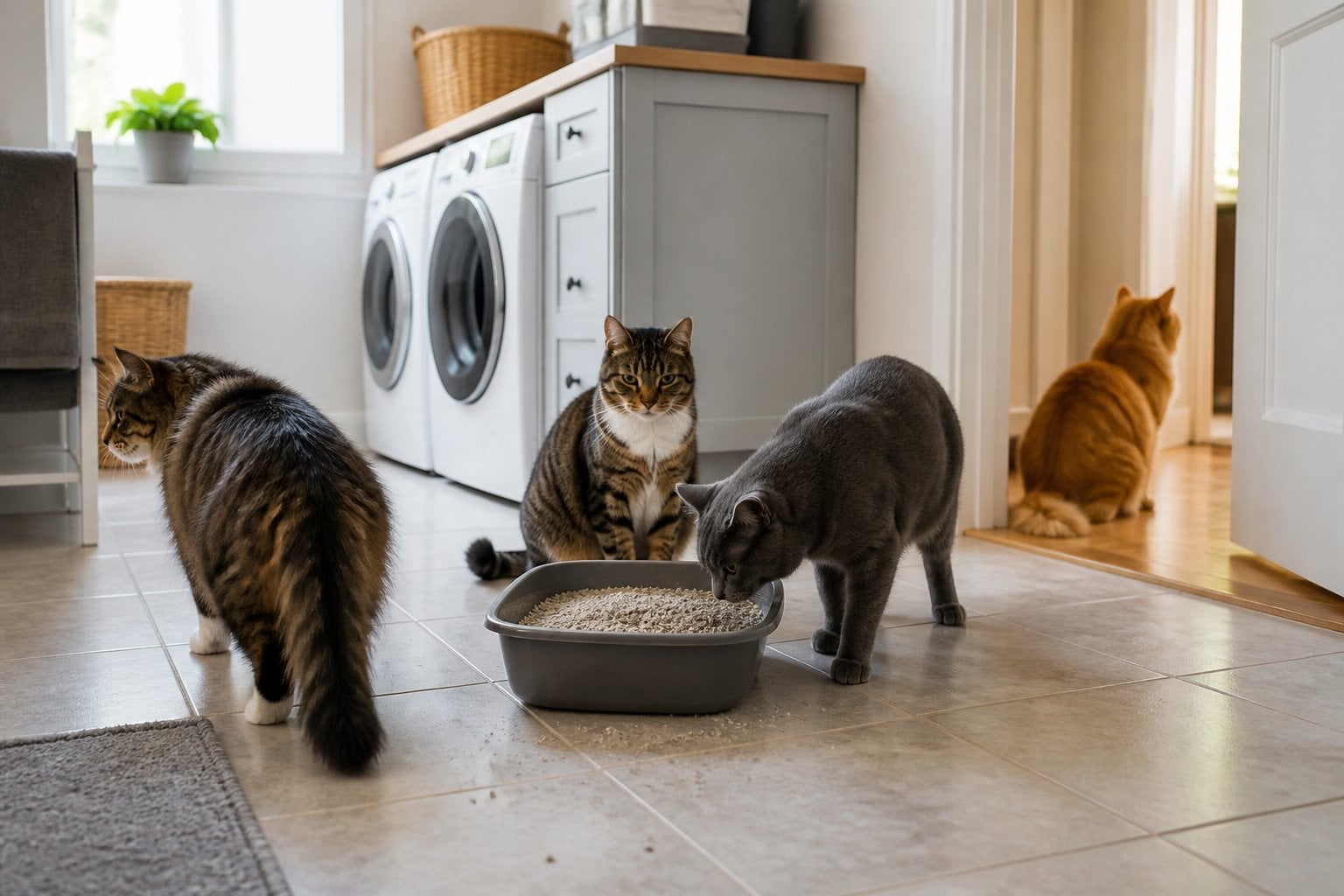
Cats don’t like sharing a bathroom, especially with other cats. If you have multiple cats and only one litter box, you’re setting up competition and stress.
The standard rule is one litter box per cat, plus one extra. So two cats need three boxes, and three cats need four. This isn’t excessive; it’s what prevents territorial disputes.
When there aren’t enough boxes, cats may start avoiding the litter box altogether. You might see accidents outside the box, spraying, or one cat guarding the box to keep others out.
Boxes should also be spread across different locations in your home, not lined up in a single room. A cat shouldn’t have to walk past a rival to relieve itself.
If you’re dealing with unexplained bathroom issues, count your boxes before assuming it’s a behavior problem. The fix is often as simple as adding another box.
18. Placing litter boxes beside noisy appliances
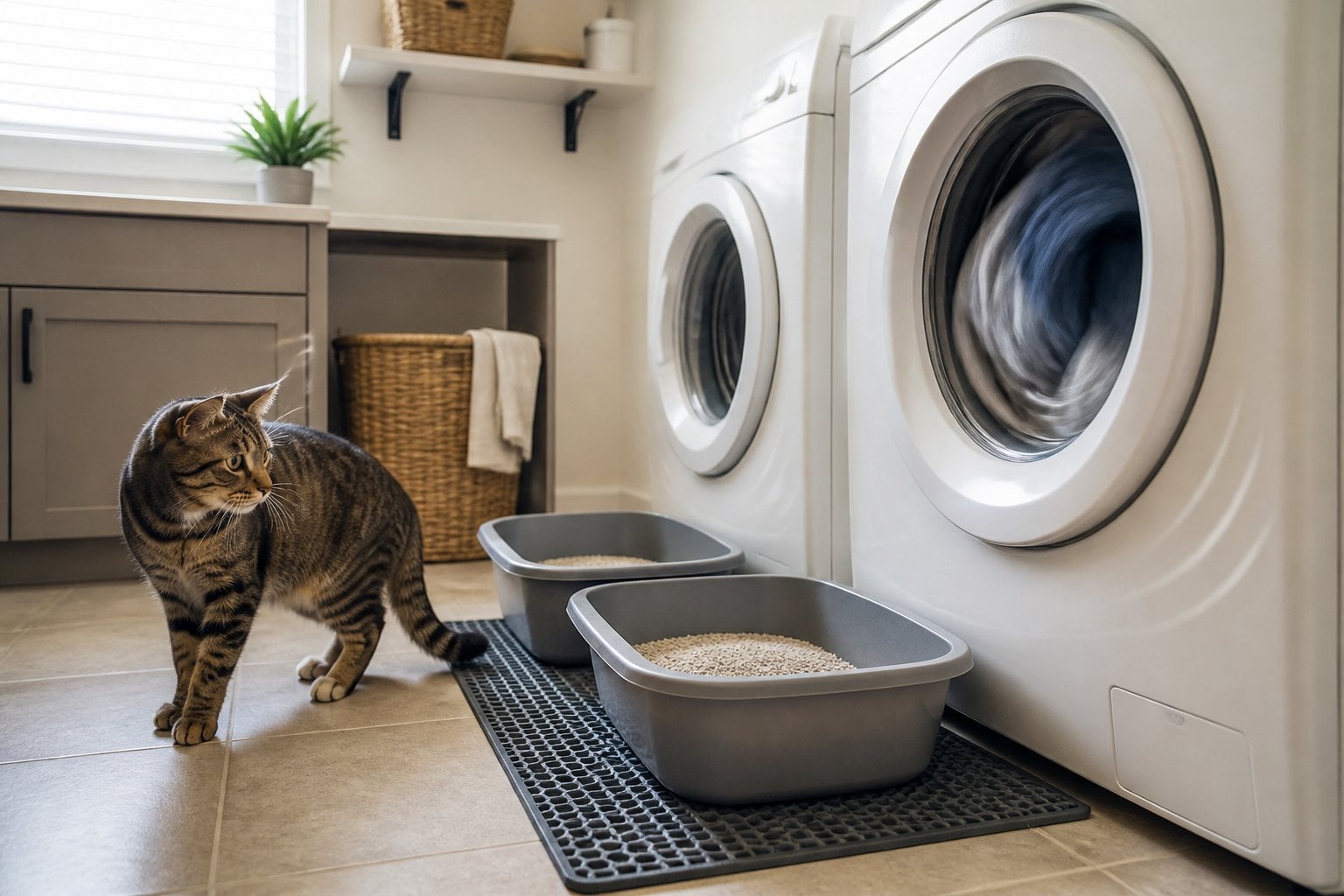
Putting a litter box next to a washing machine, dryer, or furnace is a common setup mistake. These appliances can switch on without warning, and a sudden noise while your cat is in the box can startle it badly.
Cats connect that fear to the box itself, not the machine. After one bad experience, your cat may avoid the box entirely and look for a quieter spot elsewhere in the house.
You want the box in a low-traffic area, but quiet matters just as much as privacy. Rooms with HVAC units, water heaters, or laundry equipment seem convenient, but the noise risk outweighs the space benefit.
Choose a location where sounds are predictable and minimal. A spare bathroom or quiet corner of a bedroom usually works better than a utility room.
19. Failing to clean litter boxes regularly
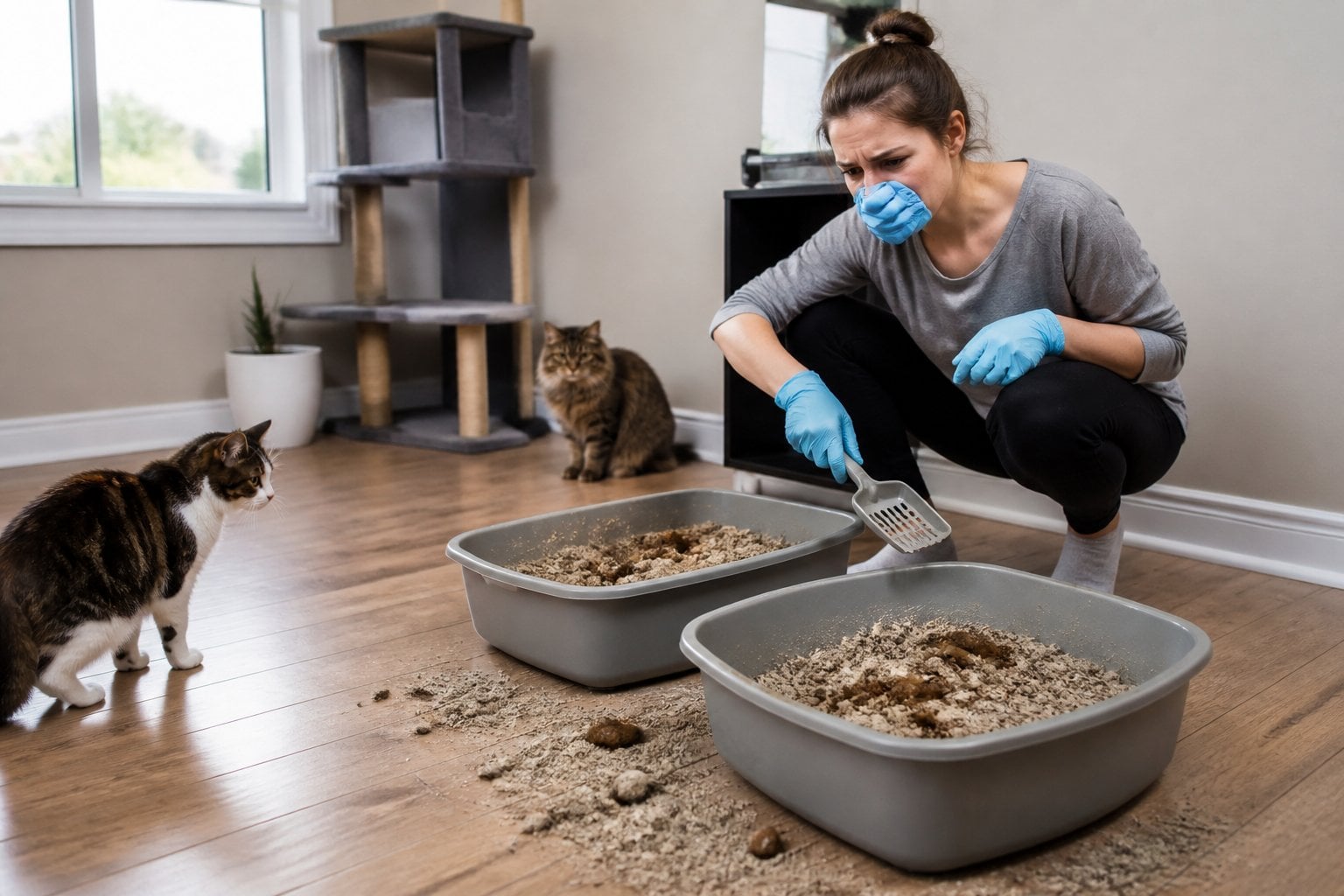
Cats are particular about cleanliness, and a dirty litter box is one of the fastest ways to cause problems. If waste sits too long, your cat may avoid the box entirely and find another spot in your home instead.
Scoop the box at least once a day. Cats often refuse to use a box that already contains waste, even from a single use.
A dirty litter box also creates health risks. If your cat holds their urine or feces because the box is too soiled, it can lead to urinary tract infections or other complications.
Beyond scooping, wash the entire box with mild soap every one to two weeks. Litter residue and bacteria build up on the surface over time, even with daily scooping.
Ignoring this task doesn’t just affect your cat’s habits. It also leads to lingering odors in your home and unnecessary stress for everyone involved.
20. Changing litter or household routines abruptly
Cats rely on predictability. They learn your household’s rhythm and expect it to stay consistent.
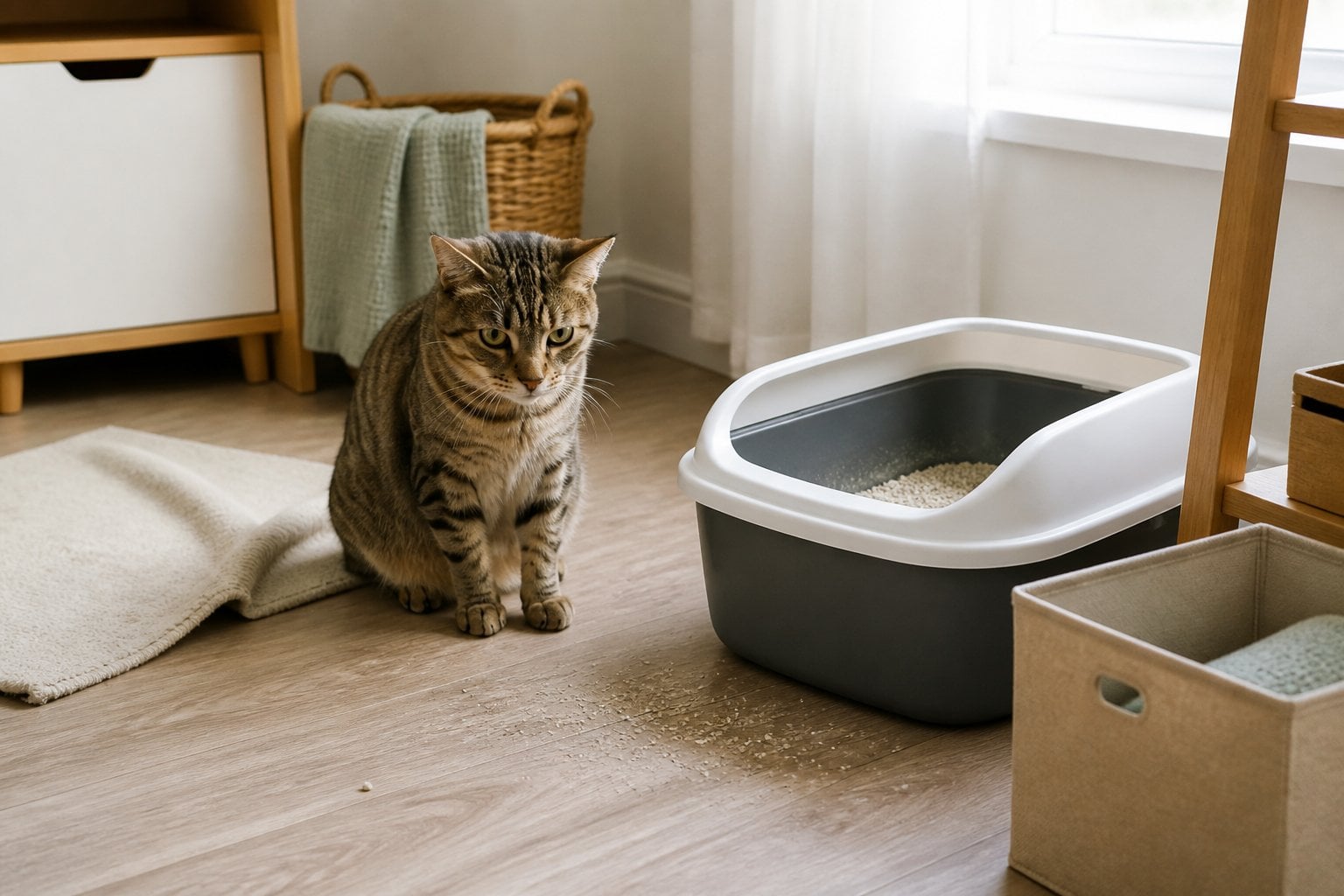
When you suddenly switch litter brands, move the litter box, or shift feeding times without transition, your cat notices immediately. This can cause stress, and stressed cats sometimes stop using the litter box altogether.
A sudden change in litter texture or scent is a common trigger for avoidance. Your cat may start eliminating on carpets or furniture instead, simply because the new setup feels unfamiliar or uncomfortable.
The same applies to daily schedules. If you rearrange furniture, change meal times, or alter your routine drastically, your cat has no way to prepare for it.
To avoid this, introduce changes gradually. Mix old and new litter for a week or two, and shift schedules in small increments rather than all at once. Your cat adjusts far better to slow transitions than sudden disruptions.
21. Using scented litter or harsh cleaners that deter box use
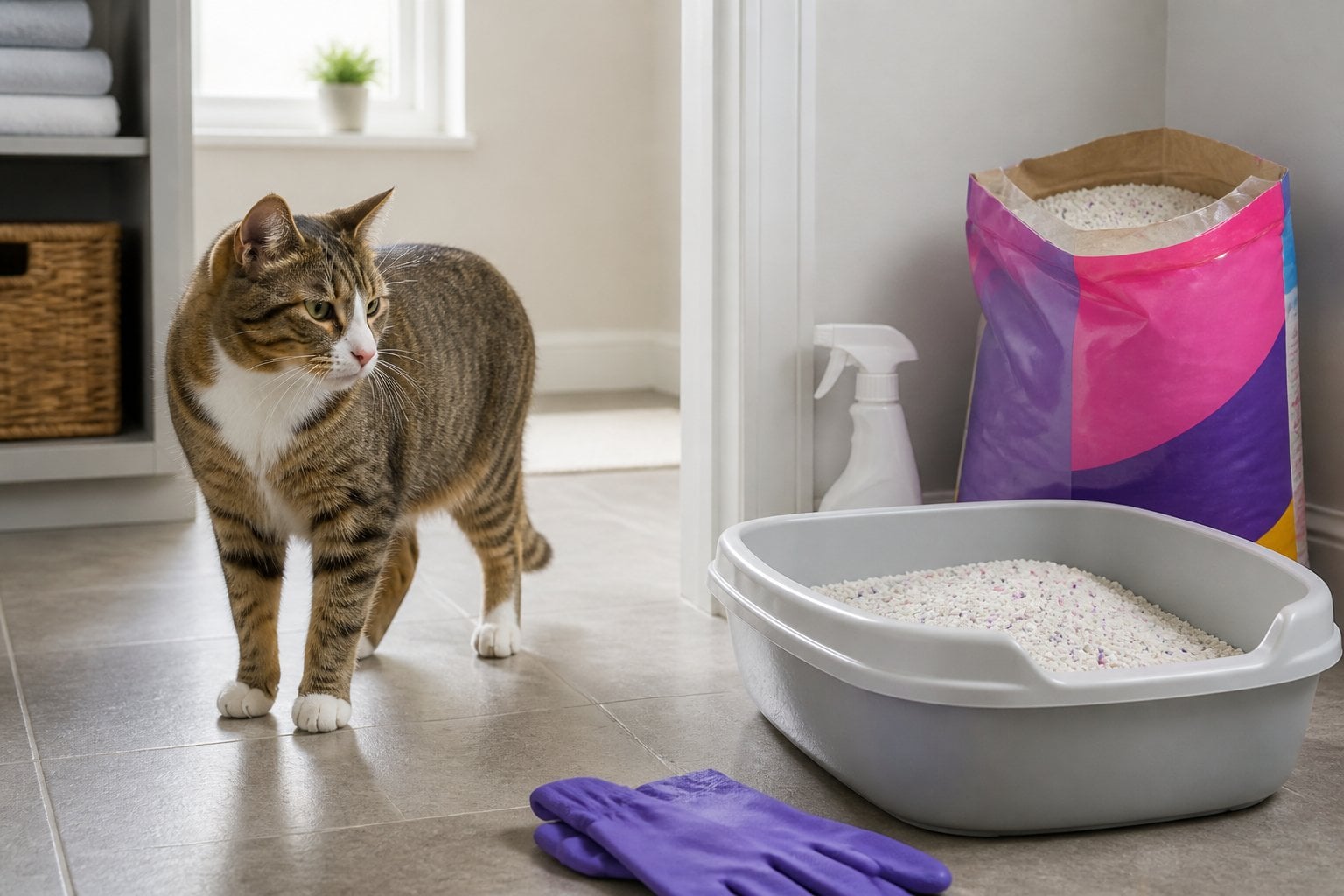
Cats have a much stronger sense of smell than humans do. Perfumed litter that seems pleasant to you can be overwhelming to your cat, and this often causes them to avoid the box entirely.
Harsh chemical cleaners create a similar problem. Bleach and other strong-smelling products can leave residue that lingers long after cleaning, making the box unappealing.
Unscented, clumping litter is generally the safer choice. It controls odor without relying on artificial fragrance, and most cats tolerate it better.
When cleaning the box, stick to mild soap and warm water. Rinse thoroughly and let it dry completely before adding litter back.
If your cat suddenly stops using a box you just cleaned or refilled, consider whether a new product or cleaner is the cause. Reverting to a plain, unscented option often resolves the issue.
22. Keeping cats indoors without climbing, hiding, or hunting opportunities
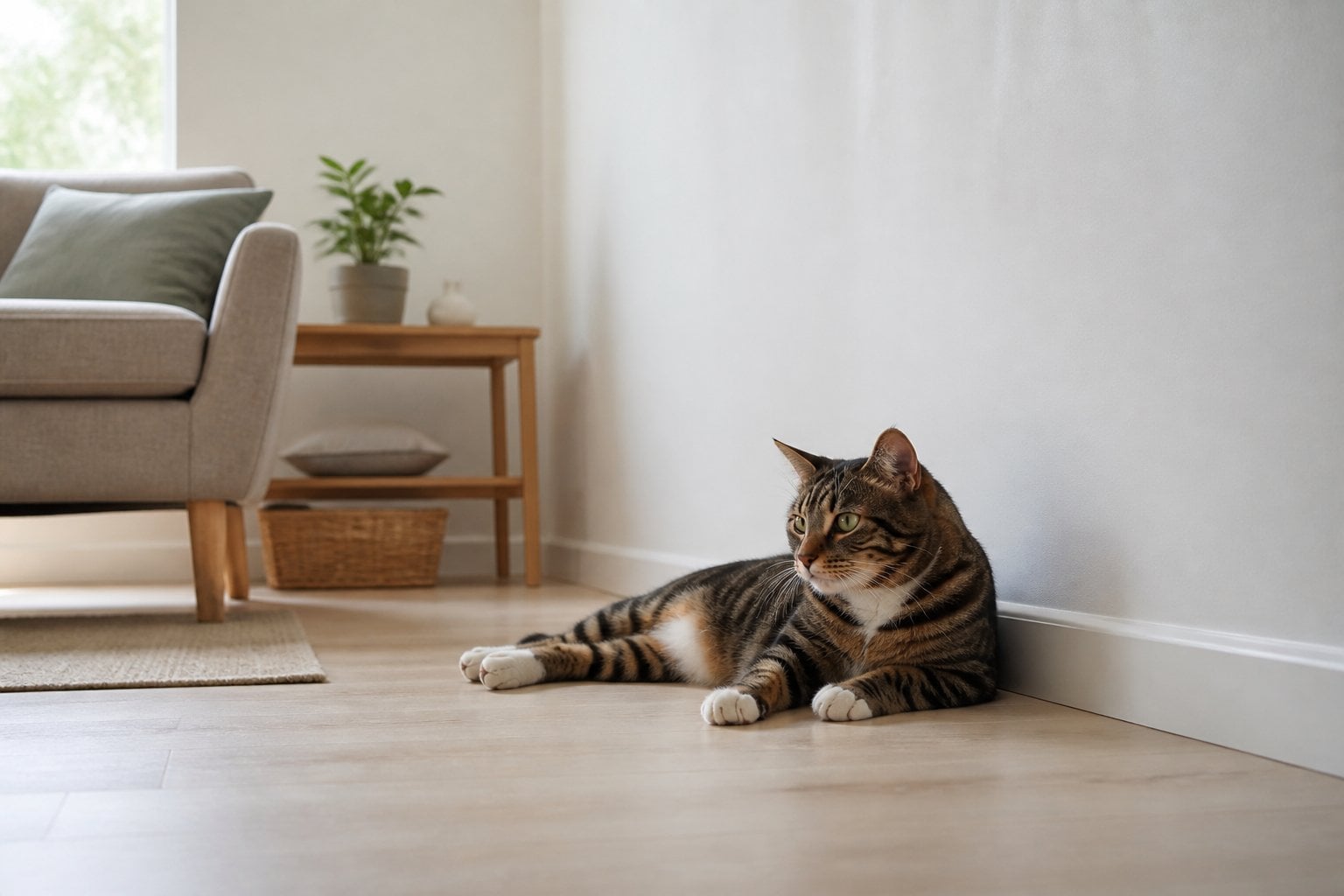
Keeping your cat indoors protects it from cars, predators, and disease. But if you only provide food, water, and a litter box, you are missing a major part of the equation.
Cats are natural hunters and climbers. Without vertical space, scratching surfaces, and things to chase, your cat’s instincts go unused. This can lead to boredom, weight gain, and stress-related behaviors like excessive grooming or destructive scratching.
You don’t need to fill every corner of your home with equipment. A cat tree, a few shelves, and a window perch give your cat places to climb and observe. Puzzle feeders and wand toys let it practice stalking and pouncing.
Hiding spots matter too. A cardboard box or covered bed gives your cat somewhere to retreat when it wants privacy. Without these outlets, an indoor cat’s environment becomes flat and understimulating.
23. Leaving windows, balconies, or doors unsecured
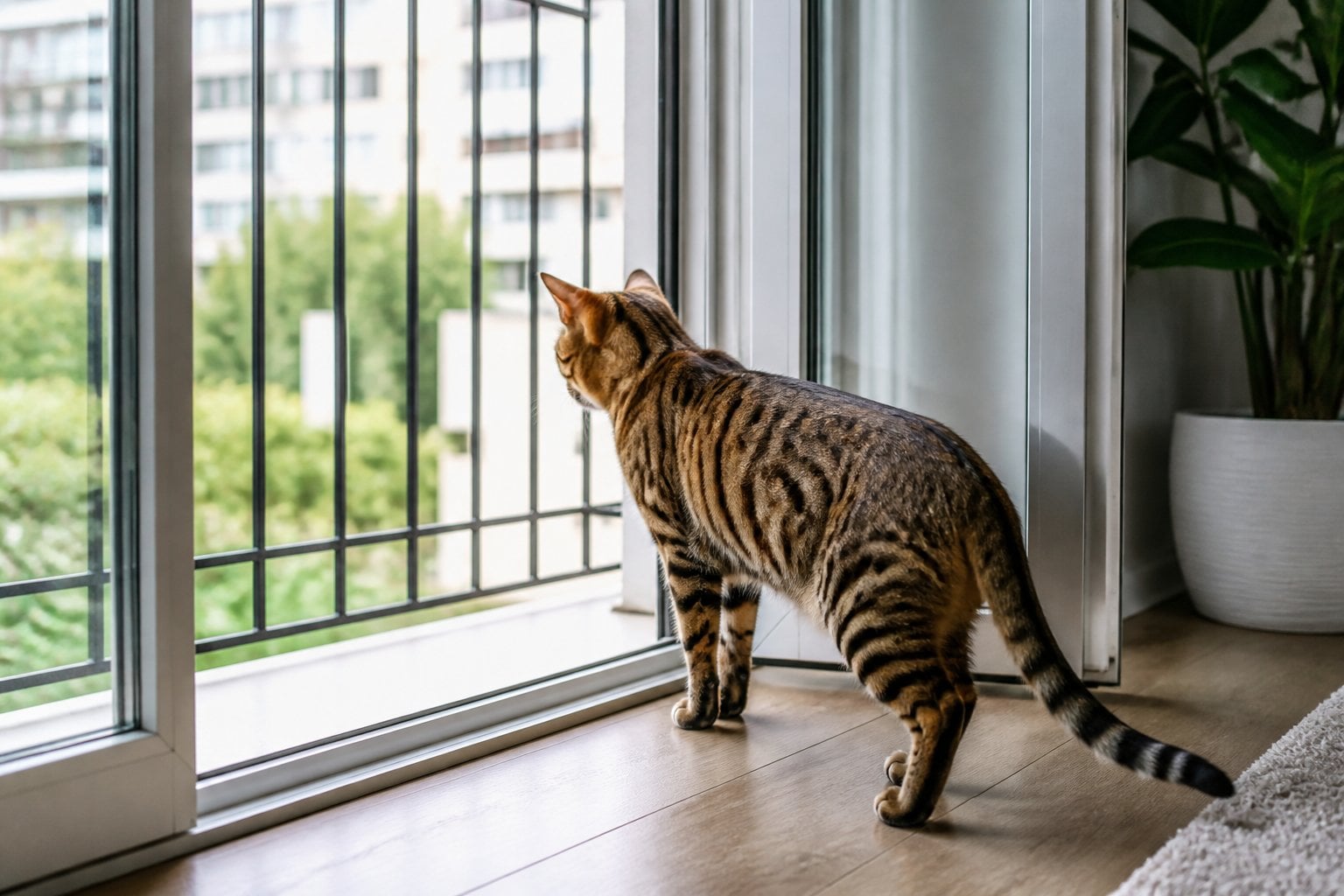
An open window or unlatched screen looks harmless. To a curious cat, it’s an invitation.
Cats chase birds, lean too far, or push against loose screens without warning. A fall from even a few floors up can cause serious injury.
Balconies carry the same risk. Gaps in railings are wide enough for a cat to squeeze through, and a warm day is often enough motivation to try.
You don’t have to seal your home shut. Window guards, secured screens, and cat-proof netting let in fresh air while keeping your cat contained.
If you want your cat to enjoy a balcony, supervise the time or invest in an enclosed catio. Never assume a closed door will stay closed. Latches fail, and cats are patient.
Check every exit point before you leave the house, not after you notice your cat missing.
24. Allowing unsupervised outdoor access near traffic and predators

Letting your cat roam outside without supervision puts them at risk from moving vehicles. Cats have no way to judge traffic speed, and many outdoor deaths involve cars.
Predators are another serious threat. Coyotes, foxes, birds of prey, and even dogs can injure or kill a cat that wanders too far from home.
You also lose control over encounters with other cats. Territorial disputes can lead to bite wounds, infections, and the spread of diseases like FIV.
If you want your cat to experience the outdoors, consider safer alternatives. A secured catio, a leash and harness, or supervised time in a fenced yard all reduce exposure to these risks.
Unsupervised roaming might seem harmless if your cat has done it before without incident. But past luck doesn’t guarantee future safety, and the dangers remain present every time your cat goes outside alone.
25. Introducing cats without a gradual separation and scent exchange
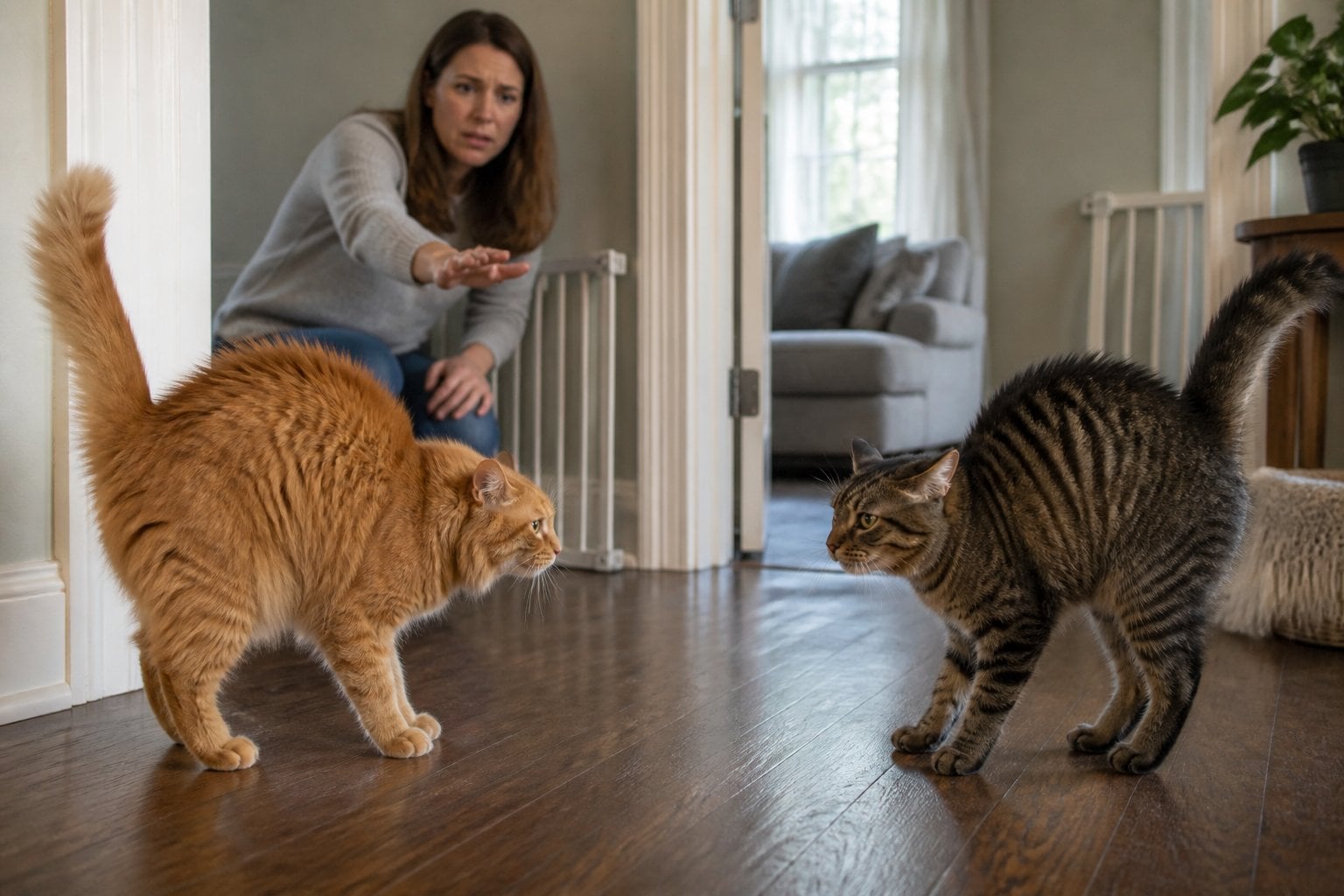
Cats rely heavily on scent to assess their environment and determine whether something is a threat. When you skip scent exchange and let two cats meet face-to-face right away, you deny them the chance to become familiar with each other before a direct encounter.
This often triggers defensive reactions like hissing, swatting, or hiding, since an unfamiliar cat in close proximity registers as a territorial intrusion rather than a potential companion.
A proper introduction starts with separate spaces. Swap bedding or use a cloth to transfer scent between cats before any visual contact happens.
Gradual exposure, first through scent, then through barriers like a cracked door, gives both cats time to adjust. Skipping these steps doesn’t just create a stressful first impression. It can establish a pattern of fear or hostility that takes weeks or months to undo.
26. Forcing physical affection when a cat shows discomfort
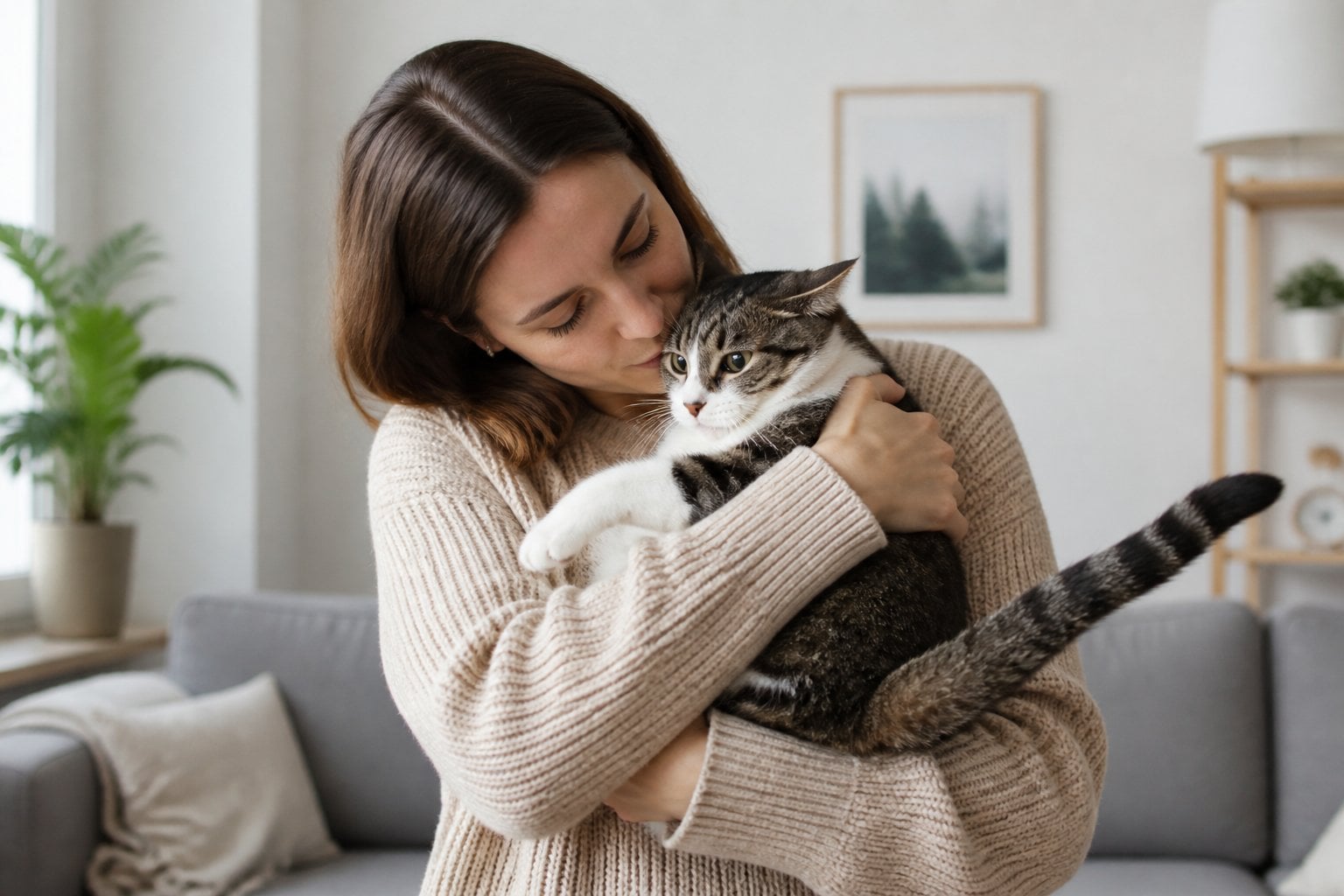
Picking up your cat when it hasn’t invited contact, or holding it in place for a hug, teaches it that your hands can’t be trusted. Cats communicate reluctance clearly if you know what to watch for.
A tail flicking side to side, ears turning back or flattening, and a stiff body are all signs your cat wants space. Ignoring these signals and continuing to pet or hold your cat pushes it toward defensive behavior, including swatting or biting.
Over time, this pattern makes your cat associate your presence with pressure instead of safety. It may start avoiding you altogether or hiding when you approach.
Letting your cat choose when and how contact happens builds a different outcome. When you offer a hand and let your cat decide whether to engage, you show it that touch is optional, not something imposed on it.
27. Ignoring fearful body language and overstimulation
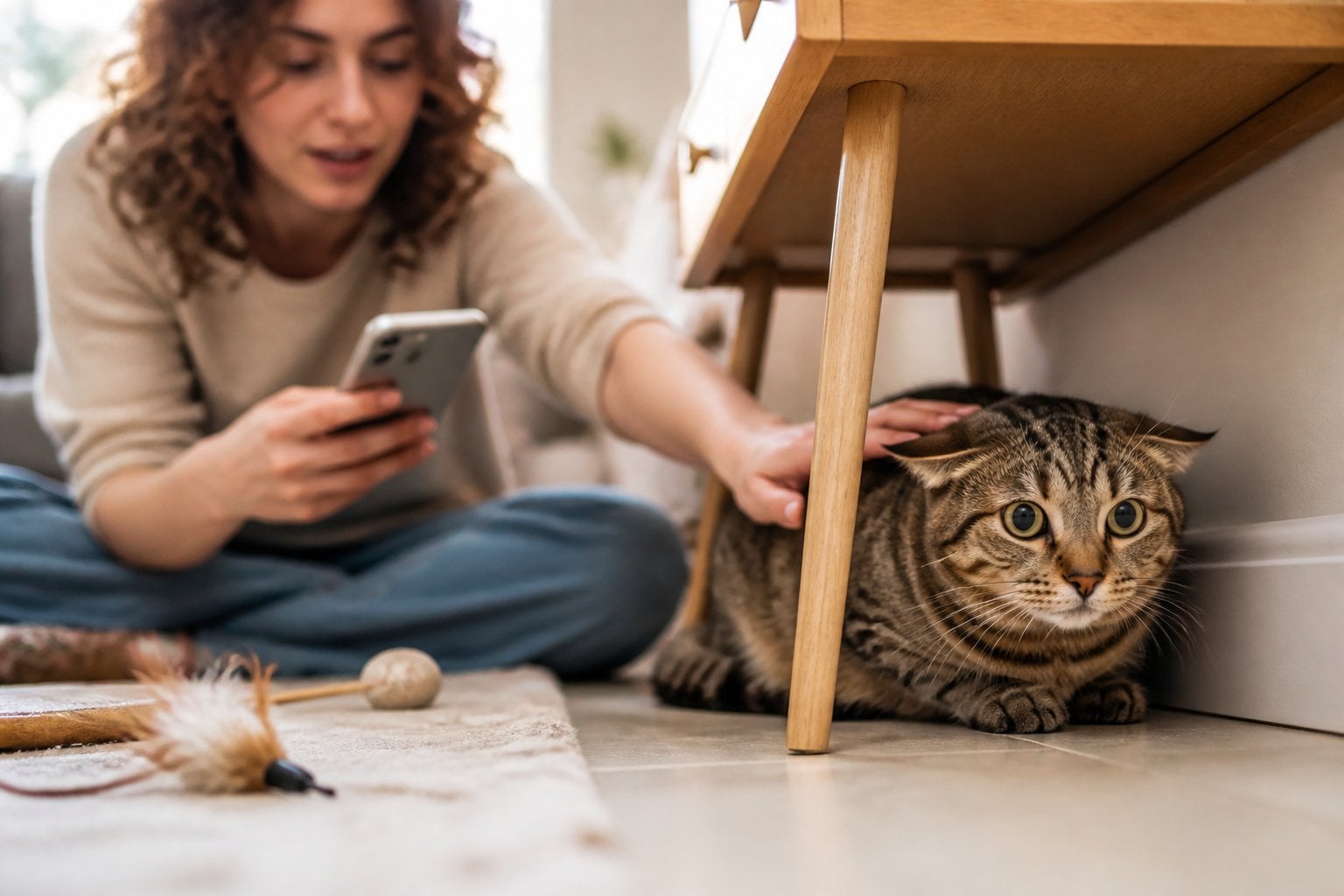
Cats show fear through specific signals: dilated pupils, flattened ears, a tucked tail, or a low crouched posture. Skin twitching along the back and sudden stillness also indicate stress. Missing these cues is a common mistake that leads to bites or scratches that seem to come out of nowhere.
Overstimulation follows a similar pattern. During petting, watch for tail flicking, ear rotation, or skin rippling. These signs mean the cat has had enough contact, even if it hasn’t moved away yet.
Continuing to pet or hold a cat past these warning signs forces it to escalate to a swat or bite to communicate. This teaches the cat that body language doesn’t work with you, making aggressive responses more likely in the future.
Stop petting at the first sign of tension. Let the cat initiate contact again if it wants more.
28. Leaving cats alone for extended periods without social or environmental support
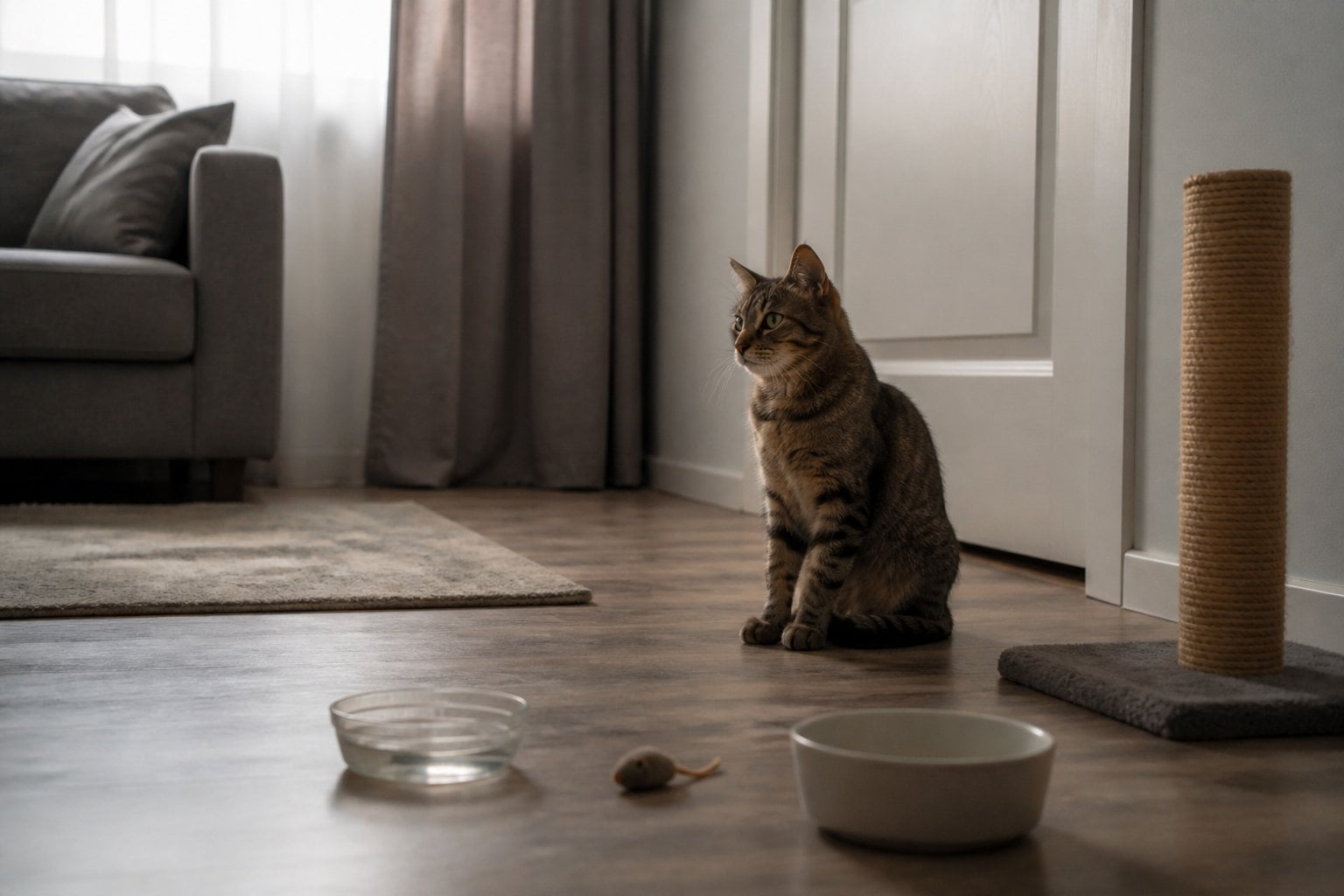
Cats are often assumed to be low-maintenance because of their independent nature. This assumption leads many owners to leave them alone for long stretches without considering their actual needs.
Extended isolation can cause boredom, stress, and anxiety, even in cats that seem self-sufficient. Without mental stimulation or a safe environment, your cat may develop behavioral issues or become withdrawn.
You should provide access to food, water, litter, and safe spaces before leaving. Toys, scratching posts, or window perches can help keep your cat occupied during the day.
If you’re regularly away for long hours, consider arranging a check-in from a neighbor, friend, or pet sitter. This reduces the risk of your cat facing an emergency or prolonged distress without help.
Understanding your specific cat’s tolerance for alone time matters. Some cats adjust well to full workdays alone, while others need more frequent interaction to stay emotionally balanced.
29. Keeping incompatible cats together without conflict management
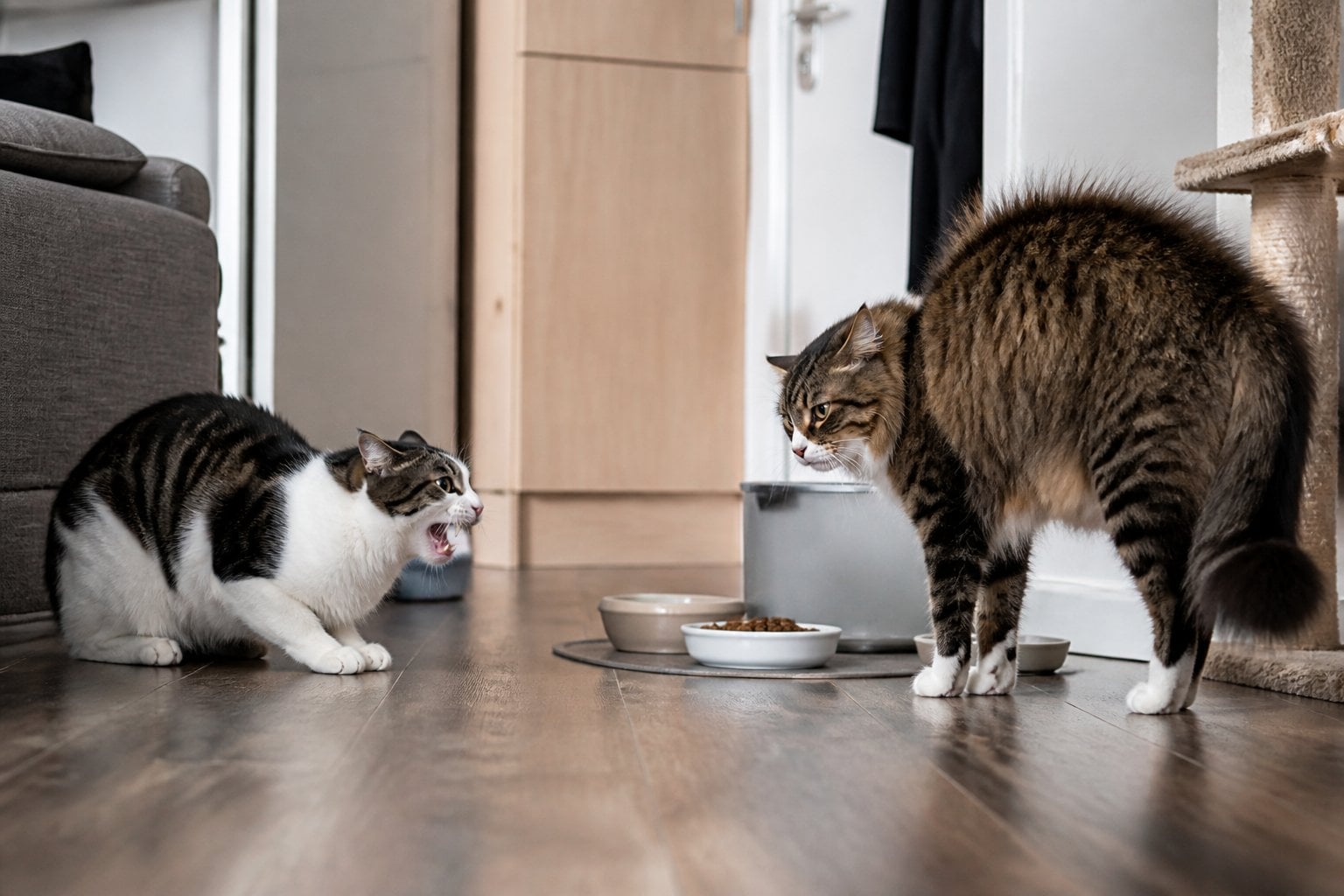
Some cats never become friends. If your cats consistently avoid each other, hiss, swat, or fight, forcing them to share space without a plan makes things worse.
Ongoing conflict causes chronic stress for every cat in the house, not just the ones fighting. Stress can lead to litter box avoidance, overgrooming, or illness.
You need to watch for the signs: staring, blocking hallways or resources, and one cat avoiding shared spaces entirely. These behaviors mean tension exists, even without visible fighting.
Address it with more resources, separate territories, and controlled reintroductions if needed. Vertical space, multiple feeding areas, and separate litter boxes reduce pressure between cats who don’t get along.
If conflict continues despite your efforts, consult a vet or a certified feline behaviorist. Permanent separation within the home is sometimes the most realistic solution.
30. Failing to microchip and identify an indoor cat
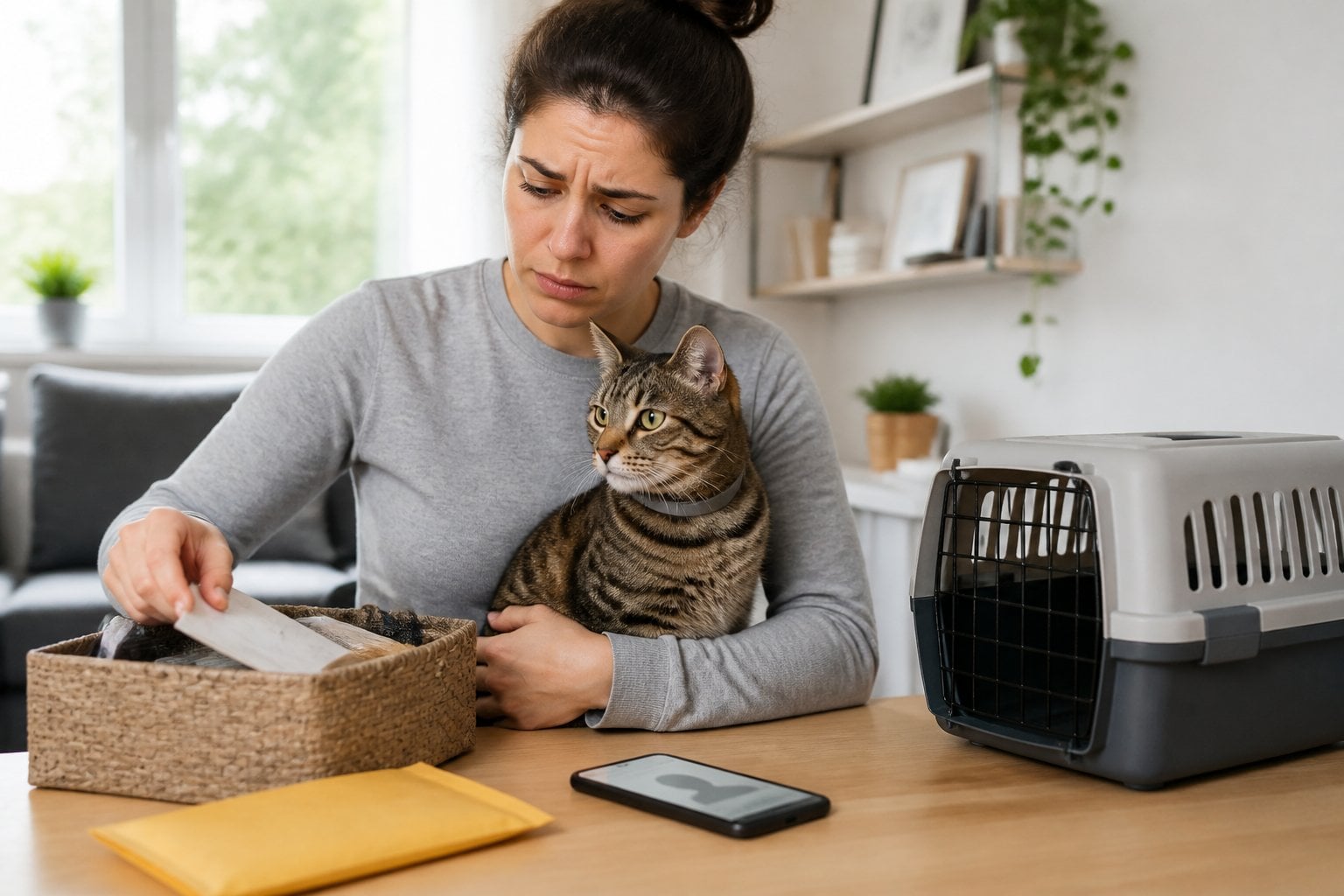
Many owners assume an indoor cat doesn’t need identification. This is a mistake. Doors get left open, screens tear, and cats slip out during moves or repairs.
A microchip gives your cat a permanent, tamper-proof form of ID. Collars can break or fall off, but a chip stays in place for life. If your cat ends up at a shelter or vet clinic, this is often the only way you’ll be reunited.
You should also keep a breakaway collar with an ID tag on your cat. This allows a neighbor or finder to contact you immediately, without needing a scanner.
Keep your microchip registration current. Update your phone number and address whenever they change. An outdated registry entry defeats the purpose of chipping your cat in the first place.
Foundations of Responsible Cat Care
Good cat ownership starts with knowing what your cat actually needs, biologically and behaviorally, and pairing that knowledge with a consistent veterinary schedule. These two elements form the baseline that everything else in cat care builds on.
Understanding Feline Needs
Your cat is an obligate carnivore, which means their diet must center on animal protein, not fillers or plant-based substitutes. Skipping this basic fact leads to nutritional deficiencies over time.
Cats also need environmental enrichment. Without it, you’ll likely see destructive scratching, overeating, or withdrawal. Key needs include:
- Vertical space — shelves, cat trees, or window perches
- Scratching surfaces — multiple textures placed near resting areas
- Predictable routines — consistent feeding and play times
- Litter box access — one box per cat, plus one extra, kept clean daily
Cats communicate through subtle body language, not vocalizations alone. A flicking tail, flattened ears, or dilated pupils each signal something different. Misreading these cues is one of the most common ways owners misunderstand their cat’s stress levels or discomfort.
Building a Preventive Veterinary Care Plan
Annual checkups aren’t optional extras; they’re how you catch problems before they become emergencies. Cats instinctively hide pain, so a vet’s trained eye often spots issues you wouldn’t.
Your plan should include:
- Core vaccinations — rabies, FVRCP, and others based on lifestyle
- Parasite prevention — year-round flea, tick, and heartworm control
- Dental exams — at least once yearly, since dental disease is widespread in cats
- Weight and bloodwork monitoring — especially for cats over age seven
Spaying or neutering by five to six months also reduces health risks and behavioral issues. Building this routine early saves you money and your cat unnecessary suffering later.
Creating a Safer, Healthier Home
Small daily choices around food, water, and physical space determine whether your cat thrives or just survives. Two areas deserve the most attention: what goes into your cat’s body and what surrounds it.
Nutrition, Hydration, and Weight Management
Feeding by eyeballing portions is one of the fastest ways to end up with an overweight cat. Check the feeding guide on your cat’s food packaging, then adjust based on your vet’s recommendation for their age, weight, and activity level.
Free-feeding dry food all day encourages overeating and disrupts natural hunting-and-eating cycles. Scheduled meals, usually two per day, give you better control over intake.
Cats are prone to dehydration because their thirst drive is naturally low. A single water bowl often isn’t enough:
- Place multiple water stations around the house
- Consider a pet fountain, since many cats prefer moving water
- Add wet food to boost daily fluid intake
Obesity increases the risk of diabetes, joint problems, and liver disease. Monthly weigh-ins help you catch weight gain early, before it becomes a medical issue.
Environmental Enrichment and Stress Reduction
Cats need vertical space. Shelves, cat trees, and window perches let them observe their territory from above, which reduces anxiety in multi-pet or high-traffic homes.
Boredom often shows up as destructive scratching, overeating, or excessive vocalization. Rotating toys weekly and offering puzzle feeders keeps their mind engaged without requiring constant supervision.
Litter box setup matters more than most owners realize. The general rule is one box per cat, plus one extra, placed in quiet, low-traffic locations away from food and water.
Sudden changes—new furniture, houseguests, or a schedule shift—can trigger stress in cats, who rely heavily on routine. Introducing changes gradually, and maintaining consistent feeding and play times, helps keep cortisol levels stable and behavior predictable.


