
The 30 Calmest Cat Breeds
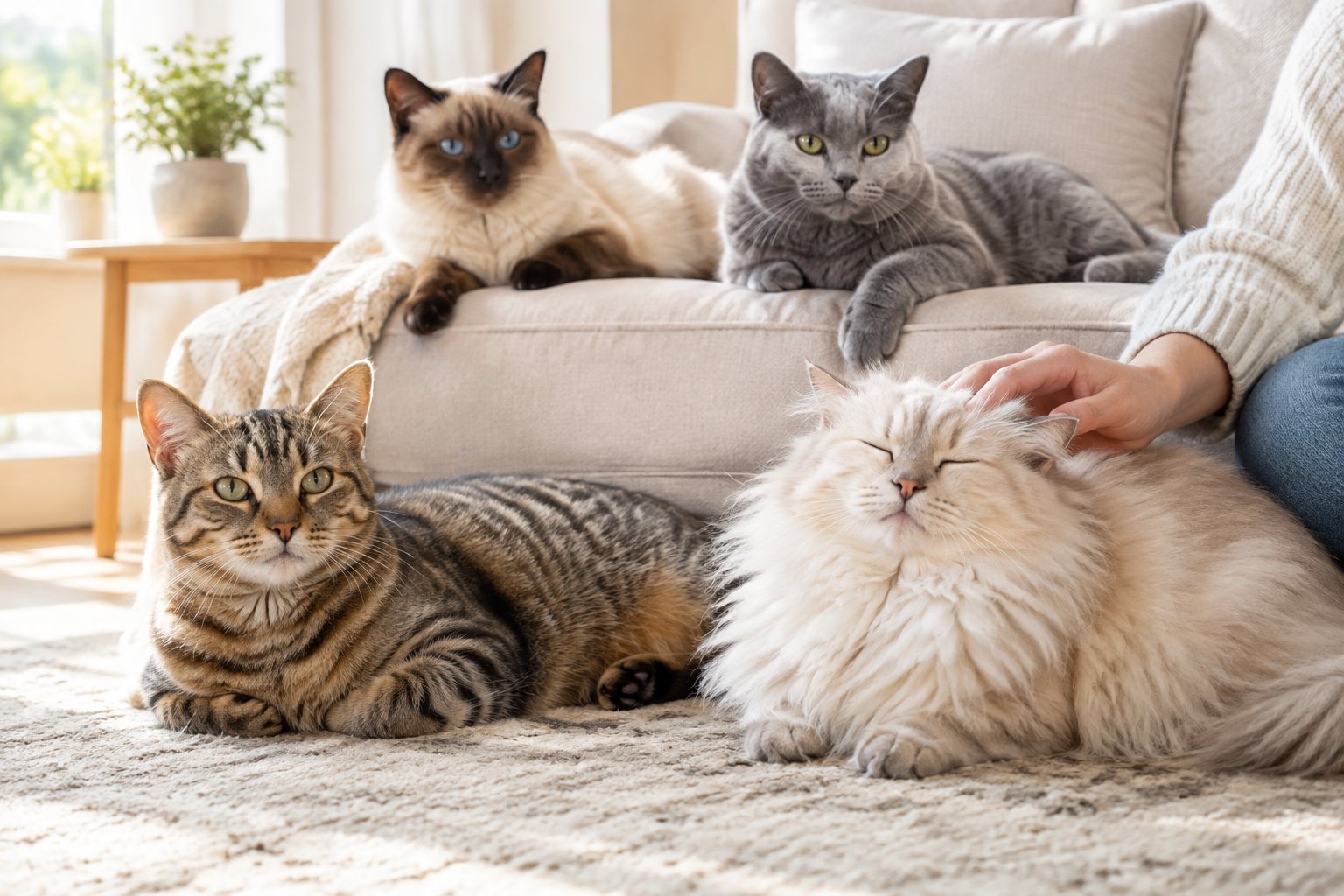
Some cats treat the living room like a racetrack. Others would rather nap in a sunbeam, watch the world from the sofa and keep you company without asking for much. If you want a quieter, more settled life with your cat, certain breeds are known for that easygoing nature.
The 30 breeds below are all commonly described as calm, laid-back or mellow. Some are famously low-energy lap cats, while others are steady, gentle companions that enjoy short bursts of play and then settle down again. We have left out the high-energy, climb-everything breeds on purpose. The breeds are not ranked strictly from calmest to least calm, because temperament depends on the individual cat as much as the breed.
A breed description is a tendency, not a promise. Every cat is different, and age, early handling and home life all shape personality. If you want a shorter list to start with, our guide to the five calmest cat breeds covers some of the best-known names. Wherever your cat comes from, ask about health screening, since several of the breeds below are prone to heart or kidney problems.
1. Ragdoll
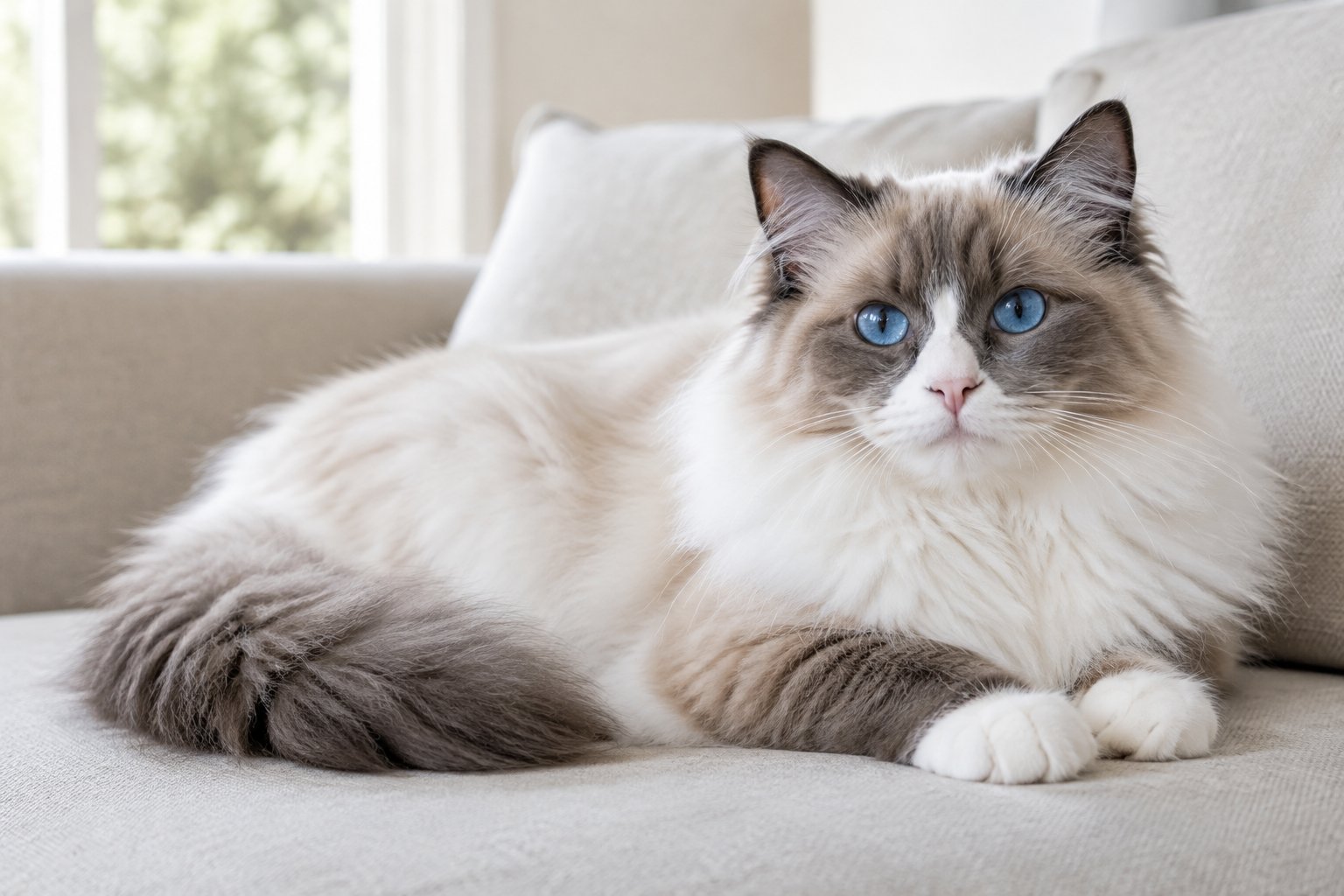
The Ragdoll is widely regarded as one of the calmest cat breeds you can bring into your home. Its name comes from the tendency to go limp when picked up, a trait linked to its relaxed, trusting nature. You’ll find this breed affectionate and people-oriented, often following you from room to room without being demanding.
Energy levels stay low to moderate throughout its life. Ragdolls enjoy short bursts of play but are just as happy lounging nearby. Daily life with one tends to feel predictable, since they adapt well to routine and rarely seek out trouble or mischief.
Their semi-long coat needs regular brushing, a few times a week, to prevent matting, though it’s less demanding than a full long-haired coat. Ragdolls are indoor cats by nature and don’t require much outdoor stimulation to stay content. When choosing a breeder, ask about screening for hypertrophic cardiomyopathy, a heart condition reported in the breed, along with general genetic health testing.
2. Persian
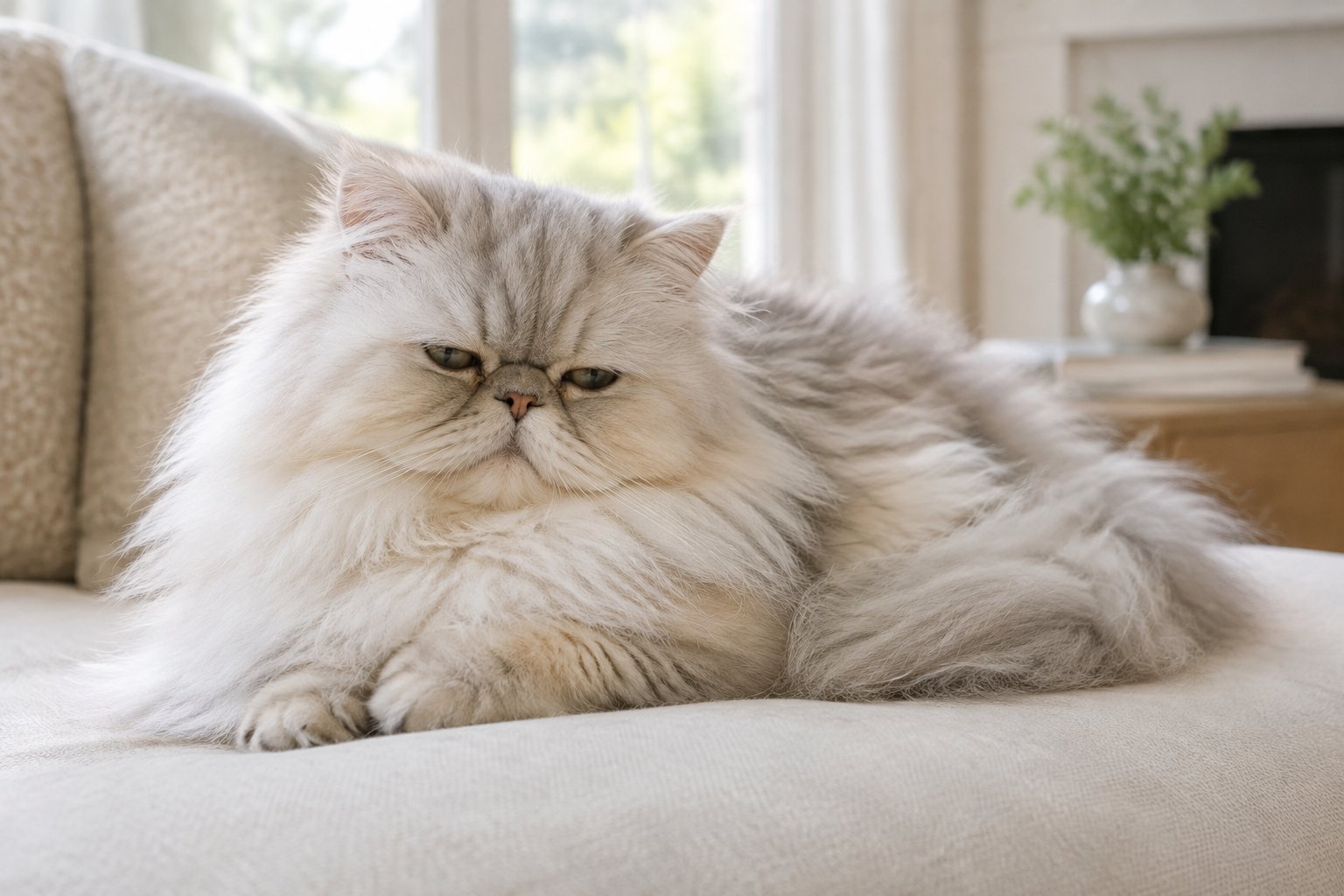
The Persian is one of the most recognized calm cat breeds, known for its quiet, gentle nature. You’ll find this breed content to spend most of its day lounging on a soft surface rather than climbing or chasing. Persians tend to form steady, affectionate bonds with their owners without being demanding or vocal.
Energy levels are low, so daily life with a Persian is relaxed and predictable. You won’t need to provide intense play sessions, though short periods of gentle interaction help maintain a healthy weight. This breed is well suited to indoor living, as its long coat and flat face make it vulnerable to temperature extremes and outdoor hazards.
Grooming is a major part of caring for a Persian, since its thick, long fur mats easily and requires daily brushing. You should also clean around the eyes regularly, as tearing is common due to the breed’s facial structure. When choosing a breeder, ask about screening for polycystic kidney disease and breathing issues related to the Persian’s brachycephalic face.
3. British Shorthair
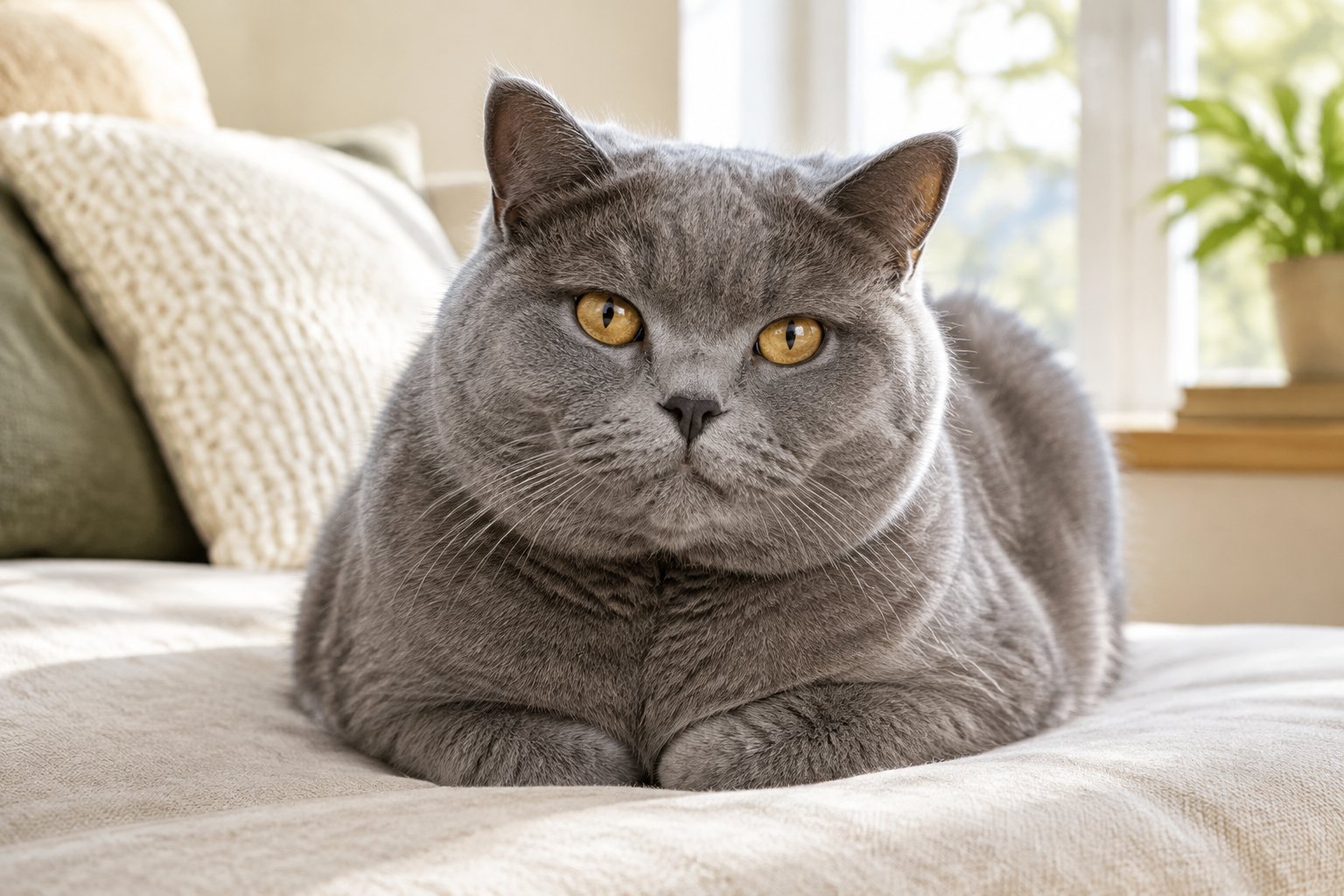
You will notice the British Shorthair’s easygoing nature right away. This breed tends to be undemanding and content to settle near you rather than demand constant attention. It is often described as even-tempered and non-aggressive, which makes it a solid choice if you want a cat that gets along with children or other pets without much fuss.
Daily life with a British Shorthair is relatively low-key. Its energy level sits on the lower end, so you can expect short bursts of play followed by long stretches of lounging. You won’t need to provide elaborate enrichment or exercise routines, though a few toys and a scratching post will keep it satisfied. This cat adapts well to indoor living and doesn’t typically show signs of restlessness when kept inside full time.
Care-wise, you should plan for regular brushing since its dense, plush coat sheds and can mat if neglected, though it’s far less demanding than long-haired breeds. Watch its weight, as this breed can become overweight if its naturally low activity level isn’t balanced with portion control. When looking for a kitten, ask the breeder about screening for hypertrophic cardiomyopathy, a heart condition sometimes seen in this breed.
4. Birman
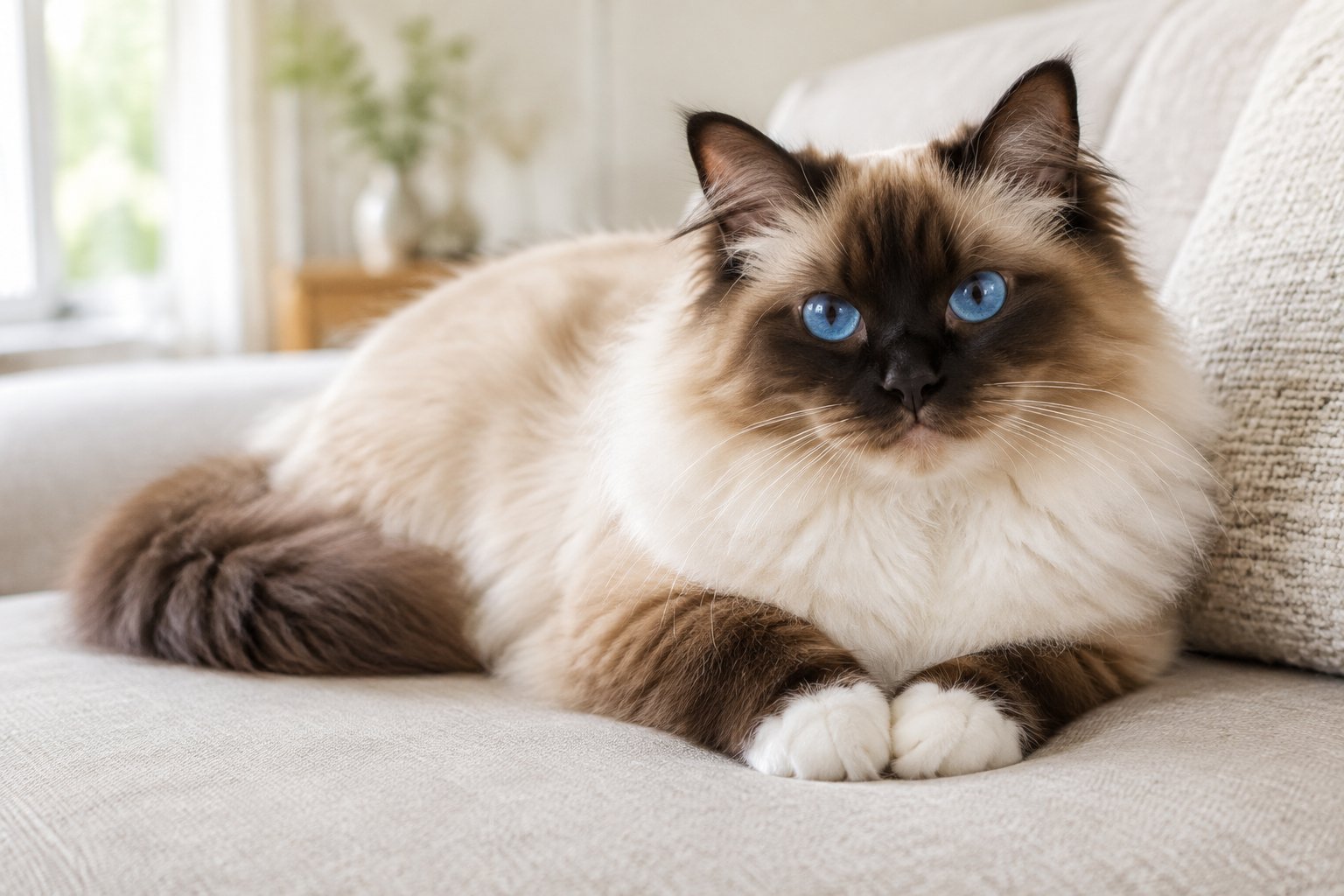
The Birman, often called the Sacred Cat of Burma, has a gentle and even-tempered personality. You’ll notice this breed prefers calm companionship over high-energy antics, following you from room to room without demanding constant attention. Birmans get along well with children and other pets, making them a dependable choice if you want a quiet household presence.
Your Birman’s energy level stays moderate, with short bursts of play followed by long stretches of relaxation. Daily life with this breed involves a cat that enjoys sitting nearby while you work or settling into a favorite spot for a nap. They adapt easily to indoor living and don’t require elaborate enrichment to stay content, though interactive toys help satisfy their occasional playful streak.
You’ll need to brush your Birman a few times a week since their semi-long coat resists matting but still benefits from regular grooming. Their coat lacks a dense undercoat, which makes upkeep simpler than other long-haired breeds. When choosing a breeder, ask about screening for hypertrophic cardiomyopathy and kidney issues, as these are commonly discussed health concerns in the breed.
5. Russian Blue
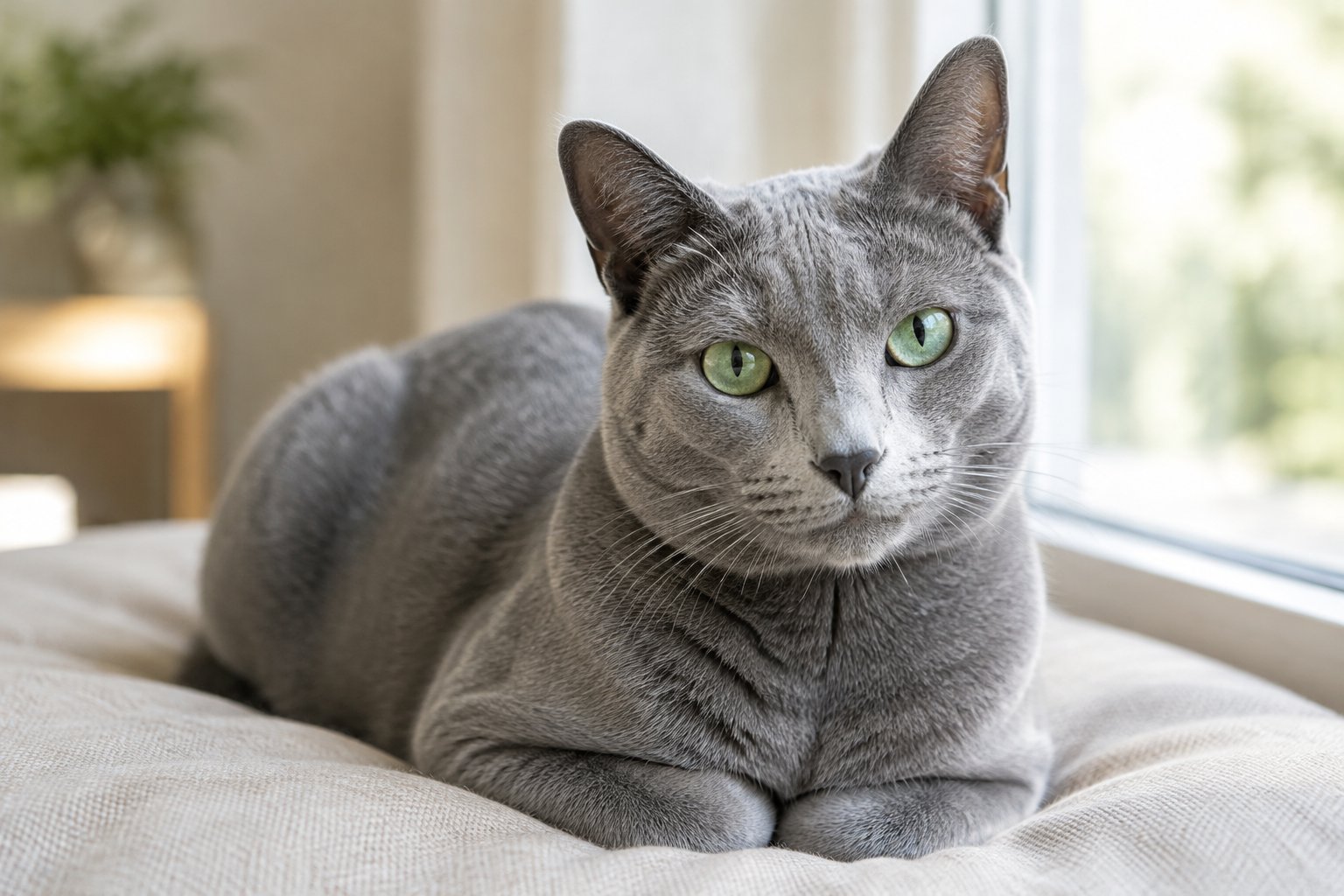
You’ll find the Russian Blue to be a quiet, reserved cat with a calm and gentle nature. It tends to be cautious around strangers at first, but once it trusts you, it forms a loyal and steady bond. Its energy level sits in the low to moderate range, so you can expect short bursts of play followed by long stretches of rest.
Daily life with this breed is predictable and low-key. You’ll notice it prefers routine and a peaceful environment over noise or sudden changes. It’s an independent cat that’s comfortable entertaining itself, though it still enjoys your company and will often settle nearby while you work or relax.
Grooming is simple, since its short, dense coat only needs occasional brushing to manage shedding. You won’t need to provide intense exercise, but interactive toys help keep it mentally engaged. This breed does well as an indoor-only cat. When choosing a breeder, you should ask about screening for progressive retinal atrophy and general heart health, as these are commonly discussed concerns in the breed.
6. Maine Coon
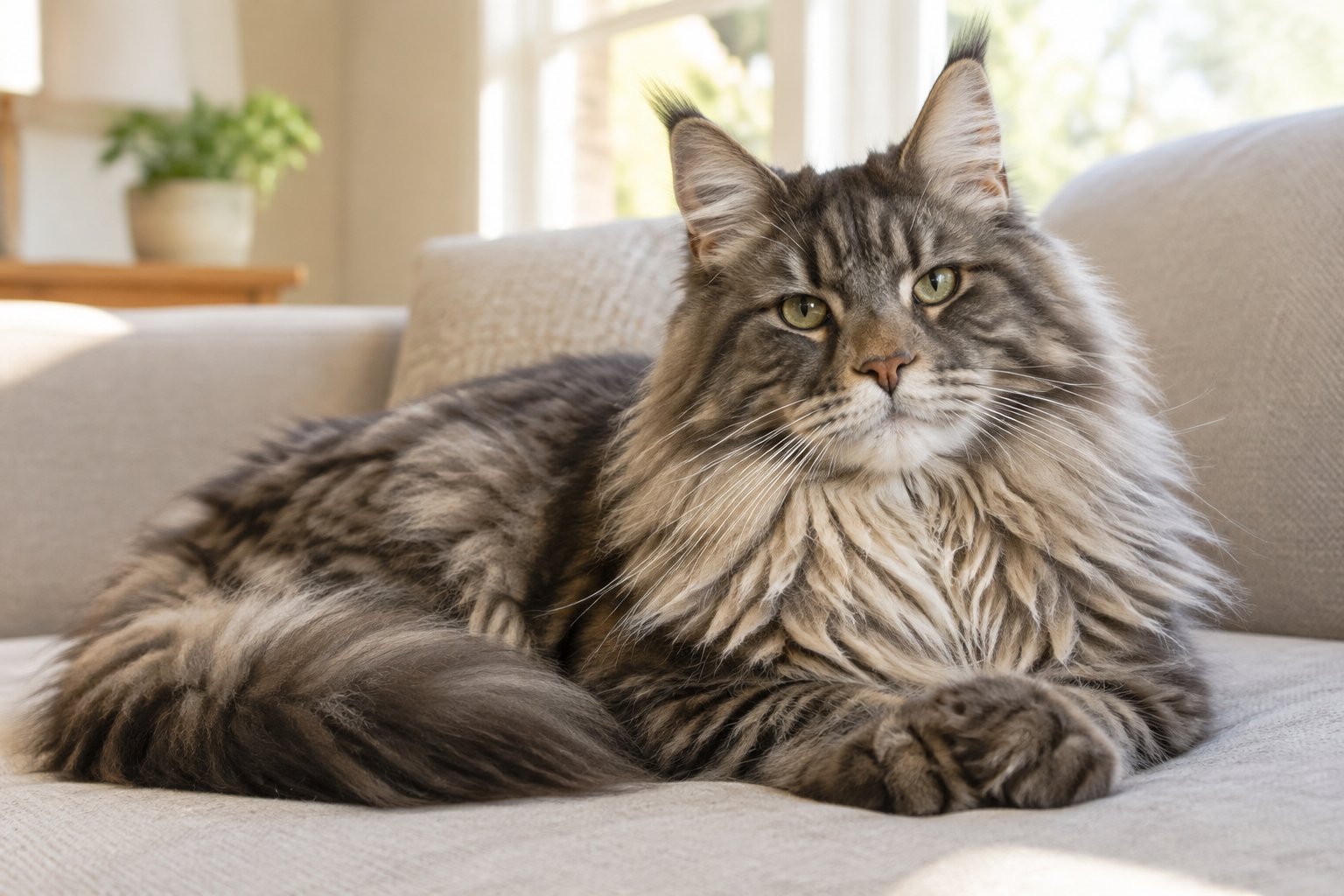
The Maine Coon is often called a gentle giant, and that reputation fits. You’ll find this breed calm, sociable, and easygoing around people and other pets. It’s not a lap cat in the traditional sense, but it likes to stay near you, often following you from room to room without demanding constant attention.
Energy levels are moderate rather than low. Your Maine Coon will enjoy short bursts of play, but it won’t pester you to keep going. Daily life with this breed feels relaxed; it adapts well to routines and doesn’t require constant stimulation to stay content. It does well as an indoor cat, though it appreciates space to move given its large size.
Grooming is a real commitment because of its long, thick coat. You’ll need to brush it several times a week to prevent mats, especially around the underside and legs. When choosing a breeder, ask about screening for hypertrophic cardiomyopathy and hip dysplasia, since both are known concerns in the breed.
7. Exotic Shorthair
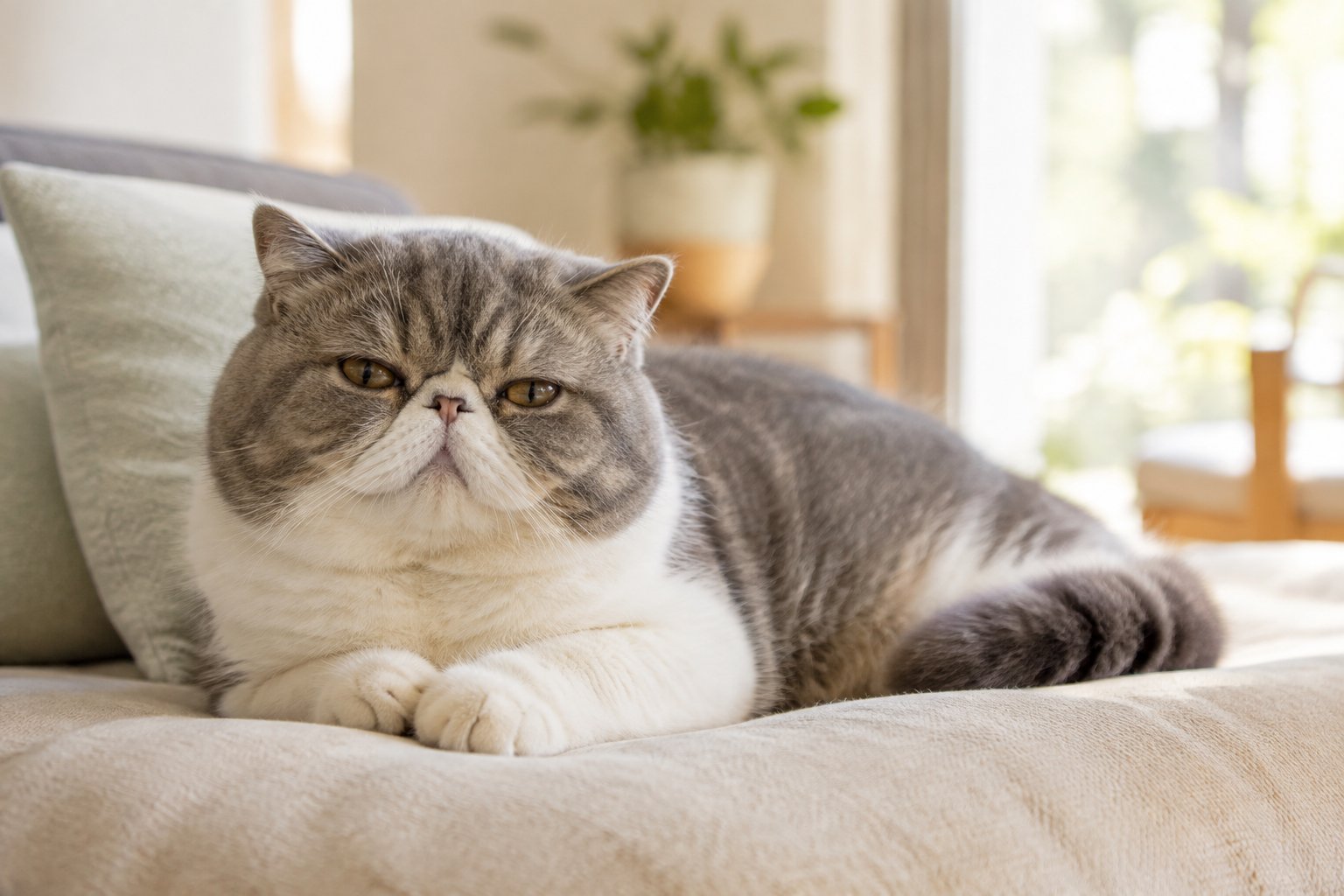
The Exotic Shorthair developed from crosses between Persians and American Shorthairs, which gives it a Persian-like temperament in a more compact coat. You’ll find this breed calm, affectionate, and content to spend most of its time near you rather than exploring on its own. It doesn’t demand constant attention, but it enjoys quiet companionship and settles easily into a predictable routine.
Energy levels stay low throughout the cat’s life. Expect short bursts of play rather than sustained activity, and don’t be surprised if your Exotic Shorthair prefers a nap to a game. This makes it a good match if you want a relaxed indoor companion rather than an active, high-energy pet.
Grooming is simpler than with a Persian, though the dense coat still needs brushing a few times a week to prevent matting. Because of its flat face, you should keep an eye on tear staining and breathing comfort, especially in heat. When choosing a breeder, ask about screening for polycystic kidney disease and heart conditions like hypertrophic cardiomyopathy, both commonly discussed in the breed.
8. American Shorthair
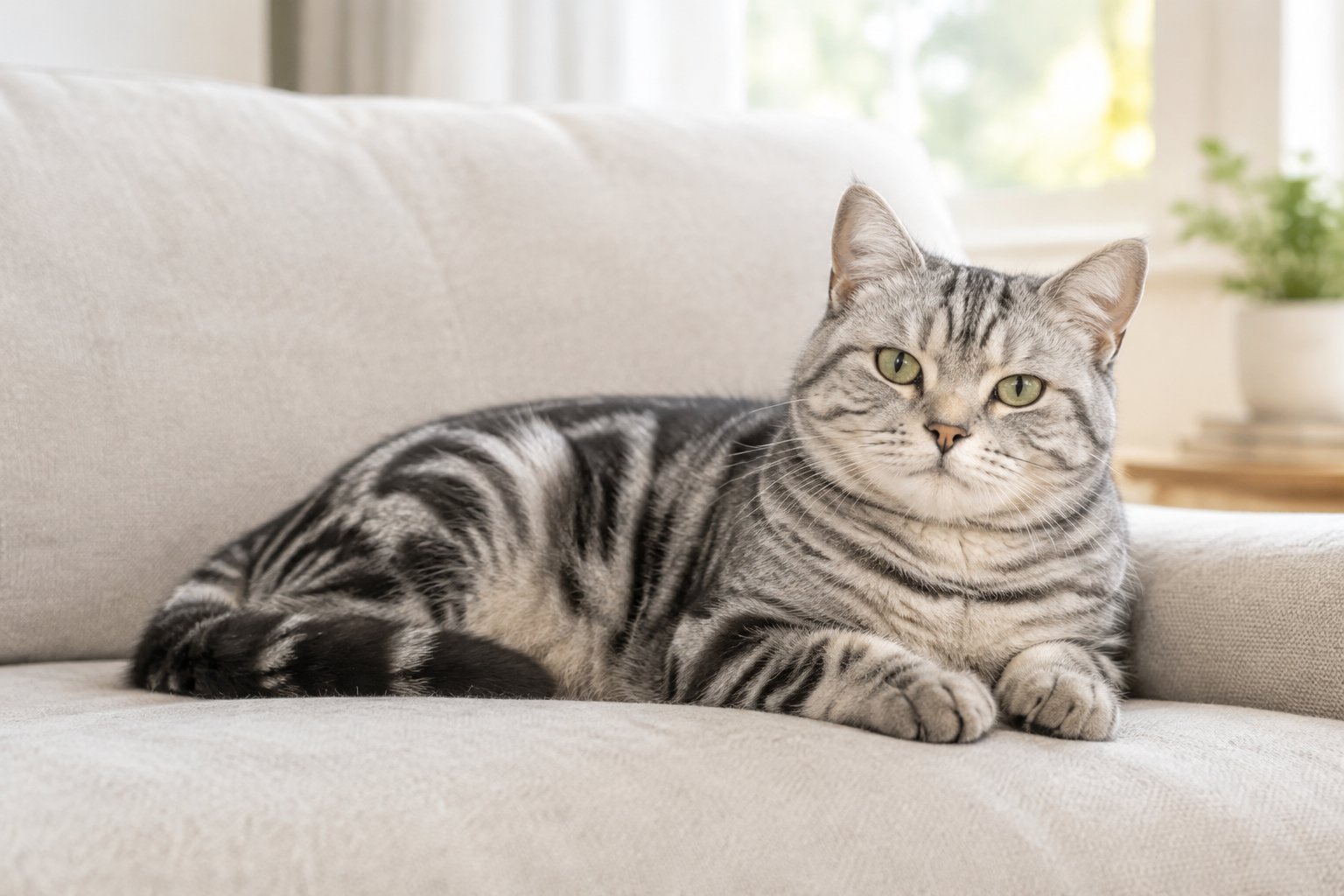
You’ll find the American Shorthair to be an even-tempered cat that adapts well to most households. It is affectionate without being demanding, and it rarely shows anxiety around new people or changes in routine. This steady personality makes it a good match if you want a companion that is present but not clingy.
Your American Shorthair’s energy level sits in the moderate range. It enjoys short bursts of play, especially with simple toys, but it is just as content lounging near you for most of the day. Because of this relaxed approach to activity, you’ll need to watch its weight and encourage some daily movement to prevent obesity, a common issue in this breed.
Daily care is straightforward. Its short, dense coat needs only weekly brushing to control shedding, and it does fine as an indoor-only cat. When you’re choosing a breeder, ask about screening for hypertrophic cardiomyopathy, a heart condition that can appear in this breed, along with general hip and joint health checks.
9. Chartreux
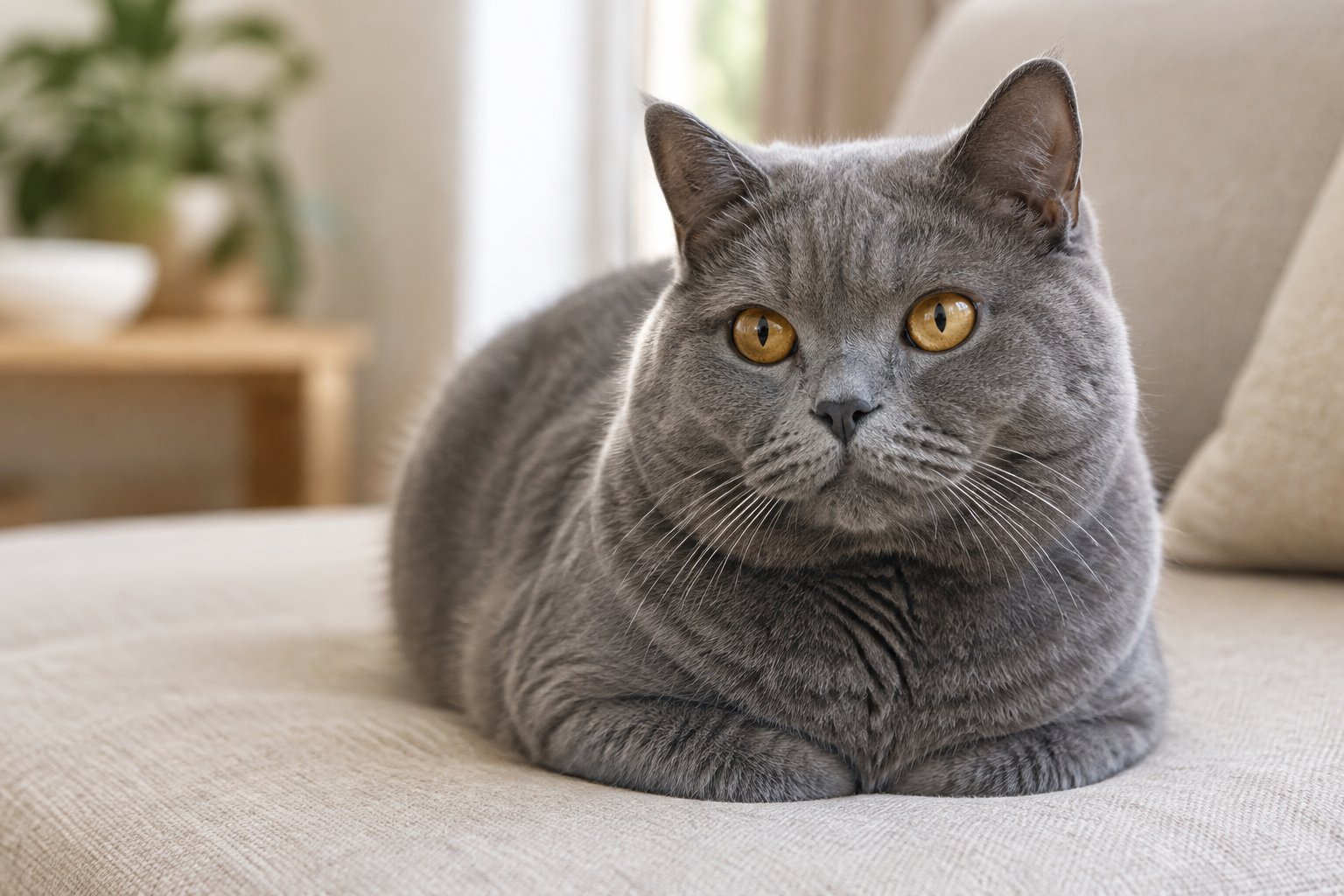
The Chartreux is a French breed known for its quiet, steady temperament. You will likely notice its reserved but affectionate nature right away, since this cat tends to observe before engaging rather than demanding attention. It is loyal to its household and often forms a close bond with one or two people, though it stays polite and even-tempered around everyone else.
Energy levels are moderate rather than low. Your Chartreux will enjoy short bursts of play, especially early in life, but it settles into a calmer pace as it matures. Daily life with this breed is straightforward: it adapts well to indoor living, doesn’t demand constant stimulation, and is comfortable spending time alone when you’re busy.
Grooming is easy, since its dense, woolly coat only needs occasional brushing to stay healthy. You should also keep an eye on weight, as the breed can be prone to putting on extra pounds if its activity stays low. When speaking with a breeder, ask about screening for hip dysplasia and luxating patella, both of which are commonly discussed in this breed.
10. Scottish Fold
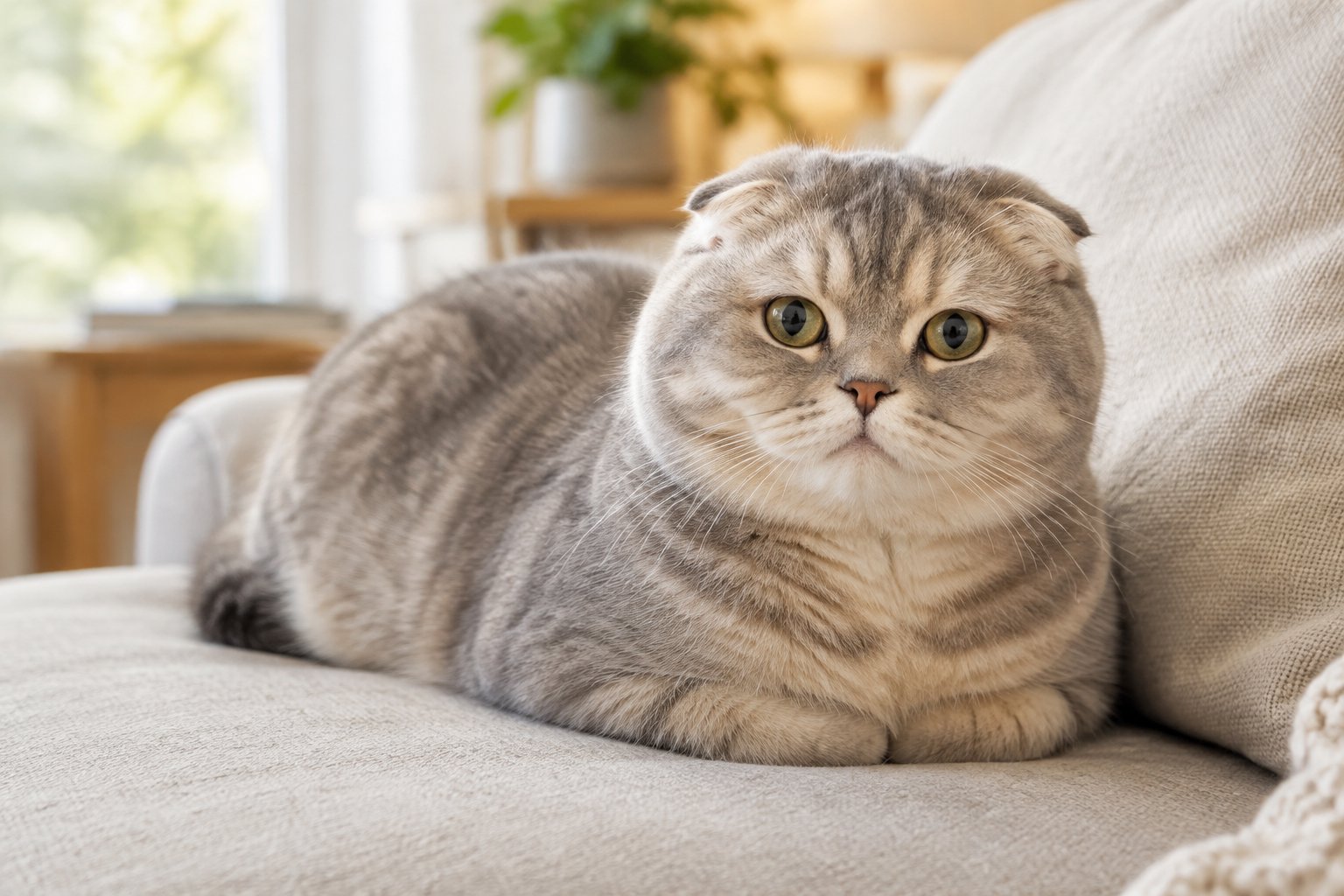
The Scottish Fold stands out for its folded ears and round, owl-like face, but its personality is just as distinctive. You’ll find this breed even-tempered and easygoing, with a sweet, undemanding nature that adapts well to most households. It isn’t prone to loud vocalizing or restless behavior, and it tends to form steady, quiet attachments to its people.
Energy levels sit in the moderate range. You can expect your Scottish Fold to enjoy short bursts of play, but it’s just as happy curling up near you for long stretches. Daily life with this breed is relatively low-key, since it doesn’t demand constant stimulation or attention, though it does appreciate company and dislikes being left alone for long periods.
Grooming needs depend on coat length, since Scottish Folds come in both short and long-haired varieties, with weekly brushing usually sufficient. This is an indoor breed, and you should keep up with regular vet visits, since Scottish Folds are prone to a cartilage and joint condition tied to the gene responsible for their folded ears. Ask any breeder about health screening for this condition before bringing a kitten home.
11. Siberian
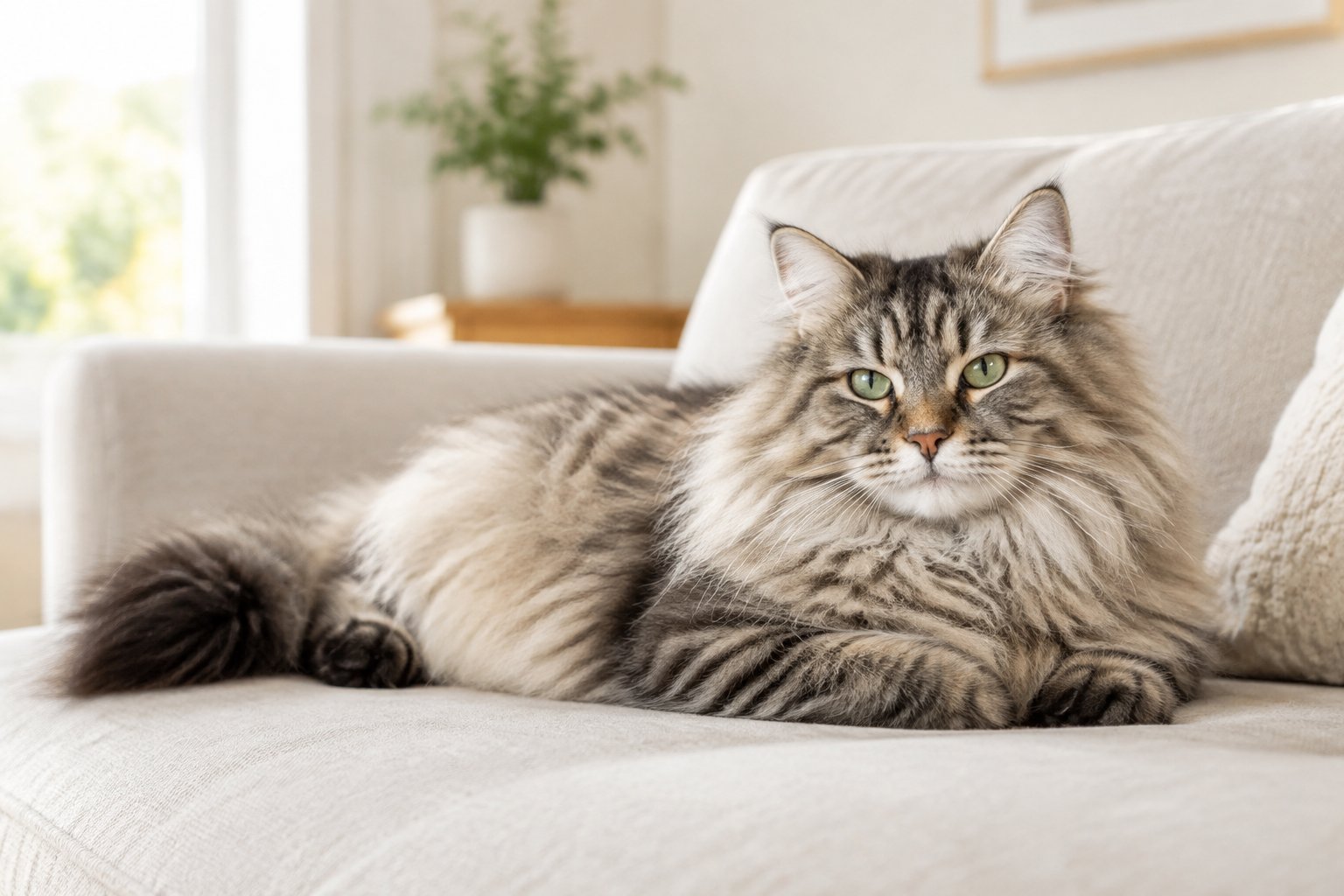
The Siberian originated in Russia and developed a sturdy, patient temperament suited to cold climates and close contact with people. You’ll find this breed gentle and even-tempered, with a quiet confidence that makes it comfortable around children, other pets, and new visitors. It’s social without being demanding, so you get companionship without constant attention-seeking.
Energy levels sit in the moderate range. Your Siberian will enjoy short bursts of play and climbing, but it settles down easily and doesn’t require constant stimulation. Daily life with this cat tends to be relaxed, with plenty of time spent near you rather than off on its own. It adapts well to indoor living and doesn’t typically show signs of restlessness if kept inside full-time.
Grooming requires some regular effort, since the Siberian has a thick, semi-long triple coat that sheds seasonally. Weekly brushing helps manage loose fur and prevents matting. When you’re choosing a breeder, ask about screening for hypertrophic cardiomyopathy, a heart condition reported in the breed, along with general genetic health testing.
12. Burmilla
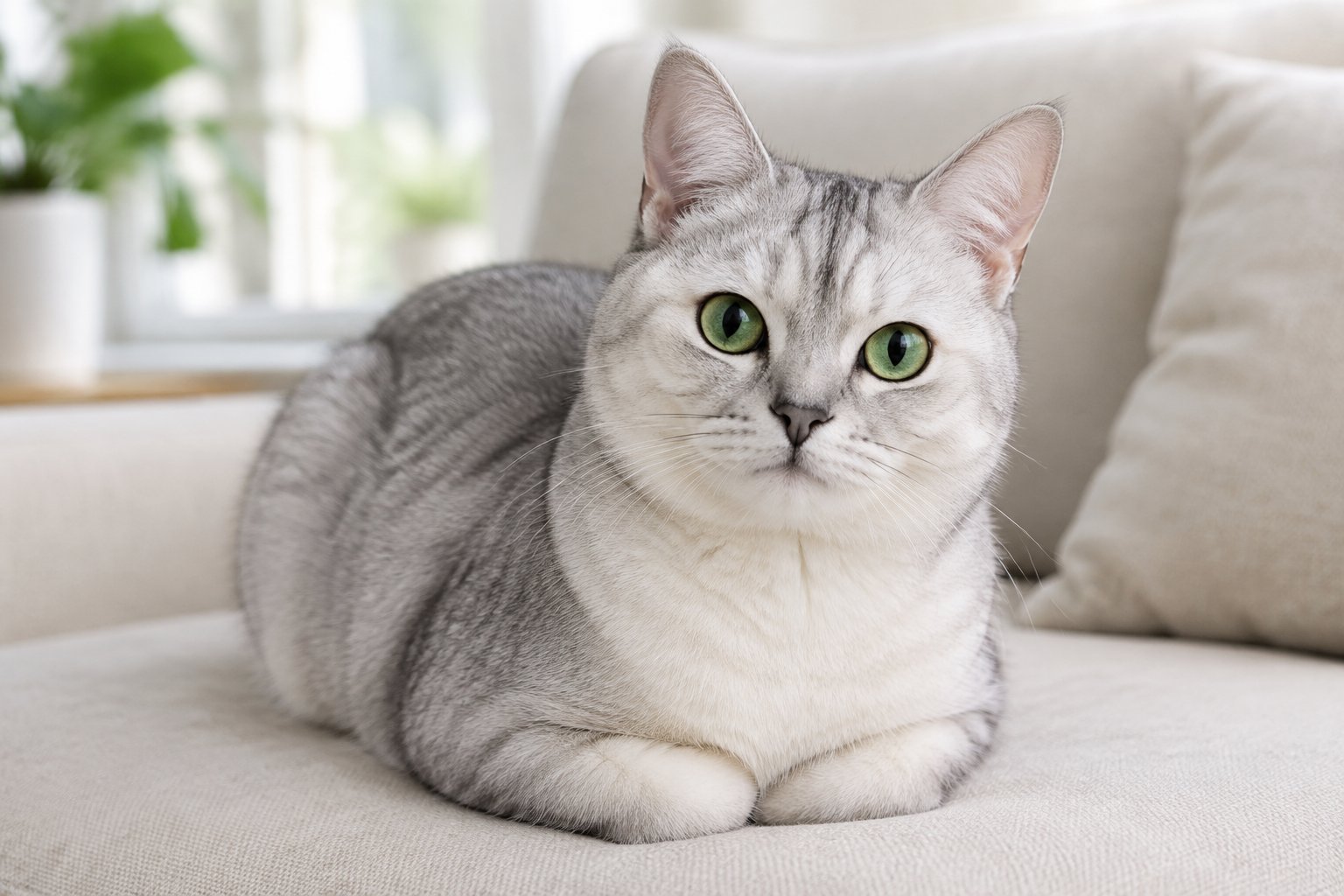
The Burmilla came about from an accidental pairing between a Burmese and a Chinchilla Persian, and that mix shows in its temperament. You get much of the Burmese sociability without the constant demand for attention, paired with a calmer, more relaxed baseline from its Persian side. Most owners describe the Burmilla as even-tempered, curious without being hyperactive, and content to follow you around the house rather than climb the curtains.
Daily life with a Burmilla tends to be easygoing. It has moderate energy, enjoying short bursts of play before settling in for a nap nearby. You won’t need to provide elaborate enrichment schedules, though it does appreciate interactive toys and some window-watching time. This breed adapts well to indoor living and doesn’t typically show signs of restlessness if kept inside full-time.
Grooming is straightforward since the Burmilla’s coat is short to semi-long with minimal matting tendency, so a weekly brush usually keeps shedding under control. When choosing a breeder, ask about polycystic kidney disease screening, since this condition has been reported in some lines tracing back to Persian ancestry.
13. Snowshoe
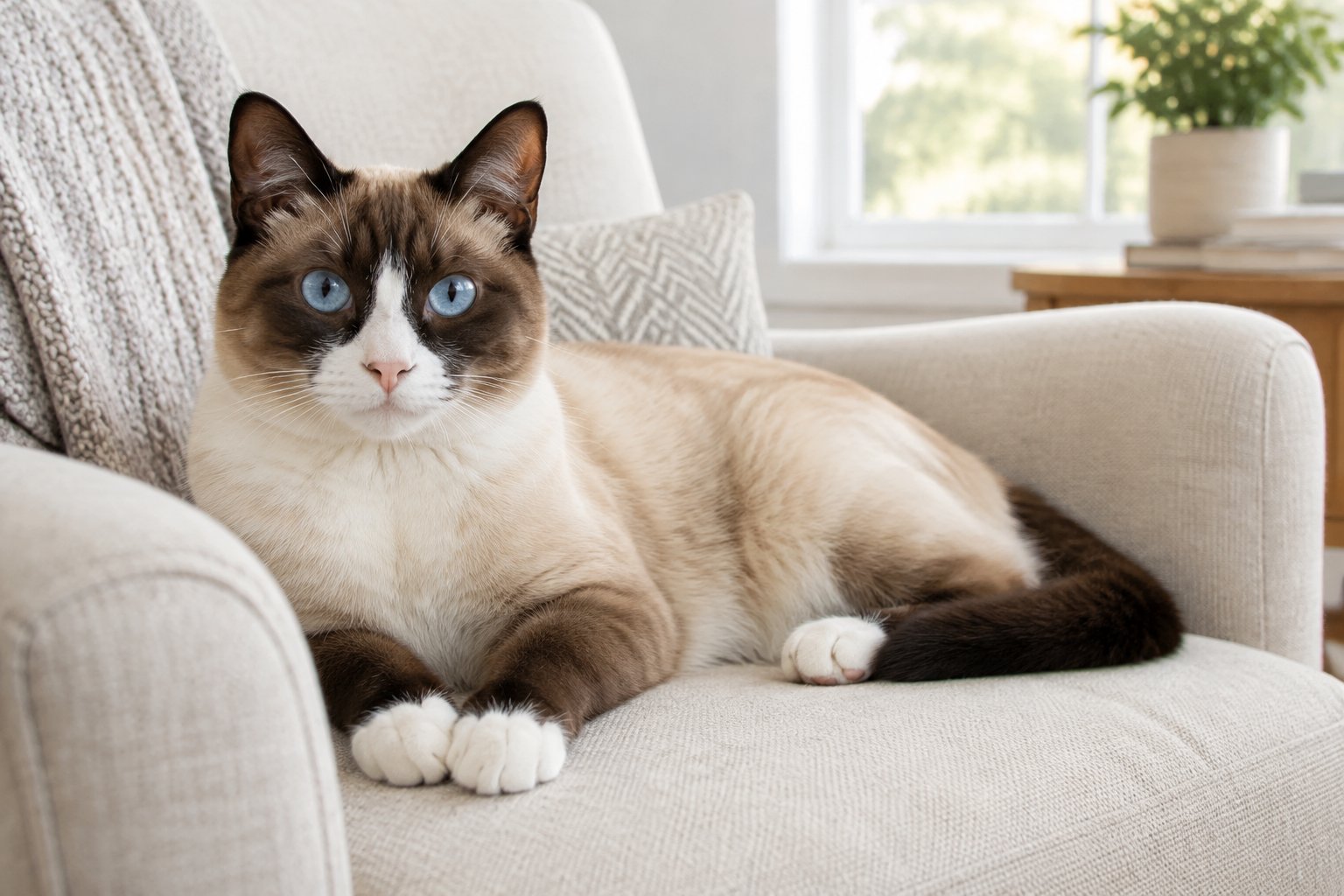
The Snowshoe developed in the United States in the 1960s from a cross between a Siamese and an American Shorthair, and it carries traits from both breeds. You’ll notice a calmer disposition than a typical Siamese, though this cat still enjoys being near you and often follows you from room to room. It’s affectionate and people-oriented, but it settles down more easily and doesn’t demand constant engagement.
Energy levels sit in the moderate range. You can expect periods of play mixed with plenty of lounging, especially once your Snowshoe reaches adulthood. Daily life with this breed is interactive but manageable; it enjoys attention and conversation, since it retains some of the Siamese tendency to vocalize, though usually in a softer tone.
Grooming is straightforward, since the short coat only needs occasional brushing to reduce shedding. This breed does well as an indoor cat and doesn’t require elaborate exercise routines beyond regular play sessions. When looking for a breeder, ask about screening for hip dysplasia and cardiac conditions, as these are the issues most commonly discussed with this breed.
14. Ragamuffin
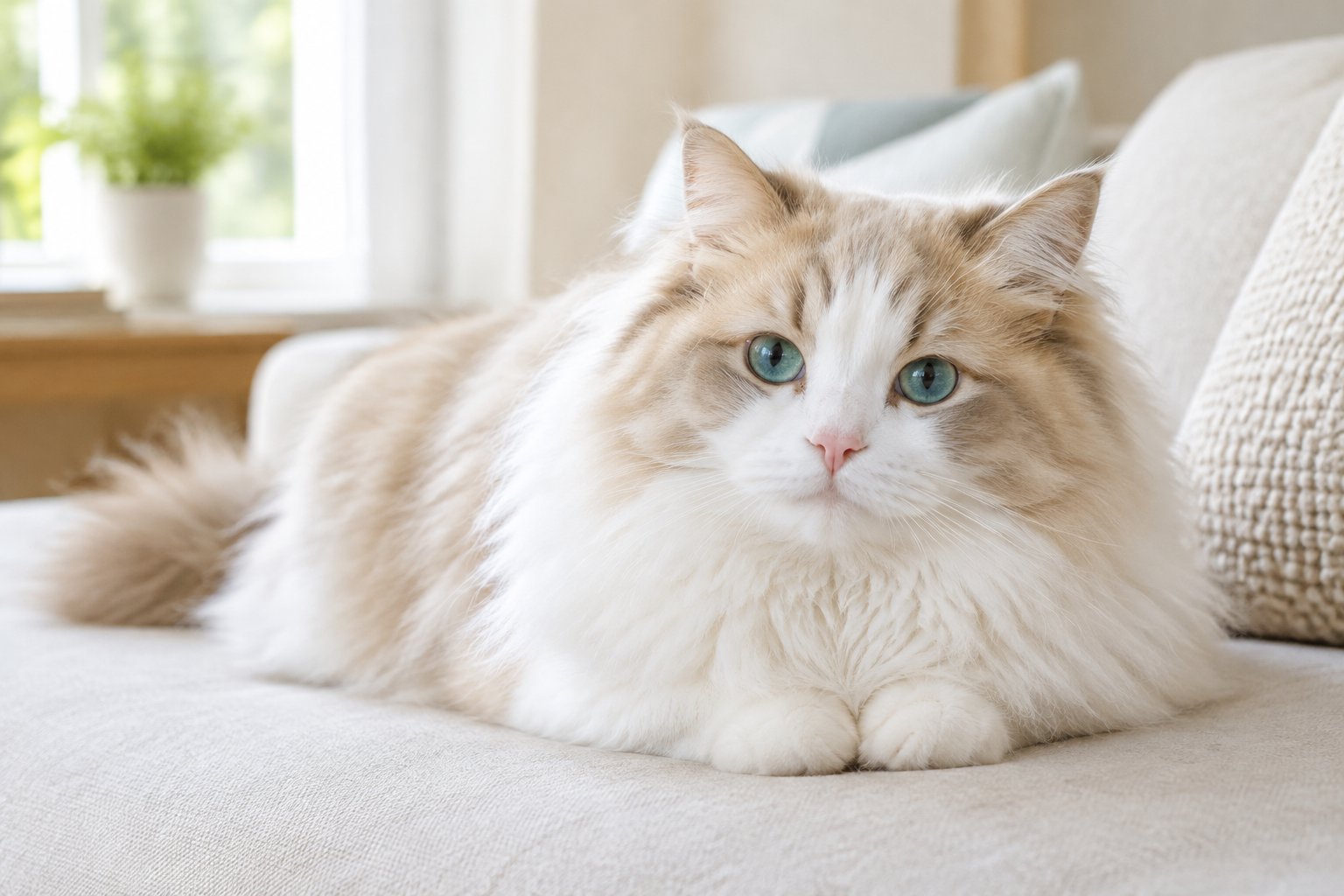
The Ragamuffin is a relaxed, people-oriented cat that tends to follow you from room to room rather than demand attention. You’ll notice it stays calm around visitors, children, and other pets, adapting easily to changes in your household routine. Its temperament is often described as gentle and affectionate, with little interest in aggressive play or erratic behavior.
Energy levels stay low to moderate, so you won’t need to provide constant stimulation. A Ragamuffin is content lounging nearby or settling into your lap for long stretches. This breed does best as an indoor cat, since its trusting nature and lack of street awareness can put it at risk outdoors.
You’ll need to brush its thick, plush coat a few times a week to prevent matting, particularly around the legs and belly. Shedding is moderate, so regular grooming keeps things manageable. When choosing a breeder, ask about screening for hypertrophic cardiomyopathy, a heart condition reported in this breed and its close relatives. Routine veterinary checkups and a consistent diet support a long, comfortable life.
15. Himalayan
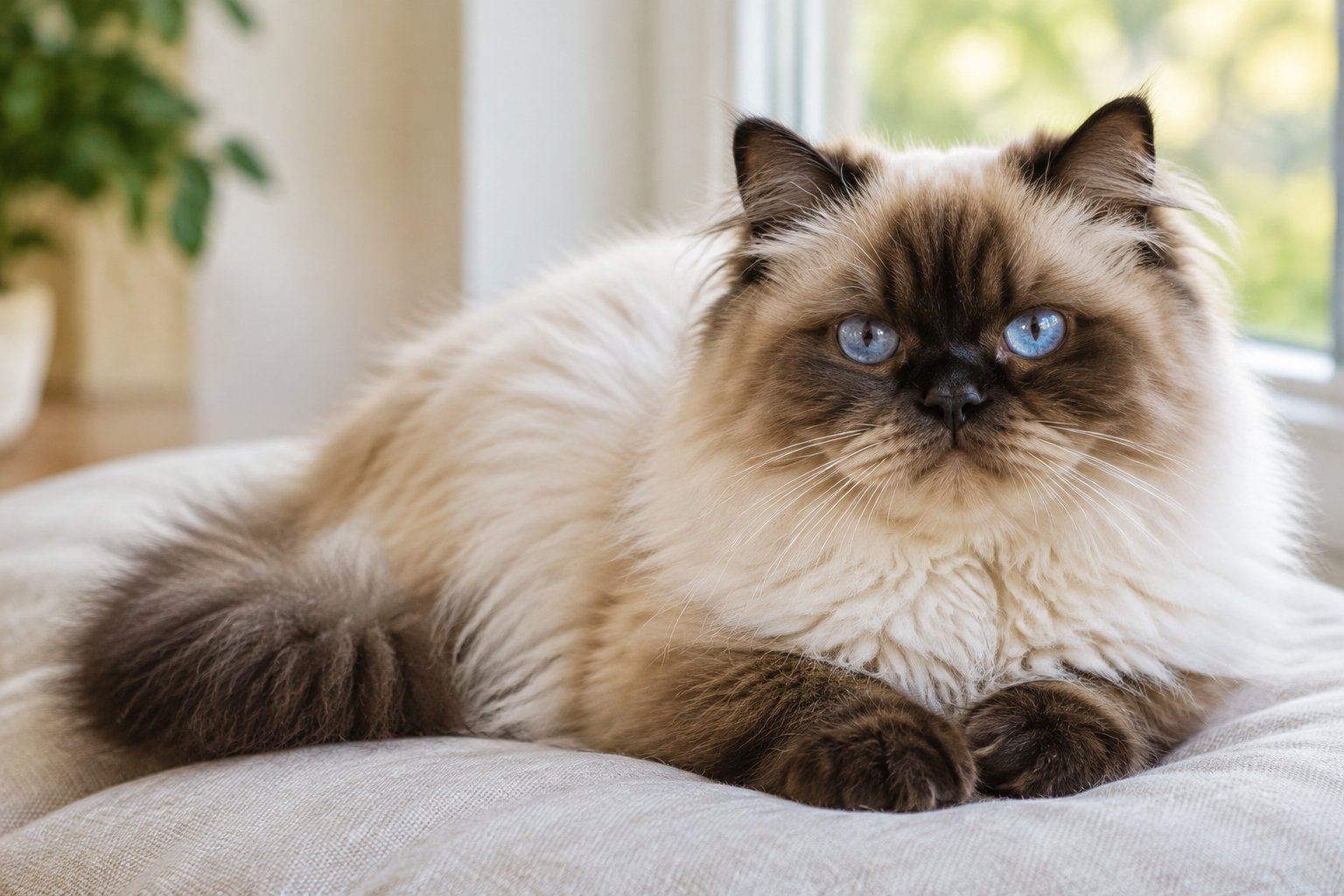
The Himalayan combines Persian body type with Siamese-style point coloring, and its temperament leans heavily toward the calm, affectionate side of both parent breeds. You’ll find this cat content to curl up on your lap for long stretches and generally prefers a quiet, predictable household over a chaotic one. It bonds closely with its people and tends to follow you from room to room rather than demanding attention loudly.
Energy levels stay low to moderate, and daily life with a Himalayan involves short bursts of play followed by extended rest. This breed does well as an indoor-only cat, since its long coat and flat face make it poorly suited to outdoor exposure or temperature extremes. You won’t need to provide much structured exercise, though some gentle play keeps your cat engaged and prevents excess weight gain.
Grooming is the most demanding part of Himalayan care, and you’ll need to brush your cat daily to prevent mats and tangles. Regular cleaning around the eyes and face also helps, since the flat facial structure can lead to tearing. When choosing a breeder, ask about screening for polycystic kidney disease and heart conditions common in Persian-related breeds.
16. Selkirk Rex
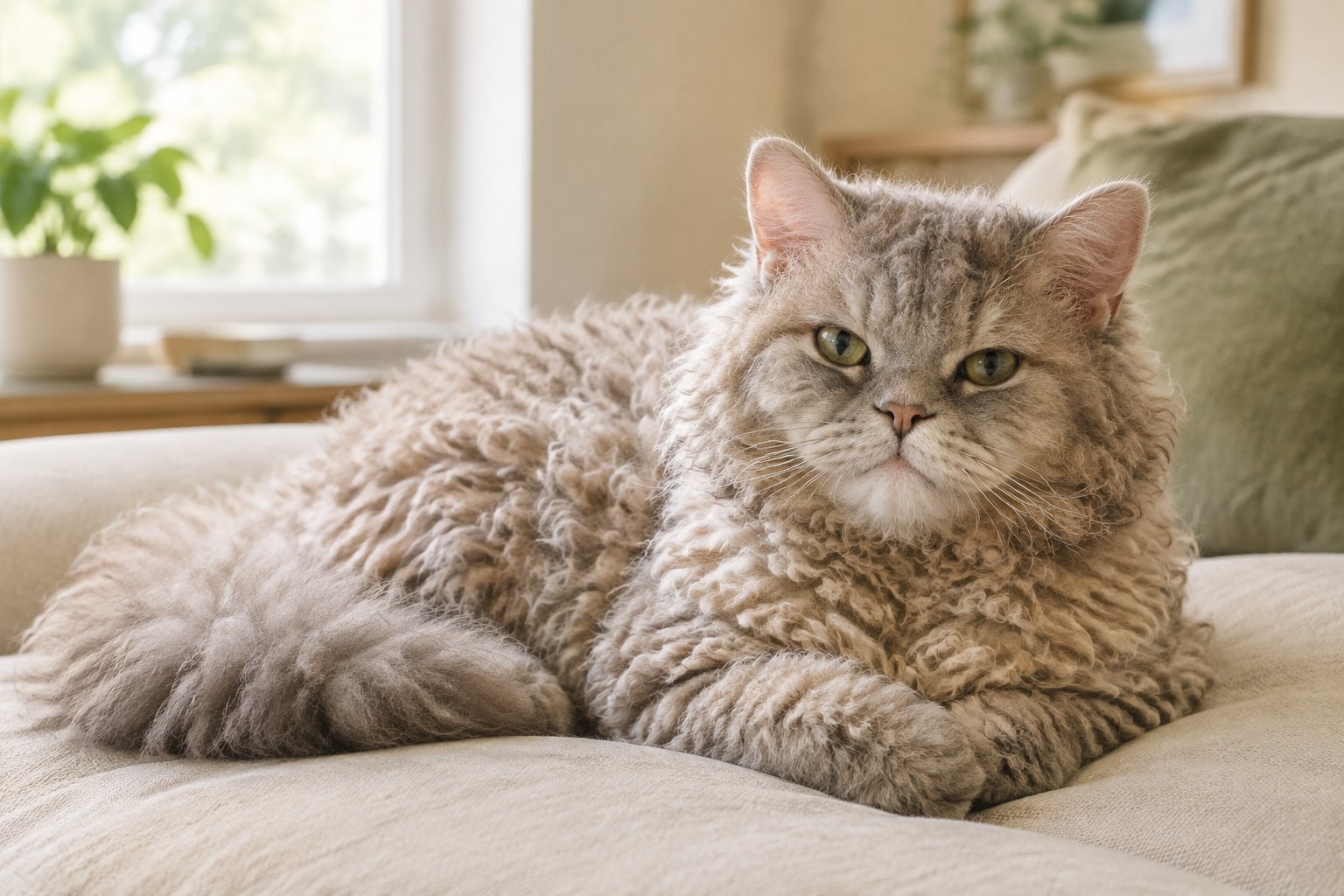
The Selkirk Rex traces back to a single curly-coated kitten found in a Montana shelter in 1987. You get a cat with a relaxed, patient temperament and a build similar to a British Shorthair, giving it a sturdy, rounded appearance. Its curly coat, including curled whiskers, sets it apart from other rex breeds, since the hair itself is normal length rather than short or sparse.
Energy levels stay moderate to low, so you won’t need to provide constant stimulation. This breed enjoys napping and observing its surroundings, though it still appreciates interactive play in short bursts. Day to day, you can expect a cat that’s affectionate but not clingy, content to follow you from room to room without demanding attention.
Grooming depends on coat length, since both longhair and shorthair varieties exist. You’ll need regular brushing to prevent matting, particularly in the plush, loosely curled fur. This breed does well indoors and adapts easily to apartment living. When choosing a breeder, ask about screening for hip dysplasia and polycystic kidney disease, both of which have been reported in the breed.
17. Norwegian Forest Cat
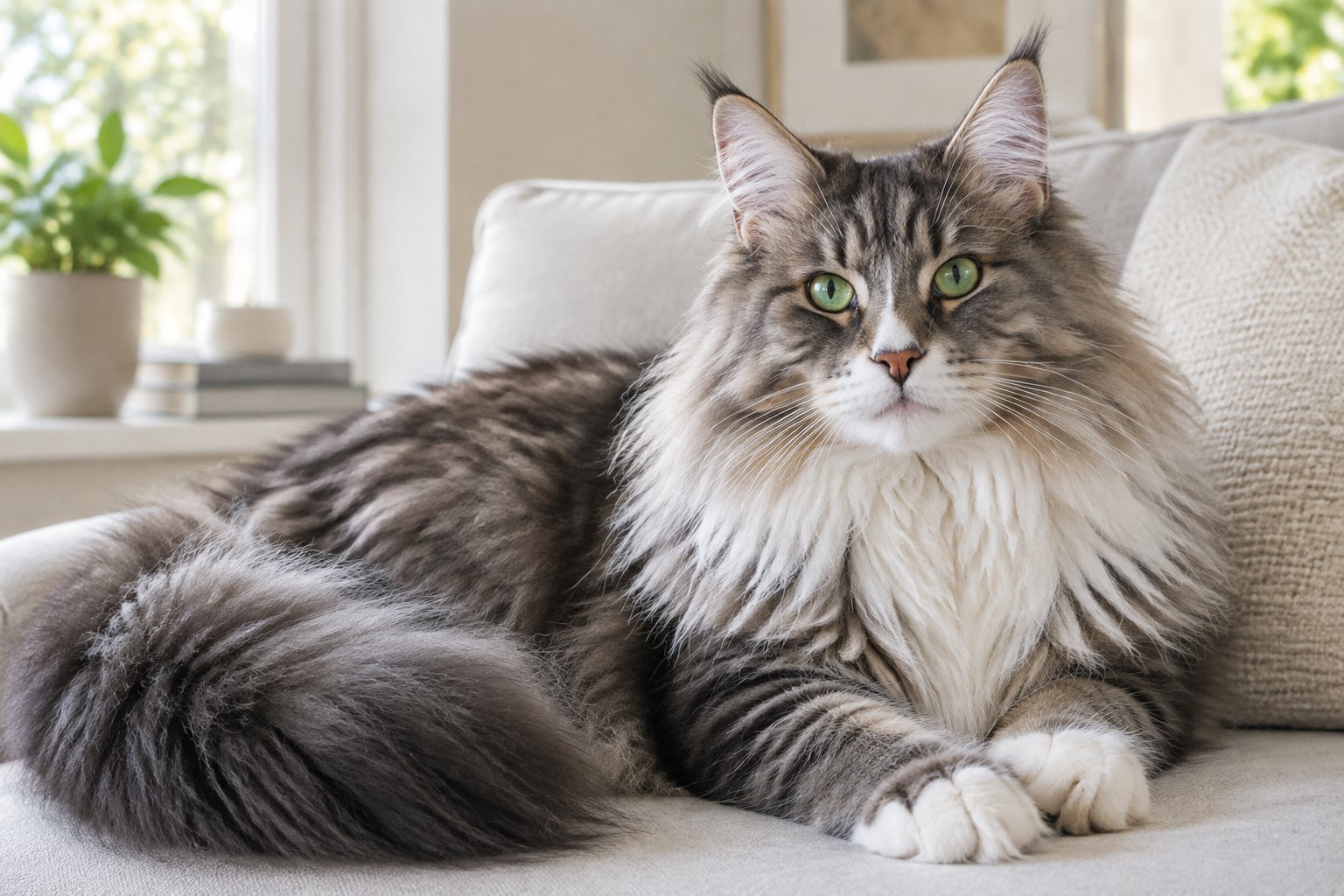
The Norwegian Forest Cat developed in Scandinavia as a farm cat, and that background shows in its steady, unflappable nature. You’ll find this breed calm but not dull, observant, patient, and comfortable following you from room to room without demanding constant attention. It tends to get along well with children and other pets, making it a practical choice for a household that wants a relaxed presence rather than a high-strung companion.
Energy levels sit in the moderate range. Your Wegie will climb and explore when it feels like it, since it’s a capable climber by nature, but it won’t pester you for nonstop play. Daily life with this breed usually means a cat that’s content to supervise your activities from a nearby perch, stepping in for affection on its own schedule.
Grooming is where you’ll need to put in real effort, since the long, water-resistant double coat requires regular brushing to prevent mats, especially during seasonal shedding. This is strictly an indoor breed for safety. When choosing a breeder, ask about screening for hip dysplasia and glycogen storage disease, both known concerns in the breed.
18. British Longhair
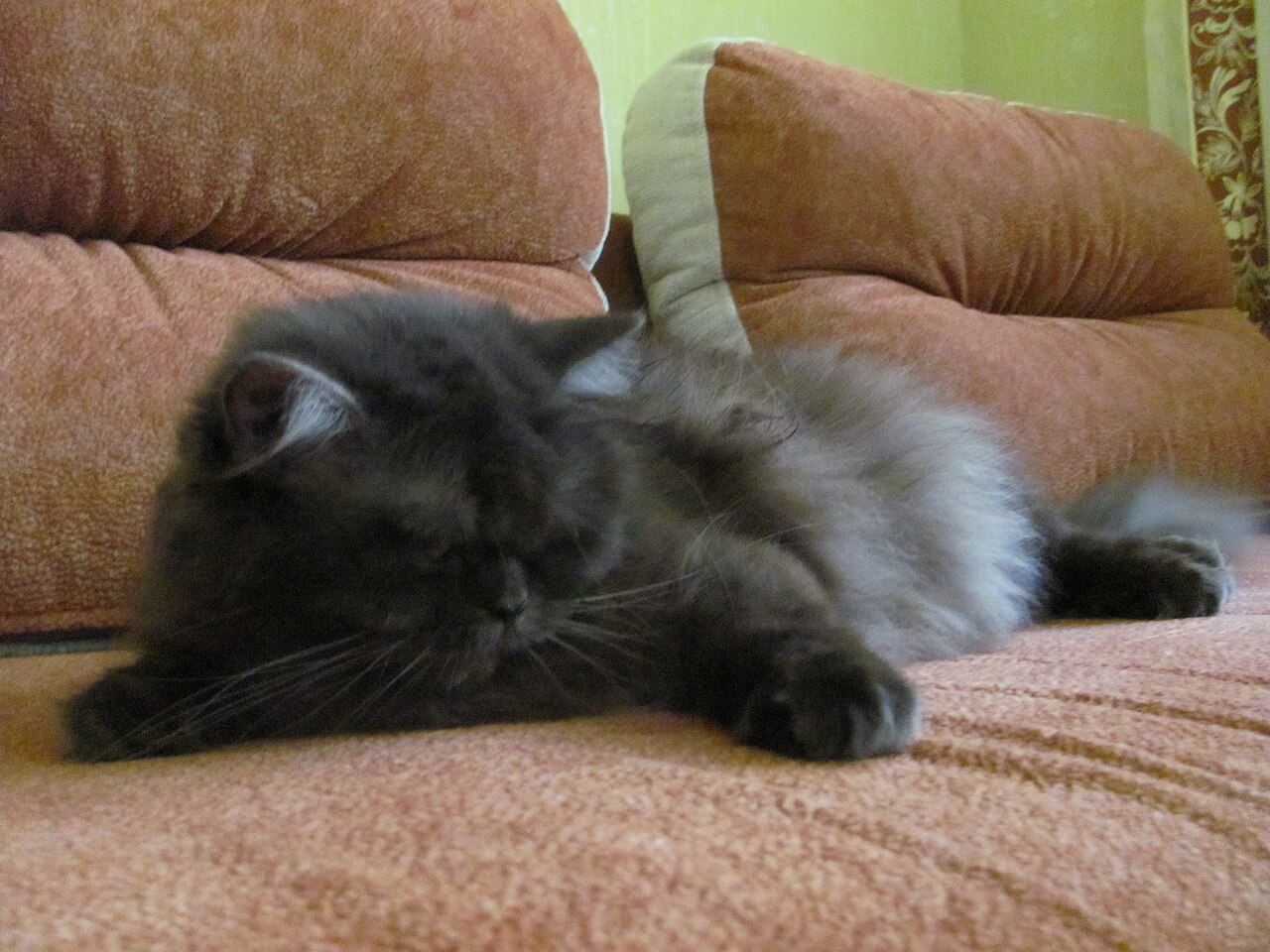
Photo: Fanni 93 / Wikimedia Commons, CC BY-SA 3.0
The British Longhair is the plush, long-haired cousin of the British Shorthair, with the same round face, sturdy body and dense, soft coat. The longer coat is traditionally credited to crosses with long-haired breeds such as the Persian. Like its shorthaired relative, it is known for a quiet, dignified and easygoing temperament.
You will find this cat affectionate without being clingy. It is happy to sit near you on the sofa, follow you around at a relaxed pace and watch what you are doing, rather than demand constant attention. Energy levels are low to moderate, so a few short play sessions a day are usually plenty, and it generally copes well with a quiet, steady household.
Brush the coat a few times a week, and more often during heavy shedding, to prevent tangles. Because it is not a very active cat, keep an eye on portions and weight. When talking to a breeder, ask about heart screening for hypertrophic cardiomyopathy, and about kidney testing if there is any Persian ancestry in the pedigree.
19. Havana Brown
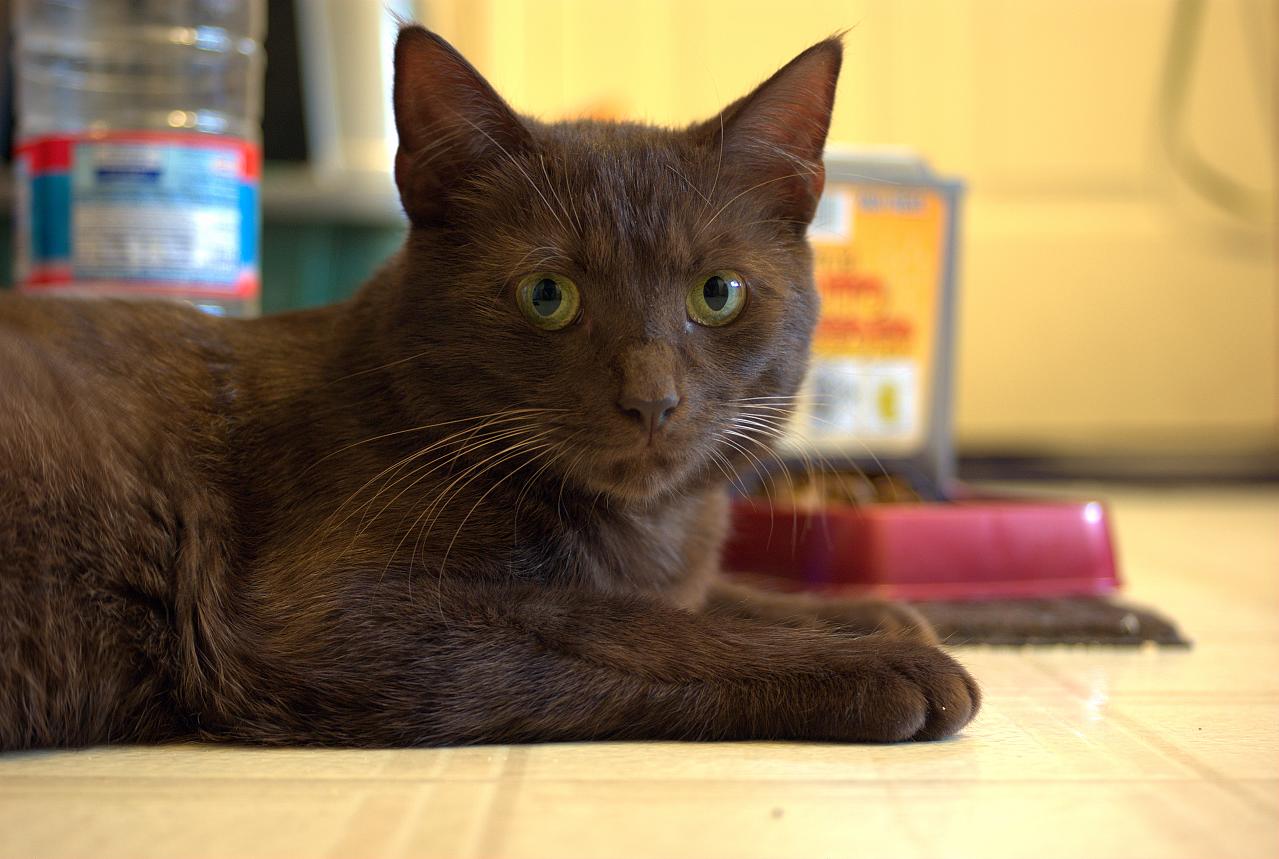
Photo: Dave Scelfo / Wikimedia Commons, CC BY-SA 2.0
The Havana Brown is a rare, rich chocolate-brown cat developed in England in the mid-twentieth century from Siamese and domestic black cat lines. It is a gentle, people-loving breed, and while it has a curious streak, it is generally described as softer and more mellow than its Siamese relatives.
Expect a cat that bonds closely with its family and likes to be involved in whatever you are doing. Many Havana Browns like to investigate objects with a paw, and they enjoy interactive play, but they settle down readily afterward and are not known for chaos or constant noise. Energy is moderate rather than high, and they do best in a home where someone is around for much of the day.
The short, glossy coat needs only a weekly brush or a rub with a soft cloth. Because the breed is small and uncommon, the gene pool is limited, so it is worth asking the breeder about health testing, the parents’ health history and how long their cats generally live.
20. Nebelung
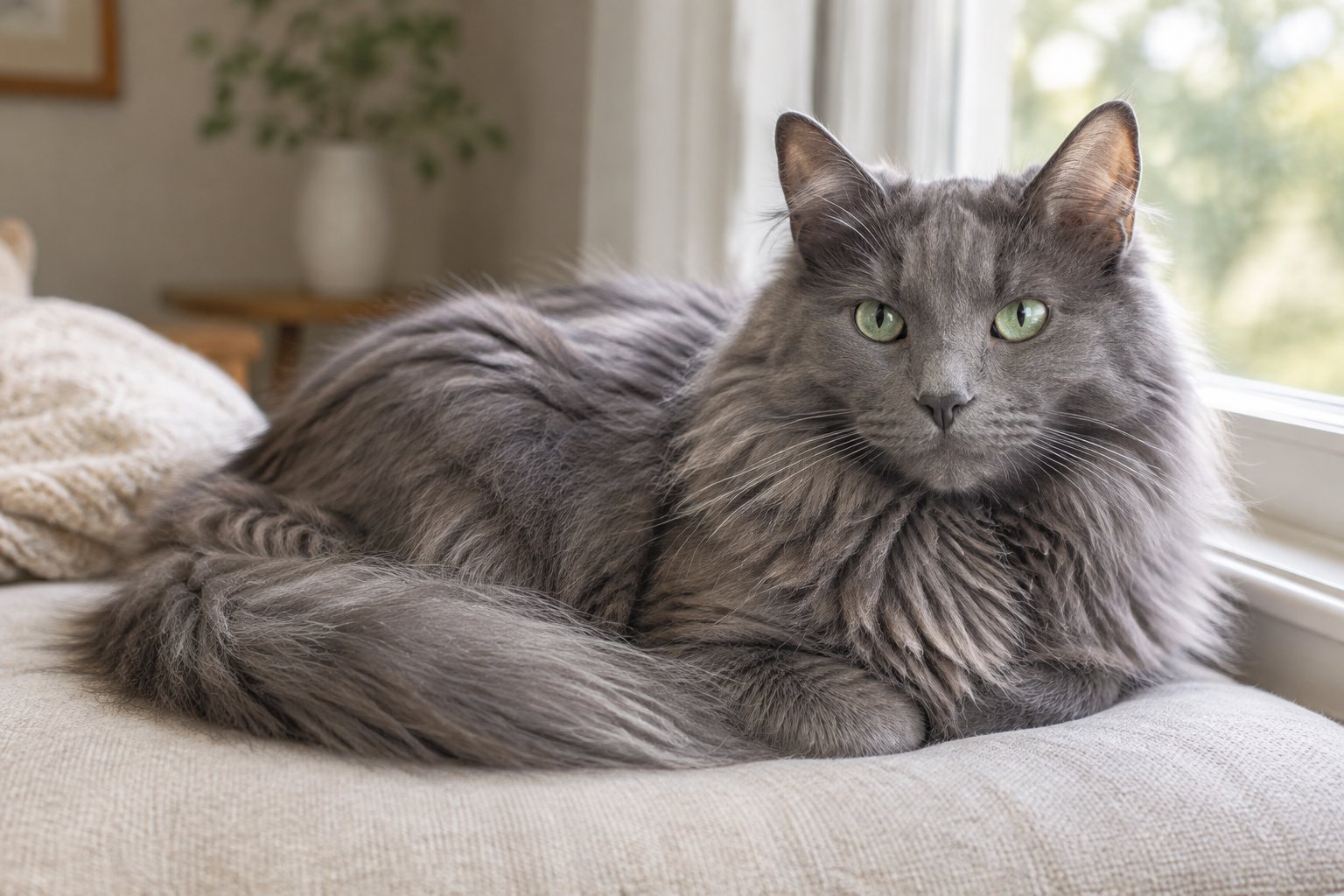
The Nebelung is a quiet, reserved cat that forms deep attachments to its family while staying cautious around strangers. You’ll find this breed affectionate once trust is established, though it rarely seeks out attention the way more outgoing breeds do. Its temperament suits a calm household where routines stay consistent and loud disruptions are rare.
Energy levels in the Nebelung stay moderate to low. You can expect short bursts of play rather than sustained activity, and this cat is content observing its surroundings from a favorite perch. Daily life with a Nebelung tends to be peaceful, as it prefers predictable environments and may retreat when visitors arrive. This breed does well as an indoor-only cat, since its cautious nature makes outdoor exposure unnecessarily stressful.
Grooming needs are moderate due to the semi-long coat, so you should plan on brushing a few times a week to prevent tangles. When looking for a breeder, ask about screening for heart conditions, as this is a common topic raised with Russian Blue-related breeds. Routine veterinary checkups will help you monitor your cat’s long-term health.
21. Bombay
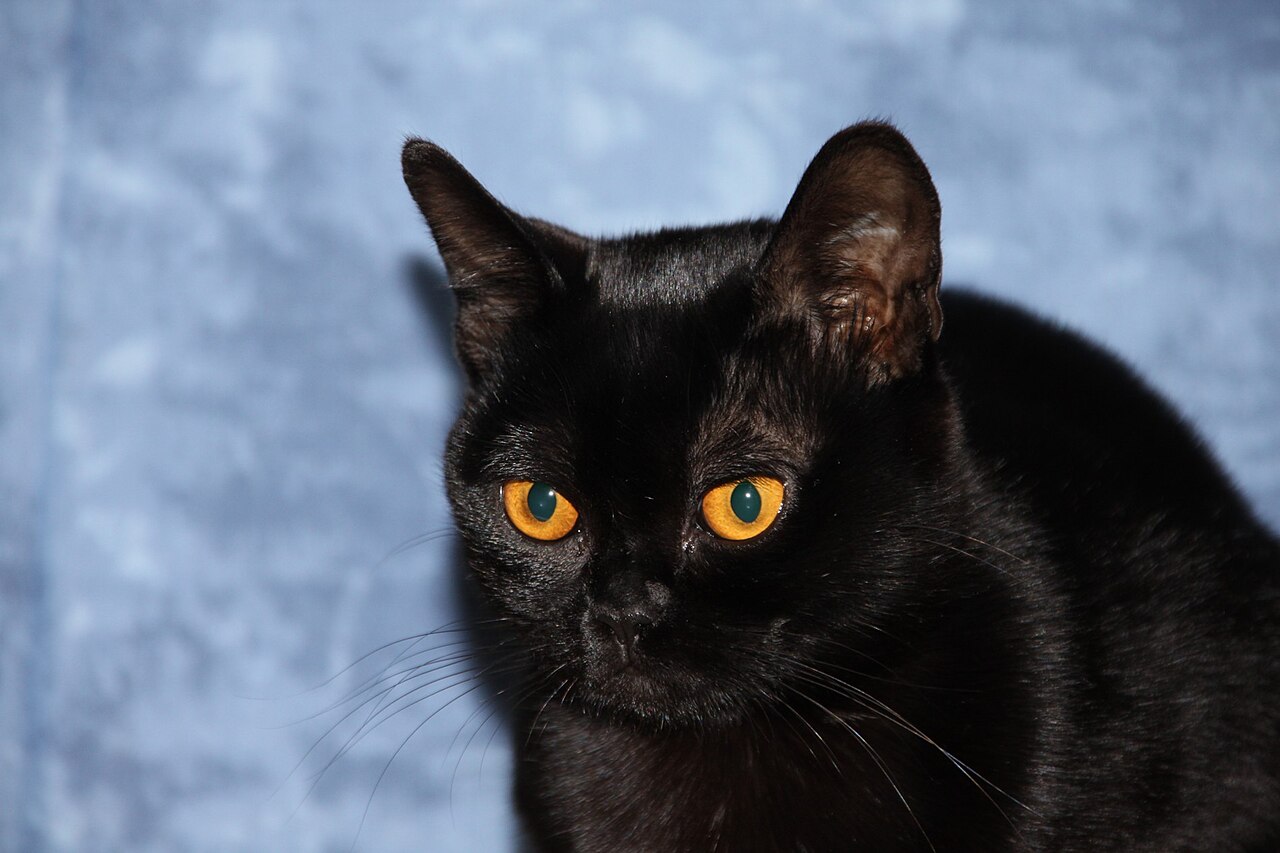
Photo: Bombaycats / Wikimedia Commons, CC BY-SA 3.0
The Bombay was created in the United States in the 1950s by breeding sable Burmese with black American Shorthairs, with the aim of a small, black, panther-like cat. Beneath the sleek look is a warm, easygoing house cat that is often described as a natural lap companion.
Bombays are affectionate, adaptable and typically enjoy being close to their people, whether that means sitting on a lap or sleeping beside you. They have some playful energy, especially when young, but they usually settle into a relaxed routine and cope well with a calm household. They tend not to enjoy long periods alone.
The short, fine coat is easy to care for, since a weekly brush or a wipe with a soft cloth keeps it shiny. Ask the breeder about heart screening for hypertrophic cardiomyopathy, and about the health history of the Burmese lines behind the breed. Keep them indoors and watch portions to prevent weight gain.
22. American Curl
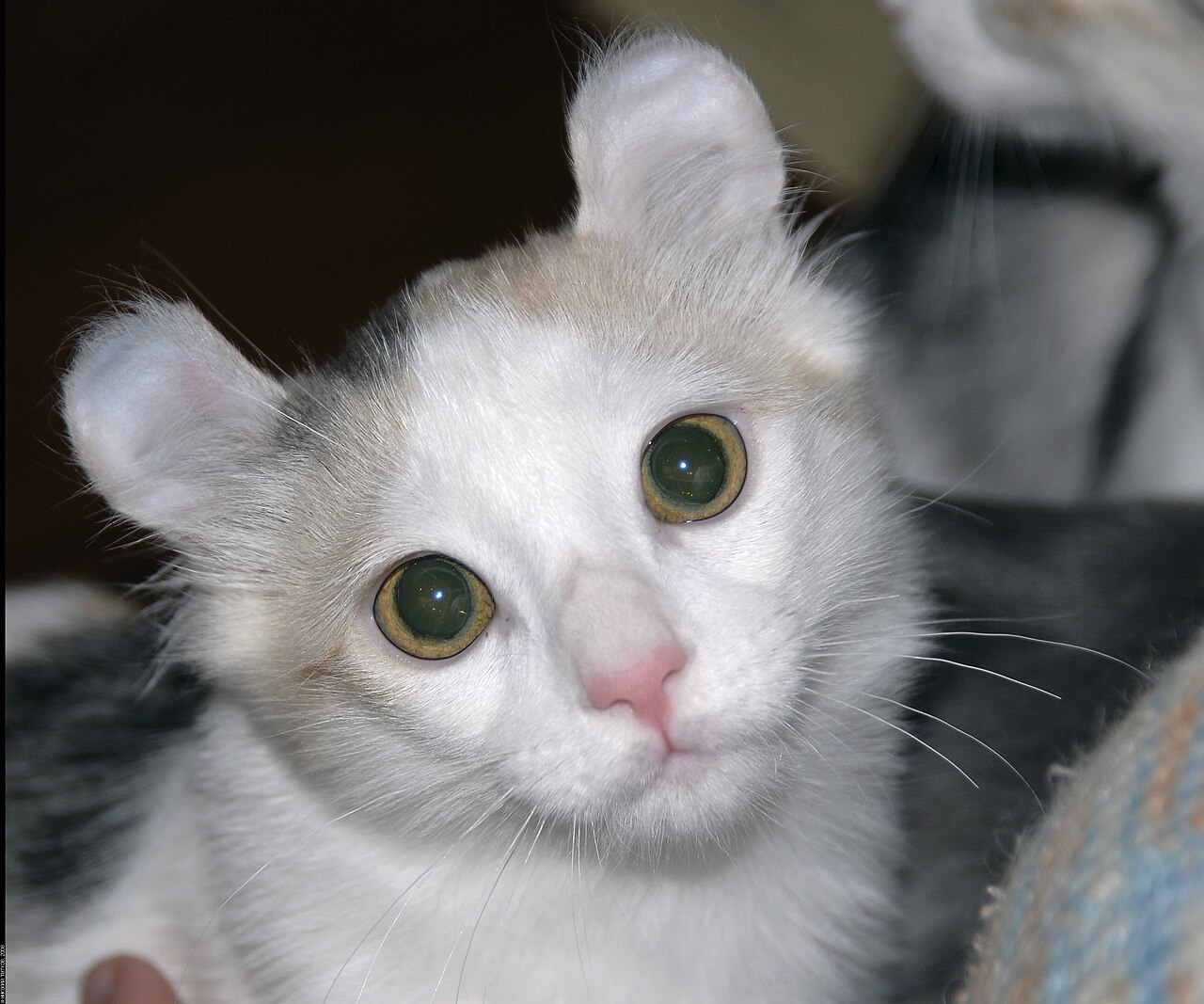
Photo: Nickolas Titkov / Wikimedia Commons, CC BY-SA 2.0
The American Curl is known for its ears, which curl backward in a graceful arc. The breed began in California in the early 1980s with a stray kitten whose ears curled back, and all Curls descend from that line. It is a friendly, adaptable and easygoing cat that is often described as staying kitten-like in outlook for life.
Curls are people-oriented and usually enjoy following their family around, greeting visitors and sitting nearby. They are playful in a gentle way and have moderate energy, but they are not demanding or destructive, and they tend to get on well with children and other pets. Daily life with one is relaxed, with plenty of company and affection.
Both short-haired and long-haired Curls exist. The coat is silky and easy to care for, needing brushing once or twice a week. Handle the ears gently and never bend them, and check and clean them only as your vet advises. Ask the breeder about the health history of the line and about general genetic screening.
23. Highlander
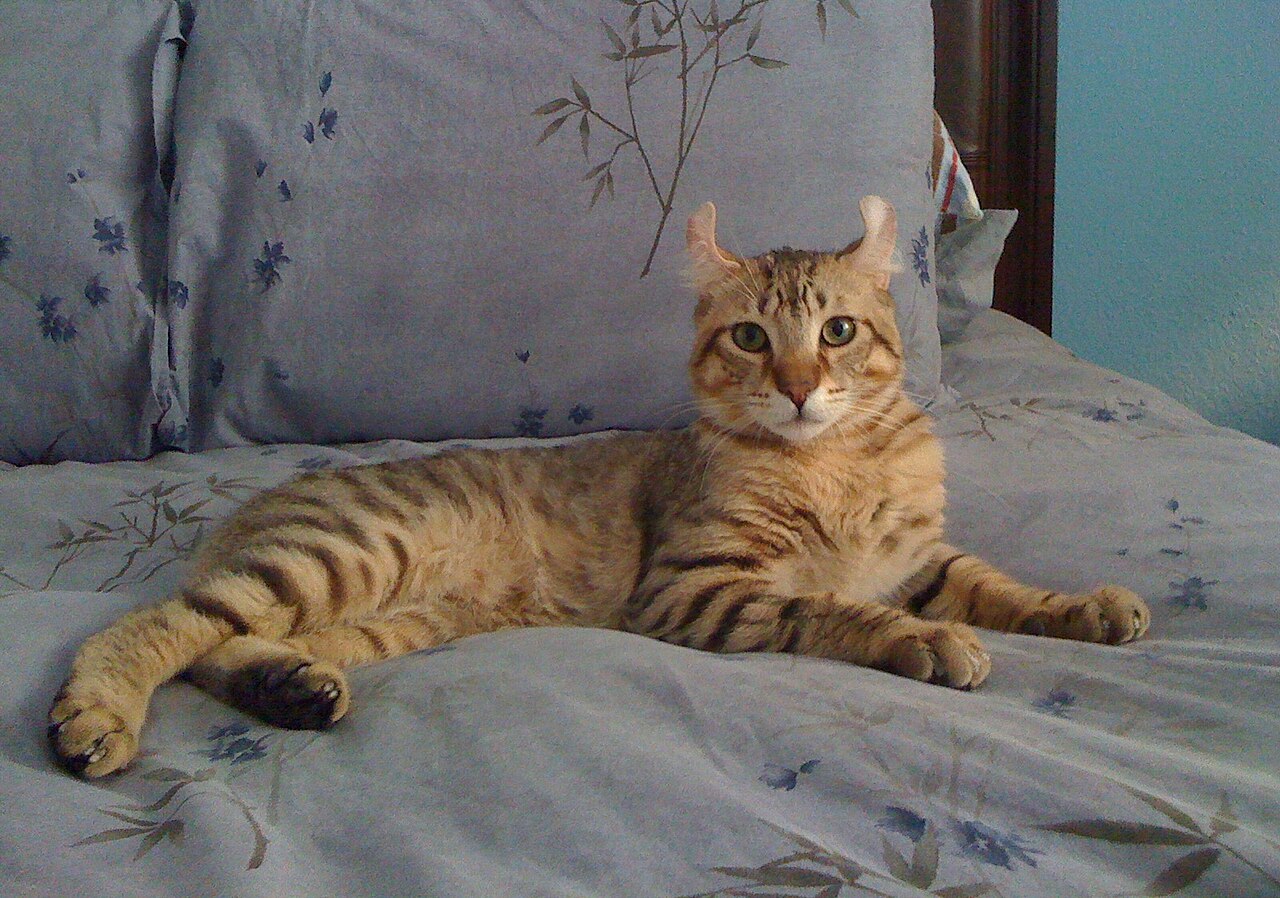
Photo: TAnthony / Wikimedia Commons, CC BY-SA 4.0
The Highlander is a newer breed developed in the United States in the early 2000s, known for its short bobtail, curled ears and sturdy, wild-looking build. Despite the rugged looks, it is usually described as a confident, social and easygoing companion.
Highlanders tend to be friendly with families, children and other pets, and they like to keep close to their people. They are more playful than the sleepiest breeds on this list, so they enjoy interactive games, but they are generally laid-back and relaxed when the play is over. Energy is moderate, and a few play sessions a day usually keep them content.
Highlanders come in short-haired and long-haired versions, and brushing once or twice a week is usually enough. Some have extra toes, so check the nails regularly. Because the breed is new and uncommon, ask the breeder about heart screening for hypertrophic cardiomyopathy and about health testing in the parents.
24. Munchkin
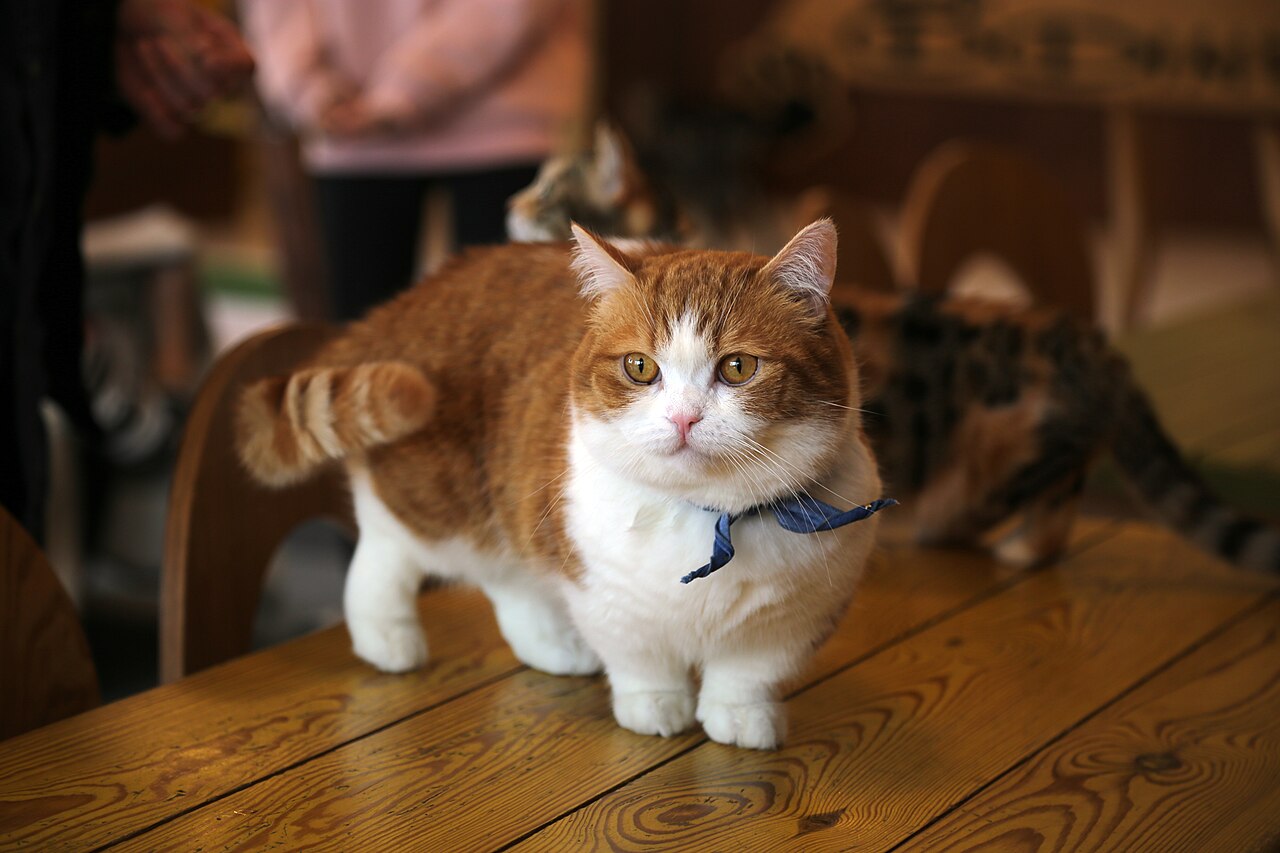
The Munchkin is best known for its short legs, which come from a natural genetic mutation. The modern breed was developed in the United States starting in the 1980s. Beneath the unusual shape is a sweet, outgoing and easygoing cat that is usually described as friendly and good-natured.
Munchkins are curious and playful but not frantic, and they are generally content to spend time near their people. They are lower jumpers than most cats, so they may prefer floor-level toys, low furniture and ramps. Energy is moderate, and they are usually happy to relax after play.
The coat can be short or long, and a weekly brush is usually enough for short coats, with a little more for long ones. Keep the cat at a healthy weight to protect its back and joints, and ask the breeder about spine and joint health. Some cat registries do not recognize the breed because of welfare concerns about the gene behind the short legs, so it is worth researching before you choose one.
25. Pixie-Bob
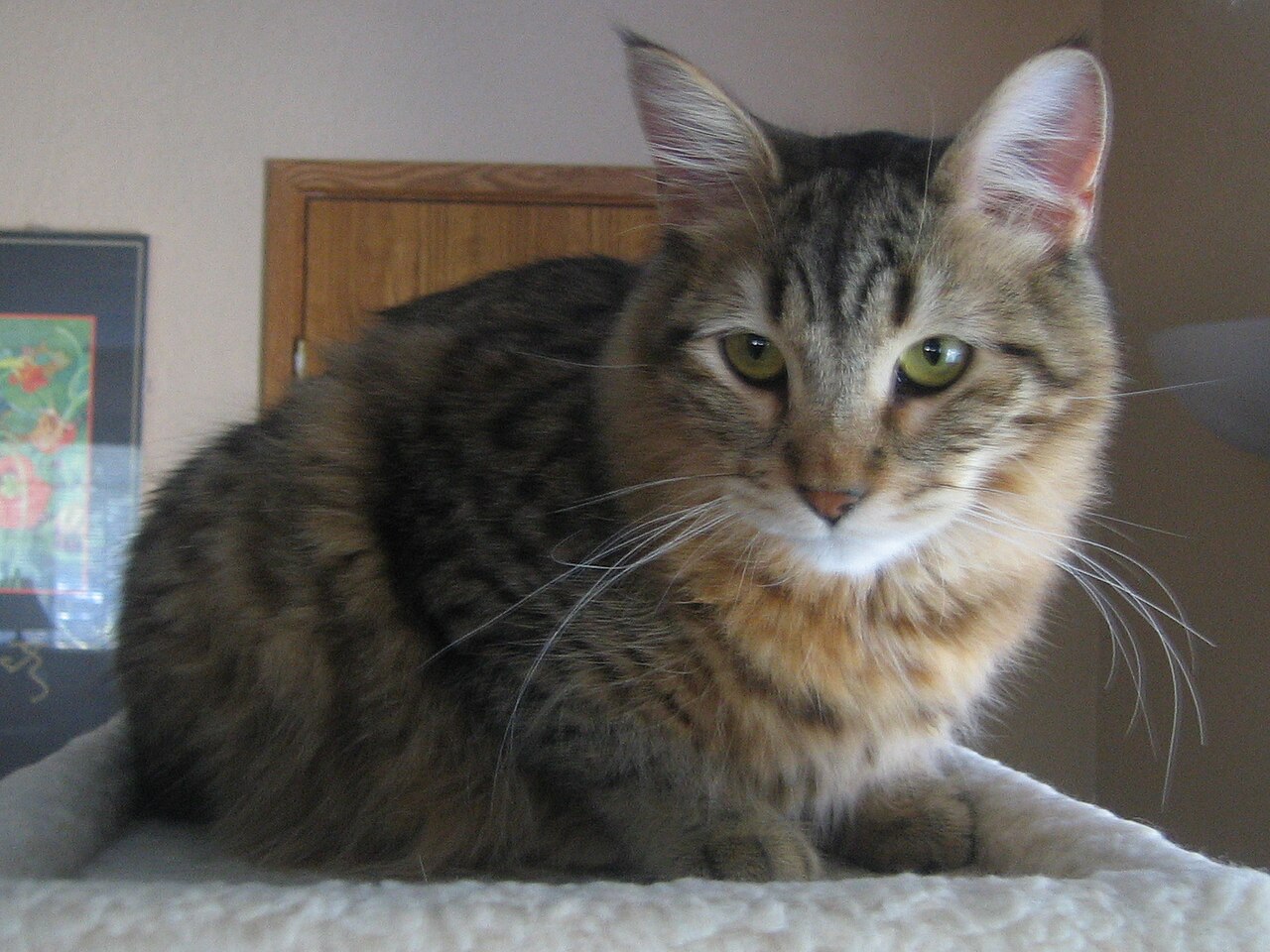
Photo: Nicknitro61 / Wikimedia Commons, CC BY-SA 3.0
The Pixie-Bob was developed in the Pacific Northwest of the United States in the 1980s and looks like a small wild bobcat, with a short tail, tufted ears and a spotted coat. Despite the look, it is a domestic cat, and genetic testing has not found a wild cat link. The temperament is calm, devoted and often described as dog-like.
Pixie-Bobs bond strongly with their families and are often good with children and other pets. They usually have moderate energy, enjoy interactive play and some learn to walk on a harness, but they are not frantic and are happy to settle beside you afterward. Many make chirping or chattering sounds rather than loud meows.
Both short-haired and long-haired Pixie-Bobs exist, and brushing once or twice a week is typically enough. Many have extra toes. Ask the breeder about heart screening for hypertrophic cardiomyopathy, and about reproductive health in breeding females, which has been reported as a concern in the breed.
26. Kurilian Bobtail
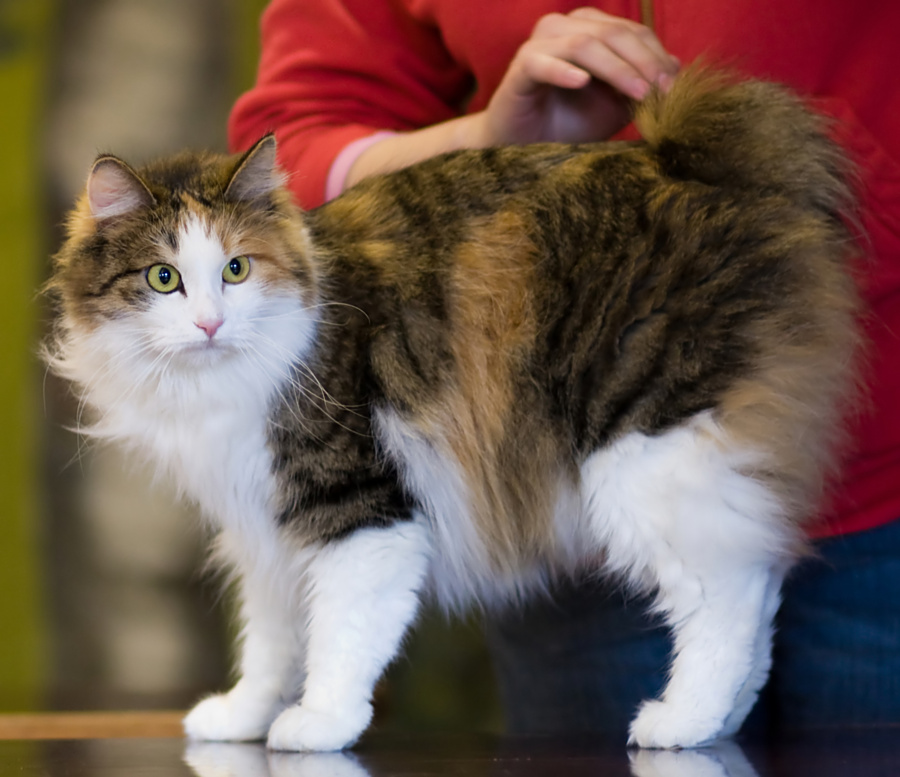
Photo: Heikki Siltala / Wikimedia Commons, CC BY 3.0
The Kurilian Bobtail comes from the Kuril Islands and the Russian Far East, where it developed naturally before becoming a recognized breed. Its short, pom-pom tail is its signature feature. It is described as an intelligent, easygoing and adaptable cat with a calm, steady personality.
These cats bond with their families and tend to be gentle and good with children. They are playful and curious in short bursts, and many enjoy water and interactive toys, but they usually settle down readily and are not known for being noisy or destructive. Energy is moderate, and they cope well with a stable household.
Kurilian Bobtails come in short-haired and semi-long-haired versions, both of which need brushing about once a week. Because the tail is naturally short, handle it gently. The breed is generally considered robust, but ask the breeder about health testing and the health history of the parents.
27. Manx
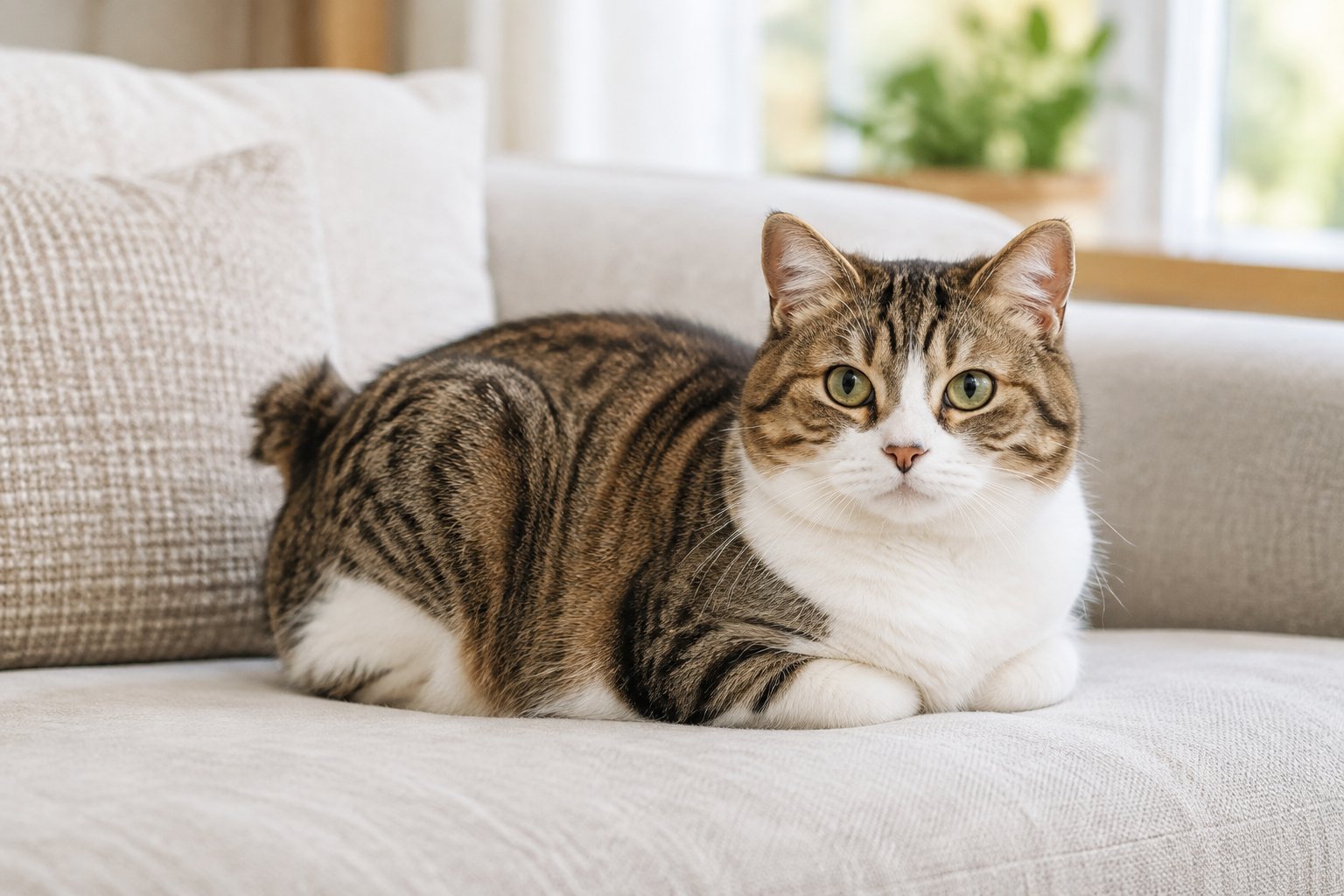
The Manx is a tailless or short-tailed cat known for being loyal and even-tempered. You will likely find it attaches closely to one or two people in the household, following you from room to room. It gets along well with children and other pets, and it rarely shows aggression or excessive nervousness.
Energy levels in the Manx tend to be moderate rather than low. You can expect bursts of playfulness, especially with interactive toys, balanced by long stretches of rest. This breed does well indoors and does not require elaborate enrichment, though it appreciates climbing spaces and occasional play sessions to stay engaged.
Grooming needs depend on coat length, since Manx cats can have short or semi-long fur. Weekly brushing is usually enough to manage shedding and prevent mats. When looking at a breeder, ask about screening for Manx syndrome, a spinal condition linked to the gene responsible for the shortened tail, as well as general hip and spine health in the lineage.
28. American Wirehair
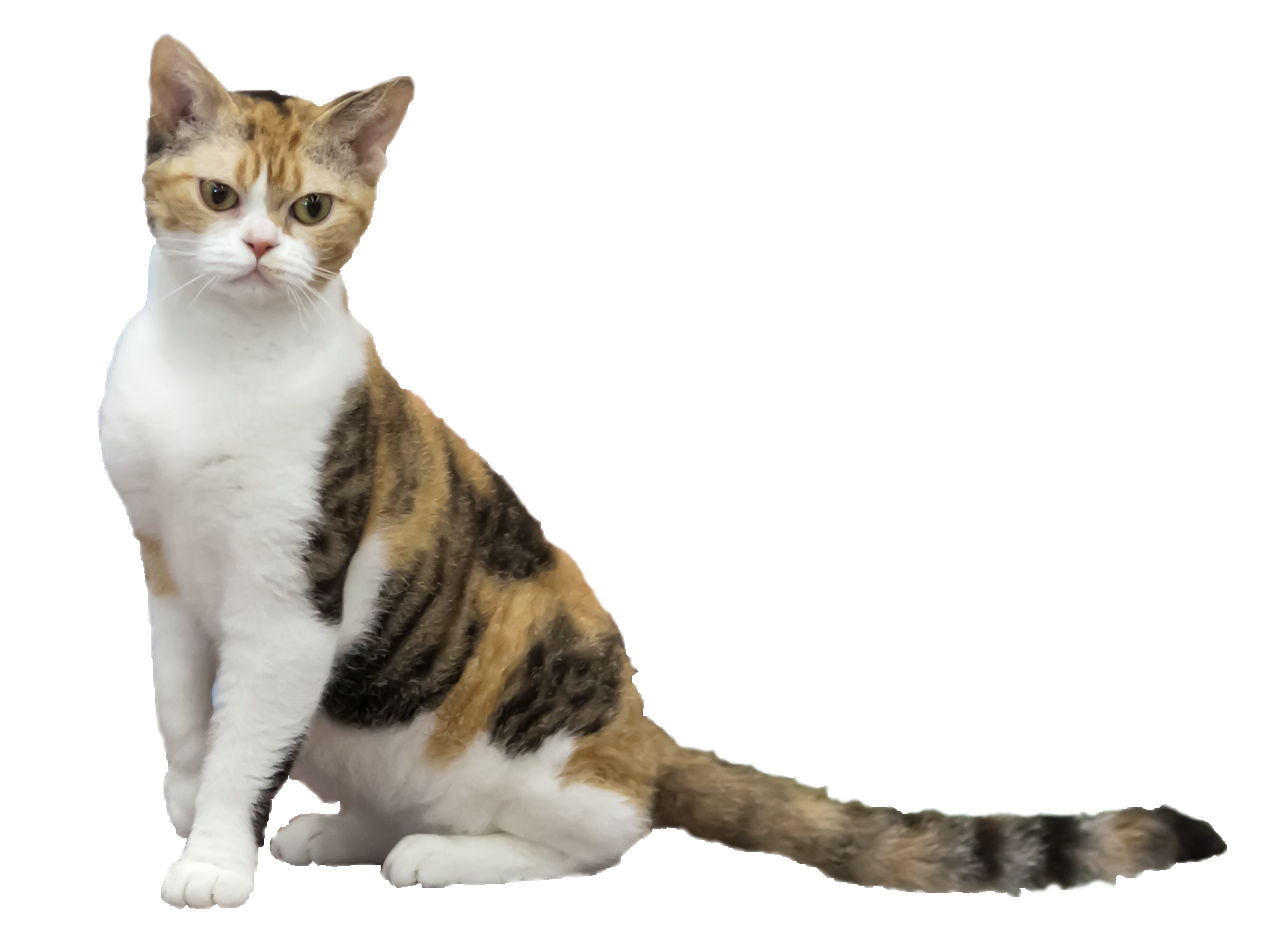
Photo: Desaix83 (after Heikki Siltala) / Wikimedia Commons, CC BY 3.0
The American Wirehair began in 1966 on a farm in upstate New York, where a kitten with a crimped, springy coat appeared in a litter of barn cats. All Wirehairs descend from that cat. The breed is rare and is usually described as easygoing, adaptable and quietly affectionate.
American Wirehairs are friendly and gentle, and they enjoy company without being demanding. They are playful, though only moderately so, and they tend to be calm companions that fit into family life, including homes with children and other pets. They are typically quiet, with soft voices.
The wiry coat should be groomed gently, because heavy brushing can flatten or break the crimped fur, and a light comb now and then is usually enough. Some Wirehairs have sensitive skin, so ask your vet about skin care. Ask the breeder about heart screening for hypertrophic cardiomyopathy as well.
29. Korat
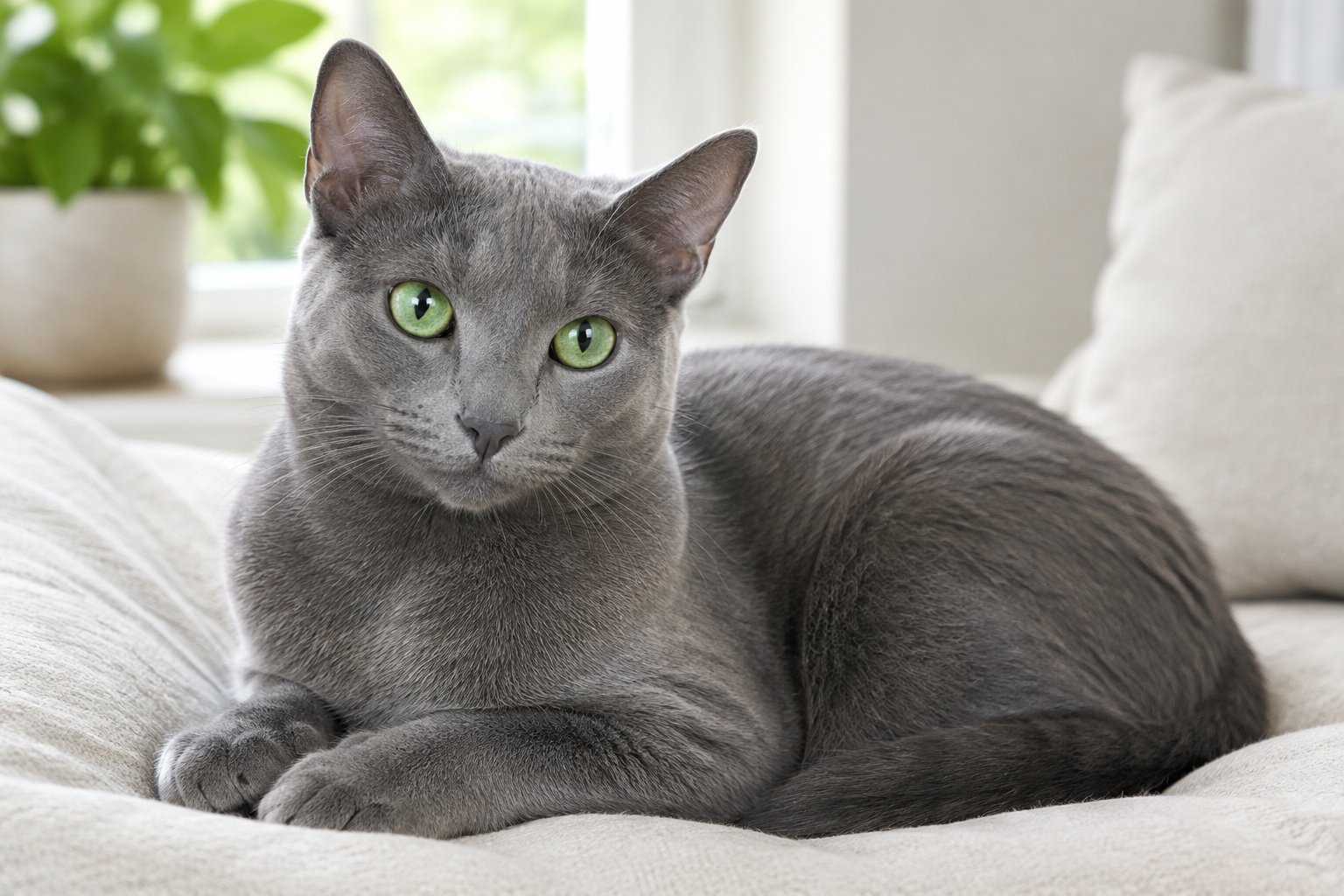
The Korat has a settled, even temperament once it feels secure in its surroundings. It bonds closely with its people and prefers calm, predictable households over chaotic ones. You’ll find this breed attentive and intelligent, but it channels that intelligence into quiet observation rather than constant activity.
Daily life with a Korat tends to be steady and companionable. It likes to stay near you, often following you from room to room, and settles easily once it has checked in with its favorite person. Loud noises or sudden changes can unsettle it, so a stable routine suits it best. Exercise needs are moderate, met through short bursts of play rather than extended activity.
Grooming is simple due to its short, dense coat, and an occasional brushing keeps shedding under control. The Korat should live strictly indoors, as its close attachment to its owner and cautious nature make it unsuited to outdoor risks. When looking for a breeder, ask about screening for GM1 and GM2 gangliosidosis, inherited conditions known in the breed.
30. Cymric
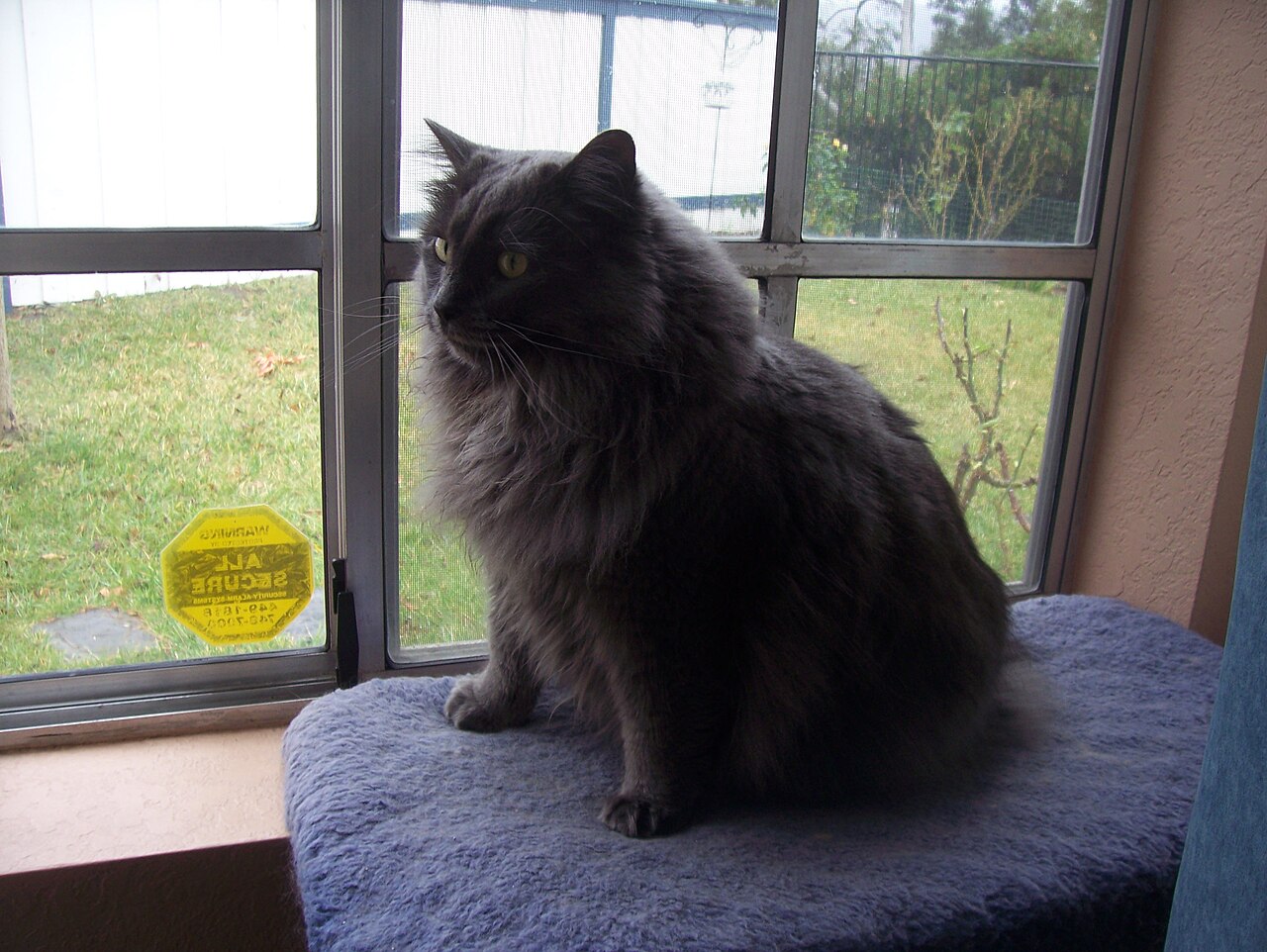
Photo: Robertlucien / Wikimedia Commons, CC BY 3.0
The Cymric is the long-haired version of the Manx, the tailless cat from the Isle of Man. Some registries treat it as a separate breed and others as a variety of the Manx. It is a calm, gentle and intelligent cat with a plush coat and a rounded body.
Cymrics bond closely with their families, often choosing a favorite person and following them around. They are playful in short bursts, and their strong back legs make them good jumpers, but they are generally relaxed and easy to live with. Energy is moderate, and they enjoy a quiet household with plenty of companionship.
The semi-long coat needs brushing a few times a week. The gene that shortens or removes the tail can also cause spinal problems in some cats, so ask the breeder carefully about spine health, and watch for any trouble with mobility or with the bowels and bladder. Keep the cat at a healthy weight to protect its back and hips.
Choosing a Calm Cat That Fits Your Home
Choosing a calm breed is a good start, but the individual cat matters most. Even within a laid-back breed, some cats are livelier than others, and a cat from the most relaxed breed can still be playful as a kitten. Meeting the cat, and its parents when possible, tells you more than any breed description.
Adult cats are worth a serious look. A shelter or rescue cat that is a few years old already has a settled personality, so staff and foster families can tell you whether it is quiet, cuddly or independent. Many adult cats are overlooked, and the ASPCA general cat care guide covers the basics of helping a new cat settle in. Mixed-breed cats can be every bit as calm as the pedigreed breeds on this list.
Whichever cat you choose, a calm home helps. Give it a predictable routine, a few quiet places to retreat, regular gentle play and a healthy weight, and ask your vet about any breed-specific health checks. If you are also weighing up how sociable a cat will be with the family, you may like our guide to the friendliest cat breeds in the world.


