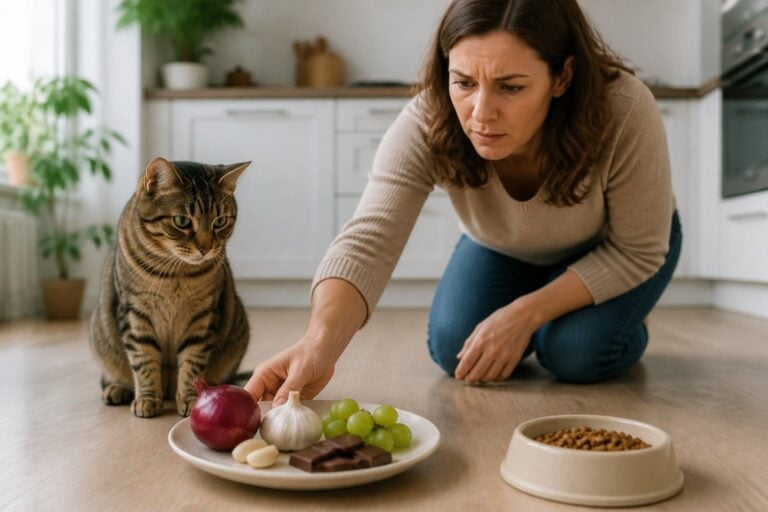
The 30 Worst Cat Treats Money Can Buy
Cat treats fill store shelves in countless shapes, flavors, and formulas, but not all of them deserve a place in your cat’s diet. Some rely on cheap fillers, artificial colors, and preservatives, while others are simply the wrong kind of snack for a cat.
You might assume that a product sold in a major pet store or labeled “natural” is automatically safe, but that assumption can lead you astray. Some treats offer little nutritional value and may contribute to weight gain, dental problems, or digestive upset over time.
This list walks through the kinds of treats worth skipping. It names a specific product only where its own ingredient label backs up the concern, and each entry explains what to offer your cat instead.
1. Treats Loaded With Artificial Dyes and Colors
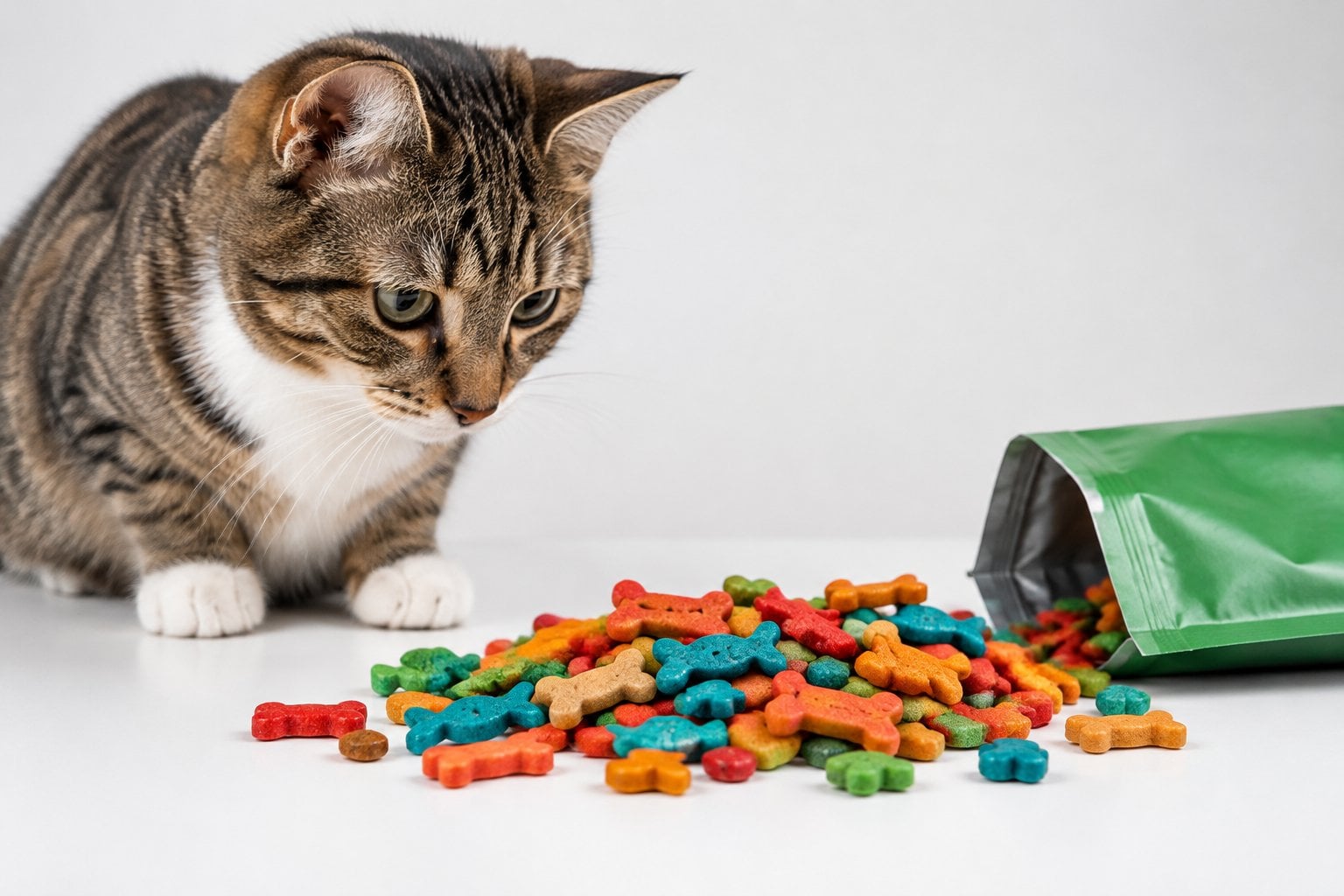
Many cat treats on the market contain artificial dyes like Red 40, Yellow 5, or Blue 2. These additives serve no nutritional purpose. They exist purely to make the product more visually appealing to you, not your cat. Cats cannot see color the way you do, so bright red or blue kibble bits are marketed entirely for human shoppers. Your cat has no preference for color and will respond to scent and texture instead.
Research on dyes in cats specifically is limited, but there is no nutritional upside to eating them. They are added for the owner’s eye, not the cat’s health. If you check the ingredient label and see a dye listed by name or number near the top, that is a sign the treat prioritizes appearance over substance. Look instead for treats that use natural colorants, or none at all.
A better choice is a treat with a short ingredient list, where the main component is a named protein source like chicken or salmon. Simpler formulas tend to align more closely with your cat’s actual nutritional needs.
2. Friskies Party Mix Crunch Treats With Artificial Colors and BHA
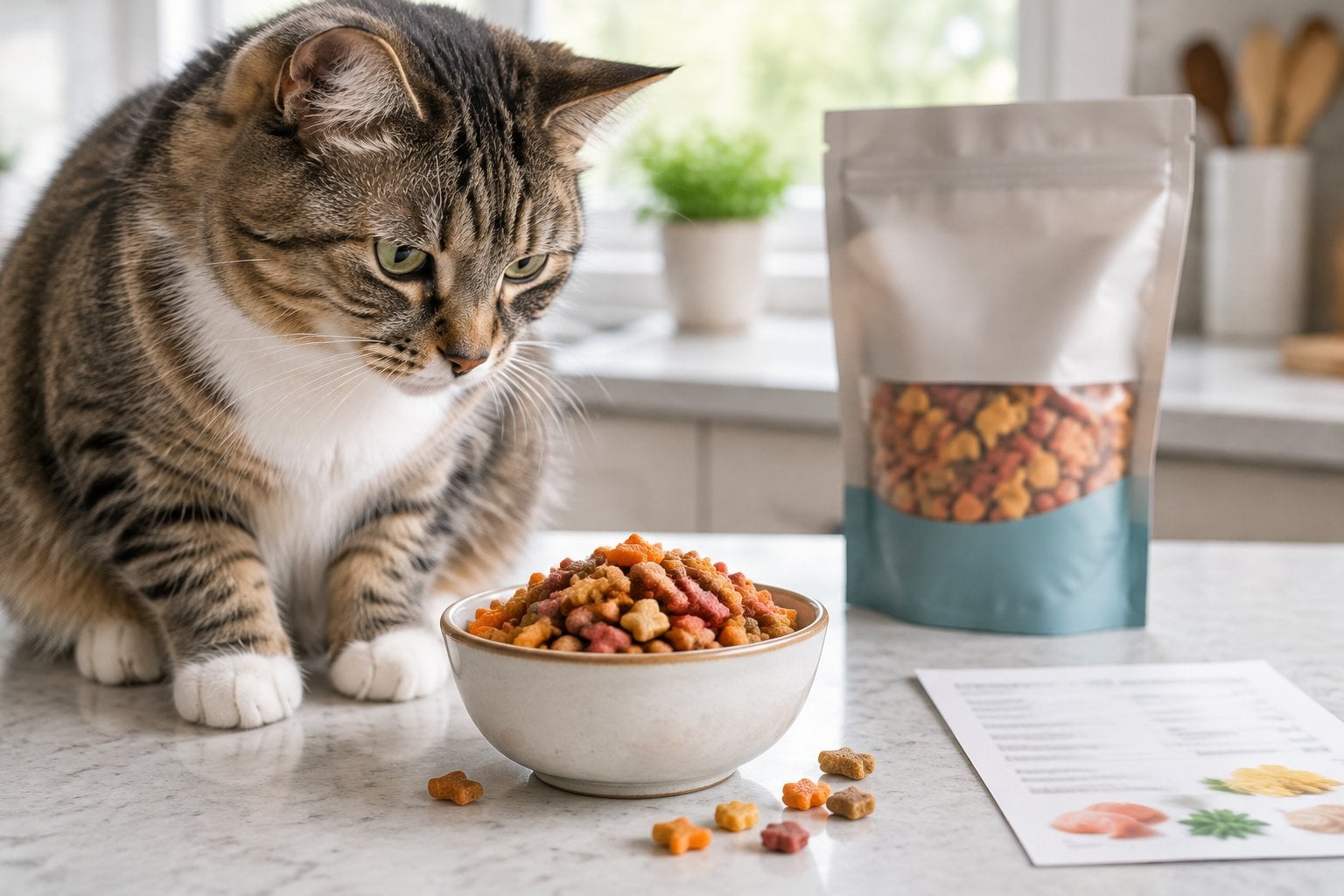
Friskies Party Mix Original Crunch is one of the most widely sold cat treats, and its own ingredient label lists artificial colors, including Yellow 5, Yellow 6, Red 40, and Blue 2, along with BHA as a preservative. Chicken is the first ingredient, so the base is not the problem. The extras are.
Artificial dyes serve no nutritional purpose and exist to appeal to you, since cats see color poorly. BHA is permitted in pet food, but it is a synthetic preservative that many owners prefer to avoid. Recipes can differ by country and change over time, so check the package in your hands.
If you want to skip synthetic additives, look for crunchy treats preserved with mixed tocopherols (a form of vitamin E) and made without artificial colors. A short ingredient list that starts with a named meat is a good sign.
3. Rawhide-Style Chews
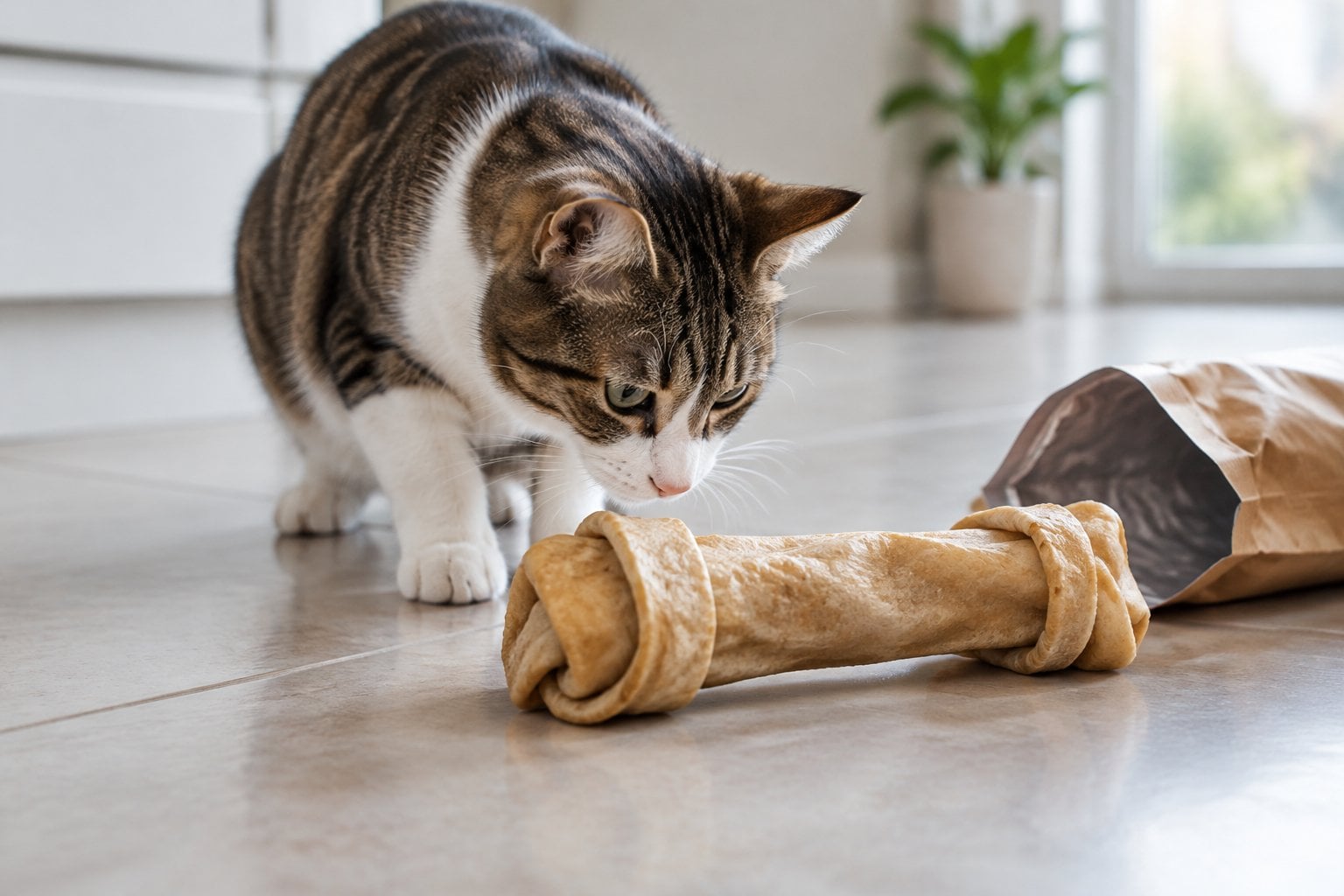
Rawhide chews are made for dogs, not cats, and you should never offer one to your cat. These products are large, dense, and dried hard enough that a dog’s jaw strength is needed to break them down safely. Cats have smaller mouths and different chewing mechanics, so rawhide poses a serious choking risk if you give it to them.
Even when cut into smaller pieces, rawhide can soften unpredictably in a cat’s mouth and become a sticky, gummy mass. This texture increases the chance it gets lodged in the throat or swallowed whole. Veterinarians generally advise that chewing products designed for one species should not be repurposed for another, since digestive systems and chewing behaviors differ significantly.
Rawhide also offers no nutritional value for cats and does not address any feline-specific dental or behavioral need. If you want to give your cat something to gnaw on, look for treats formulated specifically for cats, such as dental chews sized and textured for feline jaws. Always check the packaging to confirm the product is labeled for cat use before offering it.
4. Dog Treats Given to Cats
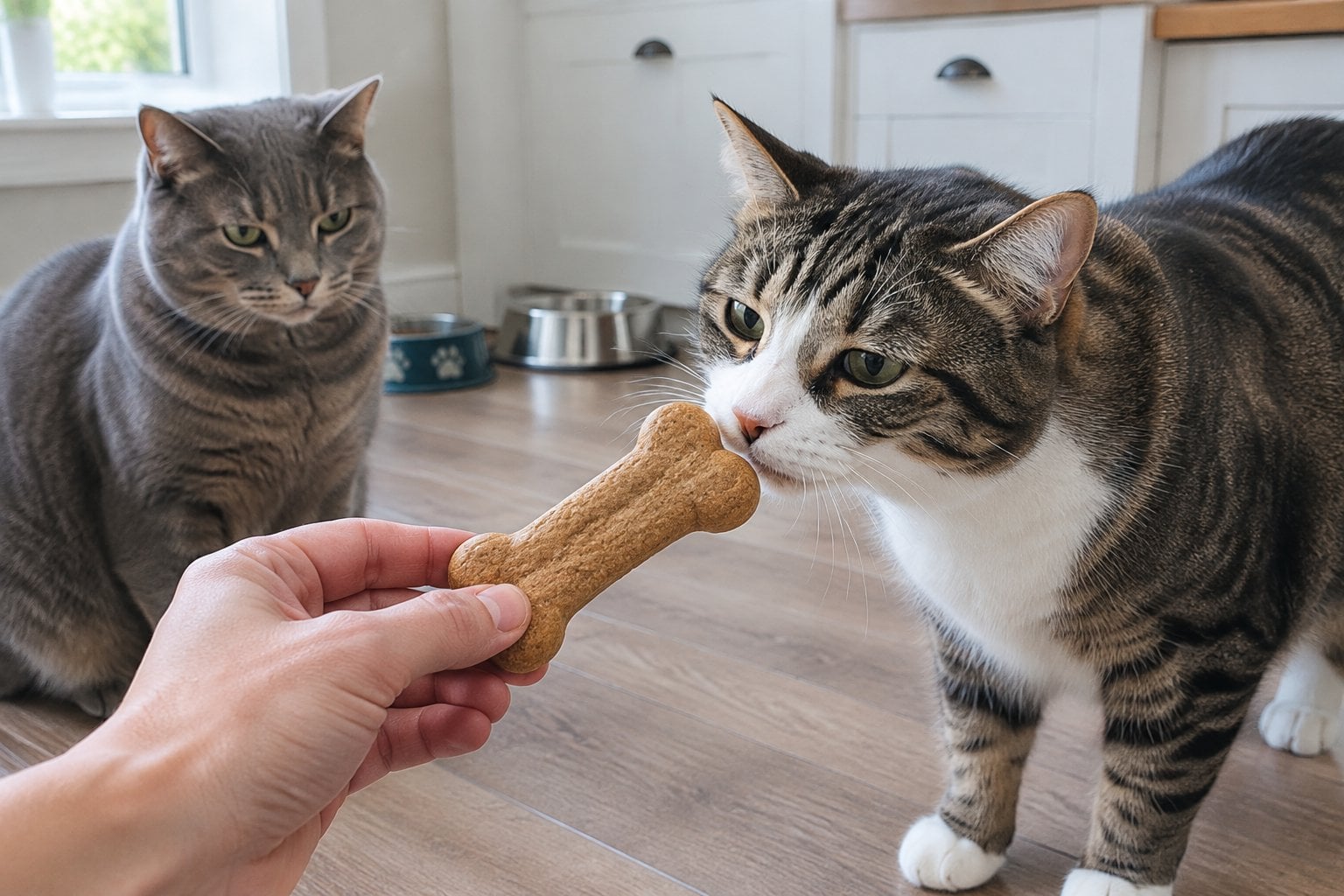
Dog treats are formulated for a dog’s nutritional needs, not a cat’s. Cats are obligate carnivores and require more protein, along with specific nutrients like taurine, which many dog treats do not provide in adequate amounts. Some dog treats also contain ingredients that are safe for dogs but risky for cats. Added vitamin D levels, flavorings, or preservatives in certain dog products can be mismatched for a cat’s smaller body size and different metabolism.
Giving your cat an occasional small piece of a plain, single-ingredient dog treat is unlikely to cause harm. The concern arises when dog treats become a regular substitute for cat-specific snacks, since this can lead to nutritional gaps over time. Your cat’s long-term health depends on treats designed around feline requirements. Look for treats labeled specifically for cats, ideally with a statement of nutritional adequacy or a short, recognizable ingredient list.
If your cat seems drawn to a dog treat’s smell or texture, try a cat treat with similar characteristics instead. This keeps your cat interested while making sure its diet stays appropriate for its species.
5. Cow’s Milk “Cat Milk” Treats
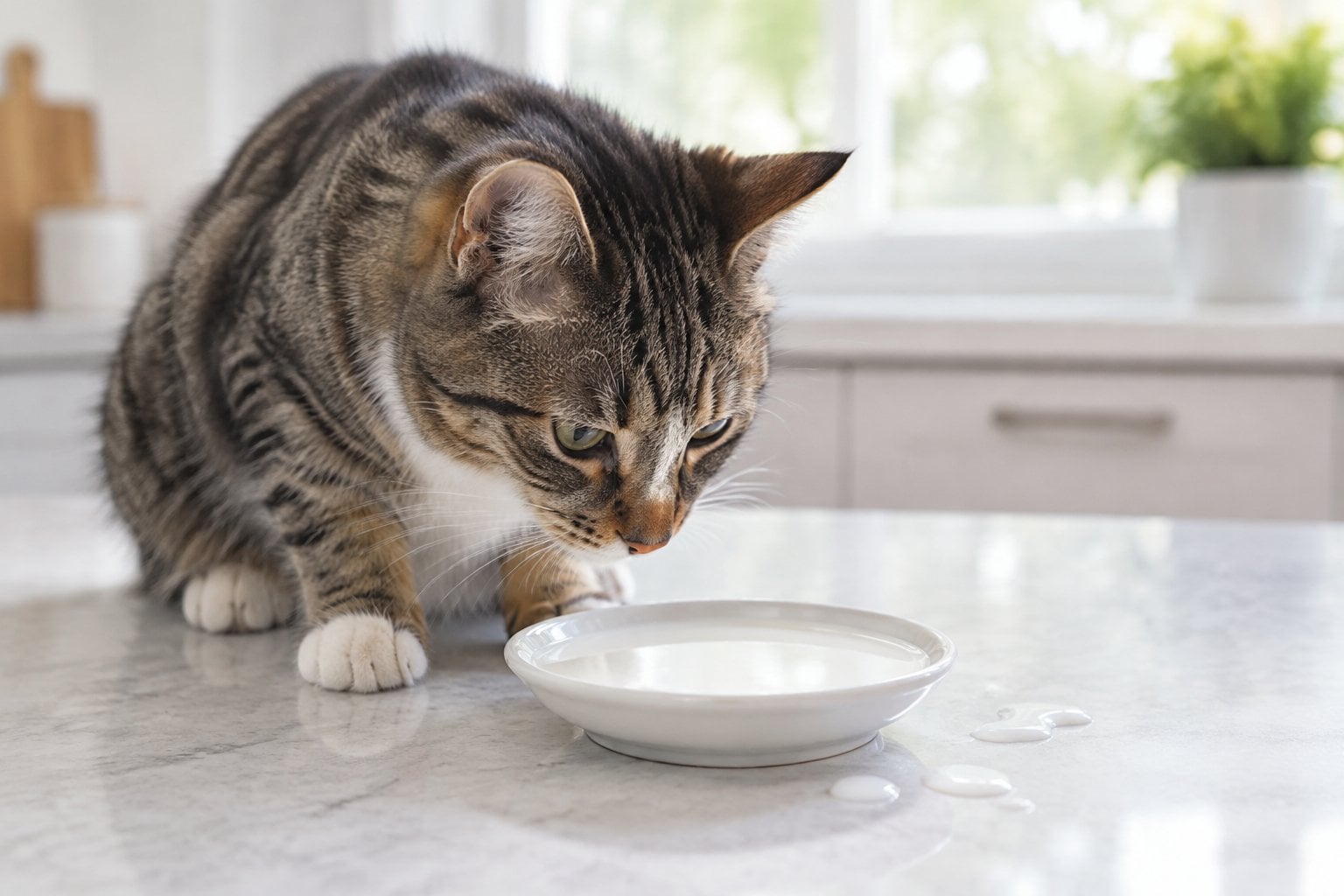
Most adult cats are lactose intolerant. After weaning, cats lose much of the lactase enzyme needed to break down the sugar in milk, so giving your cat cow’s milk as a treat often leads to digestive upset.
The common result is diarrhea, vomiting, or gas within a few hours of drinking it. This happens because undigested lactose draws water into the intestines and ferments there. A small lick of milk once in a while is unlikely to send your cat to the emergency room, but it offers no nutritional benefit and the risk isn’t worth it. You should also be cautious with products marketed specifically as “cat milk.” These are often formulated with reduced lactose, but they are still a marketing product rather than something your cat biologically needs. Veterinary sources note that cats past weaning age have no dietary requirement for milk of any kind.
A better choice is a small amount of plain, unseasoned cooked meat or a commercial treat formulated for cats. If you want to replicate the texture cats enjoy, look for a cat-specific lactose-free treat and check the label rather than assuming “cat milk” is automatically safe.
6. Tuna Made for Humans
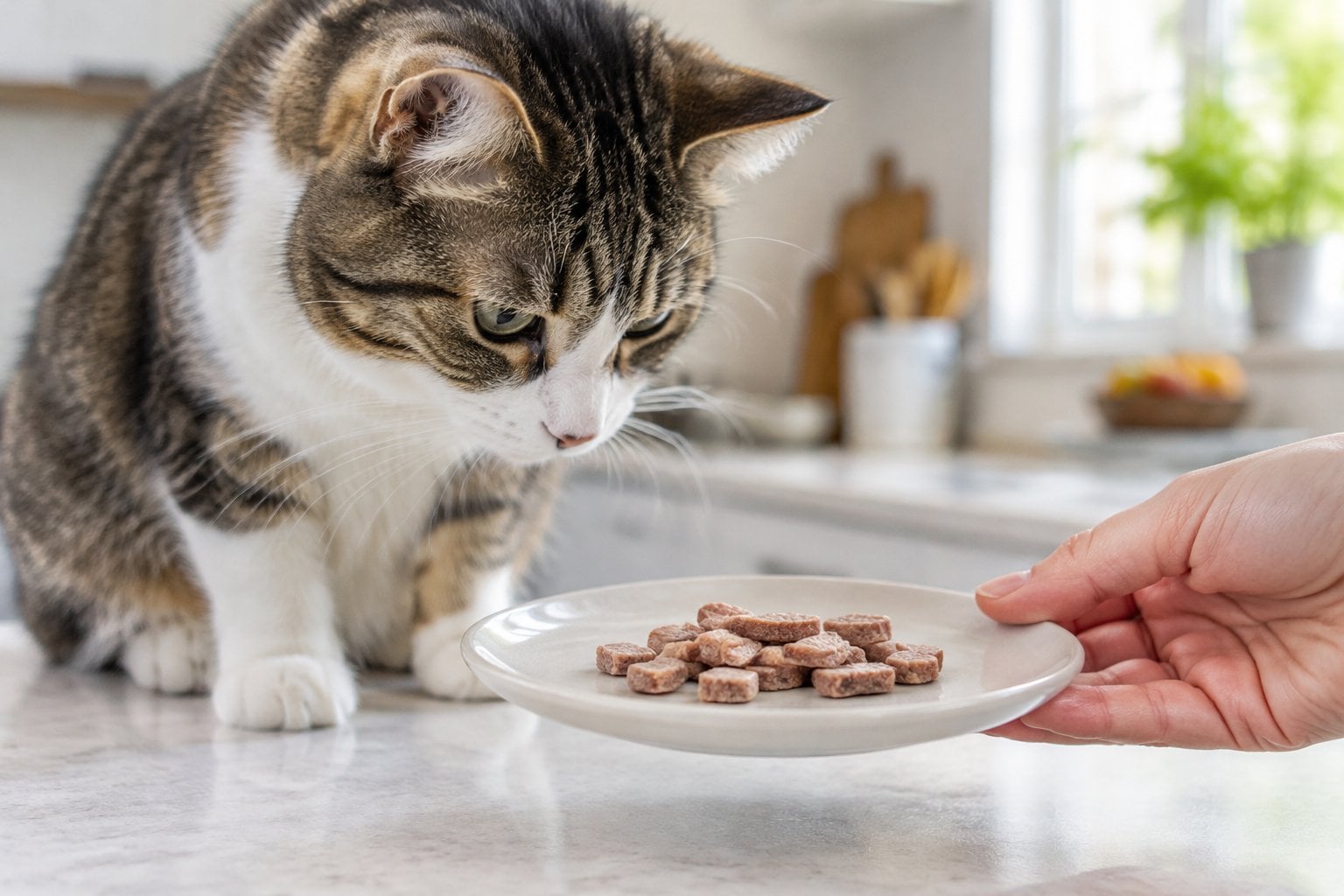
Many cat owners assume that canned tuna meant for people is a safe treat since cats seem to love it. This assumption is only partly correct. Human-grade tuna lacks the balanced nutrient profile cats need. It does not contain added taurine, an amino acid your cat’s body cannot produce on its own and must get from food. A diet or treat habit heavy in human tuna can contribute to a deficiency over time.
There’s also a mercury concern. Tuna absorbs mercury from the ocean, and because cats are small, repeated servings add up faster than they would in a person. Veterinary groups, including the Cornell Feline Health Center, have cautioned against making tuna a regular part of a cat’s diet for this reason. Canned tuna packed in oil or brine adds unnecessary sodium and fat your cat doesn’t need.
If your cat enjoys fish flavor, choose treats formulated specifically for cats, with tuna listed as an ingredient alongside added taurine and no excess salt. Reserve human tuna for a rare, small taste rather than a routine reward.
7. Imported Jerky Treats
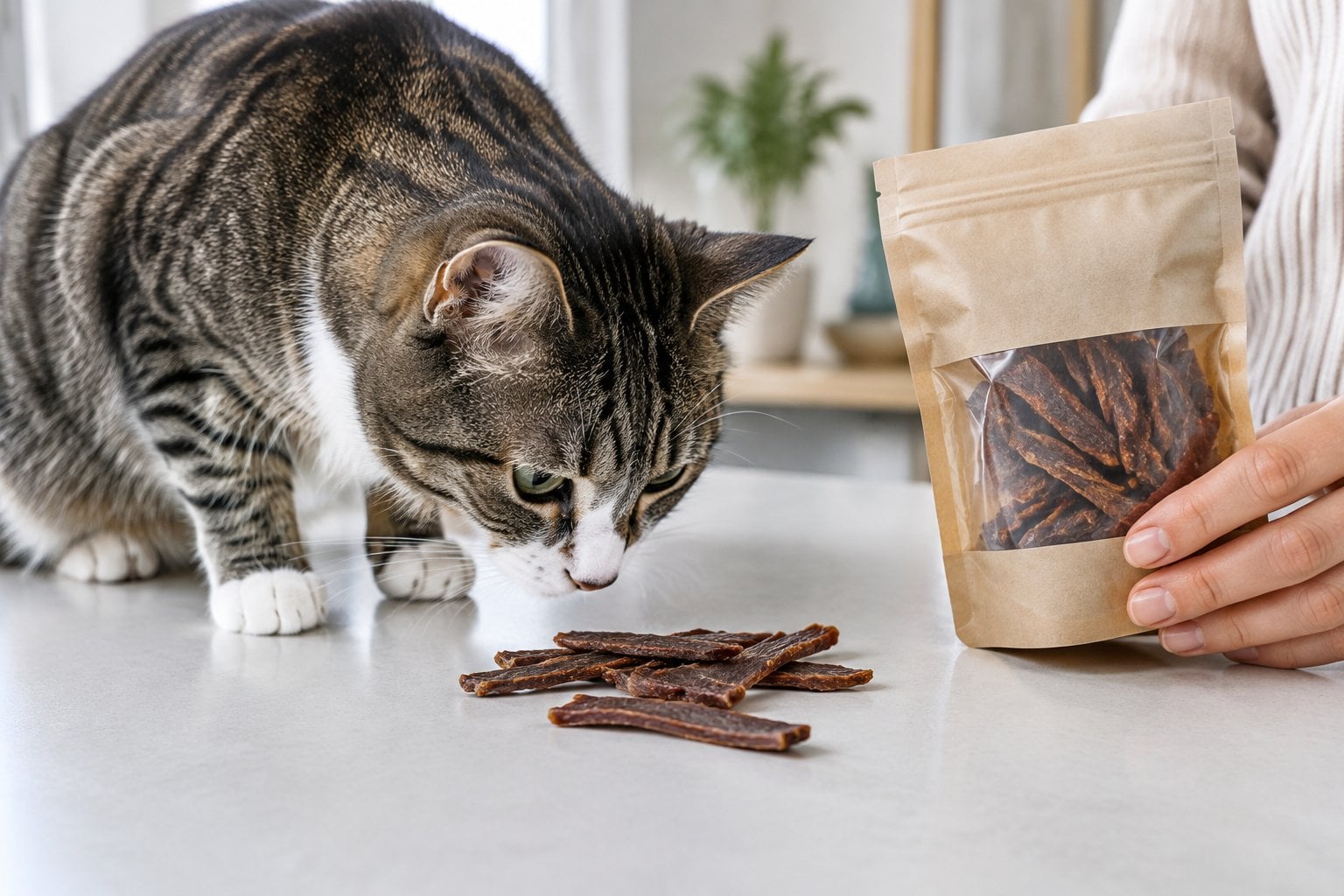
Jerky-style treats, especially poultry jerky imported from overseas, have a long record of concern. The FDA has been taking reports of pet illness linked to jerky treats since 2007, mostly in dogs but also in some cats, and it has not found a single clear cause.
The agency also keeps an import alert on poultry jerky-type pet treats from China, noting drug residues found in some products. Because the cause of the illnesses is still unclear, the safest move is to be picky about where a jerky treat comes from.
You do not need to avoid every jerky treat, but check where it was made. If the package does not say where the meat was sourced and processed, skip it and choose a single-ingredient dried meat treat from a company that is open about its supply chain.
8. Treats Preserved With BHA or BHT
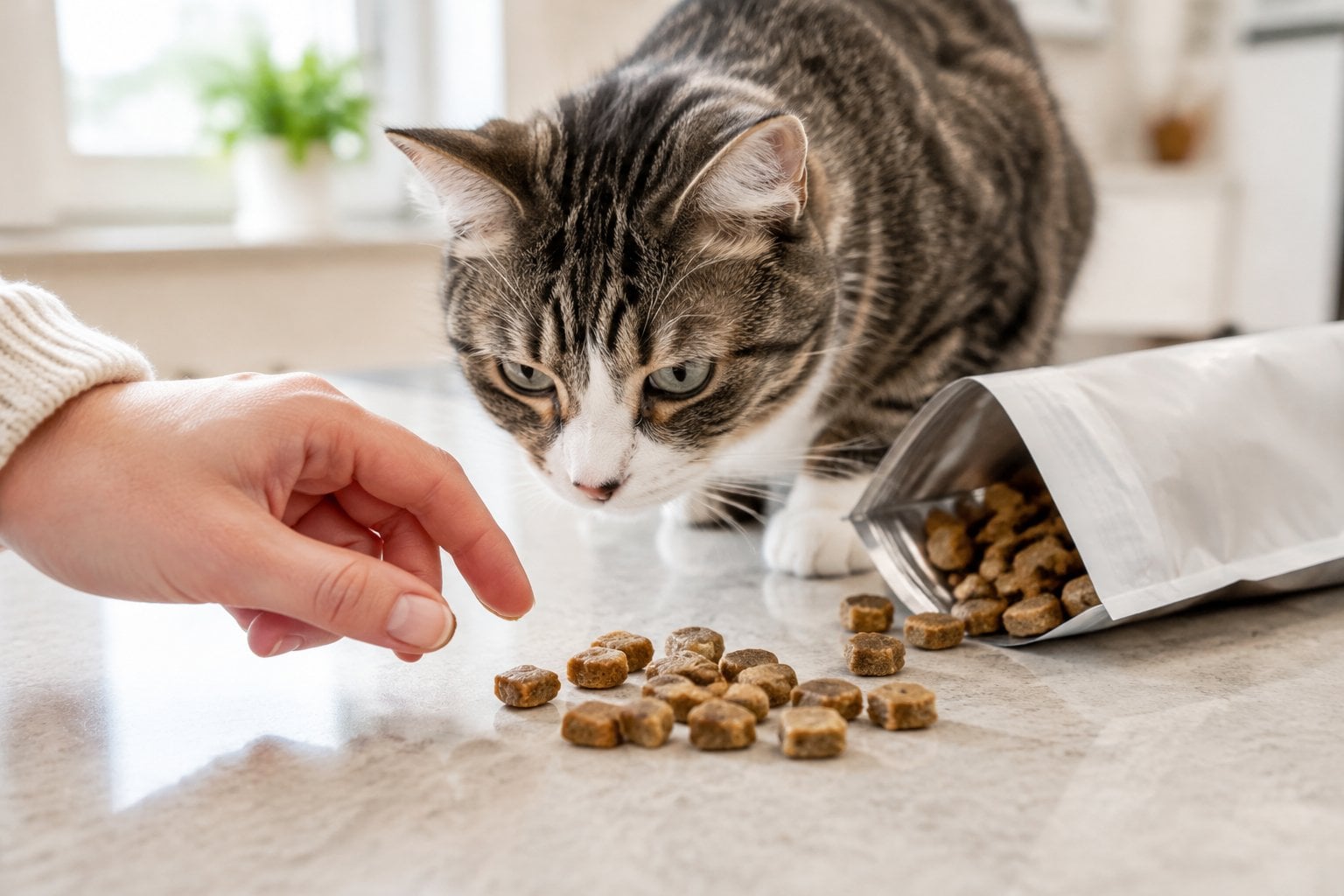
Many dry cat treats use butylated hydroxyanisole (BHA) or butylated hydroxytoluene (BHT) to extend shelf life. These synthetic preservatives are synthetic and prevent fats from going rancid.
Check the ingredient label before buying. If you see “BHA” or “BHT” listed, you’re looking at a product that relies on chemical preservation rather than natural methods. These additives have drawn scrutiny from some veterinary nutritionists over long-term safety questions, even though the FDA permits them in pet food at regulated levels. Many manufacturers have moved to other preservatives.
You have better options available. Look for treats preserved with mixed tocopherols (a form of vitamin E) or vitamin C instead. These natural alternatives accomplish the same goal of preventing spoilage without the chemical compounds that have raised long-term safety questions among veterinary nutritionists.
9. Treats Containing Propylene Glycol
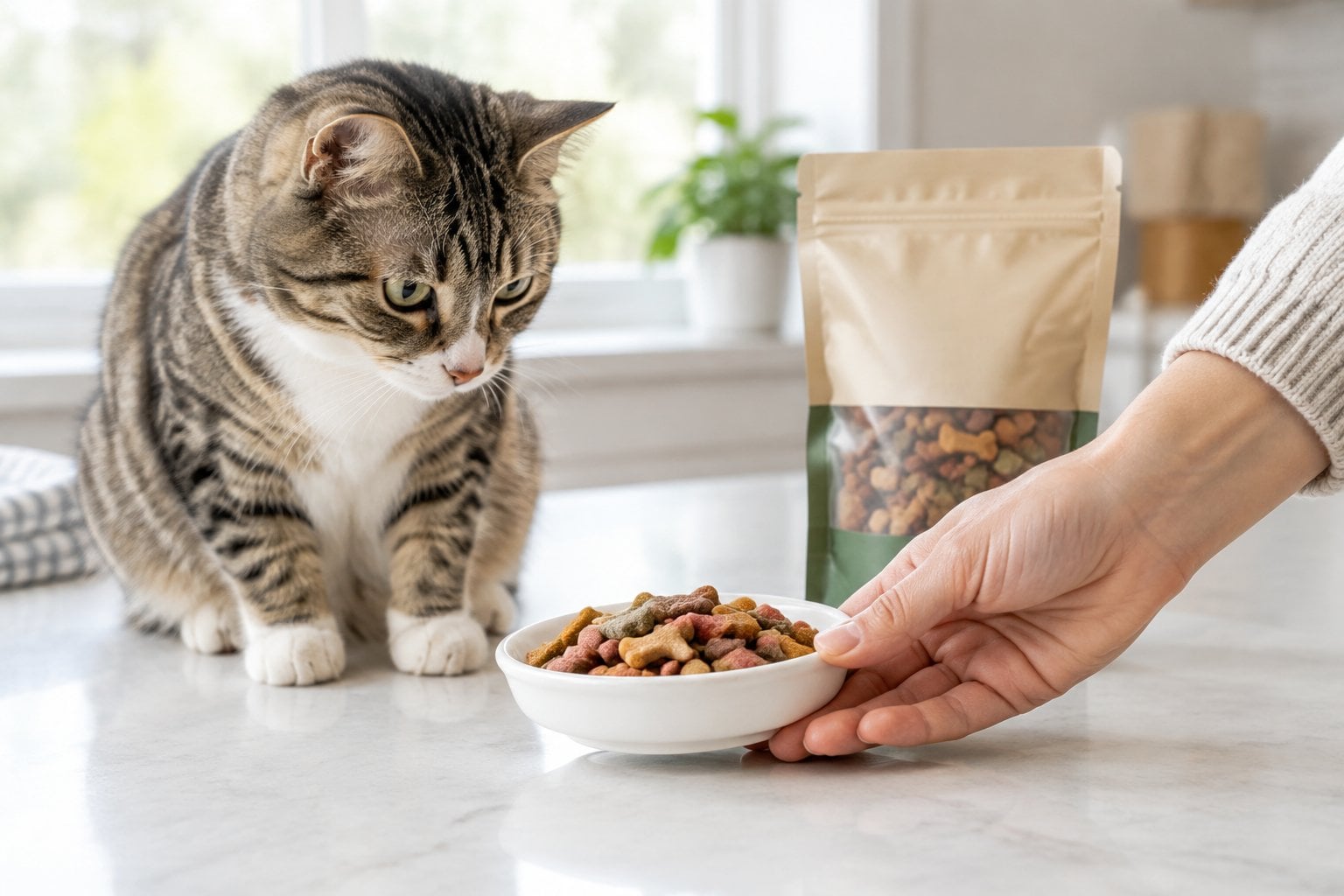
Propylene glycol is a humectant once used to keep some soft cat treats moist and chewy. The FDA banned it from cat food in 1996 after research showed it caused Heinz body formation in feline red blood cells, even at relatively low dietary levels. Heinz bodies are small clumps of damaged hemoglobin that form inside red blood cells. Over time, this damage shortens the lifespan of the cells and can contribute to oxidative stress or anemia if exposure is repeated.
You won’t find propylene glycol in products labeled “complete and balanced” for cats sold in the US today. However, it can still appear in dog treats, human foods, or household items that your cat might steal or be given by mistake. Check ingredient labels closely, especially on anything soft, chewy, or marketed for moisture retention. If you’re unsure whether a product is cat-safe, avoid giving it to your cat at all.
A single accidental taste is unlikely to cause serious harm, but you shouldn’t make a habit of it. Choose treats formulated specifically for cats, with ingredient lists you can read and recognize.
10. High-Sugar Soft Treats
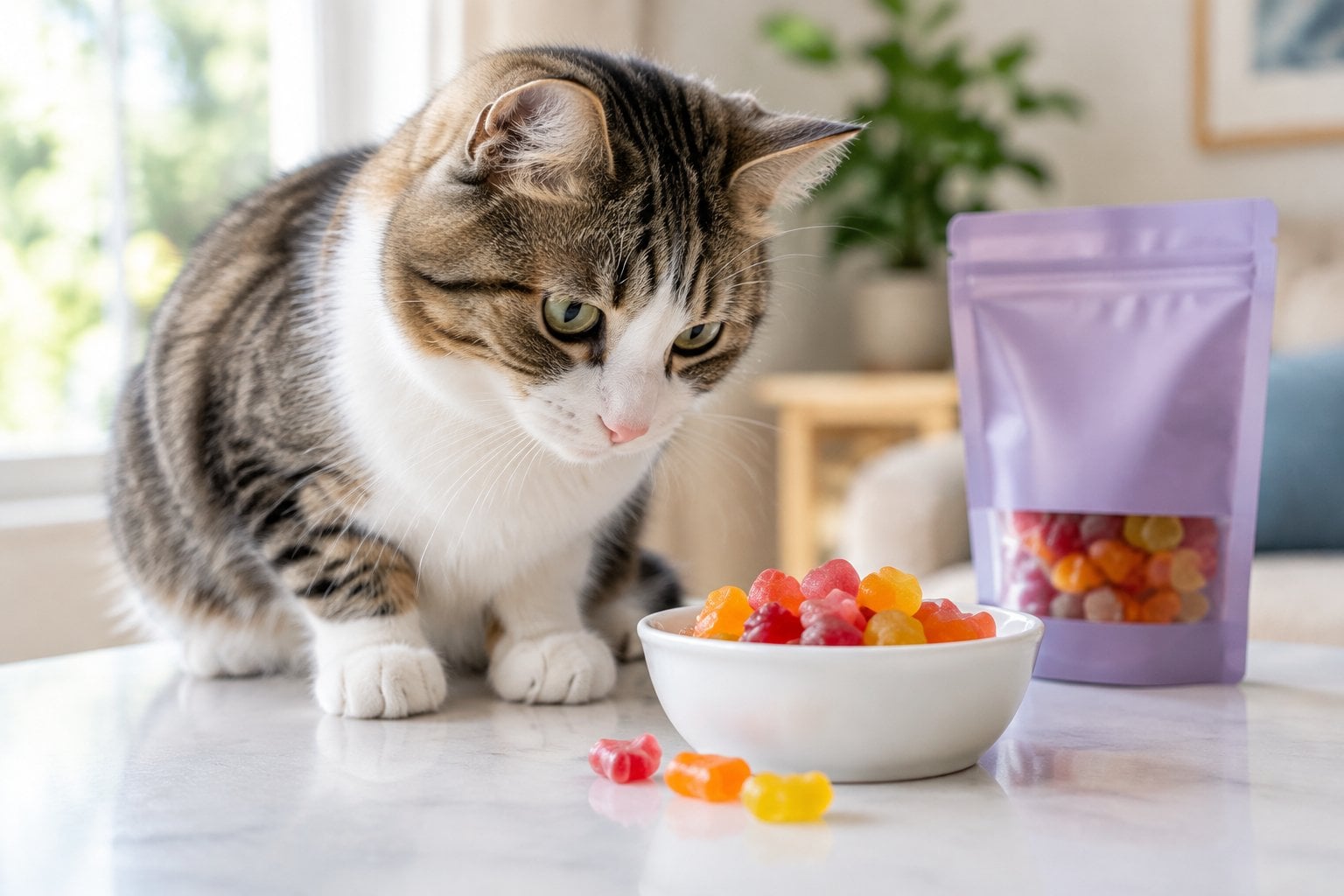
Many soft and chewy cat treats contain added sugars, molasses, or syrups to improve taste and texture. Cats cannot taste sweetness the way humans can, since they lack the taste receptors for it. The sugar is added for owner appeal and shelf stability, not because your cat needs it.
Regular consumption of high-sugar treats can contribute to weight gain and dental issues over time. Sugar also feeds bacteria in your cat’s mouth, which can accelerate plaque buildup. For diabetic or overweight cats, these treats pose an added risk and should generally be avoided. Check the ingredient label for terms like cane sugar, corn syrup, or glycerin, which often appear in soft treats to maintain moisture. If sugar or syrup appears within the first five ingredients, consider it a high-sugar product.
A better option is a freeze-dried single-ingredient meat treat, such as freeze-dried chicken or salmon. These provide protein without added sugars and tend to have a longer shelf life without preservatives. Always check with your veterinarian before changing your cat’s treat routine, especially if your cat has existing health conditions.
11. Corn and Wheat Filler Treats
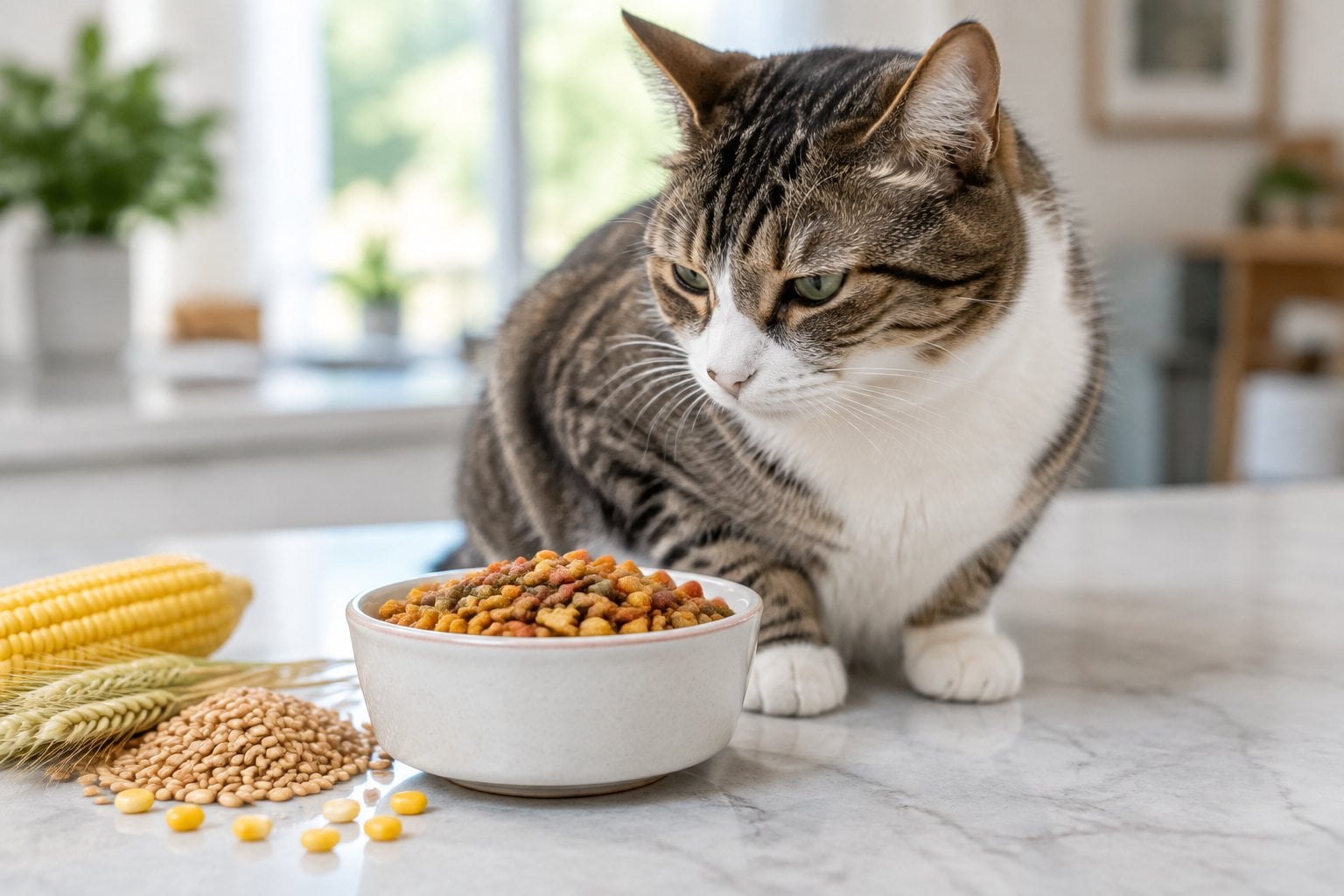
Corn and wheat are common ingredients in budget cat treats, where they serve mainly as cheap bulking agents rather than meaningful sources of nutrition. These grains add calories and texture, but they offer little benefit to a cat’s diet. Cats are obligate carnivores, meaning their bodies are built to process animal protein efficiently, not plant-based carbohydrates. When a treat lists corn, wheat, or wheat gluten among the first few ingredients, you’re paying for filler rather than nutritional value.
Some cats also have sensitivities to wheat gluten, which can lead to digestive upset or skin irritation in affected individuals. If you notice vomiting, loose stools, or excessive scratching after introducing a new treat, grain content is worth investigating. These fillers also leave starchy residue on teeth, which can contribute to plaque buildup rather than prevent it, despite some products marketing themselves as dental aids.
Check the ingredient label before buying. Look for treats listing a named animal protein, such as chicken or salmon, as the first ingredient. Your cat benefits far more from protein-rich treats with minimal grain content, which better matches their natural dietary needs. For more on cheap filler in everyday meals, see our list of the worst cat foods money can buy.
12. Treats With Unnamed Meat By-Products
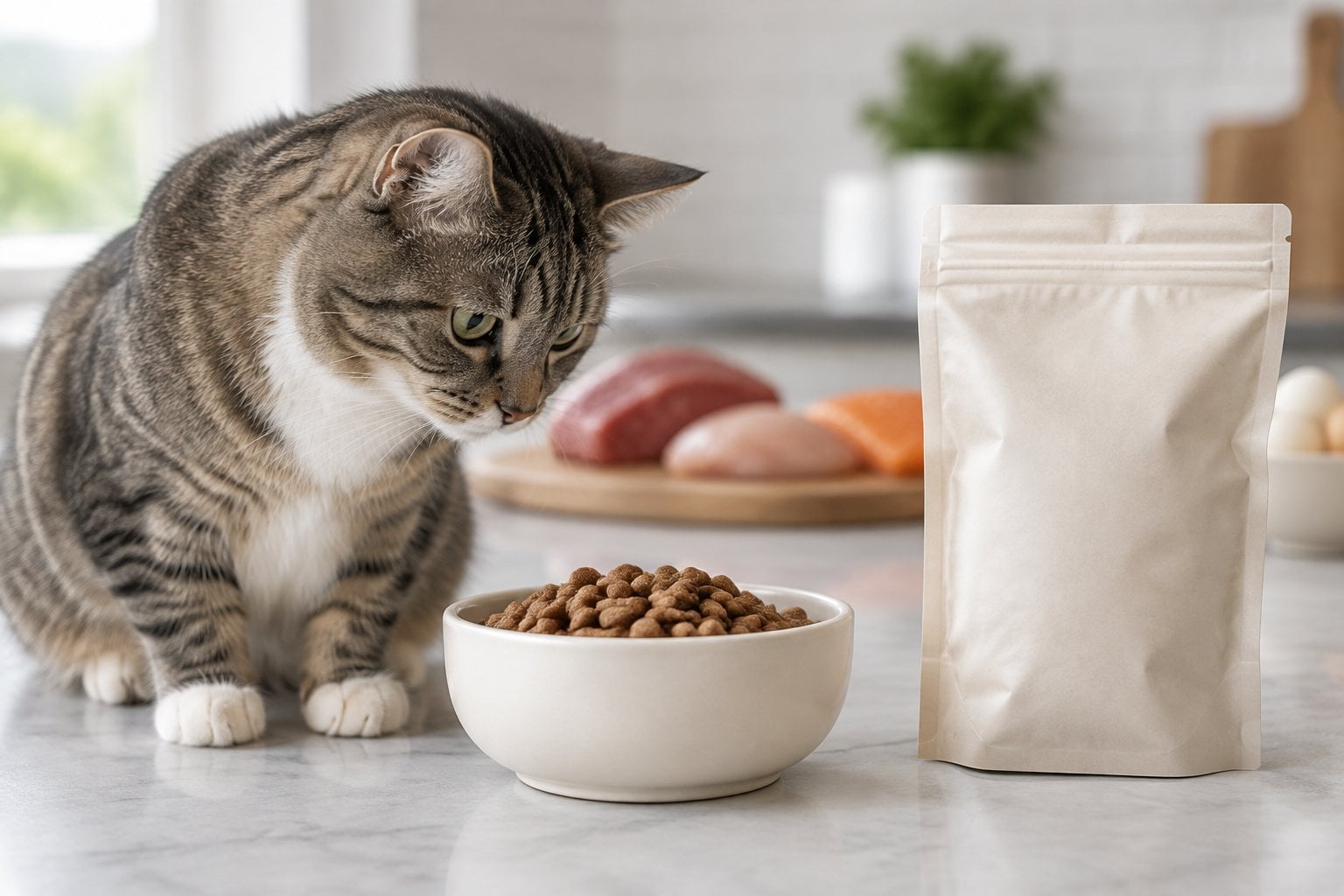
When you check a treat’s ingredient list and see “meat by-products” or “poultry by-products” without any species specified, you’re looking at a labeling practice that leaves too much unanswered. Named by-products, like chicken liver or beef lung, can actually offer solid nutrition. The problem arises when the source animal isn’t identified at all.
Unnamed by-products can come from a rotating mix of animals and parts, depending on what’s available to the manufacturer at the time. This means the nutritional content of the treat can vary from batch to batch without any change to the label. You have no way to verify quality or consistency when sourcing stays vague. This lack of transparency matters if your cat has allergies or sensitivities. You can’t avoid a problem ingredient if you don’t know what’s actually in the product.
Look for treats that name the specific animal source, such as “chicken by-product meal” or “salmon meal.” These labels give you a clearer picture of what you’re feeding your cat, and they tend to reflect better manufacturing standards overall.
13. Treats Containing Onion or Garlic Powder
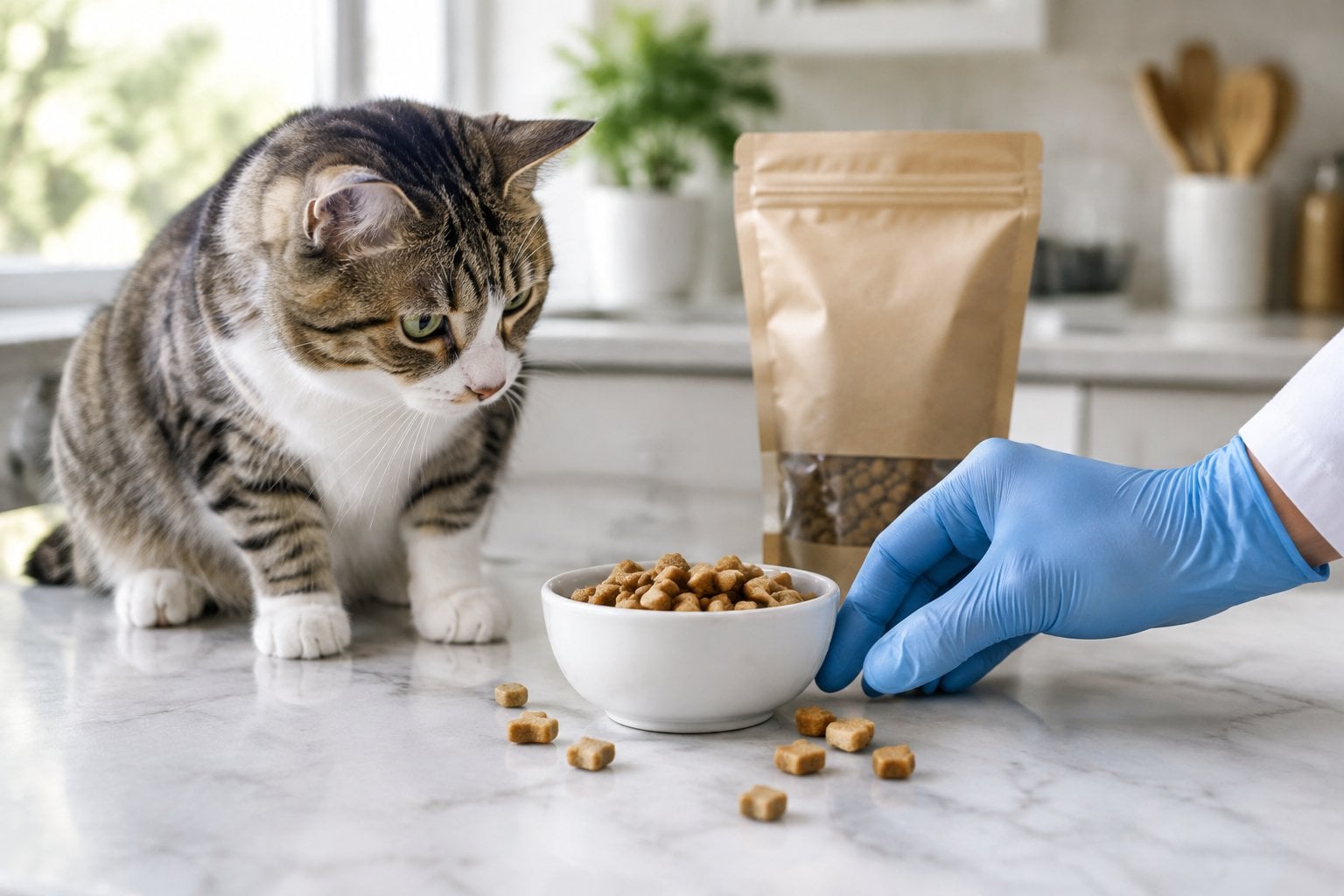
You should check every treat label for onion or garlic powder before you buy, since both ingredients belong to the Allium family and are toxic to cats regardless of form. Powdered versions are especially concerning because they are more concentrated than fresh onion or garlic.
These ingredients sometimes appear in savory or “flavor-enhanced” treats, broths, or meaty snacks marketed as gourmet. The compounds involved damage red blood cells and can lead to hemolytic anemia, a condition that causes weakness and lethargy in cats. There is no established safe threshold, so even small, repeated exposures carry risk over time. You won’t always see “onion” spelled out either. Ingredient lists sometimes use terms like “dehydrated vegetables” or “natural flavoring,” which can obscure Allium content. If a label isn’t specific, you’re better off avoiding the product entirely.
Choose treats with short, transparent ingredient lists that name a single animal protein source and skip seasoning blends altogether. Freeze-dried meat treats with no added flavoring are typically a safer choice. When in doubt, contact the manufacturer directly to confirm their recipe is onion- and garlic-free.
14. Chocolate and Other Human Sweets
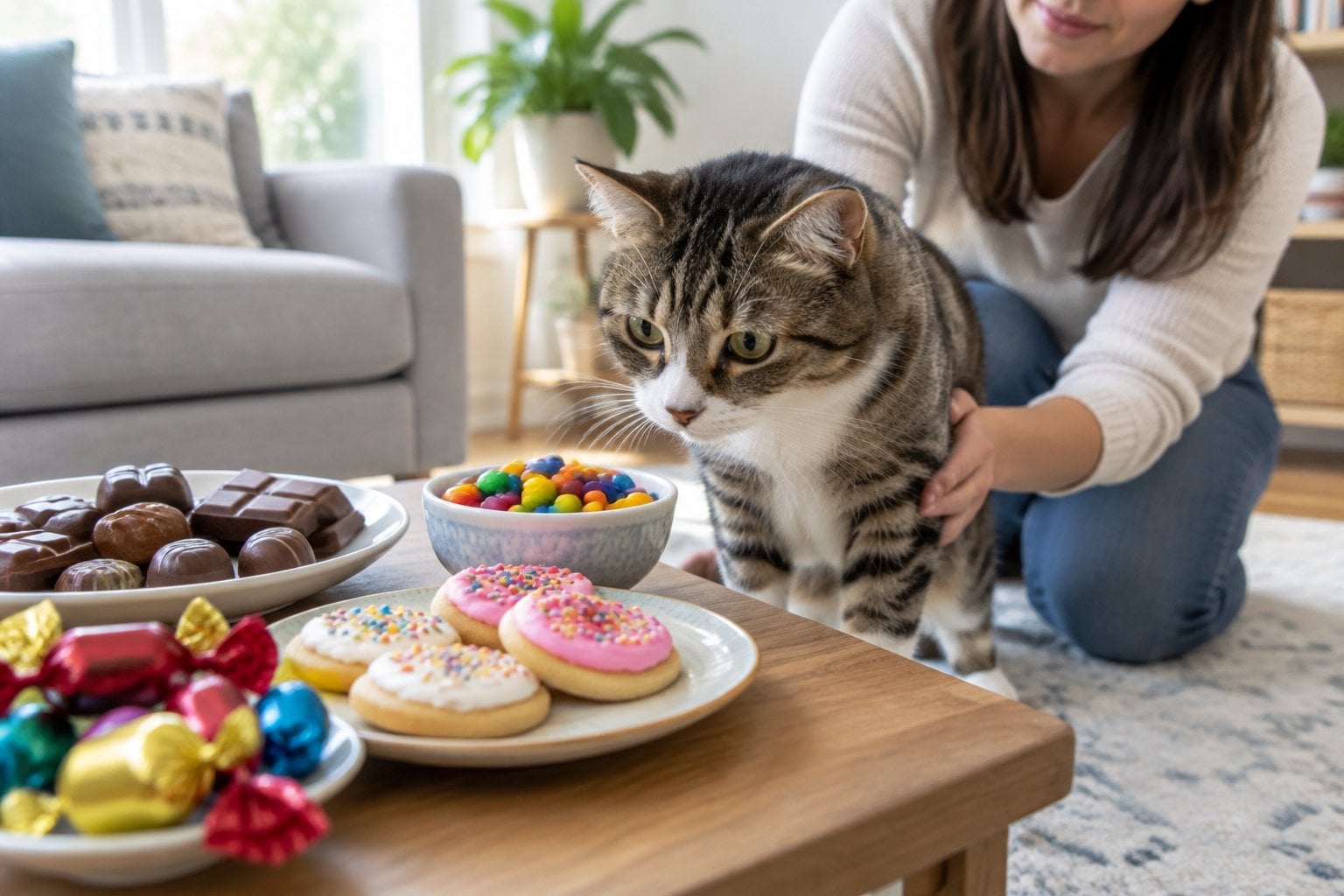
Chocolate contains theobromine and caffeine, two compounds cats cannot metabolize efficiently. Even small amounts can cause vomiting, diarrhea, rapid heart rate, tremors, or seizures, depending on the dose and type of chocolate involved. Dark chocolate and baking chocolate carry higher concentrations of theobromine than milk chocolate, making them more dangerous. You should never offer your cat any form of chocolate, including cocoa powder, brownies, or chocolate-flavored desserts.
Other human sweets pose risks too. Candies, cookies, and baked goods often contain xylitol, an artificial sweetener found in sugar-free gum and some baked products. Xylitol can cause a rapid drop in blood sugar and has been linked to liver damage in animals, according to veterinary toxicology sources. Sugary treats also offer no nutritional value for cats and can contribute to obesity or dental problems over time. Your cat’s digestive system is not built to process refined sugar or sweeteners the way a human’s can.
If you want to reward your cat, choose a treat formulated specifically for felines. Look for options with named animal proteins and no added sugars or artificial sweeteners. Keeping human desserts and candy out of reach protects your cat from accidental exposure and the health complications that follow.
15. Raw Meat Scraps as Treats
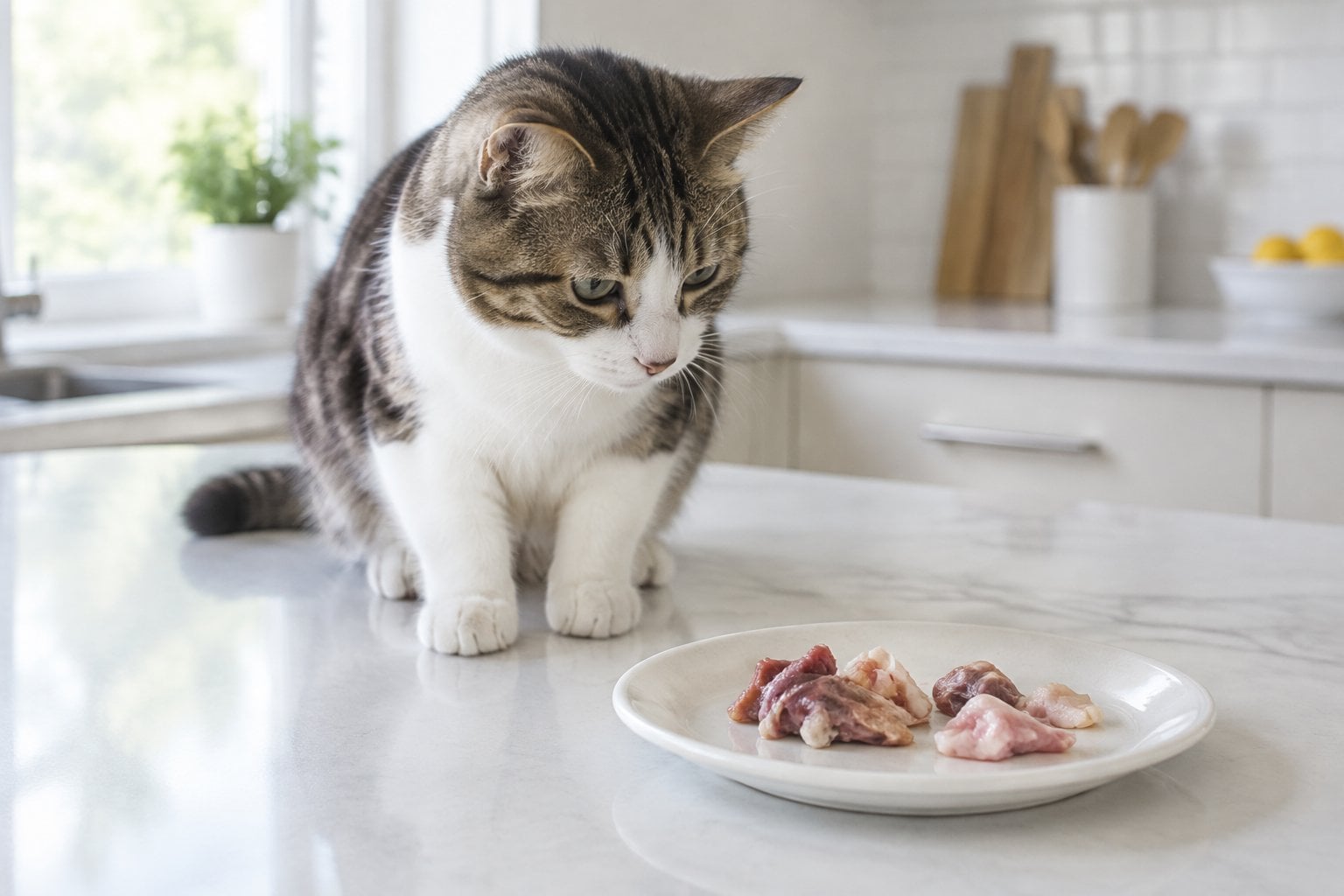
Giving your cat raw meat scraps straight from your kitchen counter might feel natural, but it carries real risks. Raw meat can harbor Salmonella, Listeria, and E. coli, all of which can make your cat sick and can also spread to you and your family through handling.
Scraps cut from cooked dinners often come with added salt, seasoning, garlic, or onion residue, even in small amounts left on a knife or cutting board. These ingredients are harmful to cats and should never be part of their diet. Unlike commercially prepared raw treats, kitchen scraps are not tested for pathogen control or nutritional balance. Veterinary groups and the FDA both warn that raw meat needs strict hygiene handling.
A safer option is a commercially produced freeze-dried or frozen raw treat made specifically for cats, since these products follow safety testing and controlled sourcing. If you want to offer your cat meat as a reward, choose a plain, unseasoned, cat-formulated option rather than leftovers from your own meal.
16. Unsafe Freeze-Dried Raw Treats
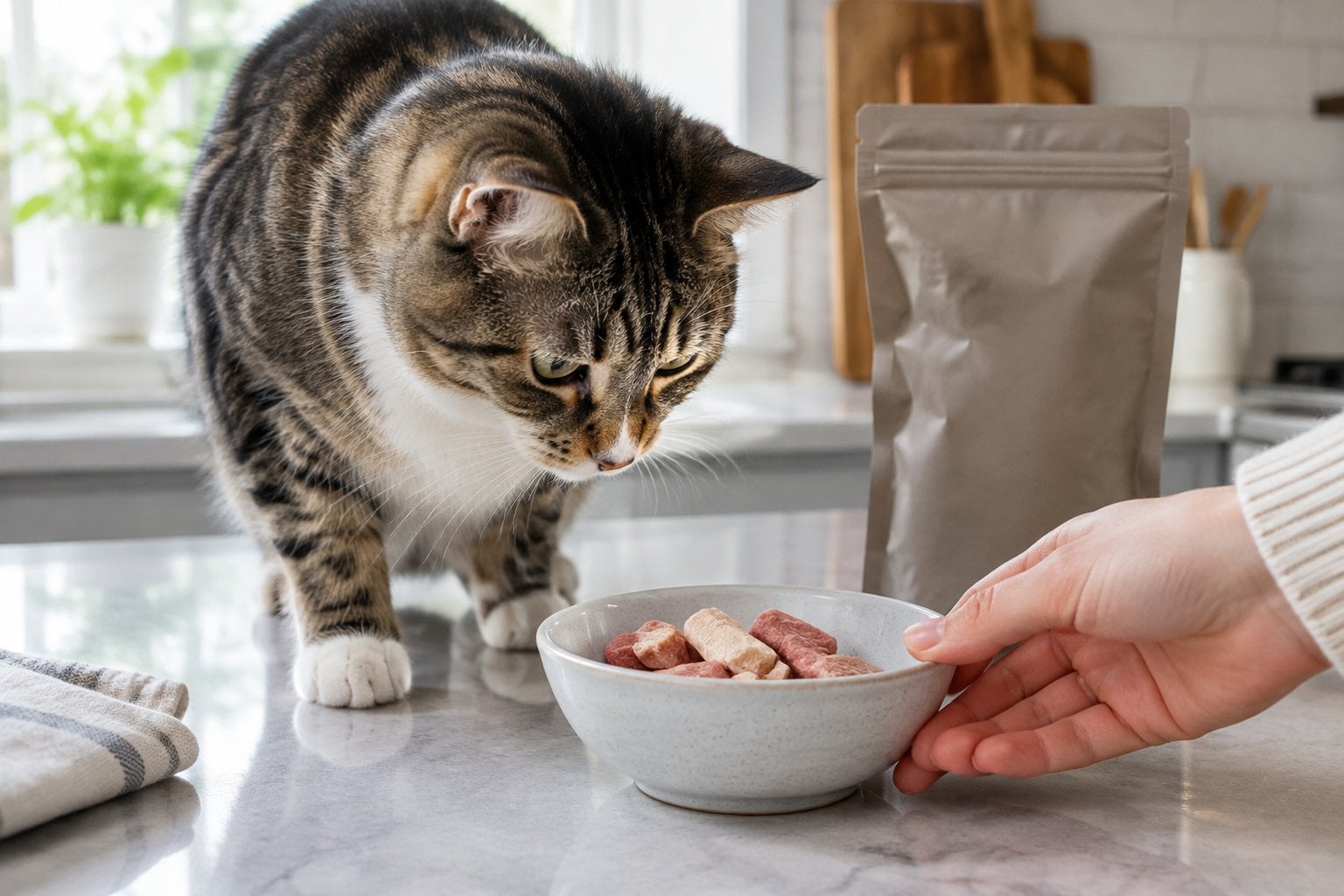
Freeze-dried raw treats are marketed as a natural, minimally processed option, but you should check them carefully before handing them to your cat. Freeze-drying removes moisture but does not necessarily eliminate pathogens like Salmonella or Listeria. The FDA has noted that raw and freeze-dried raw pet products carry a higher risk of bacterial contamination compared to cooked treats, and several products in this category have been subject to voluntary recalls over the years.
Liver-based freeze-dried treats deserve extra attention. Feeding too much liver, even in treat form, can lead to vitamin A toxicity, which affects your cat’s bones and joints over time. You don’t need to avoid freeze-dried treats entirely, but you should buy from manufacturers that test for pathogens and clearly state this on their packaging. Look for products that have undergone a kill step, such as high-pressure processing, to reduce bacterial risk.
Store these treats properly and wash your hands after handling them. If you’re uncertain about a product’s safety practices, choose a cooked, single-ingredient treat instead, since it offers a similar nutritional profile without the same contamination concerns.
17. Hard Chews That Crack Teeth
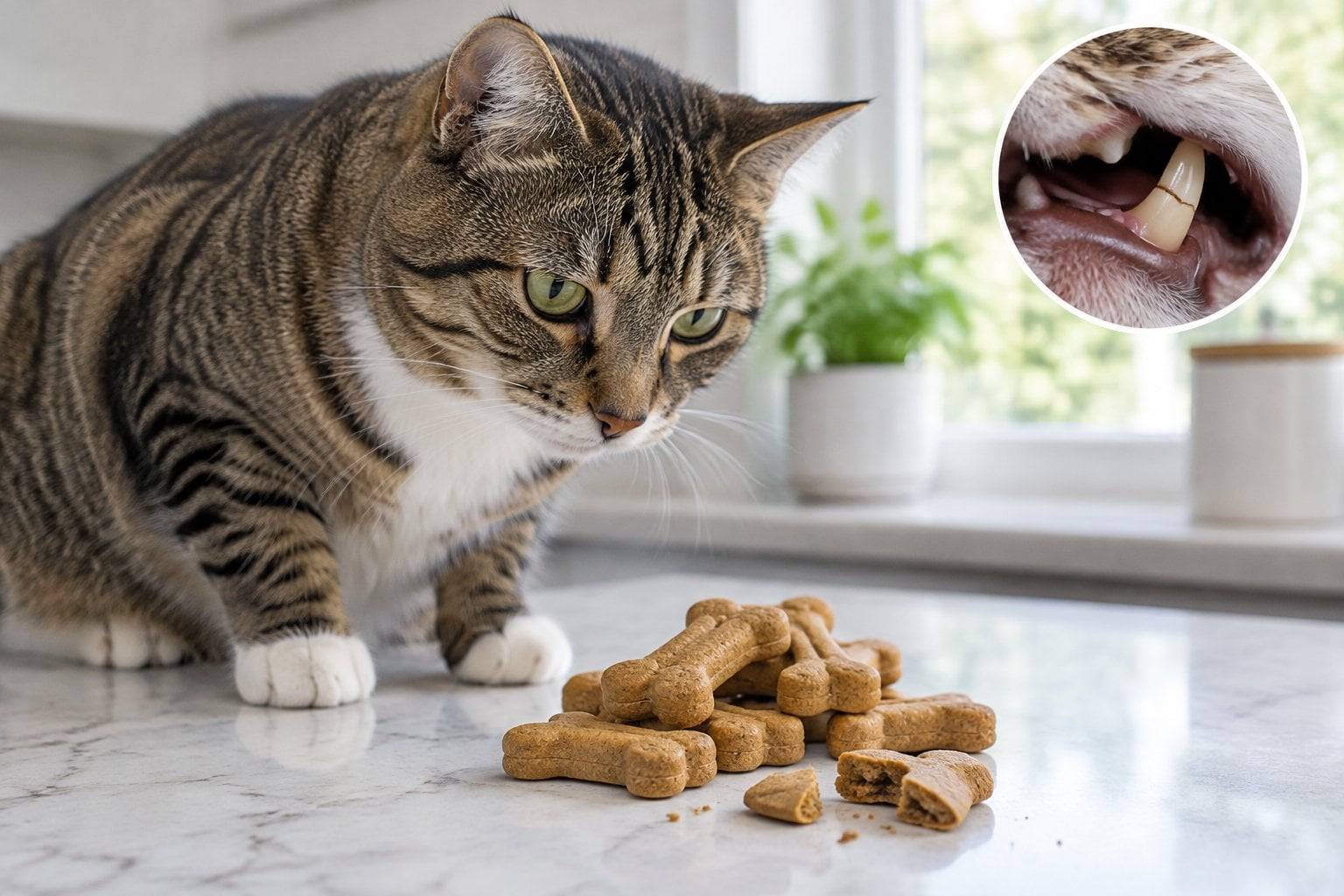
Some hard chews marketed for cats are dense enough to damage teeth rather than clean them. If a chew does not flex or give slightly under pressure, it can be too hard for a cat’s mouth.
Cats have smaller, thinner teeth than dogs, and their jaw structure is not built to handle the same force. A commonly cited rule of thumb is that if you cannot press a fingernail into a treat and leave a mark, it is likely too hard for your cat to chew safely. Hard nylon-style chews, dense bones, and some rigid dental sticks fall into this category. Cracked or fractured teeth often go unnoticed until a cat stops eating or shows signs of pain near the mouth. Treatment can involve extraction, which is more invasive and costly than preventing the injury in the first place.
Look for chews that are labeled specifically for cats, not repurposed dog products. Softer dental treats designed with feline jaw strength in mind, or chews that break down with saliva over time, are safer choices. If you are unsure whether a product is too hard, ask your veterinarian before offering it.
18. Salty Cured Meats Like Bacon and Ham
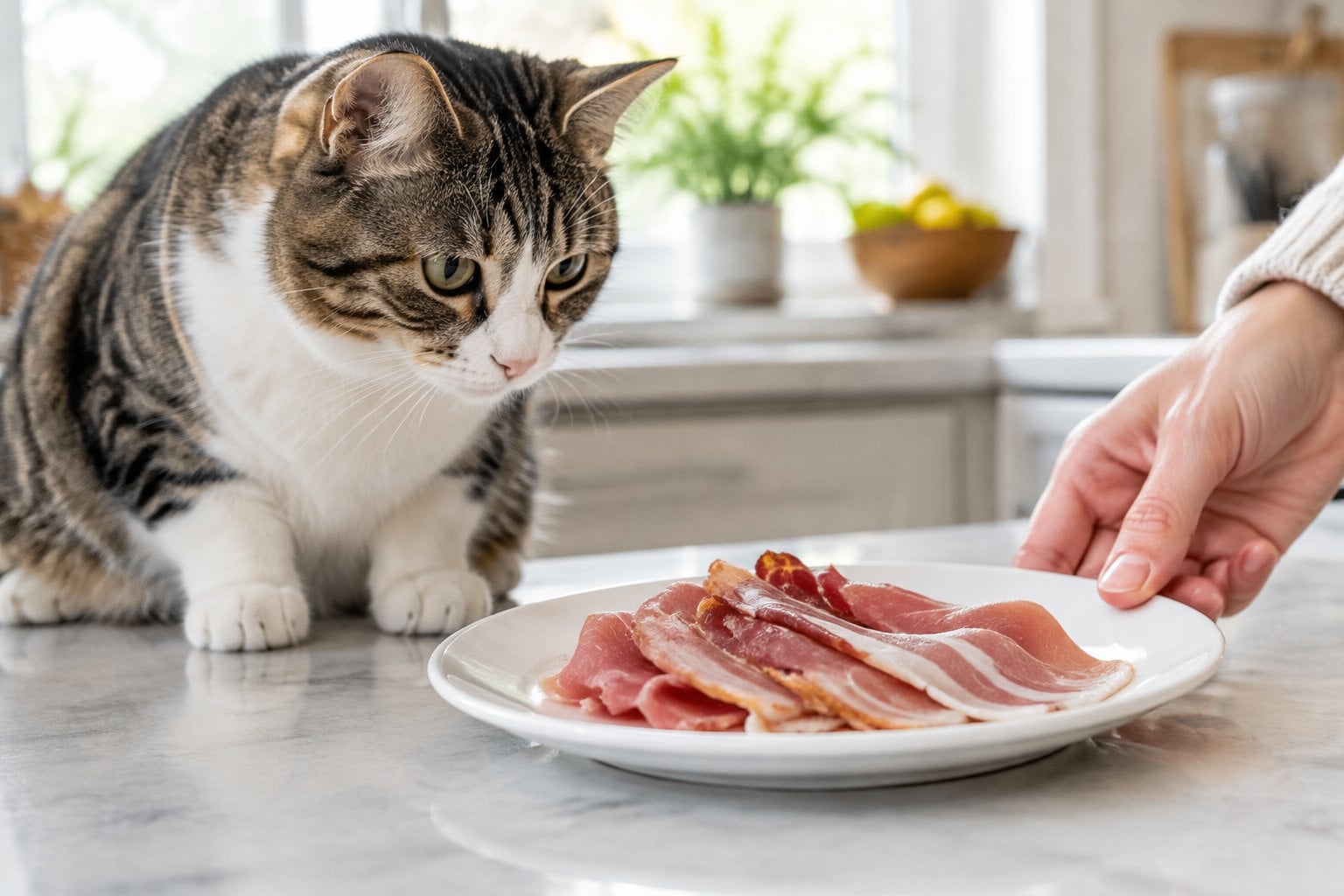
You should not offer bacon, ham, or other cured meats to your cat as a treat. These meats are processed with large amounts of salt, which is used for preservation and flavor in human food but is not appropriate for feline diets. Cats are far more sensitive to sodium than people. Even a small piece of bacon or ham can push your cat’s sodium intake well above what its body can safely process in a day.
High sodium intake is linked to dehydration and strain on the kidneys. Cured meats are also high in fat, which raises the risk of pancreatitis, a painful and sometimes serious condition in cats. Many hams and cured meats are also seasoned with onion or garlic powder. Both ingredients are toxic to cats and can damage red blood cells even in small quantities.
If you want to share meat with your cat, choose a small piece of plain, unseasoned, fully cooked chicken or turkey instead. Avoid anything smoked, cured, glazed, or salted, and keep portions occasional rather than routine.
19. Cheese and Other Dairy Snacks
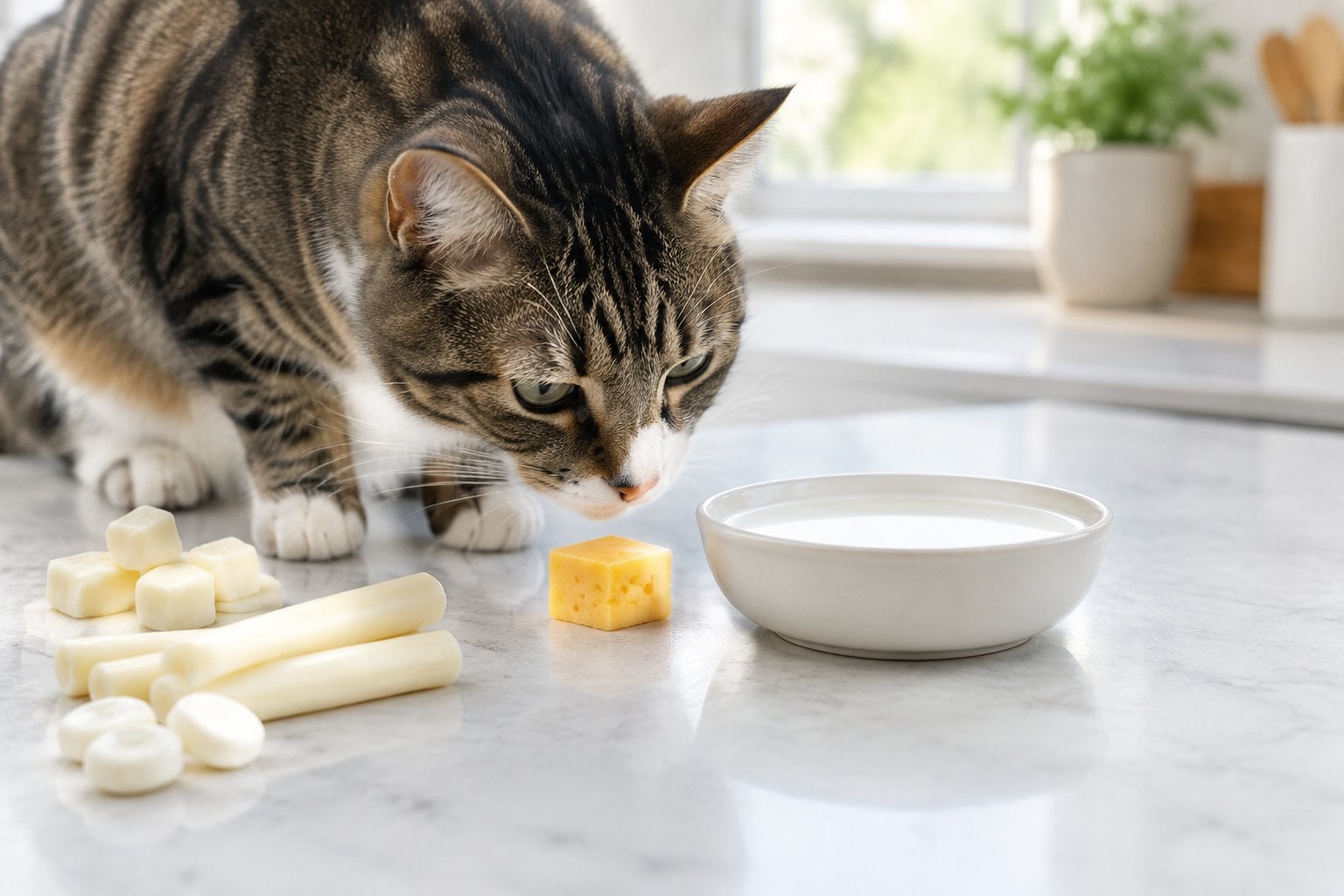
Cheese is a common human food that owners often share with cats, but it is not a suitable regular treat. Most adult cats are lactose intolerant because they lose much of their lactase enzyme production after weaning, according to veterinary nutrition guidance from Cornell Feline Health Center. This means dairy products can cause digestive upset.
If you give your cat cheese, string cheese, or other dairy-based snacks, you may notice symptoms like diarrhea, vomiting, or gas within a few hours. These reactions happen because undigested lactose ferments in the gut. Cheese is also high in fat and sodium, which contributes to weight gain and does not align with a cat’s nutritional needs. Cats are obligate carnivores, so their diet should center on animal protein rather than dairy.
A better option is a small piece of plain, cooked meat such as chicken or turkey with no seasoning. If you want a commercial treat, choose one specifically formulated for cats with named animal proteins listed first. Avoid dairy-based treats altogether, since they offer no nutritional benefit and carry unnecessary digestive risk for most cats.
20. Raw Fish Treats
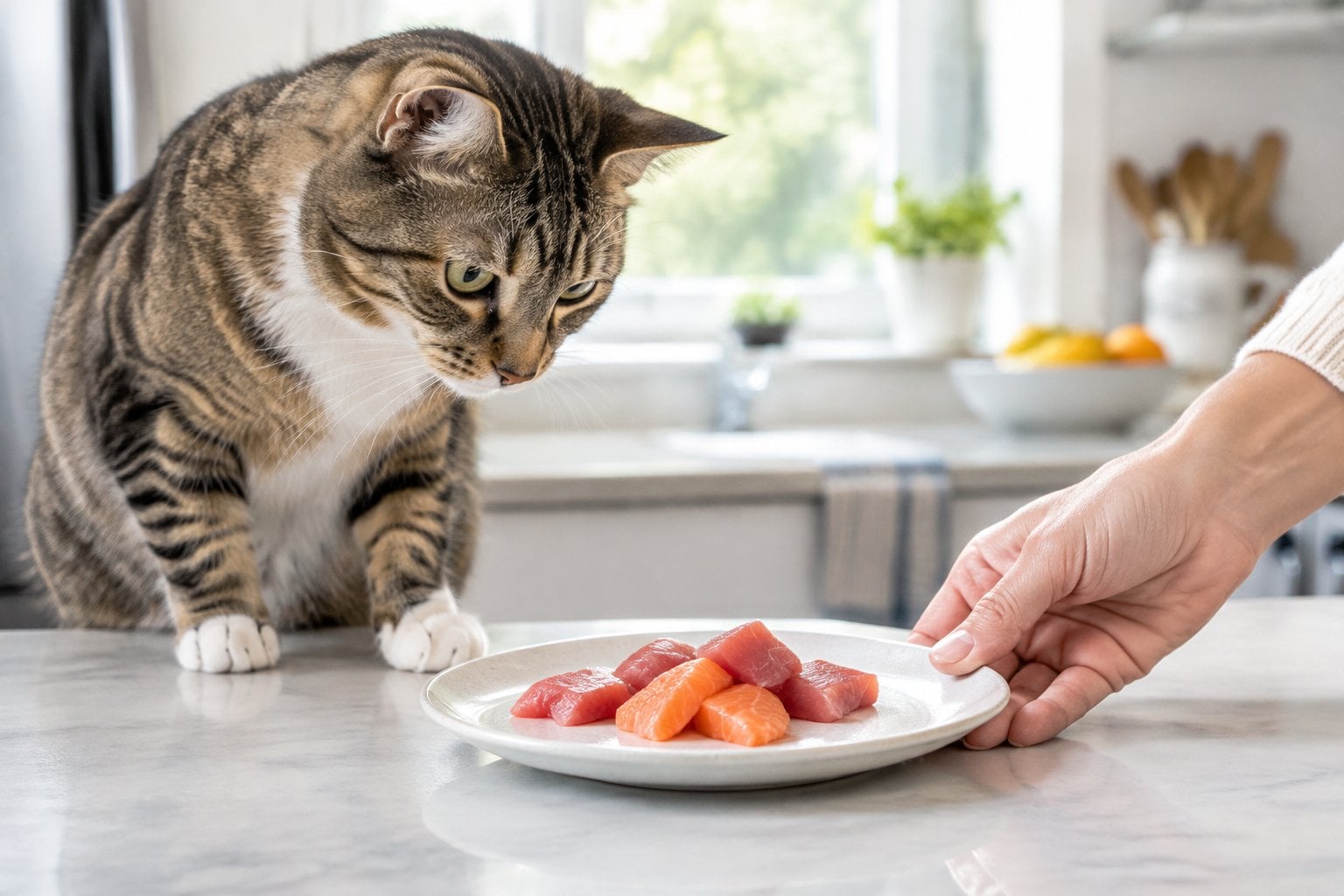
Raw fish treats sound natural, but they carry real risks you should know about. Raw fish can harbor Salmonella and other bacteria that affect both your cat and your household. There’s also a nutritional concern specific to fish. Some raw fish contain an enzyme called thiaminase, which breaks down thiamine (vitamin B1) in your cat’s body. Over time, this can lead to thiamine deficiency, a condition the Cornell Feline Health Center has flagged as a concern with diets heavy in raw fish.
Thiamine deficiency isn’t minor. It can cause neurological symptoms, loss of appetite, and other serious health problems if it goes uncorrected. Raw fish can also contain parasites that cooking would normally eliminate. Freezing at commercial standards can reduce this risk, but most treats you’d keep in your pantry aren’t prepared that way.
If you want to give your cat fish-based treats, look for ones that are cooked or properly processed, not raw. Commercially prepared treats that list fish as a named ingredient and follow safe handling standards are a better choice. Check the label for processing methods, and ask your vet before making raw fish a regular part of your cat’s diet.
21. Oversized Treat Portions
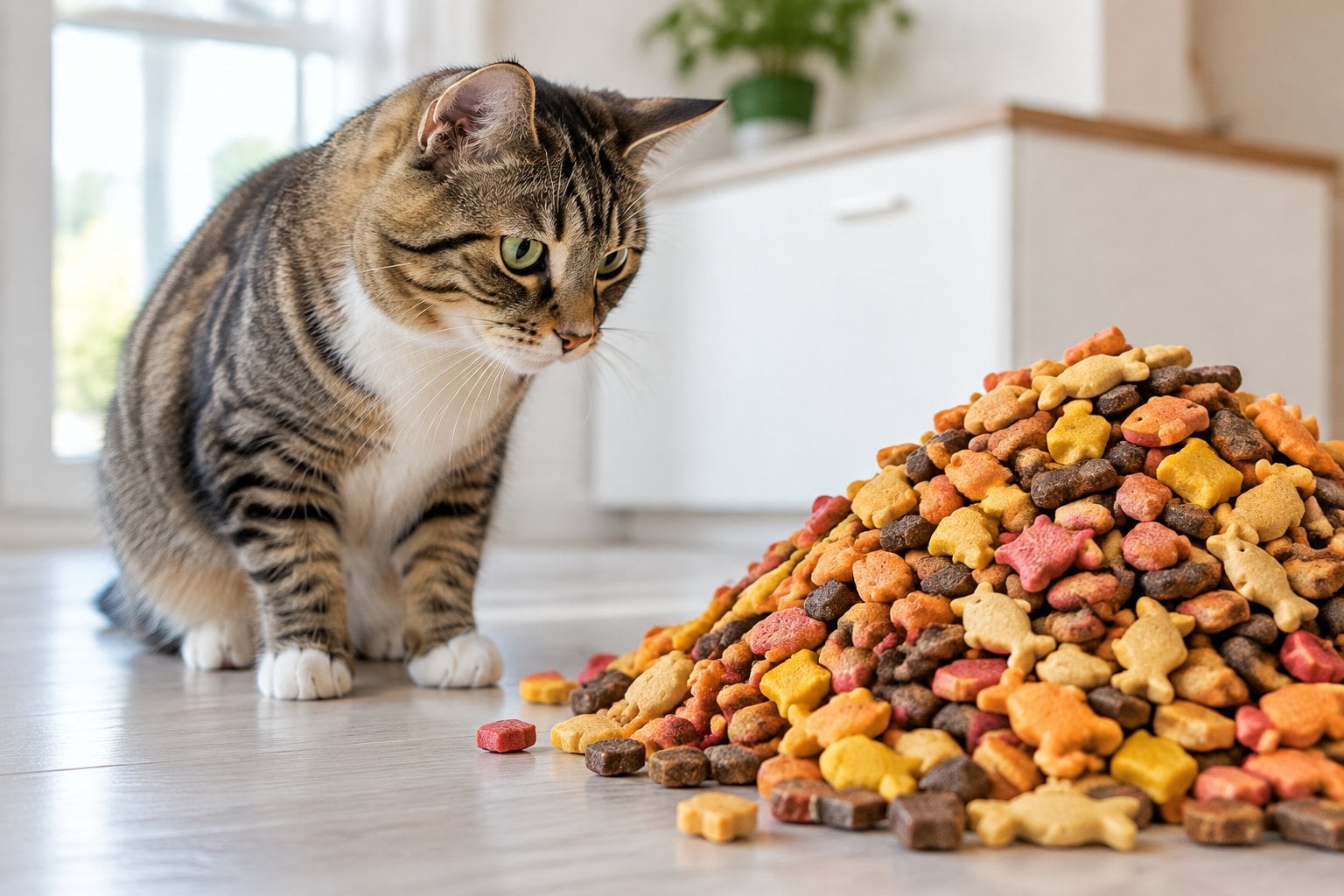
Many cat treats come in sizes meant for human convenience rather than feline portion control. A single large crunchy treat or chew stick can contain far more calories than a cat needs in one sitting. When you give treats that are too large, you risk disrupting your cat’s daily calorie balance. The Cornell Feline Health Center says treats should not exceed 10 to 15 percent of a cat’s daily calories. A handful of oversized treats can easily blow past that limit.
Oversized portions also increase choking risk, especially with hard or chewy textures. Cats have small mouths and throats, so a treat sized for convenience rather than safety can become a hazard during eating. You can avoid this by checking the calorie count per treat on the packaging and breaking larger treats into smaller pieces. Look for treats specifically labeled with portion guidance for your cat’s weight.
Choosing treats designed in cat-appropriate sizes, rather than oversized human-style snacks, helps you manage your cat’s weight and reduces safety risks during feeding.
22. Dental Treats With No Proven Benefit
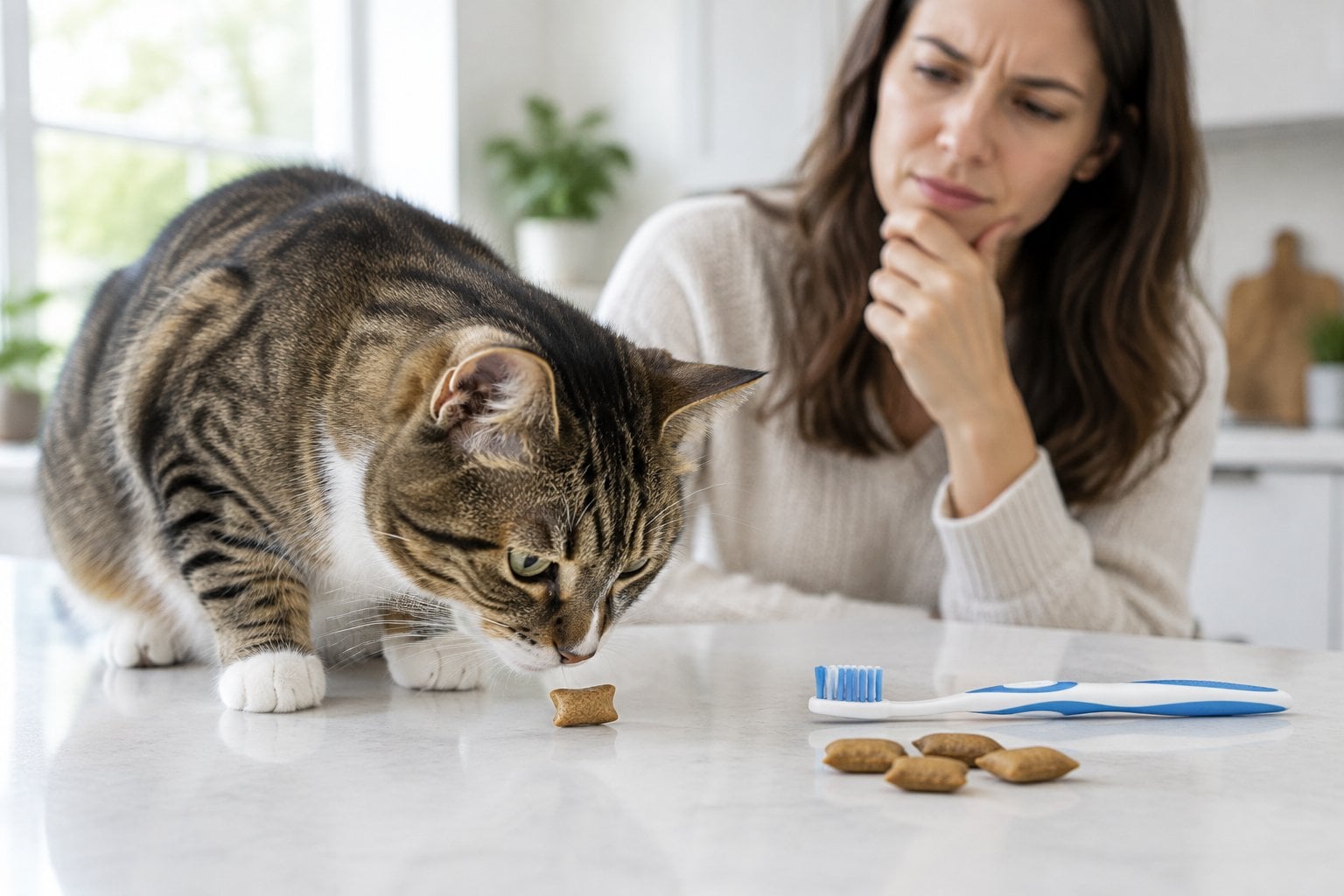
Many dental treats on the market have never been tested for effectiveness. You may be relying on a product that does little more than add calories to your cat’s diet. Many of these treats are high in carbohydrates, which can leave a starchy residue on teeth rather than reducing plaque. This works against the stated purpose of the product and may contribute to weight gain over time.
Look for the VOHC (Veterinary Oral Health Council) seal before buying any dental treat. Products without this seal have not been shown to meet the council’s standards, so their claims are unverified. Even VOHC-approved treats have limits. They cannot replace brushing or professional cleanings, and they should never be used as a substitute for veterinary dental care.
If your cat has visible tartar, bad breath, or signs of gum disease, treats alone will not solve the problem. Schedule a veterinary exam to assess what’s actually needed. For a better alternative, ask your vet about daily tooth brushing or a VOHC-approved dental diet. These options have documented evidence behind them, unlike many treats marketed with vague dental claims.
23. Lickable Squeeze Treats Used Like Meals
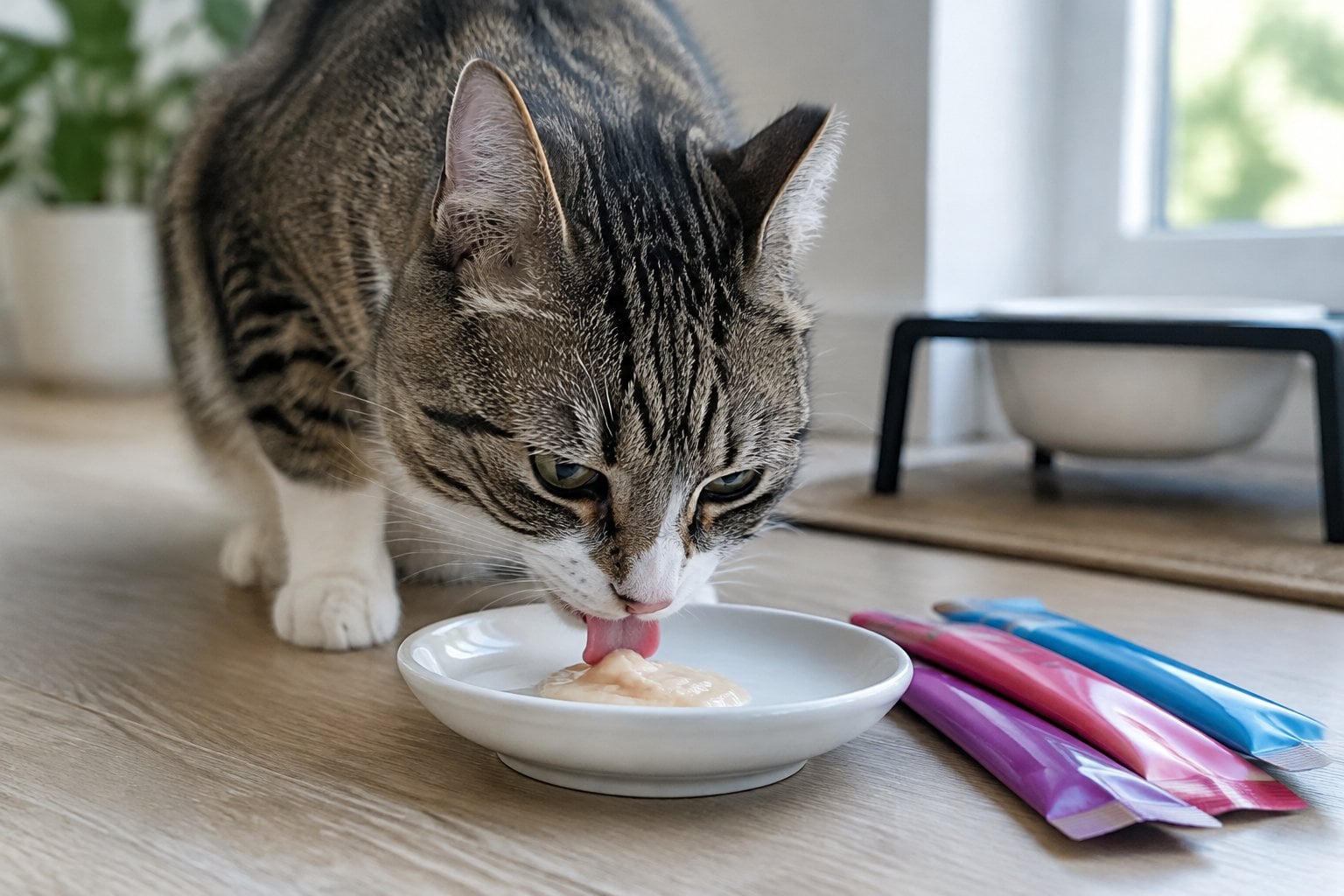
Lickable squeeze treats, often sold as “cat milkshakes” or puree treats, are designed as an occasional snack or food topper. The problem starts when you begin feeding them as a meal replacement instead. These products typically list broth, guar gum, and small amounts of meat or fish as primary ingredients. They are not formulated to meet the complete and balanced nutrition standards set by AAFCO for daily feeding. Your cat needs specific levels of taurine, protein, and fat that these treats are not designed to provide consistently.
Feeding squeeze treats in place of real meals can lead to nutritional gaps over time, particularly in protein and essential fatty acids. Some formulas are also high in carbohydrates from thickening agents, which doesn’t align with a cat’s natural carnivorous diet. Check the label for a statement confirming the product is intended for “intermittent or supplemental feeding only.” If you see that phrase, it tells you the treat is not meant to replace meals.
For daily nutrition, stick to a cat food labeled as complete and balanced for your cat’s life stage. Save the squeeze treats for occasional rewards or as a topper on regular meals.
24. Vaguely Labeled “Natural” Treats
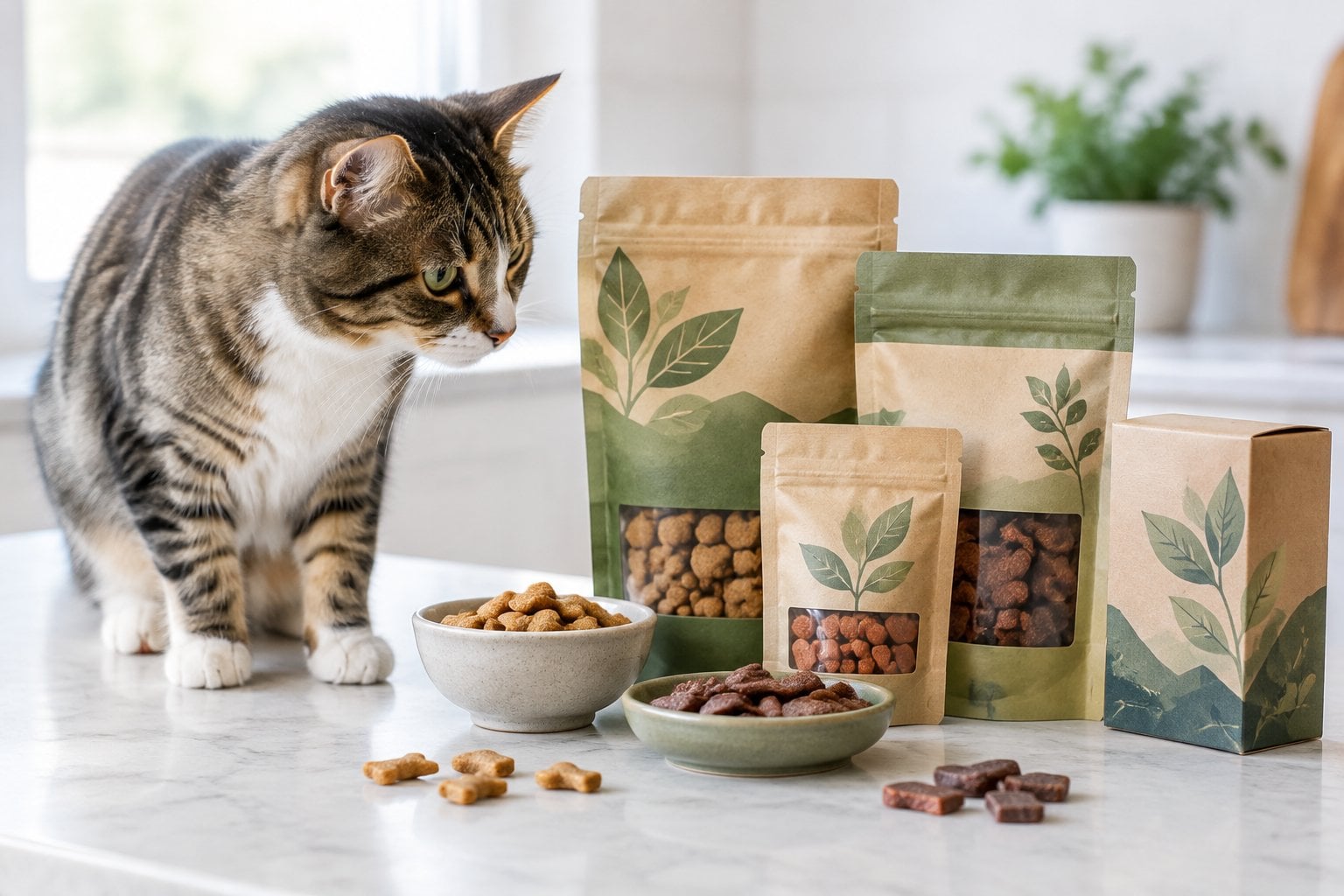
You will see the word “natural” printed across countless cat treat packages, but this label carries little regulatory weight. The term is not strictly defined or verified by oversight bodies for pet food, so manufacturers can apply it to products that still contain synthetic preservatives, artificial processing aids, or low-quality fillers. When you rely on the word alone, you risk assuming a treat is healthier than it actually is. A package can say “natural” on the front while listing unnamed by-products or chemical additives in the fine print on the back.
To avoid this problem, read the full ingredient list rather than trusting front-label claims. Look for specific, named ingredients like chicken, salmon, or liver instead of vague descriptors. Check for recognized certifications or statements that meet AAFCO guidelines, since these carry more accountability than marketing language alone. If a company is transparent about sourcing and manufacturing, it usually says so clearly and in detail.
Your best approach is to treat the word “natural” as a starting point for research, not a final answer. Compare labels, check for third-party testing, and choose brands that disclose their sourcing practices openly.
25. Treats With Unknown Ingredient Sourcing
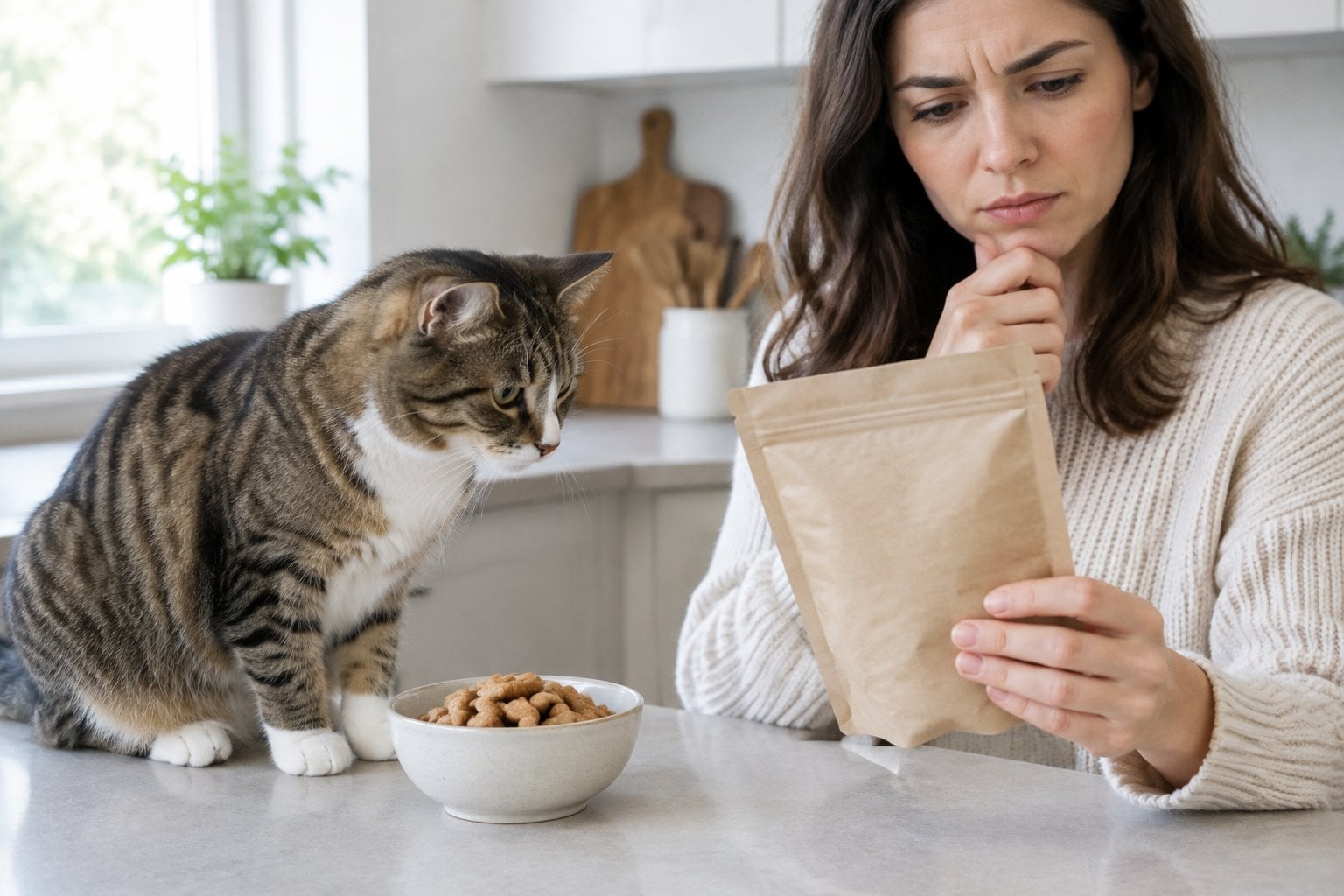
Some cat treats list generic terms like “meat,” “animal fat,” or “natural flavor” without identifying the species or country of origin. This lack of transparency makes it difficult for you to know what you’re actually feeding your cat. Ingredient sourcing matters because sourcing standards vary widely between countries. Products manufactured or sourced overseas may not undergo the same safety inspections required in the United States, and the FDA has previously issued warnings about imported pet products linked to contamination concerns.
When a label doesn’t specify where an ingredient comes from, you have no way to verify quality control, contamination testing, or supplier accountability. This is different from a company simply omitting percentages; it’s an outright absence of traceability. You should look for treats that name specific protein sources, such as “chicken breast” or “wild-caught salmon,” and disclose the country of origin on the packaging. Brands that publish sourcing information or third-party testing results give you more confidence in what you’re buying.
If a label raises more questions than it answers, treat that as a signal to choose a more transparent product instead.
26. Stale or Poorly Stored Bulk-Bin Treats
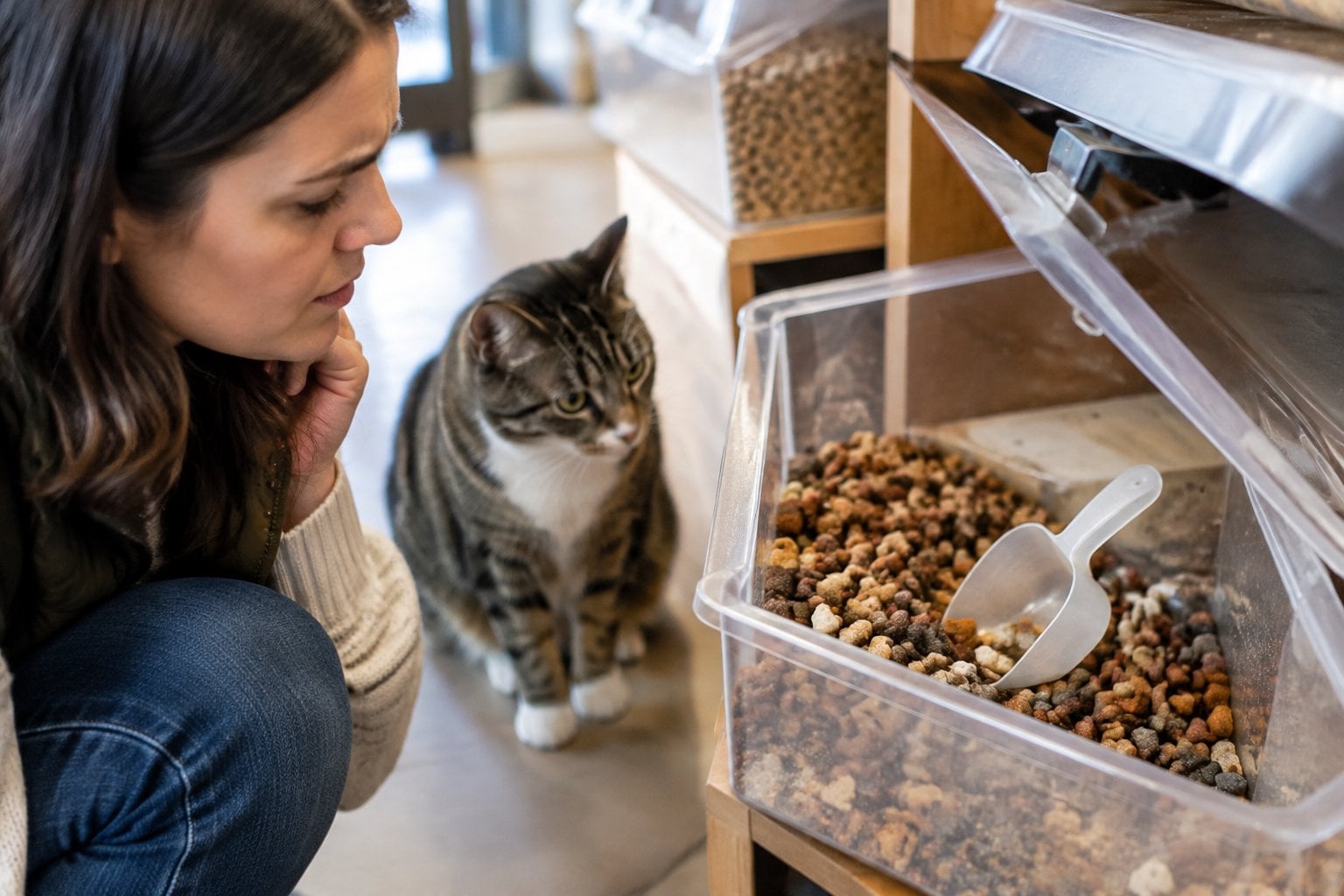
Bulk-bin cat treats are often sold by weight from open bins or large bags without individual packaging. Once a bag is opened, the treats are exposed to air, moisture, and temperature changes that speed up spoilage. Fat in the treats can oxidize over time, a process called rancidity. Rancid fat doesn’t just taste bad; it loses nutritional value and can cause digestive upset if your cat eats enough of it.
You may not notice spoilage right away. Stale treats often look fine but smell slightly off or have a dull, waxy texture compared to fresh ones. Poor storage also invites pests and mold, especially in humid climates or homes without airtight containers. The FDA recommends storing pet food and treats in their original packaging, sealed tightly, or in a clean, dedicated airtight container to preserve freshness and keep recall information accessible.
If you buy in bulk, transfer treats to a sealed, food-safe container right away and store them in a cool, dry place. Buy smaller quantities more often if your cat doesn’t go through treats quickly, so freshness stays consistent from the first treat to the last.
27. Human Snack Foods Like Chips and Crackers
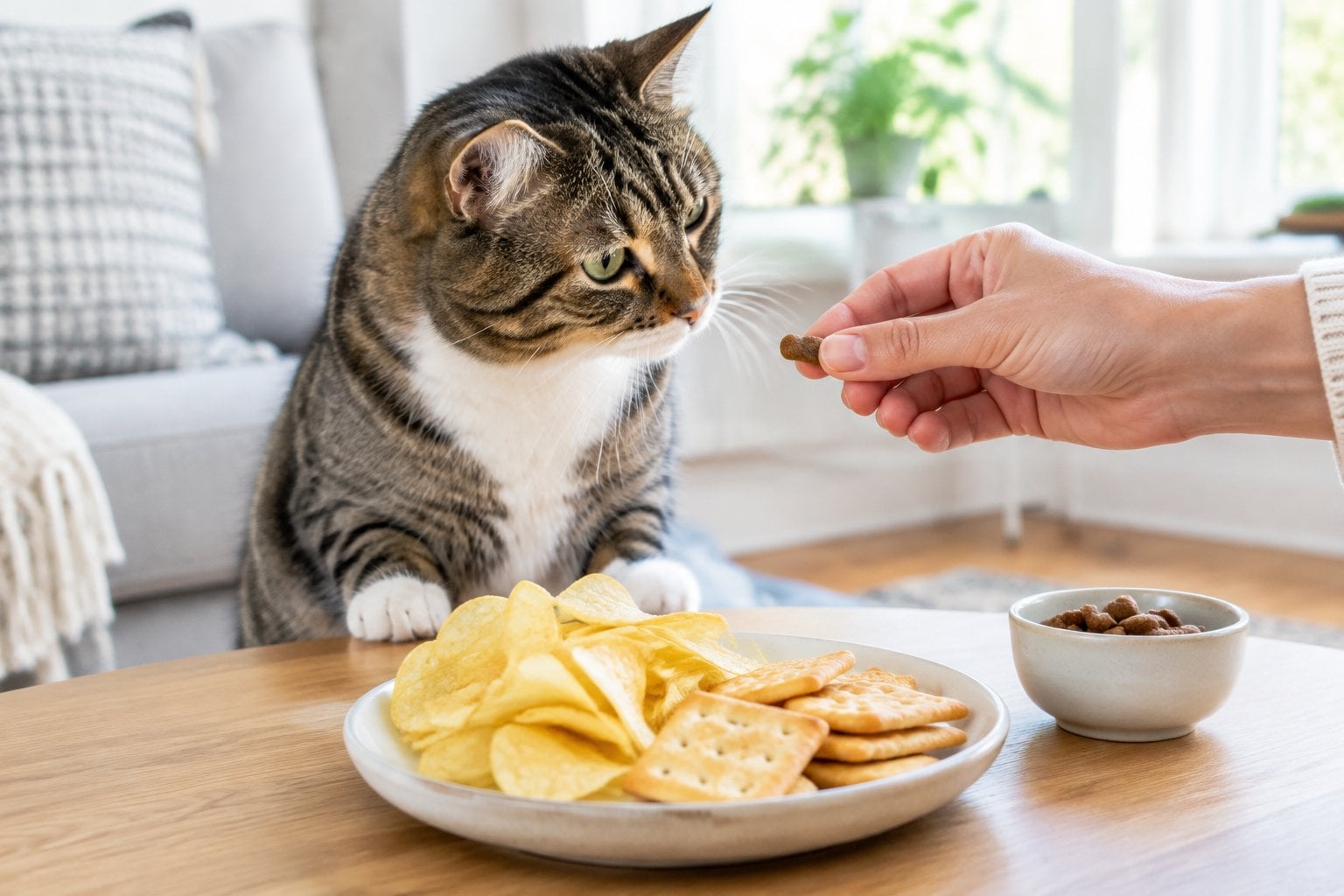
Potato chips, crackers, pretzels, and similar snacks are not made for cats, and you should not treat them as a substitute for actual cat treats. These products are typically high in sodium, which cats do not need in large amounts. Many chips and crackers also contain onion powder or garlic powder as flavoring agents. The ASPCA has identified both onion and garlic, in any form, as toxic to cats, since they can damage red blood cells.
Beyond seasoning concerns, these snacks offer no nutritional value for your cat. They’re made of refined carbohydrates and fats intended for human taste preferences, not feline dietary needs. If your cat shows interest while you’re snacking, it’s better to redirect them with a small piece of plain cooked chicken or a commercial treat formulated for cats. Keep bowls of chips or crackers out of reach, since some cats will investigate food left unattended.
Checking the label on any snack before sharing it is a simple habit that protects your cat from unnecessary sodium, seasoning, and empty calories.
28. Treats With Added Artificial Flavors
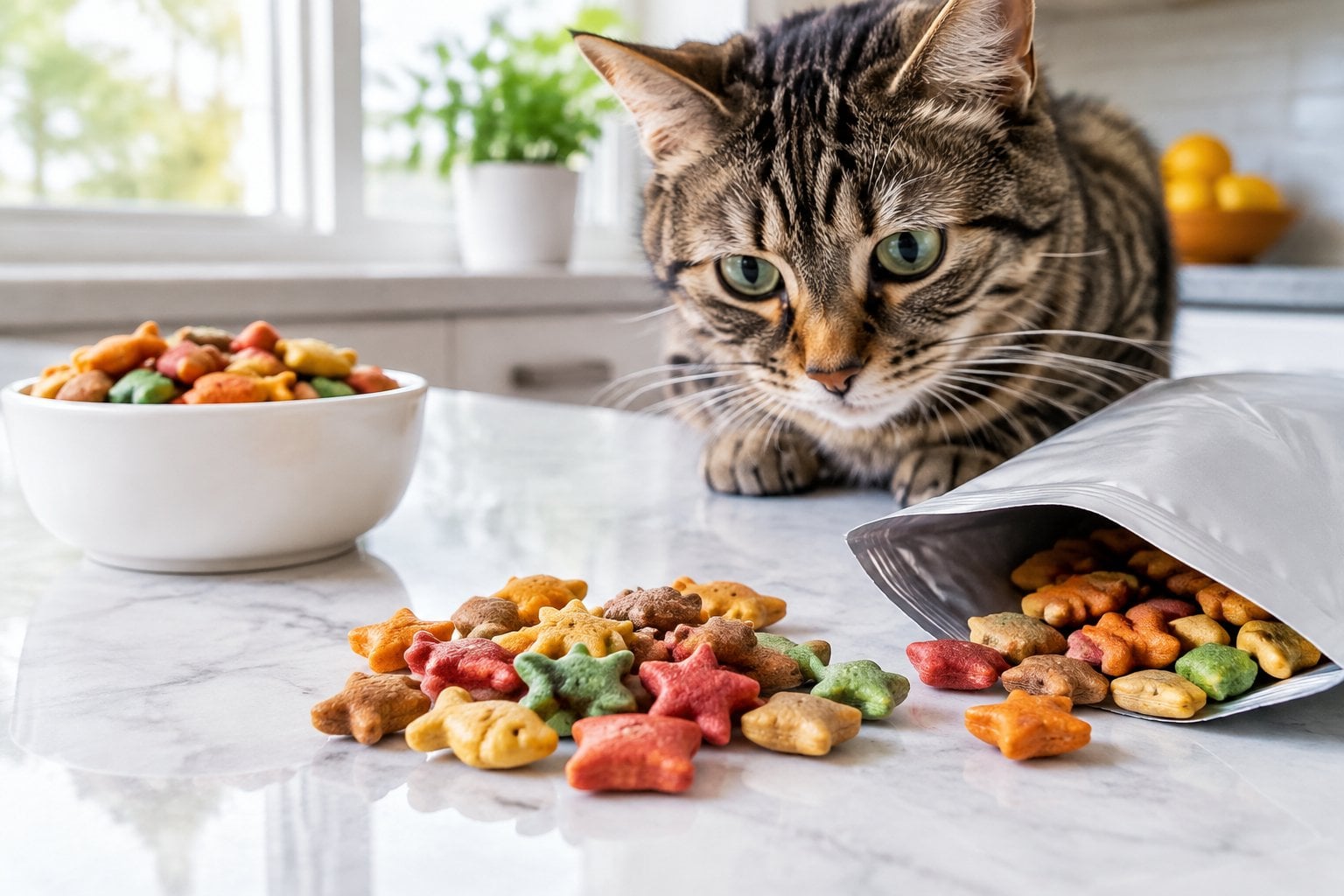
Many cat treats list vague terms like “artificial flavor” or “digest” on their ingredient panels. These flavor enhancers are sprayed onto treats to make them more appealing, since cats can be selective eaters. The problem is that these flavorings serve no nutritional purpose. They exist purely to mask low-quality base ingredients or to make a product more addictive to your cat, which can lead to overeating.
You won’t always know what chemicals are used, since manufacturers aren’t required to disclose the exact composition of proprietary flavor blends. This lack of transparency makes it hard to judge safety or quality. Repeated exposure to synthetic flavoring agents has not been proven to cause direct harm in most cases, but there’s little benefit either. Your cat’s digestive system is better suited to recognizable, whole-food ingredients.
Look for treats where the flavor comes from a named ingredient, such as real chicken, salmon, or liver. If the label relies on words like “flavor” without specifying a source, treat that as a signal of lower quality. Choosing treats with clear, simple ingredient lists gives you more control over what your cat actually consumes.
29. Table Scraps Passed Off as Treats
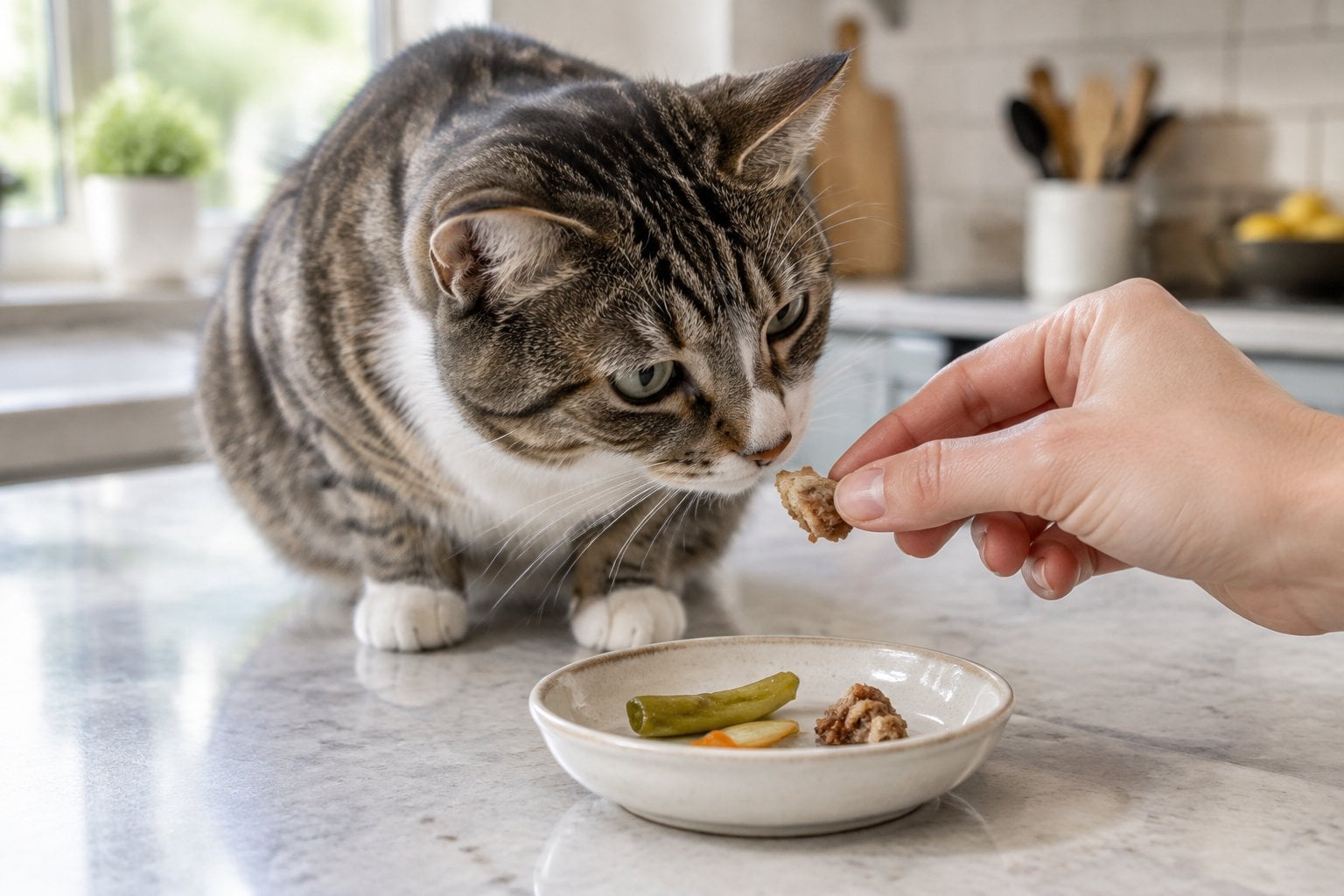
Giving your cat leftovers from your plate is one of the oldest habits in pet ownership, but it is not the same as giving a treat. Table scraps are formulated for human nutrition, not feline physiology, and they often carry ingredients your cat’s body cannot process safely.
Fat trimmings, gravy, and seasoned meat scraps are common offenders. These can trigger digestive upset, and repeated exposure to fatty scraps is linked to pancreatitis in cats. Seasonings like onion, garlic, and excess salt, which show up in sauces and cooked meats, pose additional risks to feline red blood cells and kidney function. Scraps also lack the balance your cat needs. A diet supplemented heavily with table food can dilute the nutrients found in a complete cat food, leading to deficiencies over time even if your cat seems to enjoy the food.
If you want to share something from your kitchen, offer small amounts of plain, unseasoned cooked chicken or fish with no sauce, skin, or bones. Better still, choose treats formulated specifically for cats, which account for their unique metabolic needs.
30. Homemade Treats Without Balanced Nutrition
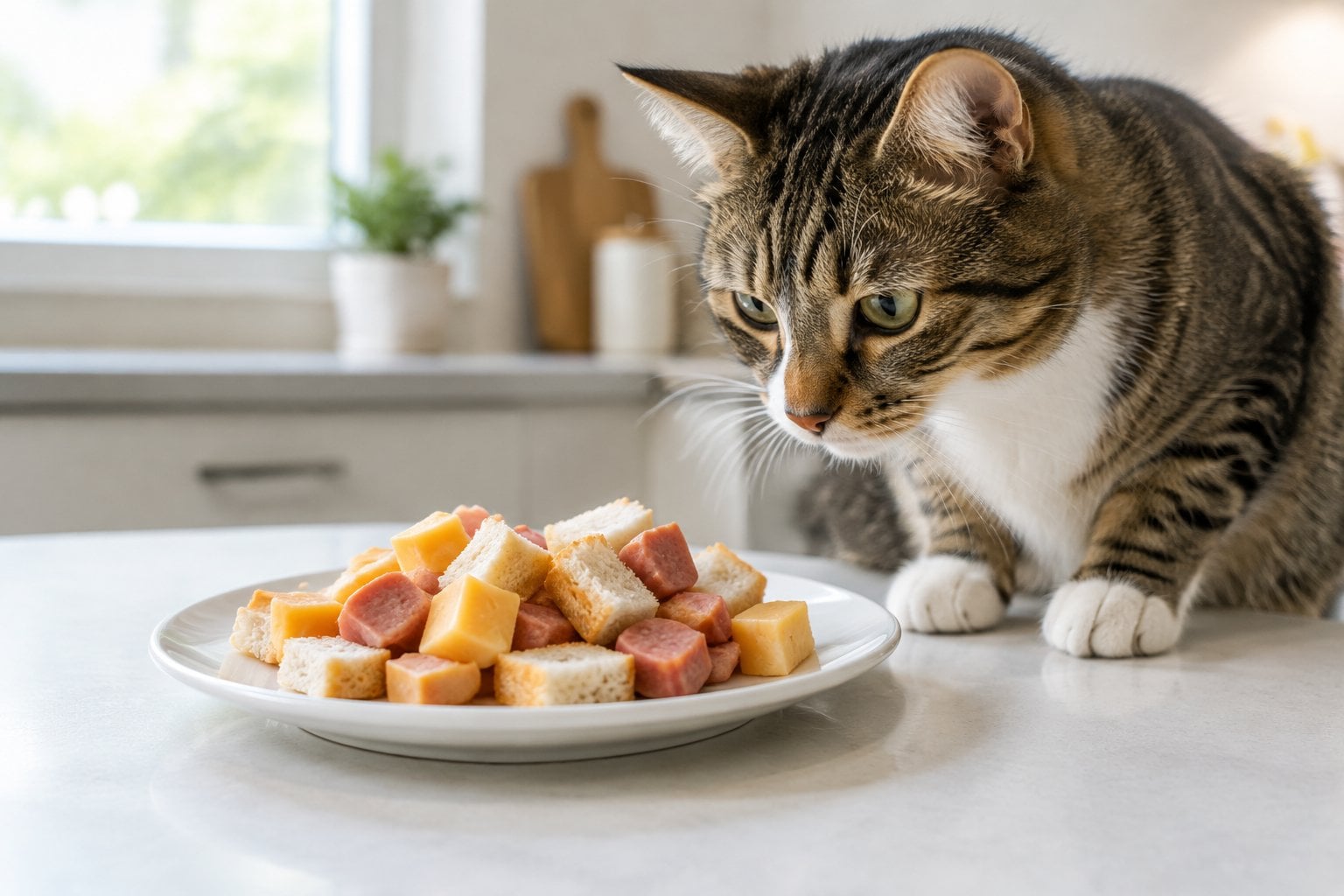
Making treats at home gives you control over ingredients, but it also removes the quality checks that commercial products go through. Many homemade cat treat recipes focus on taste and simplicity rather than nutritional balance. A treat made mostly of flour, egg, and a single protein source will not meet your cat’s complete dietary needs, though it is not meant to replace meals.
The risk comes when homemade treats make up a large share of your cat’s daily food intake. Cats require specific nutrients like taurine, which is not naturally present in many homemade recipes unless deliberately added. Without veterinary guidance, you can unintentionally create an imbalance over time. Portion control matters here too. Treats, including homemade ones, should stay within about 10 to 15 percent of your cat’s daily calories, a general guideline supported by veterinary nutrition organizations.
If you enjoy baking for your cat, look for vet-reviewed recipes designed specifically for feline nutrition. Keep portions small and occasional. Treat homemade snacks as an occasional reward, not a dietary staple, and consult your veterinarian if you plan to feed them regularly.
Safer Treat Choices and Feeding Habits
The safest treat has a short ingredient list that starts with a named meat, no artificial dyes, and a calorie count you can actually find on the package. Keep treats to a small part of the day’s food, and count them toward your cat’s daily calories so they never crowd out balanced meals.
Introduce any new treat slowly, and stop it if you see vomiting, diarrhea, itching, or lethargy. If your cat has allergies, diabetes, or kidney disease, ask your veterinarian which treats fit. For everyday meals, see our guide to the best cat foods recommended by veterinarians.
When in doubt, a tiny piece of plain cooked chicken beats a bag of mystery crunch. Use this list as a label-reading checklist the next time you shop for your cat.